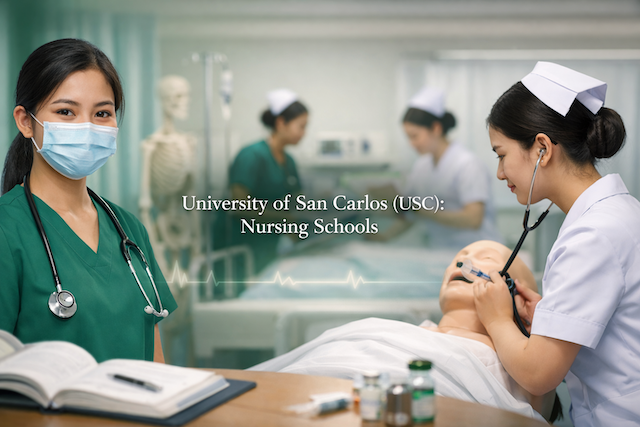
University of San Carlos (USC): Nursing Schools
Overview of USC and Nursing Education in Cebu
University of San Carlos (USC) is one of the most established higher-education institutions in Cebu, known for a strong academic culture and a wide range of professional programs. For many students who want to become registered nurses, USC is often included in the shortlist of schools to consider because of its long-standing reputation, campus learning environment, and access to clinical settings in an urban center like Cebu City.
When people search for “USC nursing school,” they are usually looking for a clear answer to practical questions: What kind of training can I expect? How competitive is admission? What clinical exposure will I get? How much does it cost, and what are the pathways after graduation? This guide is written to help you evaluate USC as an option for nursing—without relying on assumptions that may change year to year. (Program details, fees, requirements, and schedules can change, so treat this as a planning reference and confirm specifics through USC’s official channels.)
What “Nursing School” Means in the Philippine Context
In the Philippines, “nursing school” generally refers to a university-based Bachelor of Science in Nursing (BSN) program. The BSN is typically a four-year degree that integrates:
-
General education and foundational sciences (communication, humanities, math)
-
Nursing theory and professional subjects (fundamentals, community health, maternal/child nursing, mental health)
-
Skills laboratory training (return demonstrations, simulation-based practice)
-
Clinical rotations (hospital duty, community duty, specialty exposures)
-
Research and evidence-based practice components
-
Preparation for the Nursing Licensure Examination (NLE)
A strong nursing program balances academic rigor, ethical formation, clinical confidence, and communication skills. In a city like Cebu, students also benefit from exposure to diverse patient populations and a wide range of healthcare facilities.
Why Students Consider USC for Nursing
Even before comparing nursing curricula, many students consider USC because of broader university factors that can influence the overall learning experience:
-
Academic environment: A culture that emphasizes discipline, structured learning, and measurable outcomes can benefit students in a demanding program like nursing.
-
Location advantages: Cebu City provides access to hospitals, clinics, and communities for training and immersion.
-
Network effects: Studying at a well-known university can support networking for internships, volunteer work, and early career opportunities.
-
Student services: Libraries, learning spaces, advising systems, and campus services often matter more than students expect—especially during heavy clinical terms.
That said, the best school for nursing depends on your learning style, finances, resilience under pressure, and long-term goals (local hospital work, public health, abroad, further study, or specialized practice).
Program Structure You Can Generally Expect
While each university has its own sequencing, most BSN programs in the Philippines follow a structure similar to this:
-
Year 1: Foundation subjects and basic sciences; introduction to nursing concepts; early skills training
-
Year 2: Fundamentals of nursing practice; health assessment; initial clinical exposures; pharmacology and related sciences often intensify
-
Year 3: Major nursing areas expand (medical-surgical, maternal/child, mental health, community); clinical hours increase and become more complex
-
Year 4: Intensive practicum/internship-style rotations; leadership/management concepts; research completion; licensure exam preparation
If you’re evaluating USC, you should focus on how the program supports students as they move from classroom learning to direct patient care. Ask specifically about skills lab time, simulation resources, and how clinical evaluation is done.
Learning Experience: Classroom, Skills Lab, and Simulation
A nursing student’s confidence often comes from repetition and structured coaching. Strong programs usually provide:
-
Skills lab practice before hospital exposure (vital signs, injections, IV therapy concepts, aseptic technique, wound care, basic life support)
-
Simulation-based learning for rare or high-risk scenarios (emergency response, medication safety, complex patient interactions)
-
Step-by-step competency checks (return demonstrations with rubrics)
-
Clinical reasoning activities (case studies, nursing care plans, prioritization drills)
-
Communication training (SBAR handoffs, charting practice, patient education)
When considering USC, it helps to look beyond the brochure-style description and ask: How often do students practice hands-on skills before being graded? Is there remediation support if someone struggles? Do instructors provide clear performance standards?
Clinical Rotations and Hospital Exposure in Cebu
Clinical exposure is the heart of nursing education. Students usually rotate through:
-
Medical-surgical wards
-
Maternal and newborn care
-
Pediatric settings
-
Community health and public health programs
-
Mental health settings
-
Operating room, emergency room, ICU exposure (depending on affiliation and availability)
What matters is not just “where” you rotate, but also “how” the rotation is managed:
-
Clinical instructor-to-student ratio
-
Consistency of evaluation and feedback
-
Patient variety and learning opportunities
-
Safety culture, including infection control and professional boundaries
-
Opportunities to develop real clinical judgment rather than simply completing tasks
In Cebu, patient volumes and case variety can be strong, but the quality of learning depends heavily on supervision and structure.
Admission Considerations and What Applicants Should Prepare
Admission standards vary and can change, but nursing programs commonly evaluate applicants based on a mix of:
-
Senior high school academic performance (often STEM or health-aligned tracks are helpful, though not always required)
-
Entrance examinations and/or screening tests
-
Interview or behavioral assessment (sometimes included)
-
Medical clearance and immunization requirements
-
English proficiency readiness (because nursing involves heavy reading, documentation, and communication)
If you are targeting USC for nursing, prepare early in three areas:
-
Academic readiness: Biology, chemistry, basic math, and reading comprehension matter.
-
Communication ability: Nursing is communication-heavy—patients, families, doctors, nurses, and documentation.
-
Time management: The volume of requirements can overwhelm students who don’t build routines.
Even strong students can struggle if they underestimate the workload. Nursing is not just memorization—it is applied decision-making under pressure.
Cost, Budgeting, and Financial Planning
Tuition and fees for nursing programs can be significant, and total costs include more than just school payments. Typical expenses include:
-
Tuition and miscellaneous school fees
-
Uniforms and duty shoes
-
Transportation for clinical rotations
-
Medical supplies (stethoscope, BP apparatus, penlight, scissors, etc.)
-
Printing and academic materials
-
Health requirements (medical exams, vaccinations as required)
-
Review costs for NLE preparation (often in the final year or after graduation)
If budgeting is a key factor, it’s smart to compare:
-
Payment plans and installment options
-
Scholarship availability (academic scholarships, need-based assistance, external grants)
-
Hidden costs during clinical terms (commute and duty-related spending often increases)
The “cheapest” option is not always the most affordable long-term if it leads to delays, repeat subjects, or poor support. Evaluate cost together with student success systems.
Student Support Systems That Matter in Nursing
Nursing school can be mentally and emotionally demanding. A school’s support systems can significantly affect completion rates and student well-being. Useful support structures include:
-
Academic advising and clear progression policies
-
Remedial support for difficult subjects (anatomy, pharmacology, med-surg)
-
Counseling services or wellness support
-
Structured clinical debriefing (to process stressful duty experiences)
-
Clear policies for attendance, make-up duties, and clinical competency
If you can, talk to current students or recent graduates about how the program handles struggles. A supportive environment does not mean “easy”—it means clear standards with pathways to improve.
Campus Life and Professional Development Opportunities
Your nursing education is not limited to classes and hospital duty. Many students grow through:
-
Student nursing organizations
-
Volunteer and outreach programs (medical missions, community health education)
-
Research participation or poster presentations
-
Leadership roles that build confidence and teamwork skills
-
Seminars on career pathways (local hospitals, public health, overseas licensing)
A strong university setting can also offer cross-disciplinary opportunities—public health initiatives, technology exposure, or collaborations with other departments.
Career Pathways After a USC Nursing Degree
A BSN graduate in the Philippines typically pursues a combination of the following:
-
Licensure (NLE): The standard route to become a Registered Nurse (RN) locally.
-
Local clinical experience: Many graduates work in hospitals to build skills and credentials.
-
Specialization: Over time, nurses may focus on ER, ICU, OR, dialysis, pediatrics, OB, oncology, or community health.
-
Further study: Some pursue master’s degrees, research, or teaching roles.
-
Overseas pathways: Many Filipino nurses consider employment abroad. This usually requires local experience, credential evaluation, English exams, and country-specific licensing exams or bridging processes.
If overseas work is your goal, a practical strategy is to plan early:
-
Build strong fundamentals and documentation habits
-
Develop a professional portfolio (training certificates, volunteer work, leadership)
-
Maintain good academic standing
-
Seek mentorship from experienced nurses
Remember: international pathways depend on destination-country rules that change, so keep your planning flexible.
How to Evaluate USC Versus Other Nursing Schools in Cebu
If you are comparing USC with other Cebu-based nursing schools (or even schools in other cities), use a consistent checklist:
-
Clinical training quality (not just hospital names)
-
Instructor competence and mentorship style
-
Board exam preparation culture (study support, review integration)
-
Facilities for skills training and simulation
-
Student retention and support (how the program handles academic difficulty)
-
Total cost of attendance and realistic budgeting
-
Location and commute demands during duty
Try to avoid choosing based purely on reputation. Reputation matters, but your daily reality—commute, workload, support, and learning culture—matters more.
Practical Tips for Students Planning to Apply
If USC is on your shortlist, these steps help you make a smarter decision:
-
Gather official requirements early: Deadlines and processes can be strict.
-
Prepare your documents in advance: Records, IDs, and other prerequisites.
-
Build a study routine now: Especially for science foundations and English reading.
-
Visit the campus if possible: Environment affects learning and motivation.
-
Ask targeted questions: Focus on clinical support, evaluation, and progression rules.
-
Plan your finances: Include duty-related costs, not just tuition.
A nursing program is a long commitment. The best choice is the one that fits your learning style, resources, and resilience—not just the one that sounds impressive.
Final Thoughts
University of San Carlos is often considered by students who want a structured, university-based learning environment in Cebu. For nursing, your priority should be training quality: skills development, clinical supervision, feedback systems, and preparation for real patient care. If you evaluate USC using practical criteria—rather than only brand reputation—you’ll be in a better position to choose a school where you can complete the program, pass licensure, and grow into a competent, confident nurse.
FAQs (Frequently Asked Questions)
Is University of San Carlos (USC) a good choice for nursing in Cebu?
USC is often considered a strong option in Cebu because it is a long-established university with a structured academic environment and access to learning opportunities in an urban setting. However, “good” depends on your priorities. For nursing, you should look beyond name recognition and focus on practical factors such as the quality of clinical supervision, skills-lab training, evaluation methods, and student support systems. If you learn best with clear expectations, consistent feedback, and a demanding pace, USC may fit you well. The best approach is to confirm current program details and compare them with other nursing schools in Cebu using the same checklist.
What degree do I need to become a nurse in the Philippines?
Most students aiming to become Registered Nurses (RNs) complete a Bachelor of Science in Nursing (BSN). This is typically a four-year program that includes general education subjects, nursing theory, skills training, and extensive clinical rotations. After completing the BSN, graduates usually take the Nursing Licensure Examination (NLE). Because program rules and licensure requirements can evolve, it is wise to verify the latest guidance with the school and the appropriate government agencies before finalizing your plans.
How long is the nursing program, and what is the usual structure?
A BSN program is commonly structured over four academic years. Early years focus on foundational sciences, communication skills, and introductory nursing concepts. Middle years increase the intensity of major nursing subjects and introduce heavier clinical exposure. The final year is usually the most demanding, with advanced practicums, leadership or management subjects, and completion of research requirements. Many students also begin focused board exam preparation near the end of the program or after graduation. Expect the workload to increase significantly as clinical duties become more frequent.
What are the most important skills nursing students should build early?
Successful nursing students build a balance of academic skills and professional habits. Academically, reading comprehension, basic science foundations, and the ability to study consistently matter a lot. Professionally, you should develop communication skills, time management, and attention to detail. Nursing involves documentation, patient education, teamwork, and decision-making under pressure. It also requires emotional maturity, because you may encounter stress, fatigue, and challenging patient situations. Students who build routines early—sleep, study blocks, and review habits—often adjust better when clinical terms become intense.
What clinical exposure should I expect as a nursing student in Cebu?
Clinical exposure typically includes medical-surgical nursing, maternal and newborn care, pediatrics, community or public health nursing, and mental health nursing. Depending on hospital affiliations and scheduling, students may also observe or assist in areas like emergency care, intensive care, and operating room settings. The most important factors are the quality of clinical supervision, the instructor-to-student ratio, and how feedback is provided. Clinical learning is not only about completing tasks; it is about developing safe judgment, prioritization skills, and professional communication.
How competitive is admission for nursing programs like USC?
Nursing programs can be competitive because demand is high and clinical training requires strict standards. Schools may evaluate applicants through academic records, entrance exams or screening tests, interviews, and readiness for intensive coursework. Some programs also require medical clearances and vaccinations for clinical placements. Competition can vary by year, so it is smart to prepare strong documents early and build your academic foundation in science and English. If your goal is nursing, apply with a realistic plan and keep a shortlist of alternative schools in Cebu.
What expenses should I budget for besides tuition?
Many students underestimate non-tuition costs. Common expenses include uniforms, duty shoes, transportation to clinical sites, and basic nursing tools such as a stethoscope, penlight, and other supplies required for skills practice. Printing, project costs, and occasional community duty expenses can add up. You may also spend more during clinical-heavy terms because schedules can limit time for part-time work. Later on, licensure exam review costs may become a significant expense. Budgeting early helps reduce stress and allows you to focus on performance.
Does nursing school require strong English skills?
Yes. Nursing education involves reading textbooks, understanding research summaries, writing reports, and documenting patient care. Clinical settings also demand clear communication with patients, families, and healthcare teams. Even if you are confident conversationally, academic English can feel different. Improving reading speed, vocabulary, and structured writing can help a lot. If you plan to work abroad in the future, strong English skills become even more valuable, since many countries require standardized English exams and expect professional communication abilities.
How do I compare USC with other nursing schools in Cebu?
Use criteria that affect day-to-day learning. Compare skills lab quality, simulation opportunities, clinical supervision, grading transparency, remediation support, and how the school prepares students for the NLE. Consider location and commute, because clinical rotations can start early and end late. Ask how the program handles make-up duties and what happens if a student struggles in a major subject. Also compare total cost of attendance, not just tuition. A school that offers clearer systems and better support can be more cost-effective long term.
What are common challenges nursing students face, and how can I prepare?
Common challenges include heavy reading loads, frequent assessments, demanding clinical schedules, and stress from real patient responsibilities. Some students struggle with time management, sleep, and burnout. Preparation helps: build consistent study habits, learn basic note-taking and review methods, and develop self-care routines. It also helps to practice communication—how to ask questions, accept feedback, and work in teams. Nursing is a professional discipline; students who treat it like a job-in-training often adapt better than those who approach it like a typical college course.
What career pathways are available after graduating from nursing school?
After finishing a BSN, graduates commonly pursue the Nursing Licensure Examination to become RNs. Many start in local hospitals to build experience and clinical confidence. Over time, nurses may specialize in areas such as emergency care, ICU, pediatrics, maternal care, dialysis, or community health. Some pursue graduate studies, teaching, or administrative roles. Others plan for overseas employment, which may require additional exams, credential evaluation, and experience depending on the destination country. Planning early and building a strong professional foundation can keep more options open.
Cebu Universities: Nursing Degree – Top Nursing Schools, Tuition, and Board Exam Pass Rates
Post Views: 2,094