2026年4月5日
3D ACADEMY offers affordable English study programs in Cebu, Philippines – perfect for beginners, professionals, and exam takers.

3D UNIVERSAL ENGLISH INSTITUTE INC
info.3d-universal.com
8:00-17:00(Mon-Fri)
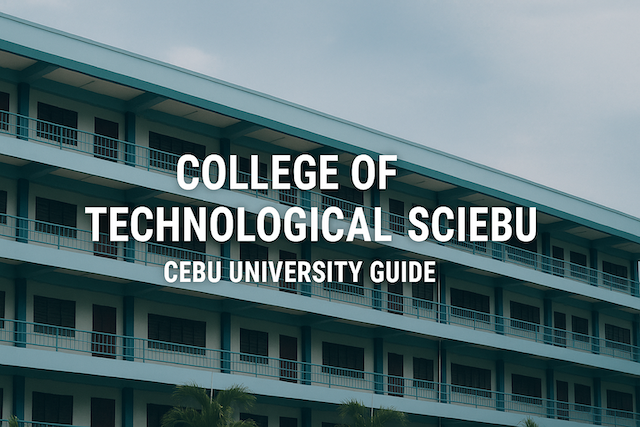
College of Technological Sciences – Cebu
Contents
- College of Technological Sciences – Cebu: Cebu University Guide
- Overview of the College of Technological Sciences – Cebu
- Academic Programs and Specializations
- Admissions Process and Requirements
- Tuition Fees and Payment Options
- Campus Facilities and Learning Environment
- Industry Training, Internships, and OJT Opportunities
- Student Life and Campus Culture
- Career Paths and Employment Opportunities
- Why Choose CTS–Cebu?
- FAQs (Frequently Asked Questions)
- What programs does College of Technological Sciences – Cebu offer?
- Is College of Technological Sciences – Cebu a good choice for technical-vocational education?
- Does CTS–Cebu offer senior high school (SHS) programs?
- What are the admission requirements for new college students?
- Can transferees enroll at College of Technological Sciences – Cebu?
- How much are the tuition fees at CTS–Cebu?
- Does the school offer scholarships or financial assistance?
- What facilities are available on campus for technical and IT students?
- Does CTS–Cebu provide on-the-job training (OJT) and industry exposure?
- What careers can graduates pursue after studying at CTS–Cebu?
- Is CTS–Cebu suitable for working students or adult learners?
- How can I get more information or contact the school?
College of Technological Sciences – Cebu: Cebu University Guide
The College of Technological Sciences – Cebu (CTS–Cebu) is a long-established private institution known for its strong focus on technical-vocational education, health sciences, engineering technology, and industry-aligned training programs. Over the years, CTS–Cebu has earned a reputation for shaping work-ready graduates equipped with practical competencies that match the evolving demands of local and international employers. This guide provides a detailed overview of the school’s programs, admissions, facilities, campus life, and overall academic experience to help prospective students make an informed decision.
Overview of the College of Technological Sciences – Cebu
CTS–Cebu began as a technical-vocational school serving learners who wanted to acquire practical skills and quickly transition into the workforce. Today, it has expanded into a comprehensive higher education institution offering bachelor’s degrees, diploma courses, and TESDA-accredited training programs. Despite its growth, the school has remained committed to affordability, accessibility, and strong industry partnerships.
Many students choose CTS–Cebu because of its emphasis on real-world training and employability. Whether they are pursuing health-related programs, engineering technology, business courses, or information technology, students benefit from hands-on activities, on-the-job training (OJT), workshops, and laboratory exposure that prepare them for actual work environments.
Academic Programs and Specializations
CTS–Cebu offers a diverse lineup of programs that cater to students with different academic goals and career interests. It has degree programs, technical-vocational courses, and short-term certifications.
Bachelor’s Degree Programs
Some of the most popular undergraduate programs include:
Bachelor of Science in Information Technology (BSIT)
A program designed to develop skills in systems analysis, software development, network management, and IT support. It is ideal for students aiming for careers in software engineering, web development, or IT administration.
Bachelor of Science in Criminology
A well-rounded program combining theory and practical training related to law enforcement, corrections, and criminal justice. This course is popular among students aspiring to join the police service, investigation agencies, and security sectors.
Bachelor of Science in Business Administration (BSBA)
A business-focused program where students can learn management, marketing, finance, and entrepreneurship. It helps prepare learners for positions in corporate organizations or for starting their own business.
Bachelor of Science in Industrial Engineering Technology and Engineering-Related Courses
The school also offers engineering technology programs that emphasize practical and applied learning. These courses train students for roles in manufacturing, operations, and technical maintenance.
Technical-Vocational and Diploma Programs
CTS–Cebu is widely recognized for its TESDA-accredited courses, which are ideal for students seeking quick employment or skill upgrades. Available programs typically include:
-
Automotive Servicing
-
Electrical Installation and Maintenance
-
Welding Technology
-
Electronics Technology
-
Computer Systems Servicing
-
Health Care Services
-
Bookkeeping and Business Process Services
These programs are hands-on, competency-based, and aligned with industry standards. Graduates can obtain national certifications such as NC II or NC III, which are often required for employment locally and abroad.
Senior High School (SHS) Tracks
The school offers senior high school programs under the K-12 curriculum:
-
Technical-Vocational-Livelihood (TVL)
-
Academic Tracks such as ABM (Accountancy, Business, and Management) and HUMSS (Humanities and Social Sciences)
The TVL track is particularly strong due to the school’s established technical facilities and TESDA training background.
Admissions Process and Requirements
Admissions in CTS–Cebu are designed to be open and student-friendly. The school accepts a wide range of learners, including fresh high school graduates, transferees, second-coursers, and working adults seeking technical certifications.
Requirements for New College Students
Typical documents include:
-
High school report card (Form 138)
-
Certificate of Good Moral Character
-
PSA Birth Certificate
-
Two to four ID photos
-
Entrance exam or assessment results (if required)
Requirements for Transferees
Transferring students must prepare:
-
Honorable Dismissal or Transfer Credentials
-
Transcript of Records or Certified True Copy of Grades
-
Good Moral Certificate
Requirements for TESDA Courses
TESDA program requirements may vary but generally include:
-
Valid ID
-
High school diploma or ALS certificate
-
1×1 or 2×2 photos
-
Basic assessment forms
Enrollment Procedure
-
Visit the school’s admissions office or website.
-
Fill out the application or registration form.
-
Submit the required documents.
-
Pay the assessment or registration fees.
-
Attend orientation or schedule for classes.
CTS–Cebu often opens multiple enrollment periods throughout the year, especially for TESDA programs with short cycles.
Tuition Fees and Payment Options
CTS–Cebu maintains its mission of being an affordable educational institution. Tuition varies depending on the program:
-
Bachelor’s degree programs typically have moderate fees suitable for families seeking budget-friendly education.
-
Technical-vocational courses are significantly more affordable and sometimes include scholarship opportunities.
-
TESDA programs may also offer financial assistance through government initiatives such as TWSP or TESDA scholarship slots.
Flexible payment terms are usually available, including installment options.
Campus Facilities and Learning Environment
CTS–Cebu invests in practical, functional facilities that support hands-on learning, especially for technical and healthcare-related courses.
Technical Laboratories
The school maintains well-equipped labs for:
-
Automotive repair and diagnostics
-
Welding and fabrication
-
Electrical and electronics work
-
Computer systems servicing
-
Engineering and industrial technology
These workshops are built to simulate real industry conditions, enabling students to learn through direct exposure.
IT and Computer Labs
For IT and business programs, CTS–Cebu provides computer laboratories with updated hardware and software applications. Students have access to internet connectivity, programming tools, and digital learning materials.
Nursing and Health Care Labs
For health care programs, the school provides training rooms, simulated hospital beds, and clinical equipment where students can practice basic first aid, patient care, and medical procedures.
Classrooms and Common Areas
The campus features clean classrooms, multipurpose halls, and study spaces where students can collaborate and participate in various academic activities. Though the school is not a large university, it emphasizes a supportive and community-oriented environment.
Industry Training, Internships, and OJT Opportunities
One of the strongest aspects of CTS–Cebu is its commitment to helping students achieve job readiness. The school has partnerships with various companies, service providers, and training centers where students can complete:
-
On-the-job training (OJT)
-
Industry immersions
-
Practicums
-
External assessments for national certifications
Technical courses involve a significant number of hours spent in industry settings, ensuring that students gain practical experience before graduation.
Student Life and Campus Culture
Despite its focus on technical education, CTS–Cebu provides a lively student environment. Learners participate in academic contests, sports activities, cultural events, and community outreach programs. The school fosters an inclusive atmosphere where students from different backgrounds can connect through clubs, organizations, and shared interests.
Clubs and Student Organizations
Common student groups include:
-
IT clubs
-
Engineering and technical societies
-
Business student organizations
-
Performing arts and cultural groups
-
Sports teams
These activities help students develop leadership, teamwork, and communication skills beyond the classroom.
Career Paths and Employment Opportunities
CTS–Cebu graduates pursue careers in a wide range of industries depending on their specialization:
-
Information Technology: IT support, web development, system administration
-
Engineering Technology: Industrial maintenance, manufacturing operations, quality assurance
-
Business Management: Admin support, marketing roles, small business management
-
Criminology: Law enforcement, investigation, security management
-
Healthcare: Local caregiving roles, abroad-related care jobs, hospital assistance
-
Technical-Vocational Fields: Automotive servicing, welding, electrical installation, electronics repair
Employers value CTS–Cebu graduates for their practical skills and preparedness to take on technical tasks immediately.
Why Choose CTS–Cebu?
Students consider CTS–Cebu for several reasons:
-
Strong technical and vocational programs
-
Affordable tuition
-
TESDA-accredited training
-
Practical and industry-aligned education
-
Accessible location and flexible enrollment
-
Supportive learning environment
It is an excellent choice for students seeking skill-based programs, quick employment after graduation, or a more affordable pathway into a bachelor’s degree.
FAQs (Frequently Asked Questions)
What programs does College of Technological Sciences – Cebu offer?
College of Technological Sciences – Cebu (CTS–Cebu) offers a mix of bachelor’s degree programs, senior high school tracks, and TESDA-accredited technical-vocational courses. Popular degrees include Information Technology, Criminology, Business Administration, and various engineering technology programs. On the technical-vocational side, CTS–Cebu provides short-term and diploma courses such as automotive servicing, welding, electrical installation, computer systems servicing, and health care services, designed to prepare students for immediate employment.
Is College of Technological Sciences – Cebu a good choice for technical-vocational education?
Yes. CTS–Cebu is especially known for its strong technical-vocational and TESDA-aligned programs. The school emphasizes hands-on, competency-based training and maintains laboratories and workshops that simulate real industry environments. Many programs are structured around TESDA qualifications, allowing students to take national certification assessments such as NC II or NC III. This makes the school an attractive choice for learners who want practical skills and faster entry into the workforce.
Does CTS–Cebu offer senior high school (SHS) programs?
CTS–Cebu offers senior high school programs under the K–12 curriculum. Students can enroll in Technical-Vocational-Livelihood (TVL) tracks, which take advantage of the school’s existing technical facilities and TESDA expertise. Some academic tracks like ABM (Accountancy, Business, and Management) and HUMSS (Humanities and Social Sciences) may also be available. SHS students benefit from both general education and skill-based subjects, helping them decide whether to continue to college or pursue employment.
What are the admission requirements for new college students?
For new college applicants, typical requirements include a completed application form, high school report card (Form 138 or equivalent), Certificate of Good Moral Character, PSA Birth Certificate, and ID photos. Some programs may require an entrance test or interview. International students or ALS passers might need additional documentation. Because requirements may vary by course or term, it is best to confirm with the school’s admissions office before enrollment.
Can transferees enroll at College of Technological Sciences – Cebu?
Yes. CTS–Cebu accepts transferees from other colleges and universities. Transferring students usually need to submit their Honorable Dismissal or Transfer Credentials, a Transcript of Records or Certified True Copy of Grades, a Certificate of Good Moral Character, and other basic documents. The registrar’s office will evaluate which subjects can be credited. Some programs may require an interview or additional assessment to ensure alignment with the school’s curriculum.
How much are the tuition fees at CTS–Cebu?
Tuition fees at CTS–Cebu are generally considered affordable compared to many private institutions. Costs vary depending on the program, number of units, and type of course. Bachelor’s degree programs usually have moderate semester-based fees, while technical-vocational and TESDA courses are often more budget-friendly. Some TESDA programs may even have government-sponsored scholarship slots. The school may also offer installment plans or staggered payment options to help families manage expenses.
Does the school offer scholarships or financial assistance?
CTS–Cebu may offer scholarships and financial aid options depending on available programs and government partnerships. These can include academic scholarships for high-performing students, discounts for honor graduates, or assistance under TESDA and other public programs. Some external sponsors or companies may also provide grants or training subsidies. Scholarship availability can change each school year, so prospective students should inquire directly with the scholarships or registrar’s office for updated details.
What facilities are available on campus for technical and IT students?
The campus is equipped with specialized laboratories and workshops to support hands-on training. Technical students have access to automotive, welding, electrical, and electronics labs, while IT and business students use computer laboratories with updated hardware and relevant software. These facilities are designed to simulate real-world work conditions, allowing learners to practice skills such as diagnostics, repair, coding, networking, and office applications in a guided environment.
Does CTS–Cebu provide on-the-job training (OJT) and industry exposure?
Yes. On-the-job training is a core component of many programs at CTS–Cebu. The school maintains linkages with partner companies, shops, service centers, and organizations where students complete their required training hours. Through OJT and practicums, learners gain real workplace experience, apply classroom knowledge, and build professional networks. This industry exposure significantly improves their readiness for employment after graduation and helps them understand actual job expectations.
What careers can graduates pursue after studying at CTS–Cebu?
Career opportunities depend on the chosen program. IT graduates can work in software development, technical support, or network administration. Criminology graduates may pursue careers in law enforcement, investigation, and security services. Business administration alumni can enter roles in administration, sales, marketing, or entrepreneurship. Technical-vocational graduates can work as automotive technicians, welders, electricians, electronics repair specialists, or health care assistants. Many CTS–Cebu graduates are valued for their practical skills and strong work ethic.
Is CTS–Cebu suitable for working students or adult learners?
CTS–Cebu can be a good option for working students and adult learners, particularly those interested in short-term technical-vocational or TESDA courses. These programs are often structured with practical schedules and focused training modules, making them manageable for individuals balancing work and study. Some programs may offer flexible class hours, although availability depends on demand and school policy. It is recommended to consult the registrar about schedules before enrolling.
How can I get more information or contact the school?
Prospective students can usually reach CTS–Cebu through its official website, social media pages, or campus admissions office. From there, you can request details on programs, tuition, schedules, and current scholarship offerings. Visiting the campus in person is also helpful for seeing the facilities, talking with staff, and clarifying questions about requirements, course offerings, and enrollment periods before making your final decision.
Philippines University Guide
Cebu University Guide
Cebu Province All Universities Lists

How to Register for eTravel Philippines (2025 Guide)
Step-by-step guide to completing your eTravel registration before arriving in the Philippines, with images and tips.

Night Market in Cebu – Things You Don’t Know About Cebu Life
Discover the hidden charm of Cebu’s night markets, from street food stalls to local life tips you won’t find in tourist guides.

How to Use ChatGPT for IELTS Preparation: A Complete Guide
Learn how to prepare for IELTS using ChatGPT — including strategies for Writing, Reading, Listening, Speaking, and grammar support.

How to Build a Website Without Coding Using ChatGPT
Discover how to build your own website using AI—no coding skills needed. From structure planning to SEO and design, let ChatGPT guide you.