2025年12月15日
3D ACADEMY offers affordable English study programs in Cebu, Philippines – perfect for beginners, professionals, and exam takers.

3D UNIVERSAL ENGLISH INSTITUTE INC
info.3d-universal.com
8:00-17:00(Mon-Fri)
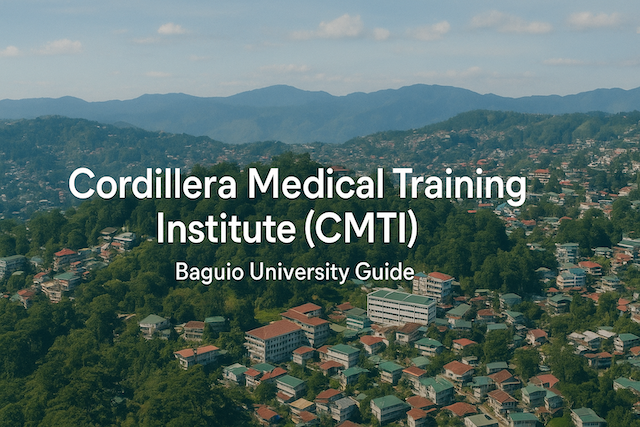
Cordillera Medical Training Institute (CMTI): Baguio University Guide
Contents
- Cordillera Medical Training Institute (CMTI): Baguio University Guide
- Overview of Cordillera Medical Training Institute (CMTI)
- Academic Programs Offered
- Why Choose CMTI?
- Campus Facilities and Learning Environment
- Student Life at CMTI
- Career Opportunities for Graduates
- Admission Requirements and Process
- Tuition and Fees
- Tips for Success in CMTI Programs
- Is CMTI the Right School for You?
- FAQs (Frequently Asked Questions)
- What kind of school is Cordillera Medical Training Institute (CMTI)?
- Is CMTI accredited by TESDA?
- What courses are offered at CMTI?
- Who is the Caregiving NC II program best suited for?
- Can I work abroad after completing a program at CMTI?
- What are the admission requirements for new students?
- How much is the tuition at CMTI and are there flexible payment options?
- Does CMTI provide dormitory or housing for students?
- What is the class schedule like at CMTI?
- How can I apply or get more information about CMTI?
Cordillera Medical Training Institute (CMTI): Baguio University Guide
Overview of Cordillera Medical Training Institute (CMTI)
Cordillera Medical Training Institute (CMTI) is one of the leading medical and allied health training institutions in Baguio City, known for producing job-ready graduates who excel in both local and international healthcare industries. With its strong focus on practical, hands-on training and competency-based education, CMTI has become a preferred choice for students pursuing careers in caregiving, healthcare assistance, emergency medical services, and other allied health professions.
Located in the heart of Baguio City, CMTI provides a supportive academic environment where students gain real-world skills through laboratory practice, simulations, community exposure, and internship placements. The institute is TESDA-accredited, ensuring that all its programs meet national standards for technical-vocational education and training.
This guide provides a comprehensive overview of CMTI’s programs, campus experience, career opportunities, admission process, and why it is considered one of the best health training institutes in the Cordillera region.
Academic Programs Offered
CMTI offers a variety of TESDA-recognized programs designed to equip students with the skills necessary for immediate employment. These programs are especially popular among students who aspire to work abroad, as CMTI’s credentials are widely accepted in many countries.
Caregiving NC II
One of the flagship programs, the Caregiving NC II course prepares students to provide care for infants, elderly, and individuals with special needs. The curriculum includes:
-
Basic first aid and emergency response
-
Personal care assistance
-
Mobility and hygiene support
-
Communication and safety procedures
-
Work ethics and professional conduct
Graduates of Caregiving NC II often pursue jobs in Japan, Canada, Singapore, and various European countries.
Healthcare Services NC II
This program trains students in hospital-based patient support, including vital signs monitoring, patient mobility, sanitation procedures, and basic nursing assistance. It is ideal for students who want to work in clinics, hospitals, or home-care facilities.
Emergency Medical Services and First Aid Programs
CMTI also offers short-term training programs in first aid, CPR, and emergency response. These courses benefit individuals seeking EMS careers or those who want to improve workplace safety skills.
Other Specialized Courses
Depending on the year and demand, CMTI may also offer:
-
Practical Nursing (PN)
-
Medical Office Assistance
-
Health Care Assistant programs
-
Foreign language training (often for Japan-bound caregivers)
Each course is designed to ensure students meet competency standards for both local and overseas employment.
Why Choose CMTI?
CMTI stands out among Baguio’s medical training institutions for several reasons. Students choose CMTI not only for its high-quality instruction but also for the opportunities and support systems available.
TESDA-Accredited and Industry-Recognized
Being TESDA-accredited means all CMTI programs are standardized, professionally recognized, and aligned with national competency requirements. This accreditation is also a major advantage when applying for overseas positions.
Strong Focus on Hands-On Training
CMTI places emphasis on practical experience through:
-
On-campus simulation laboratories
-
Community-based hands-on practice
-
Internship programs with healthcare facilities
-
Real-world patient exposure
This approach ensures students are comfortable and confident in real healthcare settings.
High Employment Rate
A significant number of CMTI graduates secure jobs shortly after completing their programs. Many pursue overseas opportunities, particularly in caregiving and healthcare support industries.
Experienced Faculty and Supportive Environment
CMTI instructors are professionals with clinical and international experience. Students benefit from mentorship-focused teaching, ensuring that they understand both the technical and interpersonal aspects of caregiving and healthcare.
Campus Facilities and Learning Environment
CMTI maintains an immersive training environment that simulates real healthcare conditions. Though smaller than major universities, the campus prioritizes hands-on learning and accessibility.
Simulation Labs
These include caregiver training rooms, nursing stations, and patient care simulators where students can practice hands-on techniques safely.
Classrooms and Lecture Halls
Modern classrooms are equipped with audiovisual tools to support theoretical instruction.
Community Outreach Programs
CMTI regularly partners with barangays and local organizations to conduct health-related community service activities, providing students with valuable field exposure.
Accessible Location
The institute is strategically located in Baguio City, close to transportation hubs, dormitories, and key student areas.
Student Life at CMTI
Although CMTI is primarily a technical-vocational institute rather than a traditional university, students still enjoy a highly supportive and collaborative learning atmosphere.
Diverse Student Population
Students come from various provinces in the Cordillera region, Northern Luzon, and sometimes other countries. This diversity fosters a multicultural and cooperative environment.
Career Guidance and Job Placement Support
The institute offers assistance for:
-
Preparing job applications
-
Overseas employment documentation
-
Skills certification exams
-
Job fairs and interviews
This makes the transition from training to employment much smoother.
Discipline and Professional Values
CMTI emphasizes professionalism, proper conduct, and strong work ethics—qualities essential for medical and caregiving careers.
Career Opportunities for Graduates
Graduates of CMTI programs have a wide range of employment opportunities due to the global demand for caregivers and healthcare support workers.
Local Employment
Graduates can work in:
-
Hospitals
-
Clinics
-
Nursing homes
-
Rehabilitation centers
-
Home care settings
Overseas Employment
CMTI graduates are often qualified for jobs in:
-
Japan (caregiving and elderly care roles)
-
Canada (home support workers)
-
Middle East (hospital staff, home care assistants)
-
Singapore and Hong Kong
-
Europe (depending on certification)
TESDA NC II certification is widely recognized by foreign employers, increasing graduates’ chances of landing jobs abroad.
Admission Requirements and Process
Applying to CMTI is straightforward. Requirements may vary depending on the program, but general requirements include:
Basic Requirements
-
Completed admission form
-
High school diploma or ALS certificate
-
Birth certificate (PSA)
-
1×1 or 2×2 photos
-
Valid ID
-
Medical certificate (for health-related courses)
Additional Requirements for Foreign Students
-
Passport
-
Visa documents
-
Proof of English proficiency (depending on course)
Enrollment Process
-
Submit documents online or on-site.
-
Attend orientation and brief interview (if required).
-
Pay enrollment fees or reservation fees.
-
Receive class schedule and training materials.
CMTI often allows flexible payment schemes, making programs more accessible.
Tuition and Fees
The cost of training at CMTI depends on the program length and its requirements. Caregiving NC II typically includes tuition, training materials, uniforms, and lab fees. Some students also pay for assessment exams and certification.
While exact fees vary annually, CMTI is known for affordable tuition compared to other healthcare training institutes.
Financial assistance programs or scholarships may be available for qualified students.
Tips for Success in CMTI Programs
Practice Skills Regularly
Hands-on practice is essential for mastering caregiving and healthcare assistance skills.
Build Strong Communication Skills
Healthcare professionals must communicate clearly and compassionately—especially when working abroad.
Maintain Professionalism
Attendance, punctuality, and respectful conduct are highly valued at CMTI.
Prepare for Overseas Opportunities Early
Those aiming to work abroad should gather documents (passport, NBI clearance, etc.) early.
Is CMTI the Right School for You?
Cordillera Medical Training Institute is an excellent choice if you:
-
Want to pursue a career in caregiving or healthcare services
-
Prefer hands-on, skills-based training over traditional academic paths
-
Plan to work abroad in the healthcare sector
-
Seek an affordable, TESDA-accredited medical training program
-
Value a supportive and professional learning environment
CMTI equips students not just with technical skills but also the attitude and confidence required to excel in demanding healthcare roles.
FAQs (Frequently Asked Questions)
What kind of school is Cordillera Medical Training Institute (CMTI)?
Cordillera Medical Training Institute (CMTI) is a specialized training center in Baguio that focuses on healthcare and allied medical programs such as caregiving, healthcare services, and emergency response. It is designed for students who want a practical, skills-based education instead of a traditional four-year degree. Classes combine lectures with hands-on practice in laboratories and community settings, helping students become job-ready for both local and international healthcare environments.
Is CMTI accredited by TESDA?
Yes. CMTI is a TESDA-accredited institution, which means its programs follow national competency standards for technical-vocational education. This accreditation is important when you take the National Competency Assessment (NC II) and when applying for jobs in the Philippines or overseas. Employers and agencies usually look for TESDA-recognized training and a valid NC certificate, so studying at CMTI can be a strong advantage for your future career.
What courses are offered at CMTI?
CMTI typically offers health-related programs such as Caregiving NC II and Healthcare Services NC II, along with short courses in basic life support, first aid, and emergency medical response. In some years, they may also open specialized programs like Practical Nursing or Medical Office Assistance, depending on demand and regulatory approval. If you are interested in a specific course, it is best to check directly with the school for the latest list of available programs and schedules.
Who is the Caregiving NC II program best suited for?
The Caregiving NC II program is ideal for students who want to work in elderly care, home care, or support roles for persons with disabilities, children, or patients needing long-term assistance. Many students choose this program because it is in demand both in the Philippines and abroad. It is suitable for high school graduates, career shifters, and adults who want a practical route to employment, especially in countries like Japan, Canada, and other destinations that hire trained caregivers.
Can I work abroad after completing a program at CMTI?
Many graduates use their training and TESDA NC II certification as a step toward overseas employment, particularly in caregiving and healthcare assistant roles. However, working abroad is not automatic. You still need to meet each country’s specific requirements, such as language proficiency, work experience, exams, or licensing. CMTI provides foundational skills and credentials, but you must work with licensed agencies or employers and follow legal processes to secure a job overseas.
What are the admission requirements for new students?
Admission requirements may vary per program, but generally you will need a completed application form, high school diploma or ALS certificate, birth certificate, ID photos, and at least one valid government ID. Some programs may require a medical certificate to confirm that you are physically and mentally fit for health-related work. International students might be asked for passport and visa documents. The school may also conduct an orientation or brief interview before confirming your enrollment.
How much is the tuition at CMTI and are there flexible payment options?
Tuition fees depend on the specific course, duration, and included services such as uniforms, training materials, and assessment preparation. Compared to full university programs, CMTI is usually more affordable because it focuses on technical-vocational training. Many students pay in staggered or installment plans, especially for longer courses like Caregiving NC II. Since fees can change over time, it is best to contact the school directly through their official channels for updated tuition and payment schemes.
Does CMTI provide dormitory or housing for students?
CMTI itself may not always operate its own dormitory, but because it is located in Baguio City—one of the country’s major education hubs—there are many nearby boarding houses, apartments, and bedspaces. Students often share rooms with classmates to save on costs. The school office can usually give general guidance or neighborhood suggestions, but it is the student’s responsibility to secure and manage their own accommodation arrangements before or soon after enrollment.
What is the class schedule like at CMTI?
Class schedules vary depending on the program and batch. Some courses follow weekday daytime schedules, while others may offer evening or weekend classes for working students. Training typically includes both classroom lectures and practical sessions in laboratories or community settings. During the final phase, students may be assigned to on-the-job training or internships in partner facilities. For exact schedules and upcoming intakes, it is recommended to inquire directly with the registrar or admissions office.
How can I apply or get more information about CMTI?
To apply or learn more, you can contact Cordillera Medical Training Institute via their official phone numbers, email, or social media pages, or by visiting the campus in person. The admissions staff can guide you through available programs, requirements, fees, and start dates. When you inquire, prepare your questions about your target destination country, preferred schedule, and budget so they can give you more tailored information and help you choose the most suitable healthcare program.
Baguio University Guide
Baguio Province All Universities Lists
Philippines University Guide

How to Register for eTravel Philippines (2025 Guide)
Step-by-step guide to completing your eTravel registration before arriving in the Philippines, with images and tips.

Night Market in Cebu – Things You Don’t Know About Cebu Life
Discover the hidden charm of Cebu’s night markets, from street food stalls to local life tips you won’t find in tourist guides.

How to Use ChatGPT for IELTS Preparation: A Complete Guide
Learn how to prepare for IELTS using ChatGPT — including strategies for Writing, Reading, Listening, Speaking, and grammar support.

How to Build a Website Without Coding Using ChatGPT
Discover how to build your own website using AI—no coding skills needed. From structure planning to SEO and design, let ChatGPT guide you.