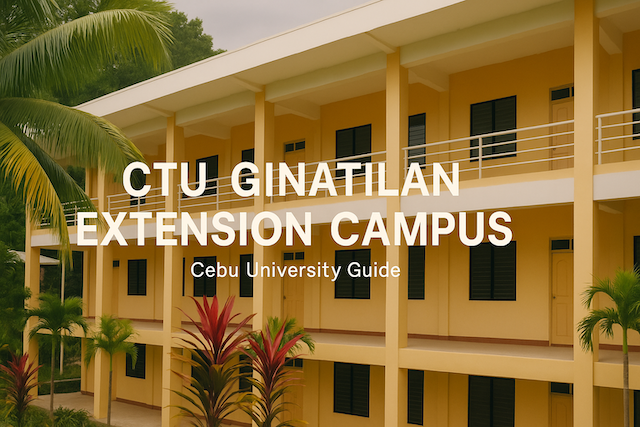
CTU Ginatilan Extension Campus: Cebu University Guide
Overview of CTU Ginatilan Extension Campus
The Cebu Technological University (CTU) Ginatilan Extension Campus is one of the satellite learning hubs of CTU located in the southwestern part of Cebu Province. Known for its quiet, coastal–mountain environment, Ginatilan offers students a serene academic setting while remaining connected to the university’s broader mission of accessible, community-driven education.
As an extension campus, CTU Ginatilan plays a pivotal role in bringing tertiary education closer to rural communities. It supports degree programs, short-term training, skills development initiatives, and municipal livelihood projects that uplift local students and professionals. This campus is especially beneficial for learners who prefer studying within their hometown or nearby municipalities such as Malabuyoc, Samboan, and Alegria—reducing travel time and living expenses.
This guide explores the campus’s academic programs, facilities, student life, admission process, and other essential details for future students, parents, and community partners.
Academic Programs Offered
CTU Ginatilan Extension Campus typically offers a selection of programs aligned with local development goals and labor demands. While offerings may vary depending on faculty availability and university policy, extension campuses often include courses geared toward technology, education, agriculture, and applied sciences.
1. Teacher Education Programs
Education remains one of the most accessible and in-demand pathways for students in southern Cebu. Programs may include:
Students gain foundational teaching skills, curriculum development techniques, classroom management training, and practical internships in partner schools.
2. Agriculture and Fisheries-Related Courses
Given Ginatilan’s rural and coastal setting, agriculture and fisheries programs align with the needs of the local economy. These programs help empower future farmers, agribusiness workers, and community development leaders through hands-on training and fieldwork.
3. Technology and Industrial Programs
Technical-vocational specializations may be offered through short courses or diploma programs. These might include:
-
Computer hardware servicing
-
Automotive servicing
-
Electrical installation and maintenance
-
Welding and fabrication skills
These programs are valuable for students seeking employable skills or TESDA-aligned certifications.
4. Continuing Education and Community Extension
The campus also hosts:
-
Skills enhancement workshops
-
Livelihood training for local residents
-
Digital literacy programs
-
Municipal training collaborations with LGUs
These programs strengthen CTU’s mission of community engagement and lifelong learning.
Campus Facilities and Learning Environment
CTU Ginatilan Extension Campus, while smaller than major CTU campuses, provides essential academic and support facilities that meet the needs of students.
1. Classrooms and Lecture Spaces
The university maintains standard classrooms equipped with basic instructional tools. Some rooms may support multimedia-aided learning, depending on program requirements.
2. Computer Laboratory
A computer lab (if available at the extension campus or via partnerships with the main or parent campus) supports IT classes, research, and digital skills training—important for today’s academic and professional demands.
3. Library and Learning Resources
Extension campuses may house a mini-library or resource center where students can access textbooks, reference materials, and online academic resources. CTU’s digital platforms also allow students to use e-books, journals, and academic portals.
4. Campus Grounds and Outdoor Facilities
Located in a more laid-back rural area, CTU Ginatilan offers a calm and peaceful learning atmosphere. Students often enjoy open spaces, shaded areas, and nearby natural attractions such as waterfalls and beaches.
5. Administrative and Support Offices
Key services available include:
-
Registrar assistance for enrolment and documentation
-
Guidance and counseling support
-
Student affairs services
-
Faculty and administrative offices
For services not available onsite, Ginatilan students may coordinate with the parent or main campus.
Student Life and Culture
CTU Ginatilan fosters a close-knit academic community due to its smaller population compared to metro-based campuses. Students, faculty, and administrators often work closely in programs and community projects.
The campus frequently collaborates with the local government, schools, and community groups, offering students opportunities to engage in outreach programs, livelihood training, and environmental activities.
2. Student Organizations
Although the number of organizations may be fewer than in larger campuses, students can typically join:
These groups help students develop leadership, teamwork, and social responsibility.
3. Campus Events
Events may include:
These campus traditions strengthen the sense of belonging and student identity.
Benefits of Studying at CTU Ginatilan Extension Campus
Choosing CTU Ginatilan provides several advantages to learners from southwestern Cebu.
1. Affordable and Accessible Education
As a state university, CTU offers free tuition under government subsidy programs, making tertiary education more attainable. Students from Ginatilan and nearby towns save significantly on accommodation and transportation costs.
2. Peaceful Academic Setting
The quiet, rural environment is ideal for students who prefer a distraction-free atmosphere conducive to learning.
3. Practical and Community-Aligned Programs
Programs are designed to uplift local livelihoods and equip students with practical skills relevant to the region’s economic landscape.
4. Opportunities for Local Employment
Graduates often find opportunities in nearby schools, municipal offices, agricultural sectors, and local businesses.
5. Personalized Learning
Smaller class sizes allow students to receive more attention from instructors, creating a more supportive learning experience.
Admission Requirements and Enrollment Guide
1. Basic Requirements
Applicants typically need to submit:
-
High school report card (Form 138) or ALS certification
-
PSA-issued birth certificate
-
Certificate of Good Moral Character
-
2×2 or passport-size photos
-
Valid ID (for verification)
Requirements may vary, so students should check updates from CTU’s official channels.
2. Entrance Assessment or Screening
Some programs may require:
3. Enrollment Steps
General steps include:
-
Secure admission forms at the campus or via CTU’s online portal.
-
Submit necessary documents.
-
Attend orientation or interview if required.
-
Wait for confirmation of acceptance.
-
Proceed to enrollment and subject encoding.
4. Scholarship Opportunities
Students may apply for:
-
CHED scholarships
-
DOST scholarships (if applicable)
-
Local government education grants
-
CTU-specific financial assistance programs
How to Get to CTU Ginatilan Extension Campus
Ginatilan is located in southwestern Cebu and is accessible via land transportation.
From Cebu City
-
Take a bus from the Cebu South Bus Terminal (CSBT) heading to Ginatilan, Samboan, or Bato.
-
Travel time is around 3.5–4 hours, depending on traffic and road conditions.
-
Ride a tricycle or motorcycle (habal-habal) to the campus upon reaching the town proper.
From Nearby Municipalities
Students from Malabuyoc, Alegria, or Samboan can ride jeepneys, buses, or motorbikes directly to Ginatilan town center.
Contact Information and Updates
Since extension campuses occasionally update their programs and enrollment guidelines, students are encouraged to follow CTU’s official pages or contact the main campus for the latest announcements. Communication lines may vary by semester, so checking online platforms ensures accurate and timely information.
Final Thoughts
CTU Ginatilan Extension Campus is a vital educational hub for students seeking quality, affordable education without leaving the comfort of southwestern Cebu. Its community-focused programs, peaceful environment, and practical training opportunities make it an excellent choice for learners aiming to build skills relevant to local industries and future careers.
Whether you are a first-time college student, a working learner, or someone looking to enhance skills through short courses, CTU Ginatilan offers accessible pathways to personal and professional development.
FAQs (Frequently Asked Questions)
Where is CTU Ginatilan Extension Campus located?
CTU Ginatilan Extension Campus is located in the southwestern part of Cebu Province, within the municipality of Ginatilan. It primarily serves students from Ginatilan and nearby towns such as Malabuyoc, Samboan, and Alegria. The campus is situated in a rural, coastal–mountain environment, offering a calm and peaceful setting that is ideal for focused study. While not as large as the main campuses in Cebu City, it functions as a local hub for higher education and community extension programs in this part of Cebu.
What types of degree programs are offered at CTU Ginatilan Extension Campus?
The campus typically offers programs that reflect the needs of the local community and the broader development goals of CTU. These often include teacher education programs such as Bachelor of Elementary Education (BEEd) and Bachelor of Secondary Education (BSEd), as well as agriculture or fisheries-related programs that support rural livelihoods. In addition, the campus may host technology and industrial short courses or diploma programs focused on practical skills like computer hardware servicing, automotive work, and electrical or welding skills. Exact offerings can change over time depending on demand, faculty, and university policy, so it is always best to confirm with the campus or main CTU website.
Is CTU Ginatilan Extension Campus a good choice for students from nearby towns?
Yes. CTU Ginatilan Extension Campus is specifically designed to make higher education more accessible for students from southwestern Cebu who may find it difficult or expensive to study in Cebu City or other major urban centers. By studying at this extension campus, students can save on transportation and boarding costs while staying close to their families and communities. The smaller campus environment can also mean more personalized attention from instructors and a supportive, close-knit student community.
What are the usual admission requirements for new students?
Admission requirements may vary slightly by program and academic year, but in general, applicants should prepare the following: a high school report card (Form 138) or ALS certification if applicable, a PSA-issued birth certificate, a Certificate of Good Moral Character from their school or barangay, and recent ID photos. Some programs may also require entrance examinations, interviews, or skills assessments, especially for technical or specialized courses. Applicants are encouraged to monitor official CTU announcements to ensure that they meet current requirements and deadlines.
Does CTU Ginatilan Extension Campus charge tuition fees?
CTU is a state university, which means qualified Filipino students may enjoy free tuition and other fee subsidies under existing government programs. However, some minimal school fees, miscellaneous charges, or personal expenses (such as uniforms, projects, or student organization fees) may still apply. Students should inquire directly with the registrar or cashier’s office for updated information on fees, subsidies, and payment procedures. Scholarships and grants from government agencies or local government units may also help reduce education-related expenses.
Are there scholarship opportunities available for CTU Ginatilan students?
Yes. Students at CTU Ginatilan Extension Campus may apply for different forms of financial assistance. These can include national scholarships such as CHED or DOST programs (depending on course and qualifications), as well as local government scholarships from municipalities and provinces. In some cases, CTU may offer its own institutional grants or work-study opportunities. Scholarships often have specific requirements related to academic performance, financial need, or chosen program, so students should consult the campus scholarship office or guidance counselor for details on eligibility and application processes.
What is student life like at CTU Ginatilan Extension Campus?
Student life at CTU Ginatilan is characterized by a friendly, community-oriented atmosphere. Because the campus is relatively small, students tend to know one another and can easily interact with faculty and staff. There may be student organizations focused on academics, culture and the arts, sports, or community service. Activities such as intramurals, foundation days, seminars, and outreach programs offer opportunities for leadership, teamwork, and personal development. The rural setting also means students can enjoy a slower pace of life and nearby natural attractions during their free time.
What facilities are available for students at the campus?
The extension campus provides essential academic and support facilities, which typically include classrooms, basic laboratories or workshop areas for technical courses, and a small library or resource center. A computer laboratory may be available for IT-related classes, research, and digital literacy training. Administrative offices such as the registrar, guidance, and student affairs also operate on campus. While facilities may not be as extensive as those found at major urban campuses, they are usually adequate for the programs offered and are supplemented by CTU’s digital learning resources.
How can I travel to CTU Ginatilan Extension Campus from Cebu City?
To reach CTU Ginatilan from Cebu City, you can go to Cebu South Bus Terminal (CSBT) and take a bus bound for Ginatilan, Samboan, or Bato passing through Ginatilan. Travel time is usually around three and a half to four hours, depending on traffic and road conditions. Once you arrive in the town proper of Ginatilan, you can ride a tricycle or motorcycle (habal-habal) to the campus if it is not within walking distance. Students from nearby towns often use local jeepneys, buses, or motorbikes for their daily commute.
Does the campus offer community extension and short training programs?
Yes. As an extension campus, CTU Ginatilan is deeply involved in community extension and outreach work. It may organize short-term training programs in areas such as livelihood development, agriculture and fisheries, digital literacy, and technical skills. These initiatives are usually carried out in collaboration with the local government, schools, and community groups. They are designed not only for enrolled students but also for local residents who want to improve their skills or start small businesses. This strong community engagement helps the campus fulfill its role as a partner in local development.
How can I get official and updated information about CTU Ginatilan?
For the most reliable and updated information on courses, admission schedules, enrollment procedures, and campus announcements, it is best to follow CTU’s official communication channels. These may include the official CTU website, verified social media pages, or announcements posted at the campus itself. You can also contact the campus or parent campus by phone or email if contact details are available. Because program offerings and policies can change, always refer to official sources rather than unofficial or outdated information.
Cebu Technological University (CTU) Guide: Courses, Campuses, and Admissions