2025年12月27日
3D ACADEMY offers affordable English study programs in Cebu, Philippines – perfect for beginners, professionals, and exam takers.

3D UNIVERSAL ENGLISH INSTITUTE INC
info.3d-universal.com
8:00-17:00(Mon-Fri)
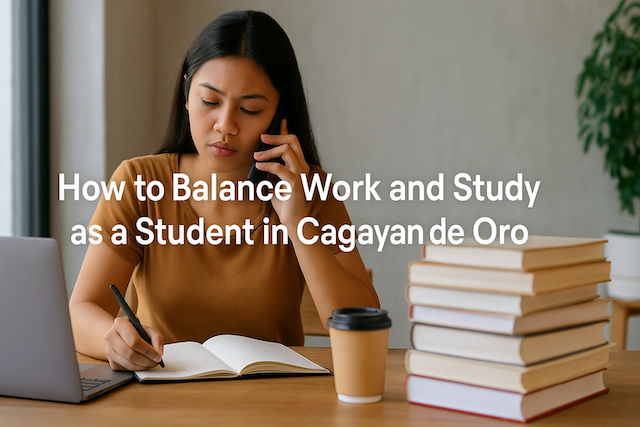
How to Balance Work and Study as a Student in Cagayan de Oro
Contents
- How to Balance Work and Study as a Student in Cagayan de Oro
- Why Students in Cagayan de Oro Choose to Work While Studying
- Common Part-Time Jobs Available to Students in CDO
- Challenges of Working While Studying in CDO
- Essential Strategies to Balance Work and Study Effectively
- Create a Clear Weekly Schedule
- Choose the Right Kind of Job
- Set Clear Academic Priorities
- Improve Your Time-Management Skills
- Make Use of Campus Resources
- Learn to Say “No”
- Communicate with Your Employer
- Take Care of Your Health
- Build a Support System
- Know Your Limits and Adjust as Needed
- Tips Specific to Cagayan de Oro Students
- Managing Stress While Balancing Work and Study
- Financial Planning Tips for Working Students
- Creating a Sustainable Routine
- When Is It Time to Quit or Change Jobs?
- Final Thoughts: Balance Is Achievable
- FAQs (Frequently Asked Questions)
- Is it realistic to work and study at the same time in Cagayan de Oro?
- What are the best types of jobs for students in Cagayan de Oro?
- How many hours per week should a student work while studying?
- How can I create a balanced weekly schedule?
- What should I do if my work schedule conflicts with my classes?
- How can I stay productive when I am tired from work and school?
- What are signs that I am not balancing work and study well?
- How can I avoid burnout as a working student?
- What local factors in Cagayan de Oro should I consider when planning my schedule?
- How can I talk to my employer about being a working student?
- What if my grades start to drop because of my job?
- How can I manage my finances better as a working student?
- Is it better to prioritize a higher salary or a flexible schedule?
- Can working while studying improve my future career opportunities?
How to Balance Work and Study as a Student in Cagayan de Oro
Balancing work and study is one of the biggest challenges for students in Cagayan de Oro—especially those juggling part-time jobs, internships, or freelance work while pursuing their degree. The good news: thousands of students in the city successfully manage both every year. With the right planning, strategies, and mindset, you can earn an income and stay on top of your academic responsibilities without burning out.
This guide explains practical techniques, time-management systems, and local CDO-specific tips to help you achieve a healthy and productive work-study balance.
Why Students in Cagayan de Oro Choose to Work While Studying
Many students in CDO work part-time or online for several reasons:
● To support living expenses
Dorms, transportation, and food can add up quickly, especially for students living away from home.
● To gain professional experience
Local companies in uptown and downtown CDO often prefer applicants with work exposure.
● To build career-ready skills
Customer service, communication, tech, and multitasking skills are highly valued in the city’s growing BPO and service industries.
● To earn extra allowance
Many students choose freelance or gig jobs to cover personal expenses.
Common Part-Time Jobs Available to Students in CDO
Balancing work and study becomes easier when you find flexible jobs. In Cagayan de Oro, students commonly work as:
-
Call center agents (night or mid-shift schedules)
-
Café and restaurant staff
-
Tutors (English, Math, Science)
-
Freelancers (writing, design, social media)
-
Retail helpers (malls, convenience stores)
-
Interns in offices near Divisoria, Corrales Ave., and Uptown
These jobs offer flexible hours, making it possible to prioritize classes while still earning.
Challenges of Working While Studying in CDO
Balancing both worlds is rewarding but not always easy. Students often face:
● Time constraints
Managing class requirements, work hours, and personal life can feel overwhelming.
● Burnout
Without rest, students may experience exhaustion, poor sleep, and reduced productivity.
● Conflicting schedules
Some shifts may overlap with important classes or exams.
● Transportation difficulties
During peak hours, traffic between Downtown, Uptown, and Carmen can cause delays.
Understanding these challenges helps you set realistic expectations before committing to a job.
Essential Strategies to Balance Work and Study Effectively
Below are proven methods used by many successful students in CDO to handle their dual responsibilities.
Create a Clear Weekly Schedule
Planning is the foundation of balance.
● List all your fixed commitments
Include class schedules, work shifts, organization meetings, and deadlines.
● Use planners or digital tools
Google Calendar, Notion, and simple spreadsheets work well.
● Block time for study sessions
Even one hour per subject daily reduces last-minute cramming.
● Schedule breaks
Rest prevents burnout and maintains long-term productivity.
Choose the Right Kind of Job
Not all jobs suit student life.
● Prioritize flexible work
Look for part-time or freelance options.
● Consider work near your school
Minimizing travel time increases available study time.
● Ask for academic-friendly shifts
Many employers in CDO (especially cafés and BPOs) hire students with flexible availability.
● Evaluate workload carefully
A job should support your education—not disrupt it.
Set Clear Academic Priorities
Your degree should remain your primary goal.
● Identify your “non-negotiable” academic tasks
For example: major exams, group project meetings, thesis consultations.
● Avoid skipping important classes
Attendance matters in most colleges in CDO and affects grades.
● Talk to professors when overloaded
Many instructors understand working students and may offer guidance.
Improve Your Time-Management Skills
Time management is a skill you build over time.
● Use the Pomodoro Technique
Study for 25 minutes, break for 5.
● Practice task batching
Group similar tasks (readings, assignments, emails) to save mental energy.
● Set deadlines earlier than required
This avoids cramming and late submissions.
● Track your peak productivity hours
Some students study best at night; others prefer early mornings.
Make Use of Campus Resources
Most universities in CDO provide support systems for working students.
● Libraries and study areas
Excellent for quiet study sessions before or after work.
● Guidance and counseling offices
Helpful for stress management and academic planning.
● Student organizations
These can provide peer support, networking, or mentorship.
● E-learning platforms
Some professors upload lectures or notes online, allowing flexible studying.
Learn to Say “No”
You cannot do everything.
● Avoid taking too many shifts
Extra income is tempting, but grades may suffer.
Balance does not mean sacrificing everything—just choosing wisely.
● Don’t volunteer for too many group roles
Participate, but manage responsibilities realistically.
Communicate with Your Employer
Honesty helps build a healthy work relationship.
● Inform them of exam weeks early
Many CDO employers are considerate when students communicate in advance.
● Request schedule adjustments if needed
Especially during finals or thesis season.
● Ask about workload expectations
Clarify responsibilities to avoid misunderstandings later.
Take Care of Your Health
Working students often struggle with stress and lack of sleep. To stay balanced:
-
Sleep at least 6–8 hours
-
Eat regular meals (not just snacks from convenience stores or cafés)
-
Drink enough water
-
Do small physical activities (walks, stretching)
-
Avoid burnout by taking rest days
Good health directly improves concentration and productivity.
Build a Support System
You do not need to balance everything alone.
● Rely on classmates for reminders or updates
Group chats help keep track of assignments.
● Ask family for support
Even small help—like meal prep or allowance during exam weeks—makes a difference.
They will understand if you decline plans due to work and school.
● Connect with fellow working students
They can offer tips and moral support.
Know Your Limits and Adjust as Needed
Balance is personal and changes every semester.
● Reflect every few weeks
Ask yourself:
-
Are my grades suffering?
-
Am I too tired?
-
Am I enjoying both work and school?
● Reduce shifts if overwhelmed
Your long-term success is more important than short-term income.
● Consider alternative jobs
Sometimes the issue is not working—but working in the wrong environment.
Tips Specific to Cagayan de Oro Students
Here are local strategies that help students in CDO maintain balance:
● Avoid rush-hour commute
Travel between Uptown and Downtown takes longer between 5 PM and 8 PM.
● Find 24/7 study spots
Several cafés and coworking spaces near Divisoria and Corrales stay open late for students.
● Study during downtime
If you work in a café or retail shop, slow hours can be used for reading (with employer permission).
● Live near your school if possible
Carmen, Lapasan, Divisoria, and Uptown have many convenient boarding houses.
● Make use of city-wide Wi-Fi spots
Especially in malls or public areas when you need quick online access.
Managing Stress While Balancing Work and Study
Stress is normal—but manageable.
● Practice relaxation techniques
Deep breathing, stretching, or short meditation.
● Maintain hobbies
Music, gaming, reading, or sports can reduce pressure.
● Avoid comparing yourself with others
Every student’s situation is different.
● Seek professional help if overwhelmed
Campus counseling offices are confidential and free.
Financial Planning Tips for Working Students
Working helps you earn, but smart budgeting ensures your money lasts.
● Track expenses
Food, dorm rent, transportation, school supplies.
● Save portions of your salary
Even small savings matter.
● Avoid impulsive purchases
Unnecessary café drinks or gadgets can ruin your budget.
● Use student discounts
Many shops, gyms, and transportation options offer student rates.
Creating a Sustainable Routine
A long-term routine helps maintain balance.
● Stick to regular sleep and wake times
Consistency is better than pulling all-nighters.
● Use Sundays for planning
Prepare schedules and tasks for the week ahead.
● Meal prep if possible
Pre-packed meals save time and money.
● Clean your study area
A clutter-free desk improves focus.
When Is It Time to Quit or Change Jobs?
Sometimes, leaving a job is the best decision for your studies.
● If your grades drop significantly
Academics should always take priority.
● If you experience constant burnout
Mental health matters.
● If your job offers no flexibility
Rigid schedules make balancing impossible.
● If the environment becomes toxic
Work should not put your well-being at risk.
Final Thoughts: Balance Is Achievable
Working while studying in Cagayan de Oro can be challenging, but with the right strategies, mindset, and support system, you can succeed in both areas. Remember that balance does not look the same for everyone—adjust your routine, communicate with your employer, and take care of your well-being.
Your goal is not just to survive student life but to build a foundation for your future career. With discipline, planning, and resilience, you can achieve your academic goals while gaining valuable work experience in Cagayan de Oro.
FAQs (Frequently Asked Questions)
Is it realistic to work and study at the same time in Cagayan de Oro?
Yes, it is realistic as long as you plan your time carefully and choose a job that matches your schedule. Many students in Cagayan de Oro successfully balance part-time work and college, especially those who use planners, communicate openly with employers, and prioritize major academic requirements. However, it requires discipline, self-awareness, and a willingness to adjust when you feel overwhelmed.
What are the best types of jobs for students in Cagayan de Oro?
The best jobs for students are those that offer flexible schedules and are located near school areas. Common options include part-time café or restaurant staff, call center agents with student-friendly shifts, tutors (online or face-to-face), retail staff in malls, freelance writers or designers, and administrative interns in offices. Jobs that allow evening or weekend work often fit better with daytime class schedules.
How many hours per week should a student work while studying?
There is no fixed number that fits everyone, but many students find that working 10 to 20 hours per week is manageable while maintaining good grades. If your course load is heavy or you have a thesis, you may need fewer hours. If you work more than 20 to 25 hours weekly, you might experience fatigue, lower concentration, and declining academic performance, so you should regularly review and adjust your schedule.
How can I create a balanced weekly schedule?
Start by listing all fixed commitments such as class schedules, laboratory hours, and regular meetings. Next, add your work shifts and travel time between home, school, and workplace. Then, block dedicated study periods for each subject, ideally in smaller sessions rather than one long session. Finally, add time for rest, meals, and personal activities. Using digital tools like Google Calendar or a simple notebook can help you visualize your week and avoid overbooking yourself.
What should I do if my work schedule conflicts with my classes?
If you notice a potential conflict, address it early. First, check if you can swap shifts with a coworker or request a schedule change from your employer, explaining that your class is a requirement. Many employers in Cagayan de Oro understand the needs of working students. If the conflict continues and affects important classes or exams, you may need to reduce your hours or consider changing jobs to protect your academic standing.
How can I stay productive when I am tired from work and school?
To stay productive, focus on small, manageable tasks instead of long, demanding sessions. Use techniques like the Pomodoro method, where you study for 25 minutes and rest for 5 minutes. Prioritize tasks that are due soon or have the biggest impact on your grades. Also, protect your sleep as much as possible, eat regular meals, and stay hydrated. Short power naps and light exercise, like walking or stretching, can also boost your energy.
What are signs that I am not balancing work and study well?
Common warning signs include constantly missing deadlines, frequently skipping classes, feeling too exhausted to focus, getting lower grades than usual, and feeling stressed or irritable most of the time. If you are using your work shifts as a reason to avoid school responsibilities, or you have no time to rest or socialize, it may mean your current balance is not sustainable. At that point, you should reconsider your workload and make adjustments.
How can I avoid burnout as a working student?
To avoid burnout, you need regular rest, realistic expectations, and boundaries. Schedule at least one period each week where you do not work or study, and use it to relax or enjoy a hobby. Learn to say no to extra shifts or unnecessary social activities when your schedule is already full. Stay connected to supportive friends, family, or mentors who understand your situation. If you feel emotionally or mentally overwhelmed, consider visiting your school’s guidance or counseling office for professional support.
What local factors in Cagayan de Oro should I consider when planning my schedule?
In Cagayan de Oro, you should consider travel time between Uptown, Downtown, and areas like Carmen, since traffic can be heavy during rush hours. If you study or work in different districts, allow extra time for commuting. You can also take advantage of 24/7 or late-night study spots, such as certain cafés or coworking spaces near major universities and business districts. Choosing a dorm or boarding house near your school or workplace can significantly reduce commuting stress.
How can I talk to my employer about being a working student?
When talking to your employer, be honest, respectful, and clear. Explain your class schedule, exam dates, and major academic commitments as early as possible. Show that you are committed to your job by being punctual and responsible, but also emphasize that your education is your priority. You can suggest specific shifts that work best for you or offer to be flexible during non-peak academic periods, such as semestral breaks.
What if my grades start to drop because of my job?
If your grades decline, treat it as a serious signal that change is needed. First, analyze which subjects are most affected and why. Then, consider reducing your work hours, rearranging shifts, or temporarily focusing more on your studies during exam or project periods. You may also talk to your professors for guidance and ask if there are ways to improve your performance. If necessary, be prepared to switch to a more flexible job or pause working for a while to recover your academic standing.
How can I manage my finances better as a working student?
Start by tracking all your income and expenses, including rent, food, transportation, school fees, and personal spending. Use a simple notebook or budgeting app to monitor where your money goes. Set a monthly limit for non-essential spending, such as eating out or entertainment. Allocate a portion of your salary for savings, even if it is a small amount. Taking advantage of student discounts, cooking your own meals, and sharing accommodation can also reduce costs and make your earnings go further.
Is it better to prioritize a higher salary or a flexible schedule?
For most students, a flexible schedule is more important than a higher salary. A job that pays slightly less but allows you to attend classes, study properly, and rest will be more sustainable in the long term. Your main investment is your education, which can lead to better career opportunities in the future. A high-paying job that damages your grades or health is rarely worth the trade-off.
Can working while studying improve my future career opportunities?
Yes, working while studying can significantly improve your future career prospects. Employers often value applicants who have demonstrated responsibility, time management, and real-world experience. Jobs in customer service, BPO, tutoring, or office work can help you build communication skills, problem-solving abilities, and professionalism. When combined with good academic performance, this experience can make you stand out in Cagayan de Oro’s competitive job market after graduation.
Cagayan de Oro University Guide: Best Schools, Tuition, Courses, and Student Life

How to Register for eTravel Philippines (2025 Guide)
Step-by-step guide to completing your eTravel registration before arriving in the Philippines, with images and tips.

Night Market in Cebu – Things You Don’t Know About Cebu Life
Discover the hidden charm of Cebu’s night markets, from street food stalls to local life tips you won’t find in tourist guides.

How to Use ChatGPT for IELTS Preparation: A Complete Guide
Learn how to prepare for IELTS using ChatGPT — including strategies for Writing, Reading, Listening, Speaking, and grammar support.

How to Build a Website Without Coding Using ChatGPT
Discover how to build your own website using AI—no coding skills needed. From structure planning to SEO and design, let ChatGPT guide you.