2025年12月15日
3D ACADEMY offers affordable English study programs in Cebu, Philippines – perfect for beginners, professionals, and exam takers.

3D UNIVERSAL ENGLISH INSTITUTE INC
info.3d-universal.com
8:00-17:00(Mon-Fri)
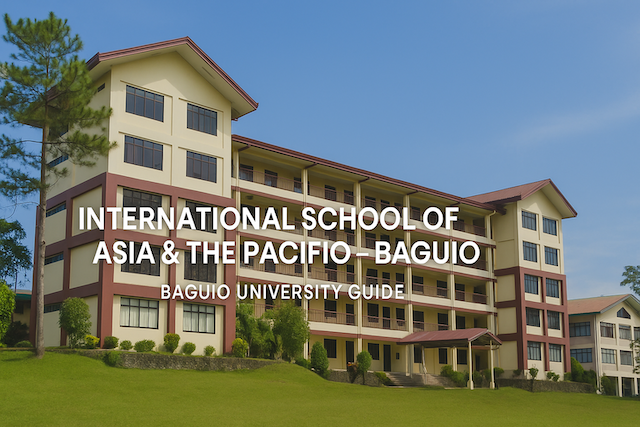
International School of Asia & the Pacific – Baguio: Baguio University Guide
Contents
- International School of Asia & the Pacific – Baguio: Baguio University Guide
- Overview of the International School of Asia & the Pacific (ISAP) – Baguio
- History and Mission
- Academic Programs Offered in ISAP – Baguio
- Teaching Approach and Learning Environment
- Campus Facilities and Resources
- Student Life at ISAP – Baguio
- Admissions Process at ISAP – Baguio
- Tuition Fees and Financial Aid
- Career Opportunities for ISAP Graduates
- Why Choose ISAP – Baguio?
- Tips for Students Planning to Enroll
- FAQs (Frequently Asked Questions)
International School of Asia & the Pacific – Baguio: Baguio University Guide
Overview of the International School of Asia & the Pacific (ISAP) – Baguio
The International School of Asia & the Pacific (ISAP) is a respected higher education institution known for its expanding academic programs, industry-aligned training, and commitment to global competitiveness. While its main campus is located in Tabuk City, Kalinga, ISAP has established a strong educational presence in Baguio City by offering selected undergraduate, graduate, and professional development programs designed to serve the region’s growing student population.
Baguio City is one of the Philippines’ major education hubs, often called the “Summer Capital of Learning.” ISAP’s presence in the city aims to bring its hallmark approach—affordable, quality, and skill-focused education—to students seeking specialized study tracks in business, criminology, education, and technological fields.
This guide provides a detailed look at ISAP–Baguio, its offered programs, campus environment, admissions procedures, tuition expectations, and student life to help prospective students make an informed decision.
History and Mission
ISAP was founded with the mission of expanding access to globally competitive education in Northern Luzon. Its philosophy centers on industry integration, ensuring students are trained not only with theoretical knowledge but also with practical competencies relevant to modern workplaces.
The Baguio extension enhances this mission by connecting students to one of the country’s most dynamic academic communities. The city’s environment supports ISAP’s goal of developing graduates with strong academic foundations, professional readiness, and social responsibility.
Academic Programs Offered in ISAP – Baguio
ISAP offers a range of academic programs tailored to current career demands. Depending on the term and academic calendar, Baguio offerings may vary, but the programs commonly include:
Bachelor’s Degree Programs
-
BS Criminology
One of ISAP’s flagship programs, known for rigorous academic training, physical fitness preparation, and exposure to criminology-related fields such as forensic science, law enforcement, and corrections. -
BS Business Administration (BSBA)
Designed to train professionals in management, marketing, finance, and entrepreneurship, with emphasis on practical business applications and industry immersion. -
Bachelor of Elementary Education (BEEd)
Prepares future educators with skills in child development, pedagogy, and curriculum design, aligned with DepEd and PRC standards. -
Bachelor of Secondary Education (BSEd)
Offers majors such as English, Mathematics, or Social Studies, depending on availability. The program focuses on teaching methodologies and student engagement strategies.
Technical and Vocational Courses
ISAP is also known for TESDA-accredited programs, including:
-
Information Technology courses
-
Caregiving programs
-
Hospitality-related NCs (National Certificates)
These courses are popular among students pursuing faster employment opportunities or international certification pathways.
Graduate and Modular Programs
Depending on term schedules, ISAP Baguio may also host:
-
Master of Arts in Education (MAEd)
-
Professional advancement workshops
-
Licensure exam review programs
Teaching Approach and Learning Environment
ISAP emphasizes practical, skills-oriented education. Their learning approach includes:
Hands-On Training
Laboratory work, simulations, field activities, and community engagement are embedded in many programs.
Industry Partnerships
Students benefit from established internship networks across businesses, government agencies, schools, and public safety institutions.
Flexible Learning Modalities
ISAP offers blended and modular approaches when necessary, accommodating working students and those with unique schedules.
Campus Facilities and Resources
While the ISAP Baguio extension campus is smaller than the main campus, it still provides essential facilities that support academic life:
Classrooms and Lecture Halls
Equipped with multimedia tools for presentations, lectures, and collaborative learning.
Criminology Training Areas
Spaces designated for physical training, tactical exercises, and criminology laboratory activities.
Library and Study Areas
Resource materials for general education, teacher education, business, and criminology are available, alongside quiet study zones.
Computer Laboratories
Used for IT subjects, business analytics tasks, and TESDA technical programs.
Student Services Office
Handles enrollment assistance, scholarships, guidance counseling, and student concerns.
Multipurpose Spaces
Areas used for seminars, orientations, and student organization events.
Student Life at ISAP – Baguio
One of the advantages of studying in Baguio is access to a vibrant academic community. ISAP students in Baguio can experience:
Clubs and Student Organizations
Academic societies, sports groups, and service-oriented clubs foster leadership and teamwork.
Citywide Academic Culture
Baguio is home to many universities, creating a youthful atmosphere filled with academic events, competitions, and cultural exchanges.
Cool Climate and Study-Friendly Environment
The city’s mild weather and laid-back lifestyle help students focus better and maintain work–life balance.
Convenient Surroundings
Dorms, apartments, cafés, and study hubs are widely available around the city, making daily student life comfortable and affordable.
Admissions Process at ISAP – Baguio
Admissions are generally open to all students who meet academic requirements. The typical application process includes:
1. Submission of Requirements
Common requirements:
-
High school report card (Form 138) or college transcript
-
PSA birth certificate
-
Certificate of Good Moral Character
-
2×2 ID photos
-
Application form
2. Entrance Evaluation
Some programs, such as Criminology or Education, may require:
-
Physical fitness screening
-
Interview
-
Orientation attendance
3. Enrollment
Once accepted, students proceed with:
-
Subject advising
-
Payment of tuition fees
-
Issuance of class schedules
ISAP also supports transferees, second coursers, and working students.
Tuition Fees and Financial Aid
ISAP is known for affordable tuition rates, often lower than many private institutions in Baguio. Tuition varies by program but typically includes:
-
Miscellaneous fees
-
Laboratory fees (for Criminology and IT programs)
-
Installment options
Scholarship Opportunities
-
Academic scholarships for high-performing students
-
Financial assistance for low-income families
-
Discounts for siblings
-
Government programs such as TESDA scholarships or CHED support, depending on availability
Career Opportunities for ISAP Graduates
ISAP graduates are prepared for roles in industries that require practical knowledge and professional readiness.
Criminology Graduates
-
Police force
-
NBI or PDEA
-
Forensic units
-
Security and investigation agencies
-
Correctional institutions
Business Administration Graduates
-
Corporate management
-
Retail and entrepreneurship
-
Marketing and sales
-
Finance and HR positions
Education Graduates
-
Public school teaching (after passing LET)
-
Private school teaching
-
Tutorial services
-
Curriculum support roles
Technical–Vocational Graduates
-
Hospitality and tourism jobs
-
Overseas caregiving roles
-
IT support positions
ISAP’s applied learning model equips students with job-ready skills, increasing employability both locally and abroad.
Why Choose ISAP – Baguio?
Students select ISAP for several compelling reasons:
Affordable yet quality education
The institution offers competitive programs without the high costs associated with larger private universities.
Skills-based training
Ideal for students who want practical preparation aligned with industry needs.
Good location in Baguio
Access to a thriving academic ecosystem and comfortable lifestyle.
Supportive community atmosphere
Small class sizes and approachable faculty foster personalized learning.
Recognized programs
Criminology, Business, and Education programs have strong reputation in the region.
Tips for Students Planning to Enroll
-
Visit the campus to understand the environment and meet staff.
-
Prepare documents early, especially for courses requiring physical exams or screening.
-
Explore housing options around Baguio to find affordable accommodation.
-
Ask about scholarships, as some slots are limited.
-
Stay updated on program announcements through ISAP’s official social media.
FAQs (Frequently Asked Questions)
Q1: Where is the International School of Asia & the Pacific (ISAP) – Baguio located?
The International School of Asia & the Pacific (ISAP) – Baguio operates as an extension of ISAP’s main campus in Northern Luzon. The Baguio site is typically situated within the city’s academic districts, close to other schools, boarding houses, and student-friendly establishments. For the exact address and updated directions, applicants are encouraged to check the official ISAP announcements or contact the campus directly, as specific building locations or leased premises may change over time.
Q2: What degree programs are commonly offered at ISAP – Baguio?
ISAP – Baguio generally offers programs that reflect the institution’s strengths and regional demand. Common undergraduate programs include BS Criminology, BS Business Administration, Bachelor of Elementary Education (BEEd), and Bachelor of Secondary Education (BSEd), depending on term availability. In addition, some technical–vocational and TESDA-accredited programs in areas such as information technology, caregiving, and hospitality may also be offered at the Baguio site. For each academic year, the officially offered programs are listed in ISAP’s current prospectus or enrollment announcements.
Q3: Is ISAP – Baguio a good choice for criminology students?
Yes. ISAP is widely known for its criminology offerings. The BS Criminology program is designed to prepare students for careers in law enforcement, forensic science, corrections, and related fields. Training often combines classroom lectures, physical fitness activities, simulation exercises, and exposure to agencies such as the police or security institutions. Students who are serious about passing the criminologist licensure exam and entering public safety careers typically find ISAP’s practical and disciplined approach beneficial.
Q4: What is student life like in Baguio for ISAP enrollees?
Student life in Baguio is generally vibrant and community-oriented. ISAP – Baguio students enjoy the cool climate, numerous cafés and study spaces, and the presence of many nearby universities. This environment creates a strong academic culture where reviews, group studies, and inter-school events are common. Outside of classes, students can join clubs, participate in school activities, explore parks and local markets, and enjoy the city’s relatively safe and student-friendly atmosphere. The combination of urban convenience and laid-back lifestyle makes Baguio a comfortable place to study and live.
Q5: How much are the tuition fees at ISAP – Baguio?
Tuition at ISAP – Baguio is typically more affordable than many larger private universities in the city. Exact amounts depend on the program, number of units, and any associated laboratory or miscellaneous fees. Criminology and IT programs may have additional costs for specialized equipment or activities. The school often allows installment plans to make payments more manageable for families. To get accurate figures, prospective students should request the latest schedule of fees from the registrar or admissions office.
Q6: Are there scholarships or financial assistance options available?
Yes. ISAP usually offers several forms of financial support. These may include academic scholarships for honor students, discounts for siblings, and limited slots for working students or those with financial need. Depending on the year, students may also access government-sponsored programs such as TESDA scholarships for technical courses or financial aid from CHED, if applicable. Because slots can be competitive and requirements may change, it is important to inquire early during the enrollment period and submit required documents on time.
Q7: What are the admission requirements for new college students?
Typical requirements for incoming freshmen include a high school report card or senior high school Form 138, a PSA birth certificate, certificate of good moral character, application forms, and ID photographs. Some programs may also ask for a medical certificate or physical fitness clearance, especially for BS Criminology. In addition, applicants might need to attend an orientation or undergo an interview. International or non-Filipino students may be asked to submit extra documents such as passport copies or visa-related papers.
Q8: Does ISAP – Baguio accept transferees and second coursers?
ISAP – Baguio generally welcomes transferees and second-course applicants, subject to evaluation of their previous academic records. Transferees must submit an official transcript of records (TOR), honorable dismissal, and course descriptions for credit evaluation. The dean or program head will then determine which subjects can be credited and which must be retaken. Second coursers who already hold a degree may be allowed to fast-track some requirements, especially for education units or related fields, depending on institutional policies.
Q9: Are there dormitories or student housing facilities connected to ISAP – Baguio?
The Baguio campus itself may not operate its own large dormitory complex, but it is surrounded by numerous boarding houses, apartments, and dorm-style accommodations that cater to students from different schools. Many ISAP–Baguio students rent rooms within walking distance or a short jeepney ride from the campus. Rental prices vary depending on room size, shared amenities, and proximity to main roads. First-time students are encouraged to visit Baguio in advance, inspect potential housing, and prioritize safety, cleanliness, and accessibility to the campus.
Q10: What career paths can ISAP – Baguio graduates pursue?
Career paths depend on the chosen program. BS Criminology graduates may enter law enforcement agencies, forensic units, private security firms, or correctional institutions, and can pursue roles such as police officer, investigator, or safety officer after meeting government requirements. Business administration graduates can work in management, marketing, HR, finance, or start their own business. Education graduates may teach in public or private schools after passing the Licensure Examination for Teachers (LET). Technical–vocational graduates can find opportunities in hospitality, caregiving, and IT support, both locally and abroad.
Q11: How does ISAP – Baguio support students’ academic success?
ISAP – Baguio supports student success through structured curricula, approachable faculty, and student services such as academic advising and guidance counseling. Many programs integrate review sessions, practicum, and on-the-job training to help students transition smoothly from school to employment. The school also promotes discipline and professionalism, which are crucial for careers in criminology, education, and business. Students who actively attend classes, participate in required activities, and communicate with their instructors often find that the learning environment is supportive and encouraging.
Q12: How can I get the latest updates about ISAP – Baguio admissions and schedules?
The most reliable way to get updated information is through ISAP’s official communication channels. These may include the main institutional website, official Facebook page, or designated contact numbers and email addresses. Since program offerings, schedules, and policies can change from year to year, prospective and current students should always rely on official announcements rather than unofficial social media posts or second-hand information.
Baguio University Guide
Baguio Province All Universities Lists
Philippines University Guide

How to Register for eTravel Philippines (2025 Guide)
Step-by-step guide to completing your eTravel registration before arriving in the Philippines, with images and tips.

Night Market in Cebu – Things You Don’t Know About Cebu Life
Discover the hidden charm of Cebu’s night markets, from street food stalls to local life tips you won’t find in tourist guides.

How to Use ChatGPT for IELTS Preparation: A Complete Guide
Learn how to prepare for IELTS using ChatGPT — including strategies for Writing, Reading, Listening, Speaking, and grammar support.

How to Build a Website Without Coding Using ChatGPT
Discover how to build your own website using AI—no coding skills needed. From structure planning to SEO and design, let ChatGPT guide you.