2025年12月15日
3D ACADEMY offers affordable English study programs in Cebu, Philippines – perfect for beginners, professionals, and exam takers.

3D UNIVERSAL ENGLISH INSTITUTE INC
info.3d-universal.com
8:00-17:00(Mon-Fri)
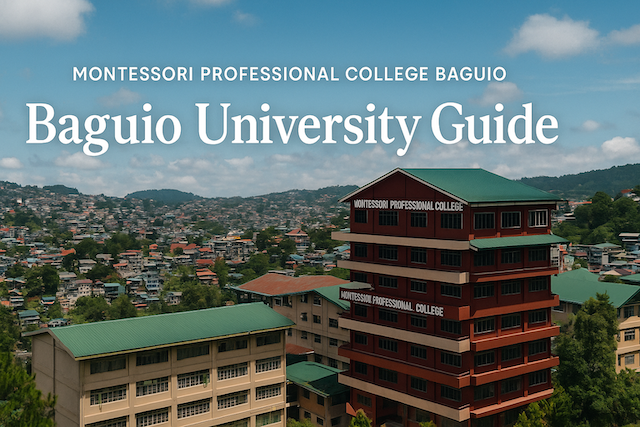
Montessori Professional College Baguio: Baguio University Guide
Contents
- Montessori Professional College Baguio: Baguio University Guide
- Overview of Montessori Professional College Baguio
- Academic Philosophy and Educational Approach
- Programs Offered at Montessori Professional College Baguio
- Campus Facilities and Learning Environment
- Student Life at Montessori Professional College Baguio
- Industry Connections and Employment Opportunities
- Admission Requirements and Enrollment Process
- Tuition Fees and Financial Assistance
- Why Choose Montessori Professional College Baguio?
- Final Thoughts
- FAQs (Frequently Asked Questions)
- What is Montessori Professional College Baguio known for?
- Is Montessori Professional College Baguio a university?
- What types of courses and programs are offered?
- Are the programs TESDA-accredited?
- Who is the ideal student for Montessori Professional College Baguio?
- What are the general admission requirements?
- How much are the tuition fees?
- Are scholarships or financial assistance available?
- What language is used in the classroom?
- Is Montessori Professional College Baguio suitable for international students?
- Does the school provide dormitories or on-campus housing?
- What are the usual class schedules? Can I study while working?
- What kind of jobs can graduates get after finishing their course?
- How can I get more detailed and updated information?
Montessori Professional College Baguio: Baguio University Guide
Montessori Professional College Baguio is one of the city’s established institutions specializing in technical–vocational education grounded in Montessori-inspired learning principles. Known for its holistic approach, competency-based curriculum, and strong industry alignment, the college serves students who seek practical skills and career-ready training in a structured and supportive environment.
This guide provides an in-depth look at the institution, its programs, facilities, student life, admission procedures, and what to expect if you plan to study at Montessori Professional College Baguio.
Overview of Montessori Professional College Baguio
Montessori Professional College (MPC) is part of the broader Montessori Professional Colleges network in the Philippines, recognized for delivering high-quality vocational and professional programs. While the term “Montessori” typically invokes early childhood education, the college adapts Montessori principles—such as independent learning, hands-on practice, and personalized instruction—to older learners preparing for professional careers.
In the Baguio campus, students experience a calm, supportive learning environment that aligns well with the city’s academic culture. MPC Baguio focuses on job-ready skills, offering short courses, diploma programs, and TESDA-accredited certifications tailored to industries such as hospitality, business, health services, and technology.
Academic Philosophy and Educational Approach
Montessori Professional College follows a learner-centered model that emphasizes:
Hands-On, Experiential Learning
Students spend significant time in simulated work environments—such as mock hotel front desks, training kitchens, and computer labs—where they practice real-world tasks similar to those they will perform in future employment.
Personalized Instruction
Class sizes are typically small, ensuring students receive individualized support from instructors. This allows learners to progress at a pace that matches their strengths and learning style.
Competency-Based Evaluation
Instead of purely theoretical exams, students are assessed on practical demonstrations, projects, and real-world scenarios. This method aligns with TESDA’s national competency standards.
Character and Work Ethics Development
The college also places importance on discipline, professionalism, and values formation—key qualities employers look for in technical-vocational graduates.
Programs Offered at Montessori Professional College Baguio
While specific offerings may vary annually, the Baguio campus commonly features the following types of programs:
TESDA National Certificate (NC) Courses
These include popular industry-aligned certifications such as:
-
Cookery NC II – A practical program focusing on food preparation, kitchen operations, and culinary fundamentals.
-
Bread and Pastry Production NC II – Ideal for aspiring bakers and pastry chefs.
-
Housekeeping NC II – Covers room preparation, cleaning procedures, laundry services, and guest service standards.
-
Front Office Services NC II – Training students for hotel reception work, guest assistance, and administrative operations.
-
Food and Beverage Services NC II – A foundational course for restaurant service and bar operations.
-
Bookkeeping NC III – A strong fit for those aiming for an accounting support role.
-
Computer Systems Servicing NC II – Geared toward IT support and hardware troubleshooting.
TESDA courses are particularly attractive because they are recognized nationwide and are often required by employers locally and overseas.
Diploma and Certificate Programs
Beyond TESDA offerings, MPC may offer professional diploma programs in hospitality, business, and technology. These programs tend to be longer and more comprehensive than short courses, combining theory with intensive practicum hours.
Short Courses and Skill-Up Programs
Popular among working learners, these courses include basic computer skills, office applications, customer service training, and entrepreneurship modules.
Campus Facilities and Learning Environment
Montessori Professional College Baguio provides a conducive learning environment with facilities designed for hands-on training. Students can expect:
Hospitality Training Facilities
Simulated hotel rooms, housekeeping labs, a front office mock-up, and dining service areas.
Culinary and Baking Laboratories
Well-equipped kitchens where students practice food preparation, cooking techniques, and pastry-making.
Computer Laboratories
Updated computer labs to support IT programs and courses focused on digital literacy.
Classrooms and Activity Rooms
Clean, organized classrooms designed to promote concentration and student engagement.
Student Services
These may include:
-
Academic advising
-
Career placement assistance
-
Administrative support for TESDA assessments
-
Orientation and values seminars
Because the campus is located in Baguio, students enjoy the benefits of a cool climate, a safe academic atmosphere, and access to affordable living options.
Student Life at Montessori Professional College Baguio
While MPC is primarily focused on technical and vocational training rather than traditional college life, students still experience a vibrant and supportive atmosphere.
A Diverse Student Population
Learners come from various backgrounds—fresh high school graduates, working students, career shifters, and individuals preparing for overseas employment.
Practical, Real-World Training
Many programs include internships or supervised industry immersion, allowing students to gain firsthand experience in hotels, restaurants, offices, or IT shops.
Values and Personal Development
MPC emphasizes discipline and professionalism, reinforcing soft skills crucial for workplace success.
Flexibility
Short-course schedules often accommodate working students, allowing them to balance employment and study.
Industry Connections and Employment Opportunities
Montessori Professional College Baguio maintains partnerships with local businesses, hospitality establishments, and service-sector organizations, ensuring students have access to:
-
On-the-job training opportunities
-
Apprenticeship placements
-
Potential employment leads after graduation
TESDA-certified graduates from MPC are equipped to pursue careers both in the Philippines and abroad, especially in hospitality, food service, caregiving, business support, and IT.
Admission Requirements and Enrollment Process
Admissions at MPC Baguio are generally open and straightforward. While requirements may vary slightly per program, students typically need:
Basic Requirements
-
Completed application form
-
High school report card or transcript (for diploma programs)
-
PSA birth certificate
-
1–2 valid IDs
-
Passport-sized photos
TESDA programs often accept students regardless of age or previous educational background as long as they meet basic literacy requirements.
Enrollment Steps
-
Inquiry and orientation – Visit the campus or contact the registrar to learn available courses.
-
Submit requirements – Provide personal documents and fill out forms.
-
Assessment and interview – Some programs require brief evaluations.
-
Payment of tuition fees – Installment options may be available.
-
Start of training – Students receive schedules and course modules.
Tuition Fees and Financial Assistance
Tuition at Montessori Professional College is generally affordable compared to private universities, reflecting its technical-vocational orientation. Fees vary by program, but TESDA courses are typically short-term, making them accessible to many learners.
TESDA Scholarships
The campus may offer TESDA-sponsored slots such as:
-
TWSP (Training for Work Scholarship Program)
-
STEP (Special Training for Employment Program)
-
PESFA (Private Education Student Financial Assistance)
These scholarships can significantly reduce or fully cover tuition for qualified students.
Why Choose Montessori Professional College Baguio?
Here are some compelling reasons students consider MPC Baguio:
Strong Focus on Practical Skills
Programs are designed to quickly prepare you for employment.
TESDA Accreditation
Nationally recognized certifications open doors locally and internationally.
Affordable Tuition
Ideal for budget-conscious students seeking fast, job-ready training.
Personalized Attention
Small classes ensure individualized feedback and mentorship.
Montessori-Inspired Approach
A structured yet flexible learning environment promotes independence and confidence.
Final Thoughts
Montessori Professional College Baguio stands out as a practical, career-focused institution offering students a pathway into various industries through hands-on training and accredited certifications. Its emphasis on values, discipline, and experiential learning makes it an excellent choice for those seeking accessible and effective vocational education in Baguio City.
If you are planning to enter the workforce quickly or develop specialized skills for career advancement, MPC Baguio provides the training and support needed to reach your goals.
FAQs (Frequently Asked Questions)
What is Montessori Professional College Baguio known for?
Montessori Professional College Baguio is known for its focus on technical–vocational education with a strong practical orientation.
The campus emphasizes hands-on training, small class sizes, and value formation, helping students build concrete skills for employment
in industries such as hospitality, culinary arts, business services, and information technology. It is a good choice for learners who
want job-ready training rather than a traditional four-year academic program.
Is Montessori Professional College Baguio a university?
No, Montessori Professional College Baguio is not a traditional university. It is a technical–vocational institution that offers
TESDA-accredited programs, diplomas, and short courses focused on specific skills. Instead of long, theory-heavy degrees, the college
provides competency-based training aimed at helping students qualify for employment more quickly, both locally and abroad.
What types of courses and programs are offered?
The college typically offers TESDA National Certificate (NC) programs such as Cookery NC II, Bread and Pastry Production NC II,
Housekeeping NC II, Front Office Services NC II, Food and Beverage Services NC II, Bookkeeping NC III, and Computer Systems Servicing NC II.
In addition, it may offer diploma programs in hospitality, business, and technology, as well as short courses on computer skills,
customer service, and other professional competencies. Specific offerings can change, so it is always best to confirm directly with the campus.
Are the programs TESDA-accredited?
Yes, one of the strengths of Montessori Professional College Baguio is its TESDA-accredited training programs. This means that courses
follow national competency standards and qualify students to take TESDA assessment exams. Graduates who pass these assessments receive
National Certificates (NC) recognized across the Philippines and valued by employers, including those recruiting for overseas positions.
Who is the ideal student for Montessori Professional College Baguio?
The ideal student is someone who wants practical, hands-on training and aims to enter the workforce as soon as possible. This includes
fresh high school graduates, career shifters, working learners looking to upgrade skills, and individuals preparing for overseas
employment. The college is also suitable for students who prefer smaller classes, more personalized guidance, and structured,
skills-based learning rather than a purely academic environment.
What are the general admission requirements?
Admission requirements may vary by program, but students are usually asked to submit a completed application form, their high school
report card or transcript (for diploma programs), a PSA birth certificate, valid identification, and recent ID photos. Some courses
may require interviews or basic skills assessments. For TESDA programs, the minimum requirement is often basic literacy and interest
in the chosen field, making the programs accessible to a wide range of learners.
How much are the tuition fees?
Tuition fees at Montessori Professional College Baguio are generally more affordable than those of full-fledged universities because
the programs are shorter and focused on specific competencies. However, exact costs depend on the course, duration, and materials
required. Prospective students should contact the registrar or admissions office for updated fee schedules and information on
possible installment options.
Are scholarships or financial assistance available?
Yes, students may be able to access financial assistance through TESDA scholarship programs, depending on availability and government
funding. Examples include the Training for Work Scholarship Program (TWSP), Special Training for Employment Program (STEP), and other
local or national initiatives. These scholarships can partially or fully cover tuition and sometimes provide allowances. Applicants
are encouraged to inquire early, as scholarship slots are usually limited and competitive.
What language is used in the classroom?
English is commonly used as the primary language of instruction, especially in subjects related to hospitality, business, and
international employment. Filipino may also be used to clarify concepts and support understanding, especially for beginners.
This bilingual approach helps students build workplace-appropriate communication skills while also ensuring that lessons remain
clear and accessible.
Is Montessori Professional College Baguio suitable for international students?
International students may find the programs attractive, particularly if they are interested in TESDA-recognized vocational
qualifications or wish to gain practical skills in a more affordable setting. However, foreign applicants should confirm visa
requirements, language expectations, and any additional documentation needed for enrollment. It is recommended to contact the
school in advance to clarify policies for non-Filipino students.
Does the school provide dormitories or on-campus housing?
Montessori Professional College Baguio does not typically operate its own dormitory, but students have access to a wide range of
boarding houses, apartments, and shared accommodations around the city. Baguio is a well-known education hub, so there are many
affordable lodging options within commuting distance. The school’s staff can often provide basic guidance or referrals, but housing
is usually arranged directly by the student or their family.
What are the usual class schedules? Can I study while working?
Many programs at Montessori Professional College Baguio are designed with flexibility in mind. Classes may be held during regular
daytime hours, but some short courses or TESDA programs offer schedules that work for part-time students and working adults.
Because of the modular nature of the training, it is often possible to balance work and study, depending on the specific course and
the student’s time management.
What kind of jobs can graduates get after finishing their course?
Graduates can pursue entry-level positions in hotels, resorts, restaurants, cafés, bakeries, corporate offices, and IT service
shops, depending on their chosen program. Typical roles include hotel room attendant, front desk staff, food and beverage server,
kitchen crew, baker, bookkeeping assistant, and computer technician. With experience and additional training, many graduates move on
to supervisory roles or use their skills as a stepping stone to overseas employment or entrepreneurship.
How can I get more detailed and updated information?
For the latest list of programs, schedules, tuition fees, and scholarship opportunities, it is best to contact Montessori Professional
College Baguio directly through their official phone numbers, social media page, or campus office. Because course offerings and
financial aid options can change over time, direct communication ensures that you receive accurate, up-to-date information tailored
to your situation.
Baguio University Guide
Baguio Province All Universities Lists
Philippines University Guide

How to Register for eTravel Philippines (2025 Guide)
Step-by-step guide to completing your eTravel registration before arriving in the Philippines, with images and tips.

Night Market in Cebu – Things You Don’t Know About Cebu Life
Discover the hidden charm of Cebu’s night markets, from street food stalls to local life tips you won’t find in tourist guides.

How to Use ChatGPT for IELTS Preparation: A Complete Guide
Learn how to prepare for IELTS using ChatGPT — including strategies for Writing, Reading, Listening, Speaking, and grammar support.

How to Build a Website Without Coding Using ChatGPT
Discover how to build your own website using AI—no coding skills needed. From structure planning to SEO and design, let ChatGPT guide you.