2026年4月3日
3D ACADEMY offers affordable English study programs in Cebu, Philippines – perfect for beginners, professionals, and exam takers.

3D UNIVERSAL ENGLISH INSTITUTE INC
info.3d-universal.com
8:00-17:00(Mon-Fri)
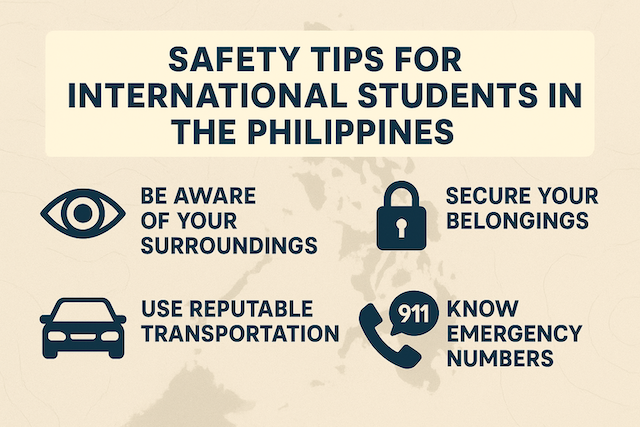
Safety Tips for International Students in the Philippines
Contents
- Safety Tips for International Students in the Philippines
- Understanding General Safety in the Philippines
- Choosing Safe Accommodation
- Transportation Safety
- Personal Safety and Street Awareness
- Online and Financial Safety
- Health and Medical Safety
- Safety on Campus
- Natural Disaster Preparedness
- Cultural Sensitivity and Social Safety
- Safety When Going Out and Socializing
- Legal and Document Safety
- Building a Safety Network
- Final Thoughts
- FAQs
- Is the Philippines safe for international students?
- Which neighborhoods should I prioritize for student housing?
- How can I evaluate if an apartment is secure?
- What transportation options are safest?
- Is it okay to travel late at night?
- How do I protect my phone, laptop, and valuables?
- What should I know about health insurance and medical care?
- How can I prepare for typhoons, floods, and earthquakes?
- How do I avoid scams—online and offline?
- What are smart money and ATM habits?
- Which documents should I carry daily, and how do I keep them safe?
- How do I stay safe on campus and in student groups?
- Any cultural or social media tips that affect safety?
- What numbers should be in my emergency list, and what do I say?
Safety Tips for International Students in the Philippines
Studying abroad in the Philippines offers a rich cultural experience, affordable education, and a welcoming community. However, as with any foreign destination, international students should prioritize safety to ensure a positive and worry-free stay. From understanding local norms to navigating transportation and housing, here are essential safety tips for international students living and studying in the Philippines.
Understanding General Safety in the Philippines
The Philippines is known for its hospitality and friendliness, but it is also a diverse country where safety levels can vary by region. Metro areas like Manila, Cebu, and Davao are generally safe for students, especially in school zones and business districts. Still, petty crimes like pickpocketing, bag-snatching, and online scams can occur.
Students should stay alert in crowded areas, use secure transportation, and avoid poorly lit streets at night. Keeping updated with local news, following your university’s safety guidelines, and registering with your embassy are also highly recommended.
Choosing Safe Accommodation
Selecting the right accommodation is one of the most critical safety decisions for international students.
1. University-Approved Dormitories
Most universities in the Philippines offer on-campus dorms or have partnerships with nearby private dormitories. These are often the safest options since they are managed and monitored by the school administration.
2. Secure Condominiums or Apartments
If you prefer independent living, choose condominiums with 24-hour security, CCTV, gated entrances, and visitor logs. Areas near universities like Quezon City (for Manila universities) or Lahug (for Cebu schools) are popular for their student-friendly and secure housing.
3. Inspect Before Renting
Always inspect the property before signing a lease. Check if doors and windows have locks, ask about emergency exits, and verify if the neighborhood is well-lit and close to main roads. Avoid isolated areas, even if rent is cheaper.
Transportation Safety
1. Using Grab or Registered Taxis
Grab (the local ride-hailing app) is the safest and most convenient transportation option. Always verify the driver’s details before entering the vehicle. If using a taxi, choose one from official taxi stands and ensure the meter is running.
2. Be Cautious with Jeepneys and Buses
Jeepneys are affordable and part of local culture, but pickpocketing can happen in crowded vehicles. Keep valuables in front pockets or small bags that you can hold securely. For long-distance buses, choose reputable companies like Ceres Bus or Victory Liner.
3. Avoid Late-Night Travel
Try not to travel alone late at night, especially in less crowded areas. If unavoidable, inform a friend or roommate of your route and estimated time of arrival.
Personal Safety and Street Awareness
1. Stay Alert and Confident
When walking on the streets, maintain awareness of your surroundings. Avoid displaying expensive jewelry, gadgets, or large amounts of cash.
2. Avoid Street Gambling or Strangers Offering Help
Scams targeting foreigners can involve fake lotteries, street games, or overly friendly strangers. Be polite but cautious when approached by unknown individuals.
3. Emergency Contacts
Save emergency numbers in your phone:
-
Police: 117 or 911
-
Fire Department: 160
-
Ambulance: 16911
-
Tourist Police: 524-1660 (for Manila)
Also, keep your university’s emergency hotline handy.
Online and Financial Safety
1. Beware of Scams
Online scams involving rental payments, scholarships, or part-time job offers are common. Only send payments to verified accounts and through trusted platforms.
2. Protect Your Identity
Do not share passport details, student IDs, or personal information on unverified websites or with strangers.
3. Use Secure Payment Methods
When paying tuition, rent, or online purchases, use official bank transfers or credit card systems. Avoid sending money via informal channels.
Health and Medical Safety
1. Enroll in Health Insurance
Most universities require international students to have health insurance. Confirm that your plan covers hospitalization, emergencies, and COVID-related treatment.
2. Know the Nearest Hospital
Familiarize yourself with the nearest accredited hospitals or clinics. In major cities, top hospitals include St. Luke’s Medical Center (Manila), Chong Hua Hospital (Cebu), and Davao Doctors Hospital (Davao).
3. Stay Hydrated and Eat Safely
The Philippines is a tropical country, so drink plenty of water and avoid street food that looks unhygienic. Wash fruits and vegetables thoroughly.
Safety on Campus
1. Follow University Safety Policies
Attend your university’s orientation programs. These sessions often include emergency drills, safety contacts, and local regulations.
2. Use Campus Security Services
Many campuses have 24-hour security and shuttle services. Use these when walking late or carrying valuables.
3. Report Suspicious Activities
If you notice suspicious behavior or theft on campus, report it to the security office immediately.
Natural Disaster Preparedness
The Philippines is prone to typhoons, earthquakes, and floods. Preparedness can make a huge difference.
1. Stay Informed
Download apps like PHIVOLCS Earthquake Alert or NOAH for disaster warnings.
2. Have an Emergency Kit
Keep essentials such as a flashlight, first-aid kit, bottled water, snacks, and important documents in one bag.
3. Know Evacuation Procedures
Universities usually have designated evacuation areas. Familiarize yourself with these routes early on.
Cultural Sensitivity and Social Safety
1. Respect Local Customs
Filipinos value politeness and respect. Avoid public arguments or offensive jokes, especially about religion or culture.
2. Dress Appropriately
While the Philippines is modern and open-minded, modest clothing is appreciated in schools, churches, and government offices.
3. Social Media Conduct
Be cautious about posting sensitive or political opinions online. Always consider local perspectives before engaging in online discussions.
Safety When Going Out and Socializing
1. Nightlife Awareness
If you go out with friends, watch your drink, and never leave it unattended. Avoid accepting drinks from strangers.
2. Use the Buddy System
Always go out with someone you trust. Having a companion reduces the risk of getting lost or encountering trouble.
3. Know Your Limits
Be mindful when drinking alcohol or participating in outdoor activities. Some beach and party areas may have strong local liquors unfamiliar to foreigners.
Legal and Document Safety
1. Keep Copies of Important Documents
Make digital and printed copies of your passport, student visa, and ID. Store them separately from the originals.
2. Know Local Laws
Avoid involvement in drugs, gambling, or unlicensed work. The penalties are strict and could result in deportation.
3. Register with Your Embassy
This helps your embassy contact you during emergencies or natural disasters.
Building a Safety Network
1. Connect with Other International Students
Join international student associations or university clubs. They often share safety updates and support each other.
2. Keep in Touch with Locals
Building friendships with local classmates can help you navigate the area better and learn safe practices.
3. Stay in Contact with Family
Regularly update your family about your whereabouts, especially during travel or long weekends.
Final Thoughts
Living in the Philippines as an international student can be a rewarding experience full of learning, growth, and adventure. While the country is generally safe, being proactive about your well-being is essential. By choosing safe accommodation, being street-smart, staying informed, and respecting local culture, you can focus on your studies and enjoy your stay without unnecessary risks.
FAQs
Is the Philippines safe for international students?
Yes—most university districts in cities like Manila, Cebu, and Davao are generally safe when you use common sense. Petty theft (phone or wallet snatching) is the most common risk in crowded spaces. Stay aware, keep valuables out of sight, use trusted transportation, and follow your school’s safety advisories. Register with your embassy and save emergency contacts for added peace of mind.
Which neighborhoods should I prioritize for student housing?
Look for areas near your campus with good lighting, frequent foot traffic, and 24/7 building security. University-approved dorms and modern condominiums with guards, CCTV, and visitor logs are ideal. In Metro Manila, pockets of Quezon City, Pasig, and Manila proper near universities are popular; in Cebu, Lahug and IT Park are student-friendly. Visit at different times of day to gauge safety and noise.
How can I evaluate if an apartment is secure?
Check that doors and windows have deadbolts and intact screens, corridors are well-lit, fire exits are accessible, and guards enforce ID and visitor logs. Ask about backup power, water pressure, flood history, and CCTV coverage. Test mobile reception inside the unit. Speak with existing tenants and read reviews. If the landlord won’t allow a thorough inspection, consider that a red flag.
What transportation options are safest?
Grab (ride-hailing) and registered metered taxis are typically safest, especially at night. For public transport, keep bags in front and phones out of sight on jeepneys and buses. Buy tickets from official counters at bus terminals and ferry ports. Avoid motorbike back rides without helmets. Share your ride details with a friend, and confirm the plate number before boarding.
Is it okay to travel late at night?
Limit solo late-night travel when possible. If you must, use Grab or a reputable taxi service, choose well-lit pickup points, and notify a friend of your route and ETA. Avoid isolated streets and shortcuts. In nightlife areas, pace alcohol intake, keep your drink in sight, and leave as a group. If something feels off, trust your instincts and change course.
How do I protect my phone, laptop, and valuables?
Carry only what you need, keep gadgets zipped away, and use anti-theft bags in crowds. In cafes and libraries, don’t leave items unattended—not even briefly. At home, store passports and spare cash in a lockable drawer or safe. Enable device tracking, set strong passcodes, and back up important files. Consider inexpensive, non-flashy accessories to avoid drawing attention.
What should I know about health insurance and medical care?
Ensure your insurance covers emergency treatment, hospitalization, and outpatient care in the Philippines. Keep a digital copy of your policy and ID on your phone. Identify nearby hospitals and school clinics on day one. Stay hydrated, use sun protection, and choose reputable food stalls. If you have ongoing prescriptions, bring a doctor’s note and learn local generic names for your medications.
How can I prepare for typhoons, floods, and earthquakes?
Create a small go-bag with water, snacks, power bank, flashlight, basic first aid, and copies of documents. Learn your building’s evacuation routes and campus muster points. Follow local weather and hazard alerts from official sources. During typhoons, avoid coastal areas, flooded roads, and hanging power lines. After earthquakes, evacuate calmly, watch for aftershocks, and check your residence for visible damage.
How do I avoid scams—online and offline?
Use official websites and counters for tuition, visa fees, ticketing, and rent payments. Be wary of “too good to be true” apartment deals, fake job offers, and unsolicited investment pitches. Decline street games and lotteries. Never share passport scans or bank details on unverified links. For marketplace transactions, meet in public places and prefer cashless payments with proof of receipt.
What are smart money and ATM habits?
Withdraw at ATMs inside banks or malls with guards. Shield your PIN, and avoid counting cash in public. Split funds between accounts and keep a small emergency stash in your room. Use contactless or mobile payments when available. For large transfers (tuition, rent), use bank-to-bank or reputable remittance services. Keep transaction records and verify recipient details twice.
Which documents should I carry daily, and how do I keep them safe?
Carry a soft copy of your passport and visa plus your student ID; keep the original passport secured at home unless required for official appointments. Store digital backups of IDs, insurance, and academic records in encrypted cloud storage. When traveling domestically, bring government-required IDs and printed tickets. Report lost documents immediately to your school, police, and embassy.
How do I stay safe on campus and in student groups?
Attend orientation, save campus security numbers, and note guard posts and clinic locations. Use university escorts or shuttles after dark when available. Report suspicious behavior, lost items, or harassment to campus authorities right away. In group projects and socials, agree on meet-up points and check-in times. Respect community rules—most incidents are prevented by early reporting and situational awareness.
Be polite, avoid heated arguments in public, and dress modestly in schools, churches, and government offices. Before posting political or sensitive content, consider local context and your digital footprint. Limit geotagging in real time, and review privacy settings on your apps. If you face online harassment, document it, block/report, and inform your university’s support services.
What numbers should be in my emergency list, and what do I say?
Save: 911 (national emergency), your university security, nearest hospital, embassy/consulate, landlord/dorm manager, and two local friends. When calling, state your name, location (landmarks help), nature of the emergency, and any injuries or hazards. If you feel followed, seek a well-lit store or guard post and call for help. After incidents, file a report and inform your school.
Philippines University Guide: Top Universities, Admissions, Scholarships, and Student Life

How to Register for eTravel Philippines (2025 Guide)
Step-by-step guide to completing your eTravel registration before arriving in the Philippines, with images and tips.

Night Market in Cebu – Things You Don’t Know About Cebu Life
Discover the hidden charm of Cebu’s night markets, from street food stalls to local life tips you won’t find in tourist guides.

How to Use ChatGPT for IELTS Preparation: A Complete Guide
Learn how to prepare for IELTS using ChatGPT — including strategies for Writing, Reading, Listening, Speaking, and grammar support.

How to Build a Website Without Coding Using ChatGPT
Discover how to build your own website using AI—no coding skills needed. From structure planning to SEO and design, let ChatGPT guide you.