2026年4月5日
3D ACADEMY offers affordable English study programs in Cebu, Philippines – perfect for beginners, professionals, and exam takers.

3D UNIVERSAL ENGLISH INSTITUTE INC
info.3d-universal.com
8:00-17:00(Mon-Fri)
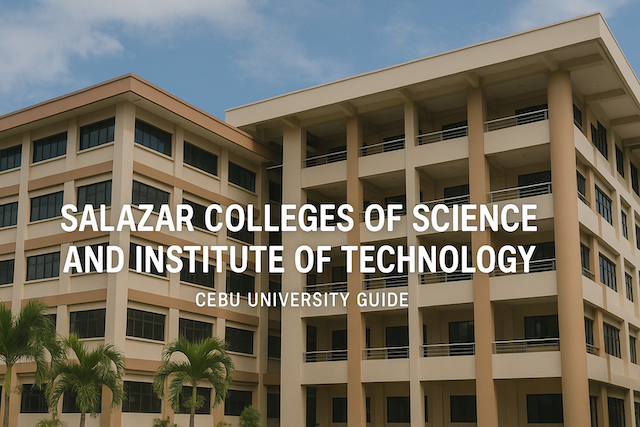
Salazar Colleges of Science and Institute of Technology: Cebu University Guide
Contents
- Salazar Colleges of Science and Institute of Technology: Cebu University Guide
- Overview of Salazar Colleges of Science and Institute of Technology
- Location and Accessibility
- Academic Programs Offered
- Technical-Vocational Programs (TESDA)
- Undergraduate Degree Programs
- Senior High School Tracks
- Tuition Fees and Cost of Studying
- Campus Facilities
- Student Life and Culture
- Strengths of SCSIT
- Weaknesses or Limitations
- Admission Process
- Who Should Choose SCSIT?
- Nearby Areas and Student Convenience
- Career Paths for SCSIT Graduates
- Overall Assessment
- FAQs (Frequently Asked Questions)
- Where is Salazar Colleges of Science and Institute of Technology located in Cebu?
- What types of programs does SCSIT offer?
- Is SCSIT an affordable school compared to other Cebu universities?
- What kind of students is SCSIT best suited for?
- How is the campus environment and safety around SCSIT?
- Does SCSIT have modern facilities and large campuses?
- Are the TESDA and technical courses at SCSIT helpful for working abroad?
- What career paths do SCSIT graduates usually pursue?
- Is SCSIT a good choice for students who want a prestigious university name?
- What should students consider before enrolling at SCSIT?
- Can international students or non-Cebu residents study at SCSIT?
Salazar Colleges of Science and Institute of Technology: Cebu University Guide
Salazar Colleges of Science and Institute of Technology (SCSIT) is one of Cebu City’s long-standing institutions offering a mix of technical-vocational programs, business courses, maritime studies, education degrees, and health sciences. Known for its affordability and accessibility, SCSIT attracts students from Cebu City and nearby provinces who seek practical, career-oriented education that prepares them for employment or certifications in local and international industries.
This comprehensive Cebu University Guide explores SCSIT’s programs, campus environment, tuition expectations, student life, admission process, and whether the school is a good fit for your educational goals in 2025 and beyond.
Overview of Salazar Colleges of Science and Institute of Technology
SCSIT is a private non-sectarian institution that has grown steadily over several decades. It is recognized for offering highly accessible tuition rates while maintaining TESDA-accredited programs and CHED-recognized college degrees. Many students choose SCSIT because it strikes a balance between cost efficiency and practical curriculum design, especially in fields like maritime, technology, and business.
The school emphasizes job-readiness, technical proficiency, and foundational knowledge that align with the needs of Cebu’s workforce. For many families, SCSIT represents an opportunity to pursue higher education without the financial burden common in major universities.
Location and Accessibility
SCSIT is primarily located in Colon Street, Cebu City’s historic and commercial district. Its central location offers several advantages:
-
Easy access to jeepney routes and public transportation.
-
Close proximity to public markets, groceries, and affordable eateries.
-
Walking distance to major downtown landmarks.
-
Convenient for students from Cebu South Bus Terminal or nearby municipalities.
However, the area is busy and crowded, which may be overwhelming for students who prefer a quieter academic environment. Still, the accessibility is one of the school’s strongest selling points.
Academic Programs Offered
SCSIT provides a broad spectrum of educational programs that cater to different student goals—from those pursuing short-term certifications to those entering 4-year degree courses. Below is an overview of the major offerings.
Technical-Vocational Programs (TESDA)
These programs attract many students because they lead to quick employment opportunities and globally recognized certifications.
Popular TESDA Courses
-
Automotive Servicing
-
Electrical Installation and Maintenance
-
Computer Systems Servicing
-
Welding and Fabrication Technology
-
Health Care Services
-
Bookkeeping
-
Hospitality and Restaurant Services
These courses are competency-based and ideal for students planning to work locally or abroad, especially in fields requiring hands-on skills.
Undergraduate Degree Programs
SCSIT offers CHED-recognized college degrees in various fields.
College of Business and Management
-
Bachelor of Science in Business Administration (BSBA)
-
Bachelor of Science in Office Administration (BSOA)
-
Bachelor of Science in Accounting Technology
Programs focus on practical applications such as entrepreneurship, sales, office systems, and management skills.
College of Education
-
Bachelor of Elementary Education (BEEd)
-
Bachelor of Secondary Education (BSEd) – Various majors
Graduates from these programs pursue teaching careers in both public and private schools.
College of Information Technology
-
Bachelor of Science in Information Technology (BSIT)
-
Bachelor of Science in Computer Science (BSCS)
These courses are relevant given Cebu’s booming IT-BPO industry and software development scene.
Maritime Programs
-
Bachelor of Science in Marine Transportation
-
Bachelor of Science in Marine Engineering
SCSIT’s maritime offerings are particularly popular due to high employability in maritime industries and competitive tuition fees compared to specialized maritime academies.
Health and Allied Programs
-
Midwifery
-
Caregiving
-
Other health-related short courses
These programs are attractive to students seeking caregiving roles abroad or healthcare support positions.
Senior High School Tracks
SCSIT also provides SHS tracks under the K–12 curriculum:
-
Academic Track (ABM, HUMSS, STEM may vary by year)
-
TVL Track (ICT, Home Economics, Industrial Arts)
-
Maritime SHS strands
This makes the school a full educational pathway provider from SHS to college.
Tuition Fees and Cost of Studying
SCSIT is known for its budget-friendly tuition structure.
Estimated Tuition Range
-
College programs: Typically lower than many private Cebu institutions
-
TESDA courses: Usually affordable, often with scholarship availability
-
Maritime programs: Higher than business or education programs, but still more affordable compared to large maritime academies
Students often choose SCSIT for the combination of low tuition, installment options, and government financial aid opportunities.
Campus Facilities
Given its downtown location, SCSIT operates facilities that prioritize functionality over aesthetics. While it may not have the modern amenities of premium universities, it provides what students generally need for their program requirements.
Key Facilities
-
Standard classrooms
-
Computer laboratories
-
Maritime training equipment (may partner with external facilities)
-
TESDA workshops and training centers
-
Library and reading areas
-
Multipurpose halls
-
Administrative and student service offices
Facilities vary depending on campus buildings, but most are designed to support technical and vocational training.
Student Life and Culture
SCSIT has a practical, down-to-earth student culture. Most students choose the school because of affordability, skill-focused education, and convenience.
What to Expect
-
A diverse student body from various socioeconomic backgrounds.
-
A fast-paced environment due to its downtown location.
-
Limited non-academic activities compared to larger universities.
-
A student community focused primarily on academics and work-preparation.
Still, student organizations, extracurricular activities, and student services exist to enrich campus life.
Strengths of SCSIT
1. Affordability
One of the most affordable private institutions in Cebu City.
2. Strong TESDA and Technical Programs
SCSIT excels in short-course and skills-based training programs valuable in today’s job market.
3. Strategic Location
Being in downtown Cebu makes commuting easy for most students.
4. Maritime Pathways
Accessible and relevant maritime programs open international employment opportunities.
5. Flexible Admission
SCSIT is known for student-friendly enrollment policies.
Weaknesses or Limitations
1. Limited Modern Facilities
Compared to larger Cebu universities, facilities may feel basic.
2. Crowded Urban Environment
The campus surroundings can be noisy and congested.
3. Fewer Academic Research Opportunities
SCSIT focuses more on practical learning than research initiatives.
4. Less Competitive Branding
May not carry the same name power as universities like USC, UC, or CIT-U.
Admission Process
SCSIT’s admission process is straightforward and ideal for students seeking a hassle-free enrollment.
Typical Requirements
-
High school report card
-
PSA birth certificate
-
Good moral certificate
-
2×2 or passport-size photos
-
For transferees: Transcript of Records or Honorable Dismissal
Enrollment Steps
-
Submit required documents.
-
Fill out enrollment forms.
-
Pay initial fees (installment options often available).
-
Attend orientation and class scheduling.
Entrance exams may not be required for several programs.
Who Should Choose SCSIT?
SCSIT is a good match for students who:
-
Need an affordable college or TESDA program.
-
Prefer hands-on technical education.
-
Are preparing for quick employment.
-
Want accessible and flexible school policies.
-
Are pursuing maritime careers without paying premium tuition fees.
-
Live near downtown Cebu and prefer commuting convenience.
It may not be ideal for students seeking advanced research facilities, modern campuses, or competitive academic prestige.
Nearby Areas and Student Convenience
Colon Street offers a mix of advantages and challenges.
Advantages
-
Inexpensive food stalls
-
Access to bookstores, markets, and supermarkets
-
Affordable dormitories and boarding houses
-
Easy transport connections
Challenges
-
Heavy foot traffic
-
Busy urban environment
-
Occasional safety concerns at night
Many students choose to live close by to minimize commuting and reduce expenses.
Career Paths for SCSIT Graduates
Graduates can enter various industries depending on their program:
Business
-
Office administration
-
Sales and marketing
-
Accounting support roles
Information Technology
-
IT service desks
-
Network support
-
Technical troubleshooting
Maritime
-
Seafarer careers
-
Marine engineering roles
Technical-Vocational
-
Skilled trades
-
Automotive and welding
-
Electrical installation
-
Hospitality services
Education
-
Teaching roles in basic education
SCSIT’s strong vocational orientation often leads graduates directly into employment.
Overall Assessment
Salazar Colleges of Science and Institute of Technology plays an important role in Cebu’s education ecosystem by providing budget-friendly and skills-oriented pathways. While it may not have the prestige of larger universities, it excels in offering accessible education with practical outcomes. For students seeking value, convenience, and technical readiness, SCSIT is a strong option in Cebu City.
If your goal is to gain employable skills quickly, work abroad through maritime or caregiving programs, or pursue a degree without excessive costs, SCSIT provides a dependable and realistic pathway.
FAQs (Frequently Asked Questions)
Where is Salazar Colleges of Science and Institute of Technology located in Cebu?
Salazar Colleges of Science and Institute of Technology (SCSIT) is primarily located along Colon Street in downtown Cebu City.
This area is one of the busiest commercial districts in the city, surrounded by shops, markets, and transport terminals.
Because of its central location, students can easily ride jeepneys, buses, or taxis from many parts of Metro Cebu.
However, the environment can be crowded and noisy, so students should be prepared for an urban campus feel with a lot of foot traffic.
What types of programs does SCSIT offer?
SCSIT offers a mix of technical-vocational courses, senior high school tracks, and college degree programs.
You can find TESDA-accredited programs in areas such as automotive servicing, welding, computer systems servicing, hospitality, and health care.
For college, there are CHED-recognized courses in business administration, office administration, education, information technology, maritime studies, and health-related programs.
This variety allows students to choose between short-term skills training and longer 4-year degree paths, depending on their goals and budget.
Is SCSIT an affordable school compared to other Cebu universities?
Yes, SCSIT is generally considered more affordable than many other private colleges and universities in Cebu City.
Tuition fees for business, education, and IT programs are usually lower than the city’s major universities, which is a big reason why many working students and provincial families choose SCSIT.
Even its maritime programs, while more expensive than other courses, are still competitively priced compared to specialized maritime academies.
Students can also ask about installment payment options, discounts, and government scholarship programs that may further reduce the cost of studying.
What kind of students is SCSIT best suited for?
SCSIT is ideal for students who are practical, budget-conscious, and career-focused.
It suits those who want to gain employable skills quickly through TESDA courses, as well as those who wish to complete a bachelor’s degree without paying premium university fees.
Many students come from nearby cities and provinces and look for accessible, no-frills education that leads directly to work in business, IT, maritime, or technical fields.
If you are more interested in hands-on training and industry readiness than in campus prestige or research opportunities, SCSIT can be a strong match.
How is the campus environment and safety around SCSIT?
The campus is located in a busy downtown area, so the surroundings are energetic but can also feel hectic.
You will find many street vendors, shops, and commuters in the vicinity, which is convenient but sometimes overwhelming.
As with any urban environment, students are advised to stay alert, secure their belongings, and avoid walking alone late at night in poorly lit areas.
The school typically has security personnel and standard campus safety rules, but personal awareness and responsible behavior are still very important.
Does SCSIT have modern facilities and large campuses?
SCSIT facilities are generally functional rather than luxurious.
You can expect basic classrooms, computer laboratories, TESDA workshops, maritime training resources, and a library or reading spaces.
While you may not see the kind of modern buildings or large open campuses that bigger universities offer, the facilities are designed to support technical and skills-based learning.
For students whose main priority is the training itself rather than the aesthetics of the campus, SCSIT’s setup is usually sufficient and practical.
Are the TESDA and technical courses at SCSIT helpful for working abroad?
Many of SCSIT’s TESDA-aligned and technical-vocational programs aim to prepare students for both local and overseas employment.
Courses in welding, automotive servicing, caregiving, and hospitality services are often recognized in industries that actively hire Filipino workers abroad.
However, students still need to pass national competency assessments and meet the specific requirements of employers or agencies overseas.
SCSIT can provide a strong skills foundation, but it is important to research your target country’s licensing, visa, and employment rules as well.
What career paths do SCSIT graduates usually pursue?
Career paths depend on the program completed.
Business graduates may work in office administration, sales, accounting support, or small business operations.
IT graduates often enter technical support, helpdesk roles, or junior developer and network-related positions in Cebu’s IT-BPO sector.
Maritime graduates can pursue seafaring roles or marine engineering careers on international vessels.
TESDA graduates commonly join trades such as welding, automotive servicing, electrical installation, hospitality, or caregiving, both locally and abroad.
Is SCSIT a good choice for students who want a prestigious university name?
If your top priority is a highly recognized or prestigious university name, SCSIT may not be the first choice compared to institutions like the University of San Carlos, University of Cebu, or CIT University.
SCSIT’s strength lies more in its affordability and skills-focused training rather than in academic branding or research prestige.
That said, for many employers, especially in technical and vocational fields, your practical skills, certifications, and performance during training matter as much as the school name.
Students should carefully match their expectations with what SCSIT realistically offers.
What should students consider before enrolling at SCSIT?
Before enrolling, students should reflect on their long-term goals, financial capacity, and learning preferences.
If you are comfortable studying in a dense urban environment, can manage commuting in downtown Cebu, and are focused on practical training at reasonable cost, SCSIT can be a strong option.
If you are looking for a quieter campus, larger facilities, or a school with a strong research profile and international partnerships, you might want to compare SCSIT with other universities.
Visiting the campus, talking to current students, and reviewing the latest curriculum will help you make an informed decision.
Can international students or non-Cebu residents study at SCSIT?
Yes, non-Cebu residents and, in many cases, foreign students can study at SCSIT as long as they meet the school’s admission and documentary requirements.
Students from other provinces often relocate to Cebu City to take advantage of the school’s affordable tuition and the job opportunities in the region.
International students may need to process additional documents such as student visas and special study permits, following Philippine regulations.
It is advisable to contact the school directly or through their official channels to confirm the most up-to-date requirements and procedures for your specific situation.
Philippines University Guide
Cebu University Guide
Cebu Province All Universities Lists

How to Register for eTravel Philippines (2025 Guide)
Step-by-step guide to completing your eTravel registration before arriving in the Philippines, with images and tips.

Night Market in Cebu – Things You Don’t Know About Cebu Life
Discover the hidden charm of Cebu’s night markets, from street food stalls to local life tips you won’t find in tourist guides.

How to Use ChatGPT for IELTS Preparation: A Complete Guide
Learn how to prepare for IELTS using ChatGPT — including strategies for Writing, Reading, Listening, Speaking, and grammar support.

How to Build a Website Without Coding Using ChatGPT
Discover how to build your own website using AI—no coding skills needed. From structure planning to SEO and design, let ChatGPT guide you.