2026年4月5日
3D ACADEMY offers affordable English study programs in Cebu, Philippines – perfect for beginners, professionals, and exam takers.

3D UNIVERSAL ENGLISH INSTITUTE INC
info.3d-universal.com
8:00-17:00(Mon-Fri)
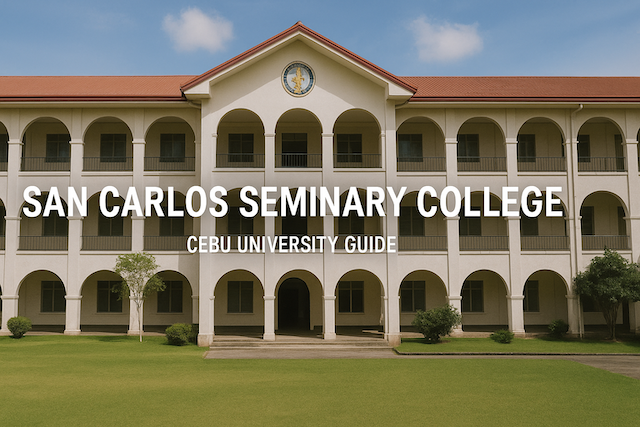
San Carlos Seminary College: Cebu University Guide
Contents
- San Carlos Seminary College: Cebu University Guide
- Overview of San Carlos Seminary College
- History and Mission
- Academic Programs
- Formation Programs
- Campus and Facilities
- Student Life and Community
- Admission Requirements
- Tuition and Financial Assistance
- Career Paths for Graduates
- Why Choose San Carlos Seminary College?
- FAQs (Frequently Asked Questions)
- What type of school is San Carlos Seminary College?
- Is San Carlos Seminary College only for future priests?
- What degree programs are typically offered?
- Where is San Carlos Seminary College located?
- What is student life like at the seminary college?
- Are there dormitories or on-campus housing?
- How does the admission process work for seminarians?
- Can lay students enroll in San Carlos Seminary College?
- What kind of careers can graduates pursue?
- Is financial assistance or scholarship available?
- How can prospective students get more information?
San Carlos Seminary College: Cebu University Guide
Overview of San Carlos Seminary College
San Carlos Seminary College (SCSC) is one of the most respected theological and philosophical institutions in Cebu. Located in Mabolo, Cebu City, the seminary college is part of a long-standing tradition of Catholic education under the Archdiocese of Cebu. The school is known for its comprehensive formation programs that prepare students for priesthood, pastoral ministry, religious life, and advanced ecclesiastical studies.
Although primarily intended for seminarians, the college also welcomes lay students who wish to take courses in philosophy, theology, and religious education. This dual structure enriches the academic environment, bringing together individuals who share a passion for deepening their understanding of faith, ethics, and human development.
San Carlos Seminary College emphasizes holistic formation—integrating intellectual, spiritual, human, and pastoral growth. Students not only gain academic competence but also engage in reflective practices, community service, and leadership development.
History and Mission
San Carlos Seminary College traces its roots to the early missionary efforts in the Visayas. The seminary has played a central role in forming generations of clergy who now serve in various dioceses across the Philippines and abroad.
The institution’s mission aligns with the vision of the Catholic Church: to nurture future leaders grounded in faith and service. Its educational philosophy emphasizes discipline, humility, academic excellence, and devotion to community. San Carlos Seminary College remains committed to producing graduates who embody integrity and compassion.
Academic Programs
San Carlos Seminary College offers a well-rounded academic curriculum aligned with the Commission on Higher Education (CHED) and ecclesiastical standards. Programs focus on philosophy, theology, spirituality, and pastoral ministry.
Bachelor of Arts in Philosophy
The AB Philosophy program is the primary undergraduate course for seminarians. This program provides rigorous training in critical thinking, ethics, metaphysics, logic, and classical philosophical traditions. Students examine Western and Eastern philosophy while engaging in intellectual discourse that strengthens their analytical skills.
Core subjects include:
-
Ethics
-
Logic
-
Metaphysics
-
Ancient and Medieval Philosophy
-
Contemporary Philosophy
-
Philosophy of Religion
-
Filipino Philosophy
The program prepares students for theological studies, teaching, law school, and careers that require advanced reasoning abilities.
Bachelor of Arts in Theology
The Theology program builds upon philosophical foundations and prepares students for Church ministry or advanced religious studies. Coursework includes sacred scripture, dogmatic theology, church history, liturgy, and moral theology.
Key subjects include:
-
Old and New Testament Studies
-
Christology
-
Ecclesiology
-
Sacramental Theology
-
Canon Law
-
Pastoral Theology
-
Homiletics
Students also engage in pastoral immersion activities, including parish assignments, catechetical instruction, and community outreach.
Religious Education and Formation Courses
Lay students who wish to deepen their understanding of faith may take certificate courses or pursue academic tracks related to Religious Education. These programs prepare graduates for work in Catholic schools, parish ministries, and community programs.
Formation Programs
San Carlos Seminary College is known for its holistic formation approach, which integrates four pillars:
-
Human Formation – developing maturity, interpersonal skills, emotional discipline, and leadership.
-
Spiritual Formation – fostering a deeper prayer life, liturgical commitment, retreats, and spiritual direction.
-
Intellectual Formation – strengthening academic rigor through philosophy and theology.
-
Pastoral Formation – engaging in service-oriented activities such as catechism classes, hospital visits, prison ministry, and parish work.
This balanced approach ensures that students grow not only academically but also morally and spiritually.
Campus and Facilities
San Carlos Seminary College features a serene campus environment suitable for prayer, study, and contemplation. Located in Mabolo—a central yet peaceful area—the campus provides easy access to Cebu’s major districts while maintaining a quiet atmosphere conducive to formation.
Key Facilities
-
Chapel and Prayer Rooms – used daily for mass, vespers, and personal prayer.
-
Library – equipped with books on philosophy, theology, pastoral ministry, and Church history.
-
Classrooms and Audio-Visual Facilities – designed for lectures, discussions, and seminars.
-
Dormitory and Residence Areas – available primarily for seminarians undergoing full-time formation.
-
Recreation and Sports Areas – offering spaces for physical wellness, sports, and community events.
-
Counseling and Spiritual Direction Offices – providing guidance for personal and spiritual development.
Student Life and Community
Despite its disciplined and structured environment, San Carlos Seminary College offers a meaningful student experience rooted in brotherhood, faith, and service.
Community-Oriented Activities
-
Retreats and recollections
-
Outreach programs in remote communities
-
Parish involvement including choir, catechism classes, and youth ministry
-
Cultural and academic events such as debates, symposia, and faith-based forums
Students build strong relationships and develop values like humility, responsibility, and teamwork.
Admission Requirements
Admission to San Carlos Seminary College varies depending on whether the applicant is a seminarian candidate or a lay student.
For Seminarians
Applicants seeking priestly formation typically undergo:
-
Vocation seminars
-
Psychological evaluation
-
Recommendation from parish priests
-
Interviews with vocation directors
-
Submission of academic and personal documents
For Lay Students
Lay applicants must submit:
-
High school or college transcripts
-
Entrance exam results (if required)
-
Birth certificate
-
ID photos
-
Application form
Some programs may require interviews or additional documents depending on the level of study.
Tuition and Financial Assistance
San Carlos Seminary College maintains affordable tuition rates and often receives support from the Archdiocese and benefactors. Scholarships may be available for deserving students, especially seminarians undergoing full-time formation. Financial assistance programs vary, so applicants are encouraged to inquire directly with the administration.
Career Paths for Graduates
Graduates of San Carlos Seminary College pursue various roles depending on their academic track.
For Seminarians
-
Priesthood
-
Chaplaincy
-
Missionary work
-
Parish leadership roles
For Lay Graduates
-
Religious Educator or Catechist
-
Catholic School Teacher
-
Guidance Counselor (with further licensure)
-
Pastoral Worker
-
Community Outreach Coordinator
-
Theology or Philosophy Lecturer
The strong foundation in philosophy, ethics, and theology also makes graduates competitive in fields like law, humanities, and public administration.
Why Choose San Carlos Seminary College?
San Carlos Seminary College stands out for several reasons:
-
Strong Catholic identity and formation
-
Academic excellence in philosophy and theology
-
Holistic development focused on spiritual and moral growth
-
Experienced faculty composed of clergy and scholars
-
Tight-knit community that promotes discipline and service
-
Accessible location in Cebu City
For students seeking a deep, meaningful, and faith-centered education, San Carlos Seminary College remains one of the top choices in Cebu.
FAQs (Frequently Asked Questions)
What type of school is San Carlos Seminary College?
San Carlos Seminary College is a Catholic seminary college in Cebu that focuses on philosophy, theology, and religious formation. It primarily serves seminarians who are preparing for the priesthood, but it may also accept lay students who wish to study philosophy, theology, or related fields. The college combines academic learning with spiritual, human, and pastoral formation, offering a community-oriented environment rooted in Catholic values.
Is San Carlos Seminary College only for future priests?
While the main purpose of San Carlos Seminary College is to form candidates for the priesthood, it is not always limited to them. Many seminary colleges in the Philippines, including San Carlos, can open certain courses or programs to lay students who want to deepen their understanding of philosophy, theology, or religious education. However, formation activities such as spiritual exercises, community life, and pastoral work are usually designed especially for seminarians.
What degree programs are typically offered?
San Carlos Seminary College usually offers a Bachelor of Arts in Philosophy as a foundational program for seminarians, and higher studies in Theology for those who progress to major seminary formation. The philosophy program focuses on logic, ethics, metaphysics, ancient and modern philosophy, and the philosophy of religion. The theology program emphasizes scripture, Christology, church history, moral theology, sacraments, and pastoral ministry. Some certificate or non-degree programs in religious education or pastoral formation may also be available for laypersons, depending on the college’s current offerings.
Where is San Carlos Seminary College located?
San Carlos Seminary College is located in Cebu, commonly associated with the Mabolo area of Cebu City. This location makes it relatively accessible from key districts such as the city center, business parks, and residential neighborhoods. At the same time, the campus is designed to maintain a peaceful and reflective environment suited for prayer, study, and formation.
What is student life like at the seminary college?
Student life at San Carlos Seminary College is structured and community-centered. Seminarians follow a daily schedule that balances prayer, liturgy, classes, household responsibilities, and recreation. There are regular masses, community prayers, spiritual direction, and retreats. Students also participate in outreach programs, parish involvement, and pastoral exposure such as teaching catechism or visiting communities. This rhythm of life aims to foster discipline, simplicity of lifestyle, fraternity, and a spirit of service.
Are there dormitories or on-campus housing?
Yes, seminary colleges typically provide on-campus housing for seminarians as part of their formation. Seminarians live in residence halls where they share common areas, prayer spaces, and dining facilities. This residential setup is essential to community living and helps form good habits, responsibility, and accountability. Housing for lay students, if admitted, may be different and is usually subject to the policies of the institution and available space.
How does the admission process work for seminarians?
Applicants who wish to become seminarians usually go through a more intensive admission process than regular college students. This often includes vocation seminars, interviews with vocation directors or formation staff, psychological assessment, and recommendations from parish priests or spiritual mentors. Academic records, baptismal and confirmation certificates, and other personal documents are also required. The goal is to assess not only academic readiness but also personal maturity, faith life, and genuine openness to priestly formation.
Can lay students enroll in San Carlos Seminary College?
In many cases, lay students may be allowed to enroll in certain academic programs, especially in philosophy or theology, if the seminary college opens its courses to them. They usually follow academic requirements similar to those in other higher education institutions, such as submitting transcripts, IDs, and passing interviews or entrance tests if required. However, they may not participate in all aspects of seminary life, such as internal community rules or formation activities meant specifically for seminarians.
What kind of careers can graduates pursue?
For seminarians, the usual path after completing their studies is ordination to the priesthood, followed by assignments in parishes, chaplaincies, or specialized ministries. Some may later pursue advanced studies in canon law, scripture, or theology. For lay graduates who complete degrees in philosophy or theology, possible career paths include teaching in Catholic schools, serving as catechists or religious educators, working in parish pastoral programs, or continuing to graduate studies in related fields. The strong training in critical thinking and ethics can also be a good foundation for professions such as law, public service, or non-profit work.
Is financial assistance or scholarship available?
Many seminary colleges receive support from dioceses, congregations, and benefactors, particularly for seminarians in formation. This support can help reduce the financial burden of tuition, board, and lodging. Some scholarships or sponsorships may be available, especially for deserving students who show both strong vocation and financial need. Lay students who enroll in academic programs may also inquire about tuition discounts or limited scholarships, depending on the policies and resources of the institution.
How can prospective students get more information?
Prospective students can usually contact San Carlos Seminary College through its official office, phone numbers, or email channels. Visiting the campus, if possible, is also helpful to experience the environment firsthand and speak with formation staff or the registrar. Those considering priestly formation are encouraged to talk with their parish priest or vocation director, attend vocation seminars, and spend time in prayer and discernment. For lay students, reaching out to the college administration can clarify available programs, admission timelines, and requirements.
Philippines University Guide
Cebu University Guide
Cebu Province All Universities Lists

How to Register for eTravel Philippines (2025 Guide)
Step-by-step guide to completing your eTravel registration before arriving in the Philippines, with images and tips.

Night Market in Cebu – Things You Don’t Know About Cebu Life
Discover the hidden charm of Cebu’s night markets, from street food stalls to local life tips you won’t find in tourist guides.

How to Use ChatGPT for IELTS Preparation: A Complete Guide
Learn how to prepare for IELTS using ChatGPT — including strategies for Writing, Reading, Listening, Speaking, and grammar support.

How to Build a Website Without Coding Using ChatGPT
Discover how to build your own website using AI—no coding skills needed. From structure planning to SEO and design, let ChatGPT guide you.