2025年12月13日
3D ACADEMY offers affordable English study programs in Cebu, Philippines – perfect for beginners, professionals, and exam takers.

3D UNIVERSAL ENGLISH INSTITUTE INC
info.3d-universal.com
8:00-17:00(Mon-Fri)
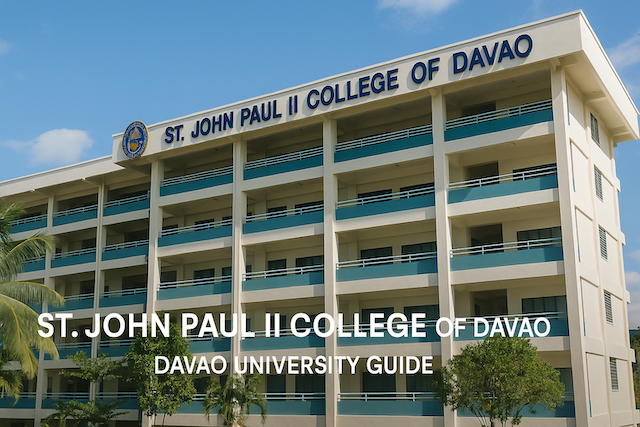
St. John Paul II College of Davao: Davao University Guide
Contents
- St. John Paul II College of Davao: Davao University Guide
- Overview of St. John Paul II College of Davao
- Academic Programs Offered
- Campus Facilities and Learning Environment
- Student Life and Community Culture
- Location and Accessibility
- Tuition, Fees, and Financial Assistance
- Admissions Guide
- Why Choose St. John Paul II College of Davao?
- FAQs (Frequently Asked Questions) about St. John Paul II College of Davao
- What type of school is St. John Paul II College of Davao?
- Where is St. John Paul II College of Davao located?
- What college programs are offered at St. John Paul II College of Davao?
- Does the school offer Senior High School programs?
- Are there TESDA or technical–vocational courses available?
- What is student life like at St. John Paul II College of Davao?
- What facilities can students expect on campus?
- Is St. John Paul II College of Davao affordable?
- Are scholarships or financial assistance programs available?
- How can I apply for admission as a new college student?
- What are the requirements for transferees?
- Is St. John Paul II College of Davao a good choice for international or out-of-town students?
- How can I get more updated information about programs and fees?
St. John Paul II College of Davao: Davao University Guide
St. John Paul II College of Davao (SJPCD) is a well-established private institution located in Ecoland, Davao City. Known for its commitment to holistic education, strong academic programs, and values-oriented formation, the college attracts both local and international students. This comprehensive guide explores its history, campus environment, academic offerings, student life, admission process, and what makes the institution a strong choice for students pursuing higher education in Davao City.
Overview of St. John Paul II College of Davao
St. John Paul II College of Davao was founded to provide accessible, high-quality education grounded in Christian values. The school emphasizes moral development, academic excellence, and community involvement. Over the years, it has expanded its programs and facilities to meet the modern needs of students while advocating discipline, compassion, and leadership inspired by the life and teachings of Pope John Paul II.
Located in the progressive Matina–Ecoland area, the institution benefits from being close to major transport routes, businesses, supermarkets, and residential communities, making it convenient for commuting students.
Academic Programs Offered
SJPCD offers a wide range of programs from basic education to higher education and technical–vocational training. Each program is designed to equip students with relevant skills aligned with current industry demands.
Higher Education Programs
These programs are the core of college-level offerings:
-
Bachelor of Science in Business Administration (BSBA)
-
Majors include Marketing Management, Financial Management, and Human Resource Management.
-
Focuses on foundational business principles, leadership, and entrepreneurship.
-
-
Bachelor of Science in Information Technology (BSIT)
-
Provides strong IT fundamentals, programming, networking, and systems development.
-
Emphasizes practical training and digital competency.
-
-
Bachelor of Arts in Psychology (AB Psychology)
-
Prepares students for careers in counseling, HR, mental health support, and social sciences.
-
Includes research components and internship requirements.
-
-
Bachelor of Elementary Education (BEEd)
-
Trains future teachers with modern pedagogical methods.
-
Includes practice teaching opportunities.
-
-
Bachelor of Secondary Education (BSEd)
-
Offers specializations depending on demand (e.g., English, Mathematics).
-
Equips students for teaching in junior and senior high schools.
-
Senior High School Programs
SJPCD offers the following strands under the K-12 system:
-
Academic Track
-
Accountancy, Business and Management (ABM)
-
Humanities and Social Sciences (HUMSS)
-
General Academic Strand (GAS)
-
-
Technical–Vocational–Livelihood (TVL) Track
-
ICT Specializations
-
Home Economics Specializations
-
Caregiving NC II
-
Technical–Vocational Education (TESDA Programs)
These short-term courses provide national certifications:
-
Computer Systems Servicing (CSS) NC II
-
Bread and Pastry Production NC II
-
Cookery NC II
-
Caregiving NC II
-
Contact Center Services NC II
TVET programs are popular among students seeking fast and industry-ready training.
Campus Facilities and Learning Environment
SJPCD’s campus is designed to support an ideal learning environment, combining safety, accessibility, and functionality.
Classrooms and Academic Spaces
-
Air-conditioned rooms in key buildings
-
Updated laboratories for IT, science, and skills training
-
Multimedia-equipped classrooms to support modern teaching
Library and Resource Center
-
Houses books, journals, and digital resources
-
Provides quiet study areas for individual and group research
Student Activity Areas
-
Multipurpose halls for events
-
Open spaces for clubs, fitness activities, and school gatherings
-
Guidance and counseling office to support student well-being
Safety and Security
-
CCTV systems across the campus
-
Security personnel stationed at entry points
-
Implementation of a student ID and visitor pass system
Student Life and Community Culture
St. John Paul II College of Davao fosters a vibrant, values-centered student community. The school encourages students to develop their talents, leadership skills, and sense of social responsibility.
Clubs and Organizations
Students may join various interest-based and academic clubs, such as:
-
Student Government
-
IT Society
-
Business and Entrepreneurship Club
-
Psychology Society
-
Performing Arts Group
-
Community Outreach Teams
Religious and Community Involvement
Given its Catholic identity, the school offers:
-
Campus ministry programs
-
Recollections and spiritual formation
-
Social service and outreach programs
These activities help develop compassion, humility, and community engagement—core values inspired by the school’s namesake.
Location and Accessibility
SJPCD is situated in Ecoland, a well-connected district near public transport terminals, malls, and residential areas.
Nearby landmarks include:
-
SM City Davao
-
Ecoland Transport Terminal
-
Matina Town Square
-
Major restaurants and commercial hubs
The campus can be accessed through jeepneys, taxis, and motorcycle rides, making commuting convenient for students from different barangays.
Tuition, Fees, and Financial Assistance
Tuition varies depending on the program and year level, but SJPCD remains one of the more affordable private colleges in Davao City. The school may also offer:
-
Payment plans (installment options)
-
Scholarships for academic excellence
-
Discounts for siblings
-
Financial assistance for qualified students
TESDA programs often have more affordable fees and may even be subsidized depending on government support.
Admissions Guide
Admission requirements may vary, but the typical process includes:
1. Application
-
Submit an online or walk-in application form.
-
Provide basic information and select your desired program.
2. Requirements Submission
For college applicants:
-
Form 138 / Report Card
-
Good Moral Certificate
-
PSA Birth Certificate
-
2×2 or passport-size photos
For transferees:
-
Transcript of Records / Honorable Dismissal
-
Updated Good Moral Certificate
For senior high applicants:
-
Junior High School Card
-
Certificate of Completion
3. Assessment and Payment
-
The registrar will assess requirements.
-
Pay the reservation or enrollment fee.
4. Orientation
Students attend an orientation to understand school policies, facilities, and academic processes.
Why Choose St. John Paul II College of Davao?
Students select SJPCD for its balance of academics, values-based education, affordability, and supportive campus community. Key advantages include:
-
Strong integration of moral and academic training
-
Accessible location within Davao City
-
Competitive programs in business, IT, and education
-
Supportive environment for both young learners and adult students
-
Opportunities for spiritual growth and community service
SJPCD remains committed to developing graduates who are knowledgeable, compassionate, and socially responsible.
FAQs (Frequently Asked Questions) about St. John Paul II College of Davao
What type of school is St. John Paul II College of Davao?
St. John Paul II College of Davao is a private, values-oriented educational institution in Davao City that offers programs from basic education up to college and technical–vocational training. It is inspired by the life and teachings of Pope John Paul II, and integrates Christian values with academic learning. The school aims to develop students who are competent in their chosen fields while also being compassionate, responsible, and socially aware members of society.
Where is St. John Paul II College of Davao located?
The college is located in the Matina–Ecoland area of Davao City, a busy but accessible part of the city with many commercial and residential establishments. It is near major roads, public transport routes, and popular landmarks such as malls, restaurants, and transport terminals. This strategic location makes daily commuting more convenient for students coming from different parts of the city and nearby areas.
What college programs are offered at St. John Paul II College of Davao?
The school usually offers a range of undergraduate programs aligned with business, information technology, education, and the social sciences. Common offerings include degrees such as Business Administration, Information Technology, Psychology, Elementary Education, and Secondary Education. These programs focus on both theoretical foundations and practical skills, so that graduates are prepared for employment, entrepreneurship, or further studies after completing their degree.
Does the school offer Senior High School programs?
Yes, St. John Paul II College of Davao typically offers Senior High School (SHS) under the K–12 curriculum. Students can usually choose from academic strands such as Accountancy, Business and Management (ABM), Humanities and Social Sciences (HUMSS), and General Academic Strand (GAS). Some Technical–Vocational–Livelihood (TVL) strands, such as ICT or Home Economics, may also be available. These strands allow students to build a foundation that matches their interests and future college plans.
Are there TESDA or technical–vocational courses available?
The institution is known for offering TESDA-accredited short courses and technical programs designed to provide national certification. Examples may include Computer Systems Servicing, Bread and Pastry Production, Cookery, Caregiving, or other in-demand TVET qualifications. These courses are popular among students and adults who want practical, job-ready skills in a shorter time frame, and who plan to work locally or overseas.
What is student life like at St. John Paul II College of Davao?
Student life blends academics, values formation, and extra-curricular activities. Learners can join student government, academic clubs, performing arts groups, and community outreach organizations. The school also promotes spiritual growth through campus ministry activities, recollections, and religious celebrations. Overall, the atmosphere is generally supportive and community-oriented, with opportunities to build friendships, leadership skills, and a sense of social responsibility.
What facilities can students expect on campus?
The campus typically includes regular classrooms, specialized laboratories for IT and science, and rooms equipped with multimedia resources. There is usually a library or learning resource center where students can access books, references, and study spaces. Common areas for student activities, guidance and counseling services, and campus security measures such as guards and ID systems contribute to a safe and focused learning environment.
Is St. John Paul II College of Davao affordable?
Compared to many large private universities, tuition and fees at St. John Paul II College of Davao are generally considered moderate and fairly accessible for families in the region. The exact cost depends on the program and year level, but the school often offers installment options, sibling discounts, or scholarships for academically strong or financially needy students. For technical–vocational programs, fees may be lower and sometimes partially subsidized through government initiatives.
Are scholarships or financial assistance programs available?
Schools like St. John Paul II College of Davao often provide various forms of financial support. These can include merit-based scholarships for students with high grades, discounts for honor students from partner schools, and sometimes grants for working students or those with proven financial need. Some TESDA courses may also have scholarship slots. Applicants are usually advised to inquire early at the registrar or scholarship office for updated requirements and deadlines.
How can I apply for admission as a new college student?
The typical process begins by filling out an application form, either online or on campus. After that, applicants submit basic documents such as their senior high school report card, Good Moral Certificate, birth certificate, and ID photos. Once documents are evaluated, the school will issue an assessment of fees, and the student can proceed with payment and enrollment. Orientation sessions at the start of the term help new students become familiar with campus policies, facilities, and support services.
What are the requirements for transferees?
Transferees are usually required to submit a Transcript of Records or certified copy of grades, a Certificate of Transfer or Honorable Dismissal from the previous school, a Good Moral Certificate, and a birth certificate. The registrar will evaluate which subjects may be credited toward the new program. Depending on the course, some departments may require interviews or additional screening to confirm academic readiness and program fit.
Is St. John Paul II College of Davao a good choice for international or out-of-town students?
Yes, it can be a practical choice for international or out-of-town students who want a values-based, mid-sized campus instead of a very large university. The location is accessible, and the environment is generally friendly and community-driven. However, students from outside Davao City should consider housing options, transportation routes, and living costs in the area. It is advisable to contact the school directly for updated guidance on support services for non-local or foreign students.
How can I get more updated information about programs and fees?
Because policies, programs, and tuition rates can change over time, the most reliable way to get updated information is to contact the school directly through its official website, social media pages, phone numbers, or registrar’s office. Prospective students and parents are encouraged to verify current offerings, schedules, and admission details before making final decisions about enrollment.
Davao University Guide
Davao Province All Universities Lists
Philippines University Guide

How to Register for eTravel Philippines (2025 Guide)
Step-by-step guide to completing your eTravel registration before arriving in the Philippines, with images and tips.

Night Market in Cebu – Things You Don’t Know About Cebu Life
Discover the hidden charm of Cebu’s night markets, from street food stalls to local life tips you won’t find in tourist guides.

How to Use ChatGPT for IELTS Preparation: A Complete Guide
Learn how to prepare for IELTS using ChatGPT — including strategies for Writing, Reading, Listening, Speaking, and grammar support.

How to Build a Website Without Coding Using ChatGPT
Discover how to build your own website using AI—no coding skills needed. From structure planning to SEO and design, let ChatGPT guide you.