2026年4月5日
3D ACADEMY offers affordable English study programs in Cebu, Philippines – perfect for beginners, professionals, and exam takers.

3D UNIVERSAL ENGLISH INSTITUTE INC
info.3d-universal.com
8:00-17:00(Mon-Fri)
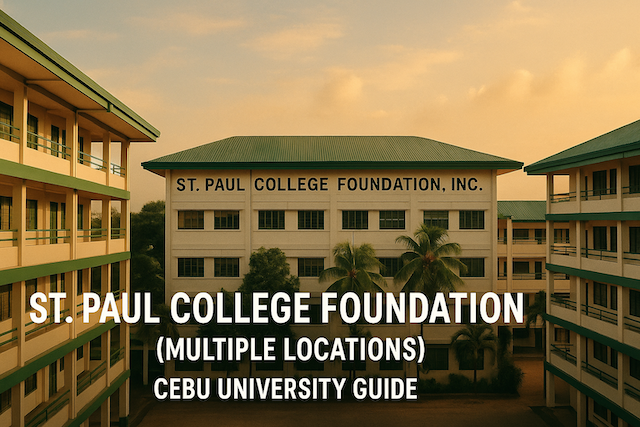
St. Paul College Foundation (Multiple Locations): Cebu University Guide
Contents
- St. Paul College Foundation (Multiple Locations): Cebu University Guide
- Overview of St. Paul College Foundation
- Campuses and Locations
- Academic Programs Offered
- Learning Environment and Facilities
- Admissions Guide
- Tuition and Financial Assistance
- Student Life and Community
- Career Opportunities After Graduation
- Why Choose St. Paul College Foundation?
- FAQs (Frequently Asked Questions)
- Where are the campuses of St. Paul College Foundation located in Cebu?
- What levels of education does SPCF offer?
- What Senior High School tracks are available at SPCF?
- Which college degree programs are most popular at SPCF?
- Does SPCF offer TESDA-accredited and short-term courses?
- What are the usual admission requirements for new college students?
- How affordable is the tuition at St. Paul College Foundation?
- Are there scholarships or discounts available for students?
- What is the learning environment like at SPCF campuses?
- Can students from outside Cebu enroll in SPCF?
- What career opportunities can SPCF graduates expect?
St. Paul College Foundation (Multiple Locations): Cebu University Guide
St. Paul College Foundation (SPCF) is one of the most recognized educational institutions in Cebu, offering a wide range of programs across multiple campuses. With a long-standing presence in the region, SPCF has built a reputation for accessible education, industry-aligned training, and strong graduate employability. This comprehensive Cebu University Guide explores all essential aspects of SPCF—from its academic offerings and campus life to admissions, tuition, and career pathways—to help prospective students make informed decisions.
Overview of St. Paul College Foundation
St. Paul College Foundation, Inc. (SPCF) is a private educational institution operating several campuses in Cebu, including locations in Mandaue, Talisay, and Compostela. Known for its practical, career-focused programs, SPCF aims to train competent professionals capable of contributing to the country’s growing industries such as healthcare, technology, business, hospitality, and engineering.
The institution emphasizes accessibility, offering flexible schedules, affordable tuition fees, and programs tailored for both senior high school students and college undergraduates. SPCF is also recognized for its strong technical-vocational training and TESDA-accredited programs, making it ideal for students seeking quick employment pathways.
Campuses and Locations
SPCF’s multi-campus system ensures that students from different parts of Cebu have access to quality education without the need for long commutes. Major campuses include:
Mandaue Campus
A central hub for health sciences, business programs, and senior high school tracks. The campus is strategically located near commercial establishments and public transportation routes.
Talisay Campus
This campus focuses on technology, engineering, and maritime-related programs. It offers hands-on facilities for technical courses and is popular among students preparing for industrial careers.
Compostela Campus
A more community-centered campus, this location provides senior high school and selected college programs. It serves students living in northern Cebu municipalities.
Each campus maintains its own facilities, faculty teams, and administrative offices but follows a unified SPCF academic system.
Academic Programs Offered
SPCF offers a wide range of programs across different fields of study. These programs are designed to meet current industry demands and prepare students for employment or further education.
Senior High School (SHS) Programs
SPCF provides full SHS offerings under the K–12 curriculum:
-
Academic Track
-
Science, Technology, Engineering, and Mathematics (STEM)
-
Accountancy, Business, and Management (ABM)
-
Humanities and Social Sciences (HUMSS)
-
General Academic Strand (GAS)
-
-
Technical-Vocational-Livelihood (TVL) Track
-
Information and Communications Technology (ICT)
-
Home Economics
-
Industrial Arts
-
Healthcare-Related Specializations
-
College Degree Programs
Health and Allied Sciences
-
Bachelor of Science in Nursing (BSN)
-
Bachelor of Science in Pharmacy
-
Bachelor of Science in Midwifery
-
Bachelor of Science in Medical Technology (varies by campus)
SPCF is widely recognized for its strong nursing and midwifery programs.
Information Technology and Engineering
-
Bachelor of Science in Information Technology (BSIT)
-
Bachelor of Science in Computer Science
-
Bachelor of Science in Computer Engineering (BSCpE)
These programs emphasize practical IT skills, coding, and hardware-related competencies.
Business and Management
-
Bachelor of Science in Business Administration (BSBA)
-
Major in Marketing Management
-
Major in Financial Management
-
Bachelor of Science in Office Administration (BSOA)
Hospitality and Tourism
-
Bachelor of Science in Hospitality Management (BSHM)
-
Bachelor of Science in Tourism Management (BSTM)
These programs integrate on-the-job training in hotels, travel agencies, and tourism establishments.
TESDA and Technical Programs
SPCF is known for offering a wide range of TESDA-accredited courses, including:
-
Caregiving NC II
-
Computer Systems Servicing NC II
-
Housekeeping NC II
-
Cookery NC II
-
Welding NC II
-
Bookkeeping NC III
These programs are popular among students seeking immediate employment opportunities in local and overseas markets.
Learning Environment and Facilities
SPCF campuses provide the necessary facilities to support hands-on learning and practical training. Though facilities vary across locations, common features include:
Laboratories
-
Nursing skills laboratories
-
Computer laboratories with updated software
-
Science laboratories
-
Technical-vocational workshops
Classrooms
Standard classrooms are equipped with audio-visual tools to support interactive learning.
Libraries and Resource Centers
Each campus houses a library accessible to all registered students, offering textbooks, research materials, and digital resources.
On-the-Job Training (OJT) Partnerships
SPCF has partnerships with hospitals, hotels, companies, and industrial facilities to provide OJT and internship opportunities.
Admissions Guide
Admission at SPCF is generally straightforward and student-friendly. Requirements may vary slightly per campus.
Basic Admission Requirements
-
Completed application form
-
Report card (Form 138 for SHS or TOR for transferees/college-level)
-
Birth certificate (PSA)
-
Certificate of Good Moral Character
-
2×2 or passport-size photo
-
Entrance exam (if required by the program)
-
Interview (for selected programs like Nursing)
Enrollment Process
-
Submit requirements to the campus registrar.
-
Attend interview or entrance exam if applicable.
-
Receive assessment and tuition breakdown.
-
Pay enrollment fees (installment plans are available).
-
Claim student ID and schedule.
SPCF frequently offers open-house enrollment periods and early-bird discounts.
Tuition and Financial Assistance
SPCF is known for its affordable tuition, making it a popular choice for students from various socioeconomic backgrounds. Tuition fees differ based on program and campus but are generally lower than major universities in Cebu.
Scholarships and Discounts
-
Academic scholarships for honor students
-
Financial aid for low-income students
-
Discounts for siblings
-
Government vouchers for SHS
-
TESDA scholarship slots (varies by batch)
Student Life and Community
SPCF creates an inclusive environment that supports learners academically and socially.
Student Organizations
Campuses have student councils, academic clubs, and interest-based groups that help develop leadership skills.
Events and Activities
-
Foundation Day celebrations
-
Sports fests and intramurals
-
Campus ministry activities
-
Program-based competitions (e.g., nursing skills contests)
Support Services
-
Guidance and counseling
-
Career placement services
-
Health and wellness centers
-
Registrar and administrative support
Career Opportunities After Graduation
With its strong emphasis on skills training and employability, SPCF graduates often find job opportunities locally and internationally.
Nursing and Allied Health
Many graduates work in hospitals, clinics, home-care facilities, and international healthcare institutions.
Information Technology
IT graduates enter fields such as programming, tech support, system administration, and network management.
Hospitality and Tourism
Graduates work in hotels, resorts, cruise ships, restaurants, and travel companies.
Business and Office Administration
These programs prepare students for work in administrative, marketing, HR, and finance roles.
Technical-Vocational Careers
TESDA-certified graduates often secure jobs quickly due to high demand in industries such as caregiving, welding, and hospitality.
Why Choose St. Paul College Foundation?
Students select SPCF for several reasons:
-
Multiple accessible campuses
-
Affordable tuition fees
-
Flexible schedules
-
Strong TESDA and technical-vocational training
-
Hands-on learning environment
-
Good graduate employability
-
Welcoming and supportive community
SPCF is ideal for students seeking practical, career-focused education that aligns with industry needs.
FAQs (Frequently Asked Questions)
Where are the campuses of St. Paul College Foundation located in Cebu?
St. Paul College Foundation (SPCF) operates multiple campuses within Cebu to make education more accessible to students from different areas. Common locations include urban centers such as Mandaue City and Talisay, as well as more community-based areas like Compostela and other nearby municipalities. Each campus follows the same institutional standards but may offer slightly different program line-ups depending on local demand, facilities, and partner institutions. When choosing a campus, students are encouraged to consider not only proximity to home but also the availability of their preferred program, transportation access, and class schedule options.
What levels of education does SPCF offer?
SPCF offers a vertically integrated set of programs that cater to various stages of a learner’s academic journey. These include Senior High School (SHS) strands under the K–12 curriculum, college degree programs, and technical-vocational courses aligned with TESDA. Senior High School students can continue into college programs within the same institution, while those who prefer a faster employment route can choose TESDA and certificate courses. This structure makes SPCF suitable for junior high graduates, transferees from other schools, working students planning to upskill, and career shifters who want to transition to in-demand fields.
What Senior High School tracks are available at SPCF?
Most SPCF campuses offer the standard Senior High School tracks recognized by the Department of Education. Under the Academic Track, students typically find strands such as STEM (Science, Technology, Engineering, and Mathematics), ABM (Accountancy, Business, and Management), HUMSS (Humanities and Social Sciences), and GAS (General Academic Strand). For students inclined toward practical and skill-based learning, the Technical-Vocational-Livelihood (TVL) Track is available, with specializations in fields like Information and Communications Technology (ICT), Home Economics, and selected industrial arts or health-related subjects. The exact combination of strands can vary per campus, so it is best to confirm directly with the registrar or guidance office of the chosen location.
Which college degree programs are most popular at SPCF?
SPCF is particularly known for its health-related and technology-oriented programs. Nursing, Midwifery, and other allied health courses attract many students who aspire to work in hospitals, clinics, and global healthcare settings. Information Technology and Computer Science programs are also popular because they address the growing demand for digital skills in the Philippines and abroad. In addition, Business Administration, Office Administration, Hospitality Management, and Tourism Management remain steady choices for students who see themselves in corporate, service, or tourism-related careers. While popularity can shift over time, these programs consistently draw strong enrollment due to their relevance to current job markets.
Does SPCF offer TESDA-accredited and short-term courses?
Yes. One of SPCF’s strengths is its wide selection of TESDA-accredited programs and short-term technical courses. Depending on the campus, students may find offerings in caregiving, housekeeping, cookery, computer systems servicing, welding, and bookkeeping, among others. These programs are designed to be practical, competency-based, and aligned with national standards. Many students choose them as a direct pathway to employment, both locally and abroad, especially in industries such as hospitality, healthcare, and skilled trades. Graduates receive national certificates upon passing the relevant TESDA assessments, which can significantly enhance their employability.
What are the usual admission requirements for new college students?
Admission requirements are generally straightforward and are meant to verify a student’s academic background and identity. For new college freshmen, typical requirements include a completed application form, an original Form 138 or Senior High School report card, a PSA-issued birth certificate, a Certificate of Good Moral Character from the previous school, and recent ID photos. Some programs may require an entrance examination or an interview, especially in health-related courses where aptitude and motivation are carefully evaluated. Transferees and second-degree applicants may be asked to submit their Transcript of Records (TOR), Honorable Dismissal, and subject descriptions for credit evaluation.
How affordable is the tuition at St. Paul College Foundation?
SPCF positions itself as an institution that offers relatively affordable education compared to many larger universities in Cebu. While exact tuition figures can change from year to year and can vary by campus and program, the general range is designed to be manageable for middle-income and working-class families. Tuition is often payable through installment schemes per semester, trimester, or grading period, depending on the policy of the specific campus. There may also be separate fees for laboratories, uniforms, ID, and other services, so students are encouraged to request an updated assessment from the registrar or cashier before enrollment.
Are there scholarships or discounts available for students?
Yes, SPCF typically offers several forms of financial assistance, although availability and criteria may vary by campus and academic year. Common forms include academic scholarships for honor graduates from high school, discounts for siblings enrolled in the institution, and special reductions or promotions during early enrollment periods. Additionally, qualified Senior High School students may make use of government-issued vouchers, and TESDA scholars may receive government-funded slots for certain technical programs. Applicants interested in scholarships should inquire early, as slots are often limited and may follow strict eligibility requirements and grade maintenance conditions.
What is the learning environment like at SPCF campuses?
The learning environment at SPCF is typically practical, skills-oriented, and community-focused. Class sizes are often moderate, allowing students to interact closely with instructors. Facilities may include computer laboratories, simulation rooms for health sciences, hospitality training areas, and technical workshops for industrial skills. In addition to classroom learning, many programs integrate on-the-job training (OJT), internships, and industry exposure. Students can also participate in student councils, clubs, and organizations that support leadership, spirituality, sports, and cultural activities. Overall, the environment is geared toward helping students transition smoothly from school to the workplace.
Can students from outside Cebu enroll in SPCF?
Yes. Students from outside Cebu, including those from other provinces or regions, can enroll in SPCF as long as they comply with the admission requirements and can attend face-to-face classes according to the schedule. Some students choose SPCF because they have relatives in Cebu or because they see strong employment opportunities in the city. For non-local students, it is important to plan ahead for housing, transportation, and living expenses. While SPCF itself may not always provide dormitories, campuses are generally located in areas where boarding houses, apartments, and other rental options are available.
What career opportunities can SPCF graduates expect?
Career opportunities for SPCF graduates depend largely on their chosen program, skills, and personal drive, but many fields offered by the institution are aligned with industries that consistently need workers. Graduates of nursing and health-related courses may work in hospitals, clinics, community health centers, or international caregiving and nursing roles. IT graduates can enter jobs related to technical support, software development, systems administration, and digital services. Business, office administration, and hospitality graduates often find roles in offices, hotels, resorts, restaurants, and travel companies. Technical-vocational graduates with TESDA certification may qualify for specialized roles in service, construction, hospitality, or industrial sectors. The combination of academic preparation, practical training, and certifications helps SPCF graduates compete in both local and overseas job markets.
Philippines University Guide
Cebu University Guide
Cebu Province All Universities Lists

How to Register for eTravel Philippines (2025 Guide)
Step-by-step guide to completing your eTravel registration before arriving in the Philippines, with images and tips.

Night Market in Cebu – Things You Don’t Know About Cebu Life
Discover the hidden charm of Cebu’s night markets, from street food stalls to local life tips you won’t find in tourist guides.

How to Use ChatGPT for IELTS Preparation: A Complete Guide
Learn how to prepare for IELTS using ChatGPT — including strategies for Writing, Reading, Listening, Speaking, and grammar support.

How to Build a Website Without Coding Using ChatGPT
Discover how to build your own website using AI—no coding skills needed. From structure planning to SEO and design, let ChatGPT guide you.