2026年1月9日
3D ACADEMY offers affordable English study programs in Cebu, Philippines – perfect for beginners, professionals, and exam takers.

3D UNIVERSAL ENGLISH INSTITUTE INC
info.3d-universal.com
8:00-17:00(Mon-Fri)
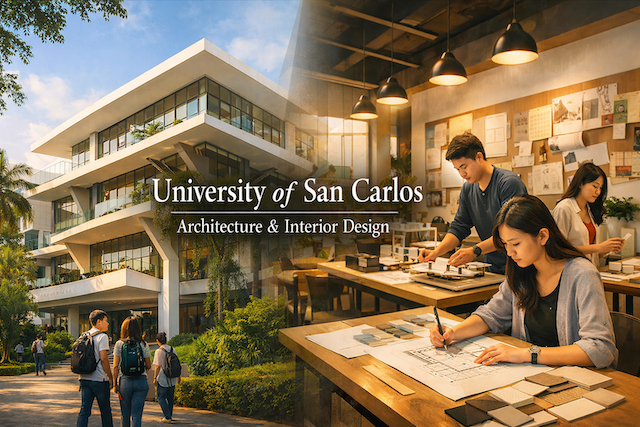
University of San Carlos (USC) – Architecture and Interior Design
Contents
- University of San Carlos (USC) – Architecture and Interior Design
- Overview of the University of San Carlos
- Architecture Program at USC
- Curriculum Structure and Academic Approach
- Emphasis on Sustainable and Contextual Design
- Interior Design Program at USC
- Core Areas of Interior Design Education
- Integration of Architecture and Interior Design
- Faculty Expertise and Mentorship
- Design Studios and Hands-On Learning
- Facilities and Learning Environment
- Exposure to Real-World Projects and Industry
- Research, Innovation, and Design Thinking
- Preparation for Professional Licensure
- Career Opportunities for Graduates
- Global Perspective and Cultural Sensitivity
- Student Life and Creative Community
- Why Choose USC for Architecture and Interior Design
- Conclusion
- FAQs (Frequently Asked Questions)
- Is the University of San Carlos (USC) a good school for Architecture and Interior Design?
- What is the main difference between Architecture and Interior Design at USC?
- Do I need to be good at drawing to succeed in these programs?
- What kinds of projects do students usually work on?
- What software or tools are commonly used in Architecture and Interior Design?
- How heavy is the workload at USC for design programs?
- Are there opportunities for internships or real-world experience?
- What should I prepare before entering Architecture or Interior Design?
- How do students build a portfolio at USC?
- What career paths can graduates pursue after finishing these programs?
- Is USC a good fit if I want to focus on sustainable or modern design?
University of San Carlos (USC) – Architecture and Interior Design
Overview of the University of San Carlos
The University of San Carlos (USC) is one of the oldest and most respected private universities in the Philippines, with a long-standing reputation for academic excellence, research, and professional training. Located in Cebu City, USC is recognized for producing graduates who excel not only locally but also internationally. Its strong emphasis on discipline, ethics, and innovation has made it a preferred institution for students pursuing careers in technical, creative, and professional fields.
Among its most distinguished offerings are the programs in Architecture and Interior Design, which combine rigorous academic foundations with practical, real-world applications. These programs are housed within an environment that encourages critical thinking, sustainability, cultural awareness, and design excellence.
Architecture Program at USC
The Architecture program at the University of San Carlos is designed to develop competent, socially responsible, and globally competitive architects. It integrates theory, technical knowledge, and creative design while responding to the unique cultural, environmental, and urban contexts of the Philippines.
Students are trained to approach architecture not only as a profession but also as a discipline that shapes communities, environments, and human experiences.
Curriculum Structure and Academic Approach
The architecture curriculum at USC follows a comprehensive structure that balances foundational courses, professional subjects, and advanced design studios. Early years focus on basic design principles, architectural graphics, visual communication, and history of architecture. As students progress, they move into more complex subjects such as building technology, structures, urban planning, environmental design, and professional practice.
Design studios are the core of the program. Each studio challenges students to solve architectural problems that increase in complexity, ranging from residential design to institutional, commercial, and urban-scale projects. These studios encourage conceptual thinking, technical accuracy, and contextual sensitivity.
Emphasis on Sustainable and Contextual Design
One of the defining characteristics of USC’s Architecture program is its strong emphasis on sustainability and contextual design. Students are encouraged to consider climate-responsive architecture, energy efficiency, and the use of local materials. Cebu’s tropical environment serves as a living laboratory where students explore passive cooling strategies, disaster-resilient structures, and environmentally responsible design solutions.
This focus prepares graduates to address real challenges in Philippine and Southeast Asian contexts while also meeting international sustainability standards.
Interior Design Program at USC
The Interior Design program at the University of San Carlos is crafted to develop creative professionals who can design functional, aesthetic, and human-centered interior spaces. The program recognizes interior design as both an art and a technical discipline, requiring a strong understanding of space planning, materials, lighting, ergonomics, and building systems.
Students are trained to design interiors that enhance user experience while complying with safety, sustainability, and professional standards.
Core Areas of Interior Design Education
The interior design curriculum covers a wide range of essential areas, including space planning, furniture design, materials and finishes, lighting design, acoustics, and building codes. Students also study color theory, design psychology, and digital visualization techniques to effectively communicate their design concepts.
Studio courses form the backbone of the program, allowing students to apply theoretical knowledge to practical design projects such as residential interiors, offices, retail spaces, hospitality venues, and institutional facilities.
Integration of Architecture and Interior Design
One of the strengths of studying Architecture and Interior Design at USC is the close integration between the two disciplines. Students gain an appreciation of how interior spaces relate to architectural structure, form, and function. This interdisciplinary approach fosters collaboration and helps students develop a holistic understanding of the built environment.
Architecture students gain deeper insights into interior spatial quality, while interior design students develop a stronger awareness of architectural constraints and possibilities.
Faculty Expertise and Mentorship
USC’s Architecture and Interior Design programs are led by highly qualified faculty members who are both educators and practicing professionals. Many instructors are licensed architects and interior designers with extensive industry experience in design firms, construction companies, and consultancy practices.
Faculty mentorship plays a critical role in student development. Instructors guide students through design critiques, technical challenges, and professional preparation, ensuring that graduates are well-equipped for both licensure and practice.
Design Studios and Hands-On Learning
Hands-on learning is a core component of both programs. Design studios simulate professional practice, requiring students to present concepts, produce technical drawings, and defend their design decisions during critiques. This process builds confidence, communication skills, and professional discipline.
In addition to studio work, students engage in model-making, site analysis, material exploration, and digital design using industry-standard software. These experiences prepare students for the realities of architectural and interior design practice.
Facilities and Learning Environment
The University of San Carlos provides students with access to specialized facilities that support creative and technical learning. These include drafting studios, computer laboratories, model-making workshops, and resource libraries. Studio spaces are designed to encourage collaboration, experimentation, and long working hours typical of design education.
Access to updated software, reference materials, and technical equipment ensures that students stay aligned with current industry practices.
Exposure to Real-World Projects and Industry
USC actively encourages student exposure to real-world design challenges. Academic projects often reflect actual site conditions, local community needs, and contemporary design issues. Students may also participate in exhibitions, design competitions, and collaborative projects with external partners.
Industry engagement is further strengthened through internships and on-the-job training, which allow students to gain practical experience in architectural firms, interior design studios, construction companies, and real estate developers.
Research, Innovation, and Design Thinking
Research plays an important role in USC’s architecture and interior design education. Students are trained to conduct site research, user studies, and material investigations as part of the design process. This research-based approach strengthens critical thinking and leads to more informed and meaningful design solutions.
Innovation is encouraged through experimental design studios, conceptual projects, and the exploration of emerging technologies such as digital fabrication, parametric design, and sustainable building systems.
Preparation for Professional Licensure
Graduates of the Architecture program are prepared for the Architect Licensure Examination in the Philippines. The curriculum aligns with national standards and includes subjects related to professional practice, ethics, and building laws.
Similarly, the Interior Design program prepares students for professional certification and licensure, equipping them with the technical knowledge and design competence required in professional practice.
Career Opportunities for Graduates
Graduates of USC’s Architecture program pursue careers in architectural design, urban planning, construction management, project consultancy, and real estate development. Many also work internationally or continue their studies through graduate programs.
Interior Design graduates find opportunities in residential and commercial interior design, hospitality design, retail planning, furniture design, set design, and design consultancy. The strong design foundation also allows graduates to explore related creative industries.
Global Perspective and Cultural Sensitivity
USC emphasizes cultural sensitivity and global awareness in its design education. Students are encouraged to respect local traditions, heritage, and social contexts while also learning from international architectural and interior design trends.
This balance between local relevance and global perspective enables graduates to work effectively in diverse cultural and professional environments.
Student Life and Creative Community
The architecture and interior design community at USC is known for its vibrant studio culture. Students often collaborate, exchange ideas, and support one another through demanding design projects. Academic organizations, workshops, and design events further enrich student life and foster professional growth.
This strong sense of community helps students develop teamwork skills and professional networks that extend beyond graduation.
Why Choose USC for Architecture and Interior Design
Choosing the University of San Carlos for Architecture or Interior Design means joining an institution with a long tradition of excellence, a strong ethical foundation, and a commitment to innovation. The programs offer a balanced education that combines creativity, technical competence, and social responsibility.
Students graduate not only as skilled designers but also as thoughtful professionals who understand the impact of design on people, culture, and the environment.
Conclusion
The Architecture and Interior Design programs at the University of San Carlos provide a comprehensive, forward-looking education rooted in academic rigor and real-world relevance. Through strong faculty mentorship, hands-on studio training, and a deep respect for context and sustainability, USC prepares students to become leaders in the built environment.
For students seeking a design education that blends creativity, technical excellence, and social awareness, USC stands as one of the leading institutions in the Philippines for Architecture and Interior Design.
FAQs (Frequently Asked Questions)
Is the University of San Carlos (USC) a good school for Architecture and Interior Design?
Yes. USC is widely regarded as one of the most established universities in Cebu, and its design-related programs are known for combining strong academic foundations with intensive studio-based training. Students typically experience a demanding but structured curriculum that emphasizes design thinking, technical competence, and professional presentation. As with any program, your success will depend on your work ethic, curiosity, and willingness to improve through critique. If you are looking for a school environment where deadlines, feedback sessions, and iterative design development are taken seriously, USC’s architecture and interior design tracks are often considered a solid choice.
What is the main difference between Architecture and Interior Design at USC?
Architecture focuses on designing buildings and larger built environments, including structure, building systems, site planning, and compliance with broader codes and regulations. Interior Design focuses on the planning and detailing of interior spaces, including spatial experience, furniture, lighting, materials, ergonomics, and how users move through and interact with a space. At USC, both disciplines rely heavily on studio work, but architecture tends to deal with the building as a whole, while interior design concentrates on the interior environment and human-centered space planning. Many skills overlap, such as drafting, visualization, and concept development, but the scope and technical requirements differ.
Do I need to be good at drawing to succeed in these programs?
You do not need to be an expert artist on day one, but you should be willing to practice visual communication consistently. Drawing is a tool for thinking and explaining design, not just a talent. In the early stages, students build skills in freehand sketching, perspective, and architectural graphics. Over time, digital tools also become important for drafting and presentation. If you are committed to improving, you can succeed even if you start with average drawing skills. What matters most is your ability to communicate ideas clearly and your willingness to learn from critique.
What kinds of projects do students usually work on?
Projects typically progress from small-scale exercises to complex design challenges. In the early years, students may work on basic spatial studies, small pavilions, or conceptual residential layouts. As they advance, projects can include houses, mid-rise buildings, institutional facilities, commercial spaces, hospitality concepts, and even urban-scale proposals. Interior design students may focus on residential interiors, retail spaces, cafes, hotels, offices, and adaptive reuse concepts. Many studio outputs include site analysis, space planning, technical drawings, 3D models, and final presentation boards.
What software or tools are commonly used in Architecture and Interior Design?
Students commonly use a mix of manual and digital tools. Manual drafting and model-making are still valuable for understanding scale, proportion, and construction logic. Digital tools may include CAD software for drafting, 3D modeling tools for visualization, and rendering or presentation software for final boards. The specific software can vary depending on course requirements and instructor preferences, but students are generally expected to become comfortable with drafting, modeling, and layout workflows. A practical approach is to learn one drafting tool well, one modeling tool well, and one layout tool well, then expand over time.
How heavy is the workload at USC for design programs?
Expect a demanding workload, especially during midterms and finals when multiple outputs are due. Studio courses require iterative development, revisions, and frequent presentations, which can involve long hours. Time management is essential. Many students find that success comes from building a routine: setting weekly milestones, starting early, and avoiding last-minute work. The workload can feel intense, but it also reflects the realities of professional practice where deadlines and coordination are part of the job. The key is learning to work efficiently while maintaining quality.
Are there opportunities for internships or real-world experience?
Yes. Many students pursue internships or practical training experiences through design firms, construction-related companies, or creative studios. Even when internships are not formally required at every stage, students often seek real-world exposure to strengthen their portfolios and professional networks. Joining design competitions, exhibitions, or student organizations can also help build experience. A strong portfolio of academic work can open doors to internships, so it’s helpful to treat each major studio project as a potential portfolio piece.
What should I prepare before entering Architecture or Interior Design?
It helps to build basic skills in observation, creativity, and organization. If possible, practice simple sketching, learn basic design principles (composition, hierarchy, balance), and explore architectural and interior design references to understand styles and space planning. You should also prepare for practical needs: a reliable laptop (if required by your workflow), basic drafting materials, and a mindset ready for critique. Design education involves feedback, revisions, and sometimes tough evaluations. Students who grow the most are usually those who treat critique as guidance rather than personal criticism.
How do students build a portfolio at USC?
Most portfolios are built gradually through studio outputs. Students typically select their strongest projects, refine their presentation boards, and document process work such as sketches, diagrams, concept studies, and models. A good portfolio usually shows both final results and the thinking behind them. Over time, students learn to present projects with clear narratives: the problem, the concept, the development process, and the final design solution. Consistency in layout, typography, and visual hierarchy matters. Many students also include competition entries or personal projects to show range and initiative.
What career paths can graduates pursue after finishing these programs?
Architecture graduates can pursue careers in architectural design firms, construction and project management, urban planning support roles, real estate development, and building consultancy. Interior design graduates can work in residential and commercial interior design, hospitality and retail design, workplace planning, furniture and fixture design, and design consultancy. Some graduates also move into related creative fields such as visualization, production design, or design entrepreneurship. Both paths can lead to international opportunities, especially when combined with a strong portfolio, relevant experience, and professional credentials.
Is USC a good fit if I want to focus on sustainable or modern design?
USC can be a good fit if you are interested in sustainable and context-aware design because design programs typically encourage students to consider climate, local conditions, and responsible material choices. In a tropical setting like Cebu, sustainability naturally becomes part of design thinking through ventilation, shading, energy use, and resilience. If you want to specialize further, you can shape your learning through elective choices, thesis topics, and the types of projects you choose to explore. The best approach is to be proactive: seek research, build sustainability-focused portfolio projects, and learn both design theory and practical strategies.
Cebu Universities: Arts and Design – Schools Offering Fine Arts, Fashion, and Multimedia Design

How to Register for eTravel Philippines (2025 Guide)
Step-by-step guide to completing your eTravel registration before arriving in the Philippines, with images and tips.

Night Market in Cebu – Things You Don’t Know About Cebu Life
Discover the hidden charm of Cebu’s night markets, from street food stalls to local life tips you won’t find in tourist guides.

How to Use ChatGPT for IELTS Preparation: A Complete Guide
Learn how to prepare for IELTS using ChatGPT — including strategies for Writing, Reading, Listening, Speaking, and grammar support.

How to Build a Website Without Coding Using ChatGPT
Discover how to build your own website using AI—no coding skills needed. From structure planning to SEO and design, let ChatGPT guide you.