2026年1月9日
3D ACADEMY offers affordable English study programs in Cebu, Philippines – perfect for beginners, professionals, and exam takers.

3D UNIVERSAL ENGLISH INSTITUTE INC
info.3d-universal.com
8:00-17:00(Mon-Fri)
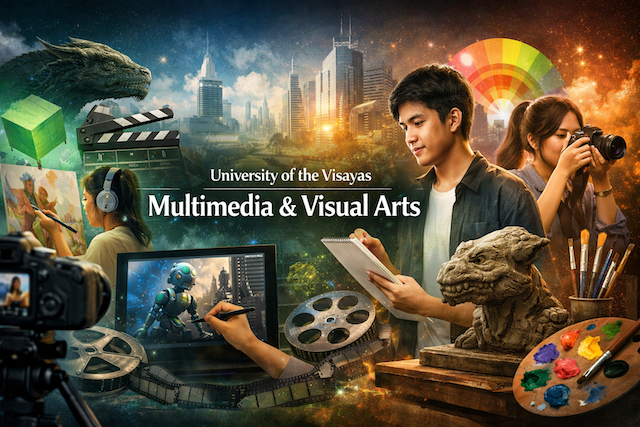
University of the Visayas (UV) – Multimedia and Visual Arts
Contents
- University of the Visayas (UV) – Multimedia and Visual Arts
- Overview of University of the Visayas (UV)
- Why Choose Multimedia and Visual Arts at UV
- Program Structure and Academic Focus
- Teaching Approach and Learning Environment
- Facilities and Creative Resources
- Career Opportunities After Graduation
- Student Life and Creative Community
- Admission Requirements and Application Process
- Tuition Fees and Affordability
- The Role of Multimedia and Visual Arts in Today’s Digital World
- Conclusion
- Frequently Asked Questions (FAQs)
- Does the University of the Visayas (UV) offer a dedicated Multimedia and Visual Arts program?
- What skills will I learn in a Multimedia and Visual Arts-focused course of study?
- Do I need to be good at drawing to study Multimedia and Visual Arts?
- What software and tools are commonly used in Multimedia and Visual Arts classes?
- Is the course more focused on art, technology, or communication?
- How can I build a strong portfolio while studying at UV?
- Are there internships or work opportunities for Multimedia and Visual Arts students in Cebu?
- What careers can I pursue after graduating in a Multimedia and Visual Arts-related field?
- How do I know if Multimedia and Visual Arts is the right choice for me?
University of the Visayas (UV) – Multimedia and Visual Arts
Overview of University of the Visayas (UV)
The University of the Visayas (UV) is one of the oldest and most established private universities in Cebu City, Philippines. Founded in 1919, UV has built a strong reputation for offering practical, industry-oriented education that caters to both local and international students. Known for its affordability, accessibility, and diverse academic offerings, UV continues to play an important role in shaping creative professionals in the region.
Among its many academic programs, Multimedia and Visual Arts stands out as a growing field that aligns closely with today’s digital economy. With the rise of content creation, digital marketing, animation, game design, and online media, UV’s programs aim to equip students with creative, technical, and professional skills that are highly relevant in the modern workforce.
Why Choose Multimedia and Visual Arts at UV
The Multimedia and Visual Arts programs at UV are designed to balance artistic creativity with technical proficiency. Students are trained not only to express ideas visually but also to apply modern tools and platforms used in professional creative industries.
Key reasons students choose UV for Multimedia and Visual Arts include:
-
Affordable tuition compared to many private universities
-
Central location in Cebu City with easy access to creative hubs
-
Industry-relevant curriculum focused on real-world skills
-
Hands-on training and project-based learning
-
Opportunities for freelance, entrepreneurial, and corporate career paths
UV’s approach emphasizes practical experience, preparing students to work immediately after graduation or pursue further specialization.
Program Structure and Academic Focus
Core Multimedia and Visual Arts Subjects
The Multimedia and Visual Arts curriculum at UV typically covers a wide range of foundational and advanced subjects. These courses are structured to help students gradually build both creative and technical expertise.
Core subjects often include:
-
Principles of Design and Visual Communication
-
Digital Illustration and Graphic Design
-
Photography and Image Editing
-
Video Production and Editing
-
Motion Graphics and Animation
-
Multimedia Storytelling
-
User Interface (UI) and User Experience (UX) Design
-
Web and Interactive Media Design
These subjects ensure students develop a strong foundation in visual aesthetics, digital tools, and creative problem-solving.
Specialized Tracks and Electives
As students progress, they may be introduced to more specialized courses or electives that allow them to focus on specific interests within multimedia and visual arts. These may include:
-
Branding and Advertising Design
-
Animation and Visual Effects (VFX)
-
Game Art and Interactive Media
-
Digital Marketing and Content Creation
-
Sound Design and Multimedia Audio
-
Portfolio Development
This flexibility allows students to tailor their education toward career paths such as graphic designer, animator, content creator, or digital media specialist.
Teaching Approach and Learning Environment
Practical and Project-Based Learning
UV places a strong emphasis on hands-on learning. Rather than relying solely on theory, students are encouraged to apply concepts through:
-
Individual and group projects
-
Creative briefs and design challenges
-
Multimedia presentations
-
Portfolio-based assessments
This approach mirrors real-world creative workflows and helps students develop professional discipline, time management, and collaboration skills.
Faculty and Instruction
Courses are taught by instructors with academic backgrounds and practical industry experience in fields such as graphic design, multimedia production, and visual communication. This combination allows students to learn both foundational theory and current industry practices.
Faculty members often guide students in:
-
Developing a personal creative style
-
Understanding client requirements
-
Presenting and defending design concepts
-
Receiving and applying constructive feedback
Facilities and Creative Resources
Multimedia Laboratories and Studios
Students enrolled in Multimedia and Visual Arts programs at UV typically have access to computer laboratories equipped with industry-standard software for design, animation, and video editing. These labs are essential for developing technical proficiency and completing multimedia projects.
Facilities may include:
-
Computer labs with design and editing software
-
Basic photography and video equipment
-
Multimedia classrooms for presentations and critiques
While UV focuses on affordability, it continues to enhance its facilities to support digital and creative learning.
Campus Environment in Cebu City
UV’s main campus is located in downtown Cebu City, offering students exposure to a vibrant urban environment. The surrounding area provides access to printing shops, creative studios, advertising agencies, and freelance opportunities.
This location allows students to:
-
Network with local creatives and professionals
-
Participate in internships or part-time creative work
-
Attend workshops, exhibits, and creative events
Career Opportunities After Graduation
Creative and Design Careers
Graduates of UV’s Multimedia and Visual Arts programs can pursue a wide range of careers in creative industries. Common career paths include:
-
Graphic Designer
-
Multimedia Artist
-
Visual Content Creator
-
Video Editor
-
Motion Graphics Designer
-
UI/UX Designer
-
Social Media Content Specialist
These roles are in demand across advertising agencies, media companies, startups, and corporate marketing departments.
Freelancing and Entrepreneurship
One of the strongest advantages of multimedia and visual arts education is the ability to work as a freelancer or independent creative professional. Many UV graduates choose to:
-
Offer design services online
-
Work with international clients through freelance platforms
-
Build personal brands as digital creators
-
Start small creative studios or agencies
The skills learned at UV support flexible career paths that are not limited to traditional employment.
Further Studies and Specialization
Some graduates continue their education by pursuing advanced studies in:
-
Fine Arts or Digital Arts
-
Animation and Game Design
-
Film and Media Studies
-
Marketing and Advertising
UV provides a solid foundation for those who wish to specialize further or transition into related creative fields.
Student Life and Creative Community
Student Organizations and Activities
Students interested in multimedia and visual arts often participate in creative organizations, campus events, and exhibitions. These activities help students showcase their work and gain confidence in presenting their ideas.
Participation in student-led initiatives can include:
-
Art and design exhibits
-
Multimedia competitions
-
Campus publications and media teams
-
Creative workshops and seminars
Such experiences enrich student life and strengthen portfolios.
Collaboration and Peer Learning
Creative programs thrive on collaboration, and UV encourages students to work together on projects and creative challenges. Peer feedback and group work help students refine their skills and develop professional communication abilities.
Admission Requirements and Application Process
General Admission Requirements
Applicants to Multimedia and Visual Arts programs at UV typically need to meet standard university admission requirements, which may include:
-
High school diploma or equivalent
-
Academic records or transcripts
-
Entrance examinations (if applicable)
-
Basic application documents
International students may need additional requirements such as student visas and proof of English proficiency, depending on their background.
Skills and Preparation
While prior artistic experience is not always mandatory, students with backgrounds in drawing, design, photography, or digital media may have an advantage. UV’s curriculum is structured to support beginners while helping talented students grow further.
Tuition Fees and Affordability
One of UV’s strongest advantages is its affordable tuition fees, making it accessible to students from diverse backgrounds. Compared to many private universities offering creative programs, UV provides strong value for money.
This affordability allows students to:
-
Invest in personal equipment such as laptops or cameras
-
Take additional workshops or online courses
-
Focus on building portfolios without excessive financial pressure
The Role of Multimedia and Visual Arts in Today’s Digital World
The demand for multimedia and visual arts professionals continues to grow as businesses rely more on digital communication. Skills in visual storytelling, branding, and digital content creation are essential across industries.
UV’s Multimedia and Visual Arts programs respond to this demand by preparing students to:
-
Communicate ideas visually across digital platforms
-
Adapt to evolving technologies and design trends
-
Work in multidisciplinary creative teams
-
Balance creativity with practical business needs
Conclusion
The University of the Visayas (UV) – Multimedia and Visual Arts programs offer a practical, affordable, and industry-relevant pathway for students who aspire to build careers in creative and digital fields. With a curriculum that balances artistic expression and technical skill, UV prepares graduates for diverse opportunities in design, media, and content creation.
Located in the heart of Cebu City, UV provides students with access to a dynamic creative environment while maintaining a strong focus on hands-on learning and real-world application. For students seeking a solid foundation in multimedia and visual arts without the high costs associated with many private institutions, the University of the Visayas stands as a compelling and practical choice.
Frequently Asked Questions (FAQs)
Does the University of the Visayas (UV) offer a dedicated Multimedia and Visual Arts program?
The University of the Visayas (UV) offers creative and media-related education designed to build skills in digital content, design fundamentals, and visual communication. In many universities, “Multimedia and Visual Arts” can be offered as a specific degree, a major under a broader program, or a cluster of related courses within arts, communication, information technology, or design departments. If you are choosing UV specifically for Multimedia and Visual Arts, the best approach is to confirm the exact program name, degree level, and curriculum structure (major, track, or specialization) directly with the university. This helps you verify the subjects you will take, the software tools used in class, and the expected outcomes such as portfolio requirements and internship components.
What skills will I learn in a Multimedia and Visual Arts-focused course of study?
Students typically develop a mix of creative, technical, and professional skills. On the creative side, you can expect training in design principles, visual storytelling, typography, layout, and concept development. On the technical side, you will likely learn digital tools for graphic design, photo editing, video editing, motion graphics, and basic animation. Many programs also include introductory web or interactive media lessons, such as interface design concepts and digital publishing workflows. Professional skills are also important: presenting creative work, receiving critique, working with deadlines, and collaborating in teams. These skills help students transition into real-world design and content production environments, including agency work, in-house marketing teams, or freelancing.
Do I need to be good at drawing to study Multimedia and Visual Arts?
You do not need to be an expert in drawing to begin, but having an interest in visual creativity helps. Many multimedia careers focus more on digital composition, layout, branding, and editing rather than traditional illustration. Programs usually start with foundational subjects that teach design principles and visual thinking, so beginners can improve quickly. If you enjoy creating visuals, learning software, and communicating ideas through images, you can succeed even without strong drawing skills at the start. That said, drawing or sketching can still be useful for brainstorming concepts, planning storyboards, or developing an artistic style, especially if you are interested in illustration or animation-related paths.
What software and tools are commonly used in Multimedia and Visual Arts classes?
Most multimedia and visual arts curricula use industry-standard creative software for design and editing work. Students commonly practice with tools for graphic design, photo editing, video editing, and motion graphics. Exact software can vary by institution, lab availability, and instructor preference. In addition to software, students may use basic photography or video equipment for production assignments, plus audio tools for multimedia projects. If you want to prepare in advance, focus on building comfort with core creative workflows: working with layers, timelines, exporting for web and social media, file organization, and asset management. Those fundamentals translate well even if specific programs change over time.
Is the course more focused on art, technology, or communication?
Multimedia and Visual Arts sits at the intersection of art, technology, and communication. In practice, your experience depends on the curriculum design. Some programs lean toward visual design and branding, emphasizing composition and creative direction. Others lean toward media production, focusing on video, motion graphics, and digital storytelling. Some include interactive media topics such as UI/UX, basic web design, or digital product presentation. A balanced program helps you become adaptable: you learn artistic fundamentals, build technical competence with tools, and develop communication skills for pitching ideas and meeting client or project requirements.
How can I build a strong portfolio while studying at UV?
A strong portfolio is usually the most important outcome for multimedia and visual arts students. Start by treating class outputs as portfolio opportunities rather than simple requirements. Save project files, document your process, and revise your best works after receiving feedback. Aim for variety: include branding or logo work, posters or layouts, social media content designs, short video edits, motion graphics samples, and any interactive or presentation pieces you create. Also show your thinking by briefly describing the goal, audience, tools used, and constraints. Over time, refine your portfolio toward your intended career path, such as graphic design, video editing, content creation, or UI/UX. Consistency, clarity, and quality matter more than having too many items.
Are there internships or work opportunities for Multimedia and Visual Arts students in Cebu?
Cebu City has a growing creative economy with opportunities in advertising, digital marketing, content production, events, and media-related services. Students often look for internships, part-time roles, or freelance projects to gain experience. Even if an internship is not required, practical exposure is highly valuable. You can also build experience through campus organizations, event documentation, student publications, or volunteer creative work for community initiatives. The goal is to develop real deliverables: brand kits, campaign materials, video outputs, and social media assets. Those real-world samples make your resume and portfolio more competitive after graduation.
Graduates commonly work as graphic designers, multimedia artists, video editors, motion graphics designers, content creators, or social media content specialists. Some move toward UI/UX design or digital marketing roles where visual communication is essential. Others pursue freelancing, serving clients locally or internationally. Your career options depend heavily on your portfolio, your ability to collaborate and meet deadlines, and the specific skills you develop—such as strong branding work, clean video editing, or effective storytelling. Many professionals also continue learning after graduation through online courses, workshops, and self-driven projects, because the creative industry evolves quickly.
How do I know if Multimedia and Visual Arts is the right choice for me?
This field is a good fit if you enjoy visual creativity, storytelling, digital tools, and producing content that communicates ideas clearly. It helps if you are willing to practice regularly, accept feedback, and improve through revisions. If you like combining creativity with practical outcomes—such as designing for a brand, editing a short video, or creating social content—this can be a strong path. Before enrolling, explore beginner tutorials, try small projects, and review sample portfolios online to understand the type of work professionals do. If you feel motivated by that process, Multimedia and Visual Arts may be an excellent match.
Cebu Universities: Arts and Design – Schools Offering Fine Arts, Fashion, and Multimedia Design

How to Register for eTravel Philippines (2025 Guide)
Step-by-step guide to completing your eTravel registration before arriving in the Philippines, with images and tips.

Night Market in Cebu – Things You Don’t Know About Cebu Life
Discover the hidden charm of Cebu’s night markets, from street food stalls to local life tips you won’t find in tourist guides.

How to Use ChatGPT for IELTS Preparation: A Complete Guide
Learn how to prepare for IELTS using ChatGPT — including strategies for Writing, Reading, Listening, Speaking, and grammar support.

How to Build a Website Without Coding Using ChatGPT
Discover how to build your own website using AI—no coding skills needed. From structure planning to SEO and design, let ChatGPT guide you.