2026年4月3日
3D ACADEMY offers affordable English study programs in Cebu, Philippines – perfect for beginners, professionals, and exam takers.

3D UNIVERSAL ENGLISH INSTITUTE INC
info.3d-universal.com
8:00-17:00(Mon-Fri)
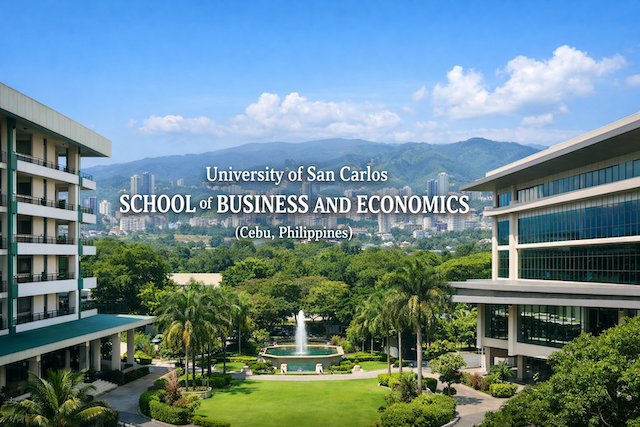
University of San Carlos (USC) – School of Business and Economics (Cebu)
Contents
- University of San Carlos (USC) – School of Business and Economics (Cebu)
- Overview of the University of San Carlos
- Introduction to the School of Business and Economics
- Academic Programs Offered
- Curriculum Design and Teaching Approach
- Faculty and Academic Expertise
- Research and Knowledge Development
- Industry Partnerships and Practical Exposure
- Student Life and Professional Development
- Campus Environment and Facilities
- Career Opportunities for Graduates
- Alumni Network and Industry Impact
- Why Choose USC School of Business and Economics
- Conclusion
- FAQs (Frequently Asked Questions)
- What is the University of San Carlos (USC) School of Business and Economics?
- Where is USC School of Business and Economics located in Cebu?
- What undergraduate programs are commonly associated with USC SBE?
- Does USC SBE offer an MBA program?
- What are the typical admission requirements for USC SBE?
- Is USC SBE a good choice for international students?
- How practical is the learning approach at USC School of Business and Economics?
- Are internships required for USC SBE students?
- What industries in Cebu are relevant for USC SBE internships and careers?
- What skills can students expect to develop at USC SBE?
- How competitive is the Accountancy track at USC?
- What is the difference between Business Administration and Economics at USC SBE?
- Does USC SBE emphasize entrepreneurship?
- What student organizations can support business students at USC?
- How can applicants evaluate if USC SBE is the right fit?
University of San Carlos (USC) – School of Business and Economics (Cebu)
Overview of the University of San Carlos
The University of San Carlos (USC) is one of the oldest and most prestigious private universities in the Philippines. Established in 1595, USC has built a long-standing reputation for academic excellence, research output, and strong industry relevance. Located in Cebu City, the university plays a central role in the educational, economic, and cultural development of the Visayas region.
USC consistently ranks among the top universities in the Philippines, particularly in board examination performance, research productivity, and graduate employability. Its strong emphasis on quality education, ethical leadership, and social responsibility has made it a preferred institution for both local and international students.
Within USC, the School of Business and Economics (SBE) stands out as one of its most dynamic and industry-connected academic units, offering programs designed to develop future business leaders, entrepreneurs, economists, and professionals.
Introduction to the School of Business and Economics
The USC School of Business and Economics (SBE) serves as the university’s primary hub for business, management, accounting, finance, marketing, and economics education. The school is known for its practice-oriented curriculum, strong academic foundation, and deep ties with Cebu’s rapidly growing business ecosystem.
Cebu is widely recognized as one of the Philippines’ major economic centers outside Metro Manila, hosting multinational companies, BPO firms, manufacturing hubs, startups, and family-owned enterprises. This environment allows SBE students to gain real-world exposure while studying, making the learning experience highly relevant and career-focused.
The School of Business and Economics emphasizes:
-
Ethical and values-based leadership
-
Analytical and strategic thinking
-
Entrepreneurial mindset
-
Global competitiveness with local relevance
Through continuous curriculum updates and close collaboration with industry partners, USC SBE ensures that graduates are well-prepared for both local and international career paths.
Academic Programs Offered
The USC School of Business and Economics offers a comprehensive range of undergraduate and graduate programs designed to meet diverse career goals.
Undergraduate Degree Programs
The undergraduate programs focus on building strong foundations in business principles while allowing students to specialize in specific fields. Common programs include:
-
Bachelor of Science in Accountancy
-
Bachelor of Science in Business Administration, with majors such as:
-
Marketing Management
-
Financial Management
-
Operations Management
-
Human Resource Development Management
-
-
Bachelor of Science in Economics
-
Bachelor of Science in Management Accounting
-
Bachelor of Science in Entrepreneurship
These programs emphasize analytical skills, communication, teamwork, and ethical decision-making. Students are exposed to case studies, simulations, research projects, and internships to bridge theory and practice.
Graduate Degree Programs
For professionals seeking advanced education, USC SBE offers several graduate programs, including:
-
Master in Business Administration (MBA)
-
Master of Science in Economics
-
Other specialized management and business-related graduate degrees
The MBA program, in particular, is popular among working professionals in Cebu due to its flexible scheduling and strong focus on leadership, strategy, and real-world application.
Curriculum Design and Teaching Approach
The School of Business and Economics adopts a student-centered and outcomes-based education framework. Courses are designed to align learning outcomes with industry needs and global business standards.
Key features of the curriculum include:
-
Case-based learning using local and international business scenarios
-
Research-driven instruction
-
Integration of technology and data analysis
-
Group projects and presentations
-
Capstone courses and thesis requirements (for selected programs)
Faculty members encourage critical thinking, ethical reasoning, and innovation, ensuring students develop both technical expertise and soft skills essential for leadership roles.
Faculty and Academic Expertise
USC SBE is supported by a strong team of experienced faculty members, many of whom hold advanced degrees from top universities in the Philippines and abroad. Faculty expertise spans accounting, finance, economics, marketing, strategy, entrepreneurship, and operations management.
Beyond academic credentials, many professors have industry experience, serving as consultants, business owners, economists, and corporate executives. This blend of academic rigor and practical insight allows students to gain perspectives that go beyond textbooks.
Faculty members are also actively involved in:
-
Research and publications
-
Industry collaboration
-
Professional organizations
-
Community development initiatives
This active engagement helps keep classroom discussions relevant and up to date.
Research and Knowledge Development
Research plays an important role within the School of Business and Economics. Students and faculty are encouraged to engage in applied research that addresses real economic and business challenges, particularly those relevant to Cebu and the Visayas region.
Research areas commonly explored include:
-
Regional economic development
-
SME growth and entrepreneurship
-
Financial markets and corporate governance
-
Consumer behavior and marketing trends
-
Sustainability and social enterprise
USC provides institutional support for research through funding opportunities, conferences, and academic journals, helping strengthen the school’s contribution to national and regional policy discussions.
Industry Partnerships and Practical Exposure
One of the major strengths of USC SBE is its close connection with industry partners. Cebu’s diverse economy offers students opportunities to interact with businesses across various sectors, including tourism, manufacturing, retail, finance, logistics, and technology.
Key industry-related initiatives include:
-
Internship and practicum programs
-
Guest lectures by business leaders
-
Company visits and immersion programs
-
Collaborative research projects
-
Career talks and networking events
These partnerships help students gain hands-on experience, build professional networks, and improve employment prospects after graduation.
Student Life and Professional Development
Students at the School of Business and Economics enjoy a vibrant campus life supported by various student organizations and academic societies. These organizations provide platforms for leadership development, teamwork, and professional growth.
Common activities include:
-
Business competitions and case challenges
-
Entrepreneurship boot camps
-
Investment and finance forums
-
Marketing campaigns and simulations
-
Community outreach and social responsibility projects
Participation in these activities helps students develop confidence, communication skills, and a sense of social responsibility, all of which are essential for future business leaders.
Campus Environment and Facilities
The University of San Carlos operates multiple campuses across Cebu City, with facilities designed to support modern learning. Business and economics students have access to:
-
Well-equipped classrooms and lecture halls
-
Computer laboratories with business software
-
Libraries with extensive business and economics resources
-
Study spaces and collaborative learning areas
The campus environment promotes academic focus while remaining accessible to Cebu’s business districts, making it convenient for internships, part-time work, and professional engagements.
Career Opportunities for Graduates
Graduates of the USC School of Business and Economics are highly regarded by employers due to their strong academic background, ethical orientation, and practical experience.
Common career paths include:
-
Accountants and auditors
-
Financial analysts and banking professionals
-
Marketing and brand managers
-
Human resource specialists
-
Operations and supply chain managers
-
Economists and policy analysts
-
Entrepreneurs and startup founders
Many alumni also pursue further studies or professional certifications, both locally and internationally.
Alumni Network and Industry Impact
USC boasts a strong and active alumni network, with graduates holding leadership positions in corporations, government agencies, NGOs, and entrepreneurial ventures. Alumni frequently return to campus as guest speakers, mentors, and industry partners.
This strong alumni presence enhances:
-
Career placement opportunities
-
Internship referrals
-
Industry insights for students
-
Long-term professional networking
The impact of USC SBE alumni is evident across Cebu’s business landscape and beyond.
Why Choose USC School of Business and Economics
The University of San Carlos – School of Business and Economics offers a compelling choice for students seeking quality business education outside Metro Manila. Its combination of academic excellence, industry relevance, ethical leadership training, and strategic location in Cebu makes it a top destination for business and economics education.
Key reasons to choose USC SBE include:
-
Long-standing academic reputation
-
Comprehensive range of business and economics programs
-
Strong industry and alumni connections
-
Experienced and research-active faculty
-
Values-driven and globally oriented education
Conclusion
The University of San Carlos – School of Business and Economics (Cebu) stands as a leading institution for developing competent, ethical, and globally competitive business professionals. By combining rigorous academics with real-world exposure and strong industry ties, USC SBE prepares students not only for successful careers but also for meaningful contributions to society.
For aspiring business leaders, economists, and entrepreneurs looking to study in Cebu, USC School of Business and Economics represents a solid and respected pathway toward long-term professional growth and success.
FAQs (Frequently Asked Questions)
What is the University of San Carlos (USC) School of Business and Economics?
The University of San Carlos (USC) School of Business and Economics (SBE) is the university’s academic unit in Cebu City that focuses on business, management, accounting, finance, and economics education. It offers undergraduate and graduate programs designed to build strong analytical, leadership, and professional skills. The school emphasizes values-based learning, practical training, and industry relevance so students can transition smoothly from classroom learning to real workplace demands.
Where is USC School of Business and Economics located in Cebu?
USC operates multiple campuses in Cebu City, and business-related classes are typically held in one of these campuses depending on the program and year level. Students usually commute using public transport, taxis, or ride-hailing services, as USC campuses are located in established urban areas. For the most accurate campus assignment and class locations, applicants should check official USC announcements and the program-specific enrollment instructions.
What undergraduate programs are commonly associated with USC SBE?
USC SBE is commonly associated with undergraduate programs such as Accountancy, Business Administration (with different majors like Marketing, Financial Management, Operations, or Human Resource Development), Management Accounting, Entrepreneurship, and Economics. Program offerings may change over time, so it is best to confirm the latest list of degrees and majors through USC’s official channels before applying.
Does USC SBE offer an MBA program?
Yes, USC is widely recognized for offering graduate business education, including an MBA pathway for professionals who want to strengthen leadership and management skills. MBA structures can vary by academic year, including scheduling formats that may suit working students. If you are comparing MBA options in Cebu, check entry requirements, course delivery mode, and expected timelines so you can choose a format aligned with your work and study goals.
What are the typical admission requirements for USC SBE?
Admission requirements depend on whether you are applying as a freshman, transferee, or graduate student. Undergraduate applicants generally submit academic records, identification documents, and other forms required by the university. Graduate applicants may need additional documents such as proof of degree completion, work experience details, entrance assessments, and interviews. Requirements can differ by program, so verify the exact checklist for your intended course before submitting.
Is USC SBE a good choice for international students?
USC can be a strong option for international students who want to study in Cebu because the city offers an accessible urban lifestyle with growing business opportunities. International applicants should pay close attention to visa processing steps, document authentication, and university timelines. It is also helpful to research housing options, cost of living, and transportation routes to the campus where your classes will be held.
How practical is the learning approach at USC School of Business and Economics?
The school’s approach is generally practical and career-oriented. Many business programs include case studies, group projects, presentations, and internship or practicum components. Students may work on real or realistic business problems to develop decision-making skills. This structure helps learners strengthen communication, teamwork, and critical thinking—skills that employers commonly seek in business graduates.
Are internships required for USC SBE students?
Many business programs include an internship, practicum, or on-the-job training requirement, but the exact rules depend on your degree and major. Internships are a key part of professional development because they allow students to apply classroom knowledge, build networks, and gain experience in corporate settings or small businesses. Students should confirm internship requirements early so they can plan schedules and meet documentation deadlines.
What industries in Cebu are relevant for USC SBE internships and careers?
Cebu has a diverse economy, which can be beneficial for business students. Common industries include business process outsourcing (BPO), banking and financial services, tourism and hospitality, retail, logistics, manufacturing, and technology-related businesses. Entrepreneurship is also active, especially in areas connected to services, food, e-commerce, and local tourism. This variety can help students explore multiple career paths before graduation.
What skills can students expect to develop at USC SBE?
Students can expect to develop a mix of technical and soft skills. Technical skills may include accounting fundamentals, financial analysis, marketing strategy, economic reasoning, operations planning, and business communication. Soft skills often include leadership, teamwork, time management, presentation skills, and ethical decision-making. These skills are valuable whether you plan to work for a corporation, pursue further studies, or start your own business.
How competitive is the Accountancy track at USC?
Accountancy programs in top universities are generally competitive because they require strong analytical abilities and consistent study habits. Students often face demanding coursework, frequent assessments, and performance standards. If you are considering Accountancy, prepare for a structured schedule and ongoing practice in problem-solving. Many students also benefit from study groups, tutoring support, and careful planning from the first year onward.
What is the difference between Business Administration and Economics at USC SBE?
Business Administration typically focuses on managing organizations and includes specializations like marketing, finance, operations, and human resources. Economics focuses more on how markets, policies, and incentives shape behavior and outcomes at the micro and macro levels. Economics may be a strong fit for students interested in research, policy, analytics, and long-term strategy, while Business Administration is often chosen by students aiming for management roles in companies.
Does USC SBE emphasize entrepreneurship?
Yes, entrepreneurship is commonly included in business education through courses, projects, and student activities. Students may learn how to develop business models, validate ideas, manage finances, and present proposals. Cebu’s business environment also provides opportunities to observe small and medium enterprises closely. Even if you do not plan to start a company immediately, entrepreneurship training can strengthen innovation and initiative in any career.
What student organizations can support business students at USC?
Business students typically have access to academic societies, leadership organizations, and interest-based groups that host seminars, competitions, and networking events. Joining organizations can help students build confidence, meet mentors, and gain experience in project planning. If you want to maximize your college experience, select one or two organizations that align closely with your major and long-term career goals.
How can applicants evaluate if USC SBE is the right fit?
Applicants can evaluate fit by reviewing the curriculum, checking major options, and comparing learning outcomes with career goals. It also helps to consider Cebu-based opportunities such as internships, networking events, and industry exposure. If possible, attend orientation sessions, open houses, or online briefings, and prepare specific questions about program structure, workload, scheduling, and support services. A clear understanding of your goals will make the decision easier.
Philippines University Guide: Top Universities, Admissions, Scholarships, and Student Life

How to Register for eTravel Philippines (2025 Guide)
Step-by-step guide to completing your eTravel registration before arriving in the Philippines, with images and tips.

Night Market in Cebu – Things You Don’t Know About Cebu Life
Discover the hidden charm of Cebu’s night markets, from street food stalls to local life tips you won’t find in tourist guides.

How to Use ChatGPT for IELTS Preparation: A Complete Guide
Learn how to prepare for IELTS using ChatGPT — including strategies for Writing, Reading, Listening, Speaking, and grammar support.

How to Build a Website Without Coding Using ChatGPT
Discover how to build your own website using AI—no coding skills needed. From structure planning to SEO and design, let ChatGPT guide you.