2026年3月30日
3D ACADEMY offers affordable English study programs in Cebu, Philippines – perfect for beginners, professionals, and exam takers.

3D UNIVERSAL ENGLISH INSTITUTE INC
info.3d-universal.com
8:00-17:00(Mon-Fri)
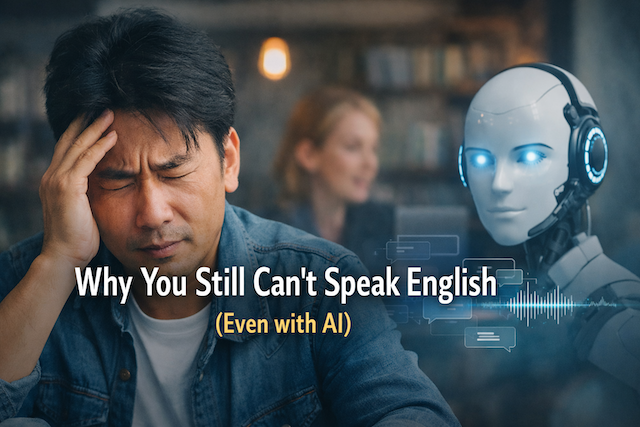
Why You Still Can’t Speak English (Even with AI)
Contents
- Why You Still Can’t Speak English (Even with AI)
- Introduction
- You Are Consuming English, Not Producing It
- You Rely Too Much on AI Assistance
- You Are Not Training Real-Time Thinking
- You Avoid Mistakes Instead of Embracing Them
- You Practice in Artificial Situations Only
- You Don’t Repeat Enough
- You Focus Too Much on Grammar
- You Are Not Thinking in English
- You Lack Consistent Speaking Habits
- You Don’t Push Your Comfort Zone
- You Expect Fast Results
- How to Fix It: A Better Approach
- Conclusion
- FAQs (Frequently Asked Questions)
- Can AI help me speak English better?
- Why do I understand English but still cannot speak it well?
- Is practicing with AI enough to become fluent?
- Why do I freeze when I try to speak English?
- Should I stop translating in my head?
- How should I use AI for speaking practice?
- Is grammar the main reason I cannot speak English?
- How long does it take to become a confident English speaker?
Why You Still Can’t Speak English (Even with AI)
Introduction
Artificial Intelligence has completely transformed how people learn English. Today, learners can access AI tutors, instant feedback, pronunciation analysis, and unlimited conversation practice—all from their smartphones. In theory, this should make fluency easier than ever.
Yet, many learners still struggle with one major problem: they understand English, but cannot speak it fluently.
If you feel stuck—even after using AI tools daily—you are not alone. The issue is not a lack of technology. It’s a deeper set of problems related to how you learn, how you practice, and how your brain processes language.
In this article, we will break down the real reasons why you still can’t speak English—even with AI—and what you must change to finally become fluent.
You Are Consuming English, Not Producing It
One of the biggest mistakes learners make is confusing input with output.
AI tools make it easy to:
- Read explanations
- Watch videos
- Translate sentences
- Listen to perfect English
But speaking is a completely different skill.
Fluency requires:
- Forming sentences in real time
- Retrieving vocabulary instantly
- Managing grammar under pressure
If your learning routine looks like this:
- Watching AI-generated explanations
- Reading corrections
- Asking questions
Then you are training your understanding, not your speaking ability.
To speak English, you must actively produce language:
- Say sentences out loud
- Answer questions without preparation
- Speak even when unsure
Without output, fluency will never develop—no matter how advanced the AI is.
You Rely Too Much on AI Assistance
AI is powerful—but it can also become a crutch.
Many learners depend on AI for:
- Grammar correction before speaking
- Sentence generation
- Vocabulary suggestions
This creates a hidden problem: you stop thinking in English yourself.
Instead of forming your own sentences, you:
- Think in your native language
- Ask AI to translate or fix it
- Repeat the AI’s answer
This process removes the most important skill:
independent sentence construction
Real conversations don’t give you time to:
- Check grammar
- Ask for corrections
- Rewrite sentences
If you rely too much on AI, your brain never develops the ability to speak spontaneously.
You Are Not Training Real-Time Thinking
Speaking English is not just about knowledge—it’s about speed.
You may know:
- Grammar rules
- Vocabulary
- Sentence structures
But if you cannot access them instantly, you will freeze in conversation.
AI interactions are often:
- Slow
- Controlled
- Editable
Real conversations are:
- Fast
- Unpredictable
- One-time only
If you are not practicing real-time thinking, you are not training for real communication.
To improve, you need exercises like:
- Answering questions within 3 seconds
- Speaking without pausing
- Describing things instantly
Fluency comes from speed, not perfection.
You Avoid Mistakes Instead of Embracing Them
Many learners use AI to avoid making mistakes.
They:
- Check sentences before speaking
- Only speak when confident
- Correct everything before saying it
This creates a dangerous habit: fear of speaking imperfectly.
In reality:
- Mistakes are necessary
- Imperfect speech is normal
- Fluency grows through errors
Even native speakers:
- Hesitate
- Use incorrect grammar
- Restart sentences
If you wait until your English is “perfect,” you will never speak.
AI should be used to review mistakes after speaking, not to prevent them before speaking.
You Practice in Artificial Situations Only
AI conversations are helpful—but they are often too:
- Predictable
- Structured
- Safe
In real life, conversations include:
- Interruptions
- Unexpected questions
- Emotional responses
- Background noise
If your only practice is with AI, you may struggle when:
- Someone speaks too fast
- You don’t understand a question
- The topic changes suddenly
Speaking is not just about language—it’s about handling real situations.
To truly improve, you need:
- Unscripted conversations
- Random topics
- Pressure and unpredictability
AI should simulate this—but many learners use it in a limited way.
You Don’t Repeat Enough
Repetition is one of the most underrated aspects of speaking.
Many learners:
- Learn something once
- Understand it
- Move on
But understanding is not mastery.
To speak fluently, you must:
- Repeat phrases multiple times
- Use the same structures in different contexts
- Practice until it becomes automatic
AI allows unlimited repetition—but most learners don’t take advantage of it.
For example:
Instead of asking one question and moving on, you should:
- Answer the same question 10 different ways
- Repeat it daily
- Increase speed each time
Fluency comes from automation, not exposure.
You Focus Too Much on Grammar
Grammar is important—but it is not the main barrier to speaking.
Many learners:
- Study grammar rules deeply
- Try to speak perfectly
- Overthink sentence structure
This leads to:
- Slow speech
- Hesitation
- Mental overload
In real conversation:
- Communication matters more than accuracy
- Simple sentences are enough
- Speed is more important than perfection
AI often reinforces grammar-focused learning, which can make this problem worse.
Instead of asking:
“Is this sentence correct?”
You should ask:
“Can I say this quickly and clearly?”
You Are Not Thinking in English
One of the biggest barriers to speaking is translation.
If your process is:
- Think in your native language
- Translate into English
- Speak
You will always be slow.
Fluent speakers:
- Think directly in English
- Use patterns, not translations
- React instantly
AI can help—but only if used correctly.
If you constantly:
- Translate sentences
- Ask for equivalents
- Compare languages
You reinforce translation habits.
To break this cycle:
- Use simple English
- Describe ideas instead of translating
- Accept imperfect expressions
Thinking in English is a skill—and it must be trained intentionally.
You Lack Consistent Speaking Habits
Fluency requires consistency.
Many learners:
- Practice irregularly
- Skip speaking practice
- Focus on passive learning
Even with AI, this leads to slow progress.
Speaking is like a muscle:
- If you don’t use it, it weakens
- If you use it daily, it strengthens
A strong routine might include:
- 15–30 minutes of speaking every day
- Daily conversation with AI
- Regular self-recording
Without consistency, even the best tools will not help.
You Don’t Push Your Comfort Zone
Many learners stay in safe areas:
- Familiar topics
- Easy vocabulary
- Simple sentences
This creates the illusion of progress.
But real growth happens when you:
- Struggle
- Search for words
- Try new expressions
AI often adapts to your level, which can make things too comfortable.
To improve, you must:
- Increase difficulty intentionally
- Talk about complex topics
- Use new vocabulary actively
Discomfort is a sign of progress.
You Expect Fast Results
AI creates the expectation that learning should be fast.
But speaking fluency still requires:
- Time
- Practice
- Repetition
Many learners quit because:
- They don’t see immediate results
- They compare themselves to others
- They expect AI to “fix” their English quickly
In reality:
- Fluency takes months or years
- Progress is gradual
- Plateaus are normal
AI accelerates learning—but it does not replace effort.
How to Fix It: A Better Approach
If you want to start speaking English fluently—even with AI—your approach must change.
Here’s a simple framework:
Focus on Output First
- Speak more than you read
- Answer questions out loud
- Practice daily
Use AI as a Tool, Not a Crutch
- Speak first, then check
- Avoid asking for perfect sentences
- Practice independent thinking
Train Speed
- Limit thinking time
- Practice quick responses
- Accept imperfect sentences
Embrace Mistakes
- Speak without fear
- Learn after speaking
- Track improvements
Repeat and Automate
- Reuse phrases
- Practice patterns
- Build muscle memory
Conclusion
AI is one of the most powerful tools ever created for language learning. It offers opportunities that were impossible just a decade ago.
However, AI alone cannot make you fluent.
If you still can’t speak English, the problem is not the tool—it’s how you use it.
Fluency requires:
- Active speaking
- Real-time thinking
- Consistent practice
- Willingness to make mistakes
Once you shift your approach from passive learning to active production, everything changes.
AI becomes not a shortcut—but a powerful partner in your journey to fluency.
And that’s when you finally start speaking English with confidence.
FAQs (Frequently Asked Questions)
Can AI help me speak English better?
Yes, AI can definitely help you improve your English speaking skills, but it is not a complete solution by itself. AI is excellent for giving you practice opportunities, correcting grammar, suggesting vocabulary, and helping you build confidence in a private and low-pressure environment. You can use it to simulate conversations, repeat speaking drills, and receive immediate feedback.
However, many learners make the mistake of thinking that access to AI automatically leads to fluency. It does not. AI is only a tool. Your progress depends on how actively you use it. If you only read AI responses, copy corrected sentences, or rely on it to create perfect answers for you, your speaking ability may improve very slowly. Speaking requires real-time production, not passive observation.
The best way to use AI is to make it part of an active routine. Speak first, make mistakes, and let AI help you review afterward. That is much more effective than asking AI to do all the speaking work for you.
Why do I understand English but still cannot speak it well?
This is a very common problem. Understanding English and speaking English are related, but they are not the same skill. Listening and reading are input skills, while speaking is an output skill. You may understand vocabulary, grammar, and sentence patterns when you see or hear them, but speaking requires you to produce those same elements quickly and independently.
In other words, recognition is easier than creation. Your brain may know what a sentence means when someone else says it, but building a sentence yourself under time pressure is much harder. This is especially true if you are still translating from your native language in your head before speaking.
To close the gap, you need more output practice. That means answering questions out loud, recording your voice, speaking without scripts, and repeating useful speaking patterns until they become automatic. Understanding is a good foundation, but fluency comes from repeated spoken use.
Is practicing with AI enough to become fluent?
For most learners, AI practice alone is not enough for full fluency. It can help you improve significantly, especially if you do not have access to native speakers, teachers, or language partners. But real fluency usually develops when you can handle different situations, accents, speaking speeds, and unpredictable questions.
Many AI conversations feel controlled and safe. You can pause, restart, or ask for clarification whenever you want. Real-life conversations are often messier. People interrupt, change topics, speak emotionally, or expect quick responses. If your practice only happens in a perfectly structured environment, you may still struggle in natural communication.
That said, AI can still be extremely valuable. It can prepare you for real-life speaking if you use it wisely. Ask it unexpected questions, practice timed responses, do roleplays, and challenge yourself to speak without stopping. The closer your AI practice is to real communication, the more helpful it becomes.
Why do I freeze when I try to speak English?
Freezing usually happens because your brain is overloaded. You may be trying to do too many things at once: choose the right vocabulary, remember grammar rules, translate from your first language, pronounce words clearly, and avoid mistakes. That is a lot of mental pressure, especially in a live conversation.
Another reason is fear. Many learners are afraid of sounding wrong, slow, or unnatural. This fear makes them hesitate even more. Instead of speaking simply, they try to create perfect sentences, and that often causes them to stop completely.
To reduce freezing, simplify your speaking process. Use shorter sentences. Focus on communicating your idea, not sounding perfect. Practice speaking under light time pressure so your brain learns to respond faster. Over time, confidence and automaticity will reduce hesitation.
Should I stop translating in my head?
Yes, reducing translation is very important if you want to speak more fluently. Translating from your native language into English slows you down and makes speaking feel heavy. It also causes unnatural phrasing, because direct translations often do not match how English is actually spoken.
Instead of translating everything, practice thinking in simple English. Start with basic descriptions of your daily life, feelings, plans, and opinions. For example, instead of thinking in your native language and then converting it, train yourself to say things like “I’m tired today,” “I need to finish this work,” or “I don’t agree with that idea” directly in English.
This skill takes time to build. At first, your English thoughts may feel simple or limited, but that is normal. Thinking directly in English is one of the key steps toward smoother speaking.
How should I use AI for speaking practice?
The best way to use AI for speaking practice is to make it interactive, active, and consistent. Do not use it only as a grammar checker or translator. Use it as a speaking partner, a drill coach, and a feedback tool.
For example, you can ask AI to give you daily speaking questions, roleplay common situations, or challenge you to explain a topic in simple English. You can also speak your answer out loud before reading or checking anything. Afterward, you can compare your version with improved alternatives and learn from the difference.
You should also use repetition. If AI gives you a useful phrase or structure, practice saying it many times in different contexts. That helps turn knowledge into speaking ability. The goal is not just to know good English. The goal is to say it naturally and quickly.
Is grammar the main reason I cannot speak English?
Not usually. Grammar matters, but for many learners, it is not the main reason they cannot speak. In fact, many people know more grammar than they need, but still struggle to hold a conversation. The problem is often not lack of knowledge. It is lack of speaking automation.
If you focus too much on grammar while speaking, you may become slow and nervous. Real conversation happens quickly, so you often need to communicate with simple structures that you can use confidently. Clear and understandable English is more useful than perfect but delayed English.
This is why many learners improve faster when they focus on speaking patterns, common expressions, and repeated real-life use rather than endless grammar study. Grammar supports speaking, but it should not control every sentence you say.
How long does it take to become a confident English speaker?
There is no single timeline because progress depends on your level, study habits, speaking frequency, and the kind of practice you do. Some learners notice improvement within a few weeks, while others need several months before they feel noticeably more fluent. Building confidence often takes longer than building knowledge.
The good news is that consistent speaking practice usually produces results faster than passive study alone. If you speak English every day, review your mistakes, repeat useful patterns, and gradually challenge yourself with harder tasks, you will improve. The process may feel slow at times, but regular speaking compounds over time.
Confidence grows when speaking becomes familiar. The more often you do it, the less scary it feels. That is why daily practice, even for a short time, is often better than long but irregular study sessions.
How to Improve English Speaking Using AI Apps (Complete Guide 2026)

How to Register for eTravel Philippines (2025 Guide)
Step-by-step guide to completing your eTravel registration before arriving in the Philippines, with images and tips.

Night Market in Cebu – Things You Don’t Know About Cebu Life
Discover the hidden charm of Cebu’s night markets, from street food stalls to local life tips you won’t find in tourist guides.

How to Use ChatGPT for IELTS Preparation: A Complete Guide
Learn how to prepare for IELTS using ChatGPT — including strategies for Writing, Reading, Listening, Speaking, and grammar support.

How to Build a Website Without Coding Using ChatGPT
Discover how to build your own website using AI—no coding skills needed. From structure planning to SEO and design, let ChatGPT guide you.