2026年4月5日
3D ACADEMY offers affordable English study programs in Cebu, Philippines – perfect for beginners, professionals, and exam takers.

3D UNIVERSAL ENGLISH INSTITUTE INC
info.3d-universal.com
8:00-17:00(Mon-Fri)
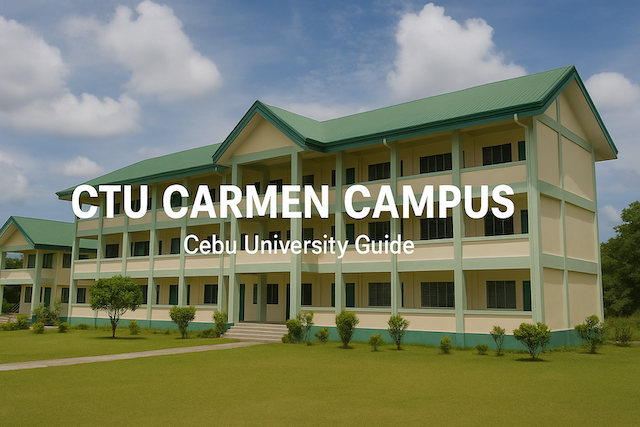
CTU Carmen Campus: Cebu University Guide
Contents
- CTU Carmen Campus: Cebu University Guide
- Overview of CTU Carmen Campus
- Academic Programs Offered
- Campus Facilities
- Campus Location and Surroundings
- Student Life at CTU Carmen Campus
- Admission Requirements
- Why Choose CTU Carmen Campus?
- Tips for Future Students
- Conclusion
- FAQs (Frequently Asked Questions)
- Where is CTU Carmen Campus located?
- What academic programs are offered at CTU Carmen Campus?
- Is CTU Carmen a public (state) university campus?
- How much does it cost to study at CTU Carmen Campus?
- Does CTU Carmen Campus offer scholarships or financial assistance?
- Is there on-campus housing or dormitory at CTU Carmen?
- What is student life like at CTU Carmen Campus?
- How can I apply to CTU Carmen Campus as a new student?
- Can I transfer to CTU Carmen Campus from another college or university?
- What is the language of instruction at CTU Carmen Campus?
- Is CTU Carmen Campus safe for students?
- How is CTU Carmen different from CTU Main Campus in Cebu City?
CTU Carmen Campus: Cebu University Guide
Overview of CTU Carmen Campus
Cebu Technological University (CTU) Carmen Campus is one of the most important northern Cebu extensions of the CTU system, offering a blend of agriculture-focused programs, applied sciences, engineering, and community-oriented courses. Located in the municipality of Carmen—about an hour and a half from Cebu City—the campus serves as a key educational institution for students from northern Cebu, the Camotes Islands, and other neighboring areas.
CTU Carmen is known for its wide open spaces, farm laboratories, and strong emphasis on practical, hands-on learning. The campus supports Cebu’s agricultural and environmental development initiatives while offering students access to industry-aligned programs. As part of CTU’s state university network, tuition fees are highly affordable, especially for Filipino students under the Universal Access to Quality Tertiary Education Act.
This comprehensive guide provides a detailed look at CTU Carmen’s academic offerings, facilities, campus environment, student life, and admission processes to help future students make an informed decision.
Academic Programs Offered
CTU Carmen Campus provides a selection of undergraduate programs emphasizing agriculture, technology, engineering, and applied sciences. The campus continues to expand its academic departments to meet the needs of the region.
Agriculture and Allied Programs
Carmen is known as one of CTU’s agriculture-oriented campuses. Programs typically include:
-
Bachelor of Science in Agriculture (BSA)
-
Bachelor of Agricultural Technology (BAT)
-
Bachelor of Science in Animal Science
-
Bachelor of Science in Agribusiness Management
These programs are strongly supported by hands-on learning through crop fields, livestock farms, nursery areas, and agricultural research facilities within campus grounds.
Engineering and Technology Programs
CTU Carmen also offers technological programs to prepare students for practical careers in rapidly evolving industries:
-
Bachelor of Science in Industrial Technology
-
Bachelor of Science in Mechanical Engineering (offered depending on academic year availability)
-
Bachelor of Science in Civil Engineering (limited slots depending on faculty assignment)
Education Programs
Some of the CTU northern campuses offer teacher education programs, and Carmen is no exception:
-
Bachelor of Secondary Education
-
Bachelor of Elementary Education
These programs typically include field immersion in local partner schools in the Carmen district.
Fisheries, Marine Studies, and Environmental Programs
Given Carmen’s access to coastal and aquatic resources:
-
Bachelor of Science in Fisheries
-
Bachelor of Science in Environmental Science
These programs align with the region’s growing environmental conservation initiatives.
Graduate Programs (If Available)
Depending on faculty and resource allocation, CTU Carmen may offer selected graduate programs under the CTU system’s extension model, including:
-
Master of Arts in Education
-
Master in Public Administration
-
Master of Science in Agriculture
Prospective graduate students should verify the latest offerings directly through the CTU admissions office.
Campus Facilities
CTU Carmen Campus provides a blend of open agricultural spaces, classrooms, and modernized facilities. While not as urbanized as CTU Main Campus, it supports student learning through functional and practical infrastructures.
Classrooms and Academic Buildings
The campus holds multiple academic buildings that house faculty offices, laboratories, and classrooms. Facilities are continually upgraded as part of CTU’s modernization program.
Agricultural and Livestock Facilities
Some of the most notable features of CTU Carmen include:
-
Livestock barns
-
Poultry houses
-
Crop research fields
-
Plant nurseries
-
Soil and water laboratories
These facilities support practical training and research in agriculture-related fields.
Laboratories
Technology, engineering, and applied science students have access to:
-
Computer laboratories
-
Engineering workshops
-
Fisheries labs
-
Science and research laboratories
Library and Learning Resources
CTU Carmen is equipped with:
-
A campus library
-
Digital learning resource center
-
E-library access linked to CTU’s central system
Sports and Community Areas
Students can enjoy recreational facilities including:
-
Basketball courts
-
Open training fields
-
Multipurpose halls
These facilities are often used for activities like intramurals, student assemblies, and cultural events.
Campus Location and Surroundings
Carmen is a charming municipality in northern Cebu known for eco-tourism sites like Mantayupan Waterfalls, mountain views, and natural landscapes. The location is ideal for students who prefer a peaceful, less urban setting.
Distance from Cebu City
-
Approximately 1.5 to 2 hours from Cebu City
-
Accessible via North Bus Terminal, jeepneys, or private transport
Nearby Amenities
Despite having a rural feel, the area offers:
-
Local markets
-
Budget eateries
-
Convenience stores
-
Pharmacies
-
Affordable boarding houses
Students find the area cost-effective compared to highly urbanized regions.
Student Life at CTU Carmen Campus
Student life at CTU Carmen is shaped by a mix of academic focus, community involvement, and cultural experiences.
Clubs and Student Organizations
Students can join:
-
Agriculture clubs
-
Environmental groups
-
Engineering societies
-
Education organizations
-
Student government associations
-
Cultural and arts clubs
These organizations provide leadership training and community outreach opportunities.
Campus Events
CTU Carmen hosts various events yearly:
-
University Foundation Days
-
Agriculture fairs
-
Sports intramurals
-
Research presentations
-
Cultural celebrations
-
Community extension programs
Cost of Living
One of the advantages of studying in Carmen is its affordability:
-
Dormitory/boarding house: significantly lower than Cebu City
-
Food options: cheap local eateries and carinderias
-
Transportation: accessible jeepneys and buses
Admission Requirements
Admission to CTU Carmen Campus follows the same procedures applied across the CTU system. Requirements may vary depending on the program and academic year.
General Undergraduate Requirements
-
Completed senior high school
-
CTU College Admission Test (depending on the latest policy)
-
Form 138 (Report Card)
-
PSA Birth Certificate
-
Good Moral Certificate
-
2×2 or passport-size photos
-
Application form (available online or onsite)
Engineering and science programs may require additional qualifications such as grade thresholds in STEM-related subjects.
Transfer Students
Transfers must submit:
-
Transcript of Records (TOR)
-
Honorable dismissal
-
Course descriptions for subject evaluation
Graduate Students
Graduate applicants typically provide:
-
Undergraduate diploma
-
Official Transcript of Records
-
Recommendation letters
-
Entrance evaluation (if applicable)
Why Choose CTU Carmen Campus?
Students often choose CTU Carmen for several reasons:
-
Strong agriculture and environmental programs
-
Affordable tuition due to state university subsidies
-
Hands-on, practical learning facilities
-
A peaceful environment ideal for focused study
-
Community-oriented programs supporting local development
-
Access to CTU’s growing academic reputation nationwide
Tips for Future Students
If you are planning to study at CTU Carmen Campus, consider the following:
-
Visit early to secure affordable boarding options
-
Prepare for practical fieldwork if taking agriculture- or fisheries-related courses
-
Attend orientation to understand campus culture and requirements
-
Stay updated on CTU’s evolving academic programs and digital systems
-
Engage in student organizations to enrich your college life
Conclusion
CTU Carmen Campus plays a vital role in providing accessible, practical, and community-centered education for northern Cebu. With strong agriculture programs, expanding technology and engineering departments, and a peaceful environment ideal for studying, it continues to be a strategic choice for students seeking affordable, quality higher education. Whether you are pursuing a career in agriculture, technology, education, or environmental science, CTU Carmen offers a solid foundation supported by the wider CTU system.
FAQs (Frequently Asked Questions)
Where is CTU Carmen Campus located?
CTU Carmen Campus is located in the municipality of Carmen in northern Cebu, along the main highway that connects Cebu City to the northern towns. It is usually reachable from Cebu City in about 1.5 to 2 hours by bus or van from the North Bus Terminal, depending on traffic and the exact departure point. The campus is surrounded by rural and semi-rural communities, farm areas, and local residential zones, which gives it a quieter, more nature-oriented atmosphere compared to city campuses.
What academic programs are offered at CTU Carmen Campus?
CTU Carmen Campus generally focuses on agriculture, environmental studies, fisheries, technology, and selected teacher education and engineering programs. Common offerings include degrees in Agriculture, Agricultural Technology, Animal Science, Agribusiness, Fisheries, Environmental Science, Industrial Technology, and selected Education programs. Some engineering programs may also be available depending on the academic year and faculty assignment. Because offerings can change over time, applicants are strongly encouraged to confirm the current list of programs directly with the CTU admissions office or official website.
Is CTU Carmen a public (state) university campus?
Yes. CTU Carmen Campus is part of Cebu Technological University, a public state university system in the Philippines. As a state university, it benefits from government support and national policies such as the Universal Access to Quality Tertiary Education Act, which can cover tuition and certain other fees for eligible Filipino students in state universities and colleges (SUCs). However, students may still need to pay for some miscellaneous fees, personal expenses, and other charges depending on their course and year level.
How much does it cost to study at CTU Carmen Campus?
Because CTU is a state university, qualified Filipino students generally do not pay traditional tuition under the free higher education law, but they may still handle miscellaneous fees, learning materials, uniforms (if required), and personal living expenses. For non-Filipino students or for specific programs, different fee structures may apply. Exact amounts change over time, so it is important to request an updated breakdown of fees from the CTU cashier or registrar and to check official announcements before enrollment.
Does CTU Carmen Campus offer scholarships or financial assistance?
Students at CTU Carmen Campus may be able to access various forms of financial assistance, including national government scholarships (such as those from CHED or DOST, when applicable), local government scholarships from their municipality or province, and possible institutional scholarships or discounts. Availability depends on current policies, budget, and scholarship slots. Interested students should inquire directly with the campus scholarship or student affairs office for the latest list of scholarship programs and application procedures.
Is there on-campus housing or dormitory at CTU Carmen?
Housing arrangements around CTU Carmen Campus often include affordable boarding houses and dorm-style accommodations located near the campus or along the main road. In some cases, there may be on-campus or university-affiliated dormitories, but this can vary by academic year. Many students choose to rent nearby rooms or apartments shared with classmates to minimize daily travel. It is best to visit the area early, ask student organizations or the student affairs office, and compare options for safety, cost, and accessibility before deciding where to stay.
What is student life like at CTU Carmen Campus?
Student life at CTU Carmen is generally community-oriented and practical. Because of the strong focus on agriculture, fisheries, and environmental programs, many learning experiences take place outdoors and in field settings. Students can join academic organizations, student government, interest-based clubs, and cultural groups. Activities such as intramurals, foundation days, research forums, and community extension projects are common. The atmosphere is less urban and more relaxed than city campuses, which many students find suitable for focused study.
How can I apply to CTU Carmen Campus as a new student?
Prospective students typically start by monitoring CTU’s official website and social media pages for announcements about the application schedule and guidelines. The usual steps include filling out an application form (online or on-site), submitting senior high school records such as Form 138, presenting a PSA birth certificate, a certificate of good moral character, and recent ID photos. Depending on current policy, applicants may also need to take a CTU entrance or placement exam. Because procedures can change, always follow the latest instructions from the CTU admissions office.
Can I transfer to CTU Carmen Campus from another college or university?
Yes, CTU Carmen Campus may accept qualified transferees, subject to space availability and evaluation of their previous coursework. Transfer applicants usually have to submit an official Transcript of Records, honorable dismissal, course descriptions for subjects they want credited, and other standard admission requirements. The department or program chair will review which subjects can be credited and what additional courses must be taken. Transferees should apply early and be prepared for the possibility that not all previous subjects will be credited.
What is the language of instruction at CTU Carmen Campus?
The primary language of instruction at CTU Carmen Campus is English, especially for technical, scientific, and professional subjects. However, Filipino and Cebuano (Bisaya) may also be used for clarifications, informal discussions, and certain general education or community-related subjects. International or non-local students should be comfortable using English in academic settings, while learning some basic Cebuano can be helpful for everyday communication in the community.
Is CTU Carmen Campus safe for students?
CTU Carmen Campus is located in a relatively peaceful area, and the university typically coordinates with local authorities and security personnel to maintain a safe environment. Like any campus, students are advised to follow safety guidelines, avoid walking alone late at night, secure their valuables, and choose reputable boarding houses or dormitories. It is also recommended to stay informed about campus advisories, emergency procedures, and community updates.
How is CTU Carmen different from CTU Main Campus in Cebu City?
While both are part of the same CTU system, CTU Carmen Campus and CTU Main Campus have different strengths and environments. CTU Main Campus in Cebu City offers a wider range of programs and is situated in a dense urban setting with more immediate access to city-based services and industries. CTU Carmen Campus, on the other hand, is more focused on agriculture, fisheries, environmental studies, and related applied sciences, with a quieter, more rural atmosphere and extensive field and farm-based learning opportunities. Students may choose between the two based on their preferred program, lifestyle, and long-term career goals.
Cebu Technological University (CTU) Guide: Courses, Campuses, and Admissions

How to Register for eTravel Philippines (2025 Guide)
Step-by-step guide to completing your eTravel registration before arriving in the Philippines, with images and tips.

Night Market in Cebu – Things You Don’t Know About Cebu Life
Discover the hidden charm of Cebu’s night markets, from street food stalls to local life tips you won’t find in tourist guides.

How to Use ChatGPT for IELTS Preparation: A Complete Guide
Learn how to prepare for IELTS using ChatGPT — including strategies for Writing, Reading, Listening, Speaking, and grammar support.

How to Build a Website Without Coding Using ChatGPT
Discover how to build your own website using AI—no coding skills needed. From structure planning to SEO and design, let ChatGPT guide you.