2026年4月5日
3D ACADEMY offers affordable English study programs in Cebu, Philippines – perfect for beginners, professionals, and exam takers.

3D UNIVERSAL ENGLISH INSTITUTE INC
info.3d-universal.com
8:00-17:00(Mon-Fri)
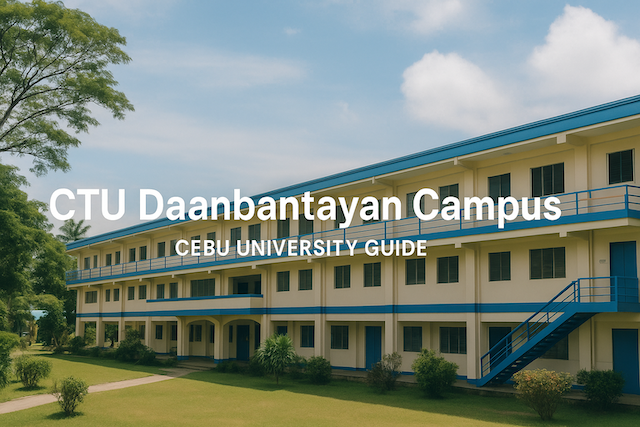
CTU Daanbantayan Campus: Cebu University Guide
Contents
- CTU Daanbantayan Campus: Cebu University Guide
- Campus Overview
- Academic Programs Offered
- Campus Facilities
- Student Life
- Admission Requirements
- Tuition and Fees
- Housing and Accommodation Options
- Transportation and Accessibility
- Career Opportunities for Graduates
- Why Choose CTU Daanbantayan Campus?
- What is CTU Daanbantayan Campus known for?
- What degree programs are offered at CTU Daanbantayan Campus?
- Is tuition free at CTU Daanbantayan Campus?
- What are the general admission requirements for new students?
- Does CTU Daanbantayan Campus offer dormitories or on-campus housing?
- How do I get to CTU Daanbantayan Campus from Cebu City?
- What is student life like at CTU Daanbantayan Campus?
- Are there laboratories and facilities for hands-on learning?
- What career opportunities are available to CTU Daanbantayan graduates?
- Who should consider studying at CTU Daanbantayan Campus?
CTU Daanbantayan Campus: Cebu University Guide
Cebu Technological University (CTU) Daanbantayan Campus is one of the key northern extensions of the CTU system, serving students from Daanbantayan, Medellin, Bantayan Island, and other nearby areas in Northern Cebu. Known for its focus on community-responsive programs, fisheries, agriculture, and technology, this campus plays an essential role in providing accessible and industry-relevant education outside Cebu City.
This comprehensive guide covers the campus overview, programs, facilities, student life, admissions, and what future students can expect when choosing CTU Daanbantayan Campus.
Campus Overview
CTU Daanbantayan Campus is part of the Cebu Technological University network, a state university known for engineering, technology, education, and applied sciences. Located in the northernmost municipality of Cebu Province, the Daanbantayan campus provides accessible higher education to students who want quality yet affordable degree programs closer to home.
The campus is recognized for fields such as:
-
Fisheries and Marine Sciences
-
Agriculture and Environmental Studies
-
Education
-
Technology and Industrial Trades
-
Hospitality and Tourism
Because of its coastal location, CTU Daanbantayan is particularly strong in technical-vocational programs related to marine, aquaculture, and coastal resource management.
Academic Programs Offered
CTU Daanbantayan Campus offers a mix of bachelor’s degrees, certificate programs, and technical-vocational courses. While specific offerings may change depending on demand and CHED approvals, the following programs are commonly available:
Bachelor’s Degree Programs
-
Bachelor of Science in Fisheries (BSFi)
A flagship program designed for students interested in aquaculture, fish processing, marine resource conservation, and coastal management. -
Bachelor of Agricultural Technology (BAT)
Focuses on sustainable farming, crop production, and agricultural enterprise. -
Bachelor of Industrial Technology (BIT)
Specializations may include automotive technology, electronics, and electrical technology. -
Bachelor of Science in Hospitality Management (BSHM)
Prepares students for careers in tourism, hotel operations, and food service – a strong fit in a tourism-rich region. -
Bachelor of Secondary Education (BSEd) & Bachelor of Elementary Education (BEEd)
These programs train future educators with strong foundations in pedagogy and subject specialization.
Technical-Vocational Programs
CTU Daanbantayan also offers TESDA-aligned courses such as:
-
Aquaculture NC II
-
Fish Capture NC II
-
Bread and Pastry Production NC II
-
Housekeeping NC II
-
Electrical Installation and Maintenance NC II
These are ideal for students seeking quick employment or technical skills training.
Campus Facilities
Though located in a non-urban setting, CTU Daanbantayan Campus provides functional academic and training facilities designed to support hands-on learning.
Key Facilities Include:
-
Classroom Buildings
Standard lecture rooms for general education and professional courses. -
Laboratories
Specialized laboratories for fisheries, agriculture, science, and industrial technology. -
Workshop Rooms
Used for hands-on training in automotive technology, electronics, and related fields. -
Library and Learning Resource Center
Offers books, digital materials, and quiet study areas. -
Computer Laboratories
Equipped with internet access and necessary software for student requirements. -
Campus Grounds and Open Spaces
A spacious environment that supports outdoor learning activities and student events. -
Multipurpose Hall
Often used for assemblies, intramurals, and academic events.
While CTU campuses vary in size and infrastructure, CTU Daanbantayan continues to develop its facilities to support growing enrollment.
Student Life
CTU Daanbantayan offers an environment where students can experience a close-knit community atmosphere. Since it is located away from the city, the campus tends to be more peaceful, making it ideal for students who prefer a calm academic environment.
Student Organizations
Students can join various groups such as:
-
Academic and departmental clubs
-
Sports teams
-
Campus journalism organizations
-
Performing arts groups
-
Environmental and community outreach organizations
These organizations help develop leadership and teamwork skills while supporting extracurricular interests.
Campus Culture
The campus community is generally supportive and collaborative. Students often participate in coastal cleanups, community immersion programs, and other service-oriented activities, reflecting the university’s commitment to social responsibility.
Admission Requirements
Admission requirements may vary per program, but the general guidelines include:
For Incoming Freshmen
-
Completed Senior High School (SHS)
-
Photocopy of Form 138 (Report Card)
-
Birth Certificate (PSA)
-
Certificate of Good Moral Character
-
2×2 ID photos
-
CTU entrance exam or interview (depending on campus policy)
For Transferees
-
Transcript of Records or Copy of Grades
-
Honorable Dismissal
-
Good Moral Certificate
-
Birth Certificate
-
Program evaluation by department
For Second-Degree Applicants
-
Transcript of Records
-
Application interview or evaluation
As a state university, CTU offers affordable tuition under RA 10931 (Universal Access to Quality Tertiary Education Act), making it financially accessible to most students.
Tuition and Fees
Because CTU is a public university, tuition is free for qualified undergraduate students under the national “Free Tuition Law.” Students may only need to pay minimal fees such as:
-
ID fee
-
Laboratory fees (depending on course)
-
Miscellaneous charges
-
Uniforms (if required)
Technical-vocational courses may have small assessment or materials fees, depending on TESDA requirements.
Housing and Accommodation Options
CTU Daanbantayan Campus does not typically provide on-campus dormitories. However, students can easily find boarding houses and rentals in surrounding barangays.
Options include:
-
Shared rooms
-
Private rooms
-
Small apartments
-
Family-run homestays
Prices are generally cheaper compared to Cebu City, making Daanbantayan a budget-friendly study location.
Transportation and Accessibility
Daanbantayan is located at the northern tip of Cebu Island. Students can reach the campus through:
-
Ceres provincial buses from Cebu North Bus Terminal
-
UV Express vans from major towns in North Cebu
-
Local tricycles or motorcycles (habal-habal) within Daanbantayan
It is also the gateway to Malapascua Island, a major dive destination, adding to the tourism value of the region.
Career Opportunities for Graduates
Graduates of CTU Daanbantayan often find employment in:
Fisheries and Aquaculture
-
Fish farming operations
-
Marina and coastal management agencies
-
Fish processing companies
-
Environmental conservation groups
Agriculture
-
Farms and agribusiness companies
-
Government agricultural offices
-
Seed and fertilizer companies
Education
-
Public and private schools
-
Tutorial centers
-
Community education programs
Hospitality and Tourism
-
Hotels and resorts (especially in Malapascua)
-
Travel agencies
-
Food and beverage sector
Industrial and Technical Fields
-
Automotive shops
-
Electronics repair centers
-
Construction and engineering firms
CTU’s reputation for practical skills training makes its graduates highly employable.
Why Choose CTU Daanbantayan Campus?
Students may consider this campus if they want:
-
A peaceful, coastal study environment
-
Strong programs in fisheries, agriculture, teaching, industrial tech, and hospitality
-
Affordable education through free tuition
-
Hands-on, community-centered training
-
Access to local job opportunities in North Cebu and nearby islands
It is especially ideal for those from Daanbantayan and nearby municipalities who want to pursue higher education without relocating to a major city.
What is CTU Daanbantayan Campus known for?
CTU Daanbantayan Campus is known for offering accessible, community-centered higher education in Northern Cebu, with particular strengths in fisheries, agriculture, industrial technology, teacher education, and hospitality management. Because the campus is located in a coastal municipality at the northern tip of Cebu, its programs are designed to respond to local needs such as aquaculture, coastal resource management, and tourism. Many students choose this campus for its mix of hands-on training, affordable tuition, and the opportunity to study near their hometown rather than relocating to a big city.
What degree programs are offered at CTU Daanbantayan Campus?
The campus typically offers a range of bachelor’s degree programs and technical courses. Common offerings include:
- Bachelor of Science in Fisheries (BSFi)
- Bachelor of Agricultural Technology (BAT)
- Bachelor of Industrial Technology (BIT), with various specializations
- Bachelor of Science in Hospitality Management (BSHM)
- Bachelor of Secondary Education (BSEd)
- Bachelor of Elementary Education (BEEd)
In addition to degree programs, the campus may also provide TESDA-aligned technical-vocational courses related to aquaculture, fish capture, housekeeping, bread and pastry production, and basic electrical installation. Program offerings can change depending on demand and approvals, so it is always a good idea to check directly with the campus for the most updated list.
Is tuition free at CTU Daanbantayan Campus?
Yes, CTU Daanbantayan Campus is part of a state university covered by the Philippines’ Universal Access to Quality Tertiary Education Act (RA 10931). This means that qualified Filipino students enrolled in approved undergraduate programs do not pay traditional tuition and other school fees. However, students should still budget for certain expenses such as laboratory fees (when applicable), school ID, student organization fees, and personal costs like transportation, food, and learning materials. Some technical-vocational programs may also have small assessment or materials fees, especially when equipment and consumables are involved.
What are the general admission requirements for new students?
For incoming freshmen, general requirements commonly include:
- Senior High School completion (Grade 12 graduate)
- Form 138 or Senior High School Report Card
- PSA-issued Birth Certificate
- Certificate of Good Moral Character
- 2×2 or passport-sized ID photos
The campus may also conduct an entrance exam, placement test, or interview depending on the chosen program and current admission policies. Transferees usually need to provide a Transcript of Records or certified copy of grades, Honorable Dismissal, and program evaluation by the department. For the most accurate and updated list of requirements, applicants are encouraged to contact the campus registrar or admissions office directly.
Does CTU Daanbantayan Campus offer dormitories or on-campus housing?
In many cases, CTU Daanbantayan Campus does not operate large-scale on-campus dormitories. Instead, students typically stay in nearby boarding houses, rented rooms, shared apartments, or homestays run by local families. The cost of accommodation around Daanbantayan is generally lower than in major cities like Cebu City, which can be a big advantage for students with a limited budget. When choosing a place to stay, students should consider safety, distance from campus, access to transportation, water and electricity reliability, and any house rules.
How do I get to CTU Daanbantayan Campus from Cebu City?
From Cebu City, students usually travel via the Cebu North Bus Terminal. Buses and vans bound for Daanbantayan or nearby towns such as Bogo and Medellin are widely available. The trip can take several hours depending on traffic and road conditions, so it is best to allow enough travel time. Upon arriving in Daanbantayan, students can take local transport such as tricycles or motorcycles for hire (habal-habal) to reach the campus. For day-to-day commuting, students who live in nearby municipalities often rely on buses, jeepneys (where available), and local rides to get to and from the campus.
What is student life like at CTU Daanbantayan Campus?
Student life at CTU Daanbantayan Campus is generally characterized by a close-knit and community-oriented atmosphere. Because the campus is located away from dense urban centers, the environment tends to be more relaxed and less crowded. Students can participate in a variety of organizations, including academic clubs, sports teams, student government, campus publications, and environmental or community outreach groups. Activities such as coastal cleanups, community extension projects, and school-based events help students develop leadership, social awareness, and teamwork outside the classroom.
Are there laboratories and facilities for hands-on learning?
Yes, the campus usually maintains a range of facilities that support practical learning. These may include lecture rooms, science laboratories, fisheries or agriculture labs, computer laboratories, and specialized workshops for industrial technology. A library or Learning Resource Center provides students with access to reference books, course materials, and quiet study spaces. While facilities in a provincial campus may not be as large as those in major metropolitan universities, CTU Daanbantayan focuses on making sure that students receive the essential tools and environments they need for skill-based education.
What career opportunities are available to CTU Daanbantayan graduates?
Career paths for CTU Daanbantayan graduates depend on the program they complete. Fisheries graduates may work in aquaculture farms, fish processing plants, marine conservation projects, and government agencies dealing with coastal and marine resources. Agriculture graduates can join farms, agribusiness companies, and local government agricultural offices. Education graduates often become teachers in public or private schools, while hospitality management graduates find work in hotels, resorts, restaurants, and tourism-related businesses, especially around Daanbantayan and nearby destinations like Malapascua Island. Industrial technology graduates can enter technical and trade fields such as automotive, electrical, or electronics services.
Who should consider studying at CTU Daanbantayan Campus?
CTU Daanbantayan Campus is a strong option for students who live in Northern Cebu and want to pursue a degree without moving to Cebu City, as well as for those who value a calm, coastal study environment. It is especially suitable for students interested in fisheries, agriculture, industrial technology, hospitality, and education, and for those who prefer applied, hands-on learning over purely theoretical courses. Because tuition is free for qualified undergraduates and living costs in the area are relatively modest, the campus is also a good choice for students who need an affordable but reputable public university.
Cebu Technological University (CTU) Guide: Courses, Campuses, and Admissions

How to Register for eTravel Philippines (2025 Guide)
Step-by-step guide to completing your eTravel registration before arriving in the Philippines, with images and tips.

Night Market in Cebu – Things You Don’t Know About Cebu Life
Discover the hidden charm of Cebu’s night markets, from street food stalls to local life tips you won’t find in tourist guides.

How to Use ChatGPT for IELTS Preparation: A Complete Guide
Learn how to prepare for IELTS using ChatGPT — including strategies for Writing, Reading, Listening, Speaking, and grammar support.

How to Build a Website Without Coding Using ChatGPT
Discover how to build your own website using AI—no coding skills needed. From structure planning to SEO and design, let ChatGPT guide you.