
Contents
- Male Guide to Female Communication
- Why Male–Female Communication Often Feels Difficult
- Understanding Communication Styles: General Tendencies
- Listening Is More Important Than Talking
- Emotional Validation: What It Is and Why It Matters
- Avoid the “Fix-It” Reflex
- Understanding Indirect Communication
- Tone and Delivery Matter More Than Words
- Communicating During Conflict
- Timing Is Critical
- Asking Better Questions
- Understanding Emotional Expression Differences
- Non-Verbal Communication Signals
- Communication in Romantic Relationships
- Communication in the Workplace
- Cultural and Individual Differences Matter
- How to Improve Long-Term Communication Skills
- Common Myths About Female Communication
- Final Thoughts: Communication Is a Bridge, Not a Battle
- FAQs (Frequently Asked Questions)
- Is this guide saying that all women communicate the same way?
- Why does my partner say “I’m fine” when she clearly isn’t?
- How do I know when to give advice versus when to just listen?
- What is emotional validation, and why does it matter so much?
- I tried to validate her feelings, but she said I was being fake. What went wrong?
- Why does she bring up old issues during an argument?
- How can I communicate better during conflict without escalating it?
- What if I shut down when emotions get intense?
- How do I bring up a sensitive topic without sounding accusatory?
- Is indirect communication a sign of manipulation?
- What role does tone play in misunderstandings?
- How can I get better at asking questions that lead to real understanding?
- What if my partner expects me to “just know” what she needs?
- Can these communication tips work outside romantic relationships?
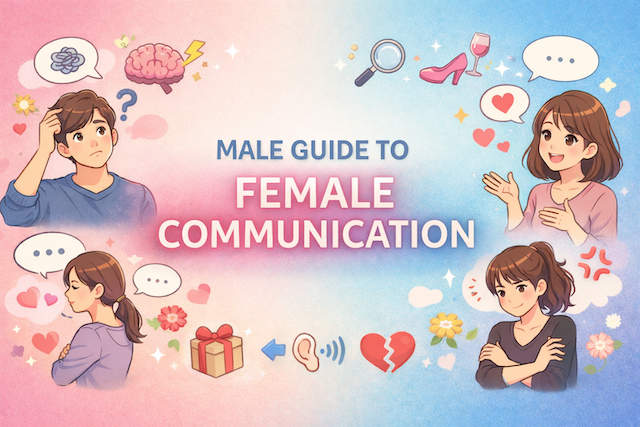
Male Guide to Female Communication
Understanding communication between men and women can feel challenging, especially when expectations, emotional styles, and social conditioning differ. This guide is not about stereotypes or “winning” conversations. Instead, it focuses on clarity, empathy, and practical communication skills that help men communicate more effectively with women in everyday life—whether in relationships, friendships, family settings, or the workplace.
The goal is simple: better understanding leads to better relationships.
Why Male–Female Communication Often Feels Difficult
Many men report feeling confused by women’s reactions, indirect expressions, or emotional responses. On the other side, many women feel unheard, dismissed, or misunderstood. These gaps usually come from differences in communication priorities, not from bad intentions.
Common friction points include:
-
Different ways of expressing emotions
-
Different expectations of listening
-
Different interpretations of silence, tone, and timing
Recognizing these differences is the first step toward better communication.
Understanding Communication Styles: General Tendencies
While every individual is unique, social research and real-life patterns show some common tendencies shaped by upbringing and culture.
How Men Often Communicate
-
Focus on solutions and outcomes
-
Prefer direct and concise language
-
See conversation as a way to solve problems
-
May interpret emotions as issues to be fixed
How Women Often Communicate
-
Focus on connection and understanding
-
Use conversation to process emotions
-
Value empathy and validation
-
Pay attention to tone, context, and subtext
Neither style is better or worse. Problems arise when one style is applied to the other without adjustment.
Listening Is More Important Than Talking
One of the most common mistakes men make is listening with the intention to respond, not to understand.
Active Listening Explained
Active listening means:
-
Giving full attention without interrupting
-
Not planning your reply while she is speaking
-
Showing understanding through verbal or non-verbal cues
Simple phrases that help:
-
“That sounds really frustrating.”
-
“I understand why you’d feel that way.”
-
“Tell me more about what happened.”
Often, being understood matters more than being helped.
Emotional Validation: What It Is and Why It Matters
Validation does not mean agreement. It means acknowledging her emotional experience as real and important.
What Validation Sounds Like
-
“I can see why that upset you.”
-
“That must have been stressful.”
-
“Your feelings make sense.”
What Invalidates Feelings
-
“You’re overreacting.”
-
“It’s not a big deal.”
-
“Just ignore it.”
Even if the issue seems minor to you, dismissing emotions damages trust and openness.
Avoid the “Fix-It” Reflex
Many men instinctively offer solutions when a woman talks about a problem. While well-intentioned, this can backfire.
When Solutions Are Not Wanted
Often, she wants:
-
To be heard
-
To release emotions
-
To feel supported
Before offering advice, ask:
-
“Do you want advice, or do you just want me to listen?”
This simple question can prevent many misunderstandings.
Understanding Indirect Communication
Women may communicate indirectly to avoid conflict, protect feelings, or test emotional safety.
Examples of Indirect Messages
-
“I’m fine” may mean “I’m not ready to talk yet.”
-
“Do whatever you want” may signal disappointment.
-
Silence may indicate emotional overload, not indifference.
Instead of guessing, gently clarify:
-
“You seem quiet. Is something bothering you?”
-
“I want to make sure I understand how you feel.”
Tone and Delivery Matter More Than Words
Men often focus on what is said. Women often focus on how it is said.
Things That Affect Tone Perception
-
Volume
-
Facial expression
-
Body language
-
Timing
Even logical statements can feel harsh if delivered without warmth or empathy. Slow down, soften your tone, and stay calm, especially during disagreements.
Communicating During Conflict
Conflict is unavoidable. How you handle it determines whether it strengthens or damages the relationship.
Common Mistakes Men Make in Conflict
-
Shutting down emotionally
-
Becoming overly defensive
-
Turning discussions into debates
-
Avoiding the issue entirely
Healthier Approaches
-
Stay present, even when uncomfortable
-
Acknowledge emotions before facts
-
Use “I” statements instead of “you” accusations
Example:
-
Instead of: “You always complain.”
-
Say: “I feel overwhelmed when conflicts escalate quickly.”
Timing Is Critical
Men often want to resolve issues immediately. Women may need time to process emotions first.
Respect Emotional Timing
If she says:
-
“I need some time.”
Respond with:
-
“That’s okay. Let me know when you’re ready to talk.”
Pushing for resolution too early can increase resistance and emotional tension.
Asking Better Questions
Good communication depends on good questions.
Helpful Question Types
-
Open-ended: “How did that make you feel?”
-
Clarifying: “What part of that bothered you the most?”
-
Supportive: “How can I support you right now?”
Avoid yes-or-no questions when discussing emotions, as they limit expression.
Understanding Emotional Expression Differences
Women often express emotions verbally. Men are often taught to suppress or minimize emotions.
Why This Causes Friction
-
Men may feel overwhelmed by emotional conversations.
-
Women may feel emotionally abandoned when men withdraw.
Learning to tolerate emotional discomfort is a key growth area for many men. You don’t need perfect words—presence matters more.
Non-Verbal Communication Signals
Women tend to be more sensitive to non-verbal cues.
Pay attention to:
-
Eye contact
-
Nodding or lack of response
-
Physical distance
-
Facial expressions
Checking your body language can dramatically improve communication without saying anything.
Communication in Romantic Relationships
In romantic settings, communication affects trust, intimacy, and long-term stability.
What Many Women Value
-
Consistency between words and actions
-
Emotional availability
-
Feeling prioritized and respected
Small habits make a big difference:
-
Checking in emotionally
-
Remembering details she shares
-
Following through on promises
Communication in the Workplace
Professional communication also benefits from these skills.
Key Points for Men at Work
-
Avoid dismissing emotional concerns as “personal”
-
Be mindful of interrupting
-
Encourage participation and feedback
-
Recognize emotional labor and communication effort
Strong communication improves teamwork, leadership, and trust.
Cultural and Individual Differences Matter
Not all women communicate the same way. Personality, culture, age, and experience play major roles.
Avoid These Traps
-
Assuming all women think alike
-
Using stereotypes as shortcuts
-
Ignoring individual preferences
The best communicator adapts to the person, not the category.
How to Improve Long-Term Communication Skills
Communication is a skill that improves with practice.
Practical Steps
-
Reflect after conversations: What worked? What didn’t?
-
Ask for feedback: “How can I communicate better with you?”
-
Read body language and emotional cues
-
Be willing to apologize and adjust
Growth mindset matters more than perfection.
Common Myths About Female Communication
Myth 1: Women are too emotional
Reality: Emotional awareness is a form of intelligence.
Myth 2: Women expect men to read minds
Reality: Many women want effort, curiosity, and engagement.
Myth 3: Logic beats emotion
Reality: Emotional understanding often resolves issues faster than logic alone.
Final Thoughts: Communication Is a Bridge, Not a Battle
Effective male–female communication is not about control, dominance, or always being right. It is about connection, respect, and mutual understanding.
When men learn to listen deeply, validate emotions, and adapt their communication style, relationships improve naturally—romantic or otherwise.
The strongest communicators are not those who speak the most, but those who understand the most.
FAQs (Frequently Asked Questions)
Is this guide saying that all women communicate the same way?
No. Women are not a single group with one communication style. This guide describes common patterns that can appear due to social norms, personality differences, and relationship dynamics. Individual preferences vary a lot, so the most effective approach is to stay curious, ask questions, and learn how the specific person you’re speaking with prefers to communicate.
Why does my partner say “I’m fine” when she clearly isn’t?
“I’m fine” can sometimes mean “I don’t want to talk yet,” “I’m hurt,” or “I’m not sure how to explain it.” It may be a protective response to avoid conflict or to create emotional space. Instead of pushing, try a gentle check-in like, “I sense something’s bothering you. Do you want to talk now, or should we come back to this later?”
How do I know when to give advice versus when to just listen?
A reliable method is to ask directly. Many conflicts start when one person wants empathy and the other offers solutions. Try: “Do you want advice, or do you want me to listen and support you?” This shows care while preventing misunderstandings. If she wants solutions, you can move into problem-solving together.
What is emotional validation, and why does it matter so much?
Validation means acknowledging that someone’s feelings are real and understandable, even if you would feel differently. It is not the same as agreeing with every detail. Statements like “That sounds stressful” or “I can see why you’d feel that way” help a woman feel heard and safe. Without validation, she may feel dismissed and stop sharing openly.
I tried to validate her feelings, but she said I was being fake. What went wrong?
This often happens when validation sounds rehearsed or when your tone and body language don’t match your words. Keep it simple and specific: name the emotion and the situation. For example, “I can see you’re disappointed about how that meeting went.” Also, avoid switching too quickly into fixing the problem. Stay present for a moment before offering next steps.
Why does she bring up old issues during an argument?
Old topics often resurface when a current conflict touches the same emotional theme, such as feeling ignored, disrespected, or unsupported. It can also mean past issues were never fully resolved. Instead of saying “Why are we talking about that again?” try: “I didn’t realize that still hurt you. Can you tell me what part felt unresolved?”
How can I communicate better during conflict without escalating it?
Focus on calm delivery and clear structure. Use “I” statements, avoid absolutes like “always” or “never,” and pause before reacting. A helpful pattern is: acknowledge feelings, state your perspective, propose a next step. Example: “I hear you’re frustrated. I felt pressured earlier. Can we slow down and talk about what you need from me right now?”
What if I shut down when emotions get intense?
Shutting down is common when you feel overwhelmed or fear saying the wrong thing. The key is to communicate what’s happening instead of disappearing emotionally. Say: “I’m getting overwhelmed. I want to continue, but I need 20 minutes to calm down.” Then actually return at the promised time. This builds trust and prevents the “avoidance” cycle.
How do I bring up a sensitive topic without sounding accusatory?
Start with your intention, then describe the behavior, then share your feeling and request. Keep it focused and avoid character judgments. Example: “I want us to feel close. When we don’t talk for days after an argument, I feel anxious. Could we agree on a time to check in even if we need space?” This approach invites teamwork instead of defensiveness.
Is indirect communication a sign of manipulation?
Not necessarily. Indirect communication can come from fear of conflict, a desire to protect feelings, or uncertainty about how the other person will react. However, patterns like guilt-tripping, threats, or repeated mind games are unhealthy regardless of gender. If indirectness is frequent, encourage clarity: “I want to understand you. Can you tell me directly what you need?”
What role does tone play in misunderstandings?
Tone can change the meaning of the same words. A logical message delivered with irritation may feel like rejection. Slow down, soften your voice, and keep your body language open. If you’re unsure how you came across, ask: “My intention is to be respectful—did my tone sound harsh?” This shows responsibility without self-blame.
How can I get better at asking questions that lead to real understanding?
Use open-ended questions and follow-up prompts. Instead of “Are you mad?” ask “What part of today was hardest for you?” Then reflect what you hear: “So you felt ignored when I didn’t reply.” This back-and-forth helps her feel listened to and helps you confirm you understood correctly.
What if my partner expects me to “just know” what she needs?
Some people learned to expect partners to anticipate needs, especially if they’ve felt unsupported before. You can be empathetic while still setting a healthy standard for clarity. Say: “I want to meet your needs, but I’m not always going to guess right. If you tell me directly, I can show up better.” Over time, consistency can shift the dynamic.
Can these communication tips work outside romantic relationships?
Yes. Active listening, validation, clear questions, and respectful conflict skills improve communication with friends, family members, coworkers, and clients. The main adjustment is context: in professional settings, keep emotional language appropriate while still acknowledging concerns and aiming for clarity and mutual respect.



