2025年12月18日
3D ACADEMY offers affordable English study programs in Cebu, Philippines – perfect for beginners, professionals, and exam takers.

3D UNIVERSAL ENGLISH INSTITUTE INC
info.3d-universal.com
8:00-17:00(Mon-Fri)
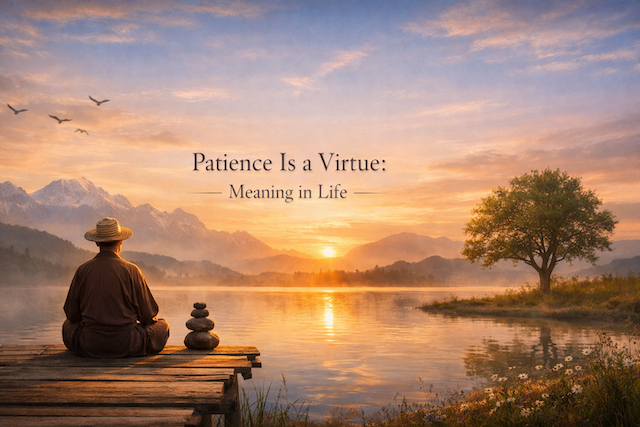
Patience Is a Virtue: Meaning in Life
Contents
- Patience Is a Virtue: Meaning in Life
- Introduction: Why Patience Still Matters Today
- The Meaning of “Patience Is a Virtue”
- The Historical and Cultural Roots of Patience
- Patience Versus Passivity: Clearing a Common Misunderstanding
- The Role of Patience in Personal Growth
- Patience in Relationships and Human Connection
- Patience and Emotional Well-Being
- Patience in Career, Success, and Ambition
- The Connection Between Patience and Wisdom
- Patience in Facing Failure and Adversity
- Learning Patience in a Fast-Paced World
- The Moral Value of Patience
- Patience as a Lifelong Practice
- Conclusion: Why Patience Defines a Meaningful Life
- FAQs (Frequently Asked Questions)
- What does “patience is a virtue” mean in everyday life?
- Is patience the same as doing nothing or accepting bad situations?
- Why is patience considered a “virtue” rather than just a personality trait?
- How does patience make life more meaningful?
- Does patience help with anxiety, stress, or anger?
- How can I be patient when I feel like I’m falling behind?
- What are practical ways to build patience as a daily habit?
- How can patience improve relationships and communication?
- Is being patient the same as delaying decisions?
- Can patience be learned, or is it something you’re born with?
Patience Is a Virtue: Meaning in Life
Introduction: Why Patience Still Matters Today
In a world shaped by instant gratification, fast technology, and constant urgency, patience often feels outdated. We expect quick replies, rapid success, and immediate results. Yet despite all modern conveniences, frustration, burnout, and dissatisfaction are more common than ever. This contradiction highlights a timeless truth: patience is not weakness—it is a virtue essential to a meaningful life.
The phrase “patience is a virtue” has been passed down for centuries, but its relevance has only grown stronger. Patience helps us endure uncertainty, manage emotions, build stronger relationships, and make wiser decisions. Rather than passively waiting, true patience is an active skill that shapes character and long-term success. Understanding what patience truly means—and how it applies to daily life—can fundamentally change how we face challenges and define fulfillment.
The Meaning of “Patience Is a Virtue”
At its core, the saying means that the ability to wait calmly, endure difficulty, or tolerate delay without anger or despair is a moral strength. A virtue is not merely a habit; it is a quality of character that reflects wisdom and integrity. Patience, therefore, is not about doing nothing—it is about responding thoughtfully instead of reacting impulsively.
Patience involves emotional regulation, perspective, and trust in process. It means accepting that not everything can be controlled or rushed. When practiced consistently, patience allows people to navigate life’s unpredictability with composure rather than chaos.
The Historical and Cultural Roots of Patience
Patience has long been valued across cultures, religions, and philosophies. In ancient Greek philosophy, patience was linked to self-mastery and rational thought. Stoic thinkers emphasized enduring hardship without complaint and focusing only on what lies within one’s control.
In religious traditions, patience is often associated with spiritual growth. In Christianity, patience is considered one of the fruits of the Spirit. In Buddhism, patience is essential to enlightenment, helping individuals release attachment and anger. In Islam, patience (sabr) is regarded as a form of faith and resilience during trials.
Across cultures, patience has consistently been seen as a foundation for wisdom, maturity, and moral strength—suggesting that it is a universal human necessity rather than a cultural preference.
Patience Versus Passivity: Clearing a Common Misunderstanding
One common misconception is that patience means being passive, submissive, or accepting injustice. In reality, patience is not about inaction—it is about intentional response. A patient person can still take decisive action, set boundaries, and pursue goals. The difference lies in timing, emotional control, and clarity.
For example, patience in conflict does not mean tolerating harm; it means choosing calm communication over explosive reaction. Patience in career growth does not mean abandoning ambition; it means understanding that meaningful progress takes time.
True patience empowers action by removing emotional noise and impulsive decisions that often lead to regret.
The Role of Patience in Personal Growth
Personal growth rarely happens overnight. Skills, confidence, emotional intelligence, and self-awareness develop through consistent effort and reflection. Patience allows individuals to stay committed during slow progress and setbacks.
Without patience, many people quit too early—abandoning goals just before meaningful change occurs. With patience, failures become lessons rather than endpoints. Growth requires trusting the process, even when results are invisible.
Patience also encourages humility. It reminds us that learning takes time and that mistakes are part of mastery. This mindset fosters resilience and long-term self-improvement.
Patience in Relationships and Human Connection
Strong relationships depend heavily on patience. People grow at different speeds, communicate differently, and carry unique emotional histories. Impatience leads to misunderstanding, resentment, and conflict, while patience creates space for empathy and trust.
In romantic relationships, patience allows partners to navigate disagreements without escalation. In friendships, it supports forgiveness and acceptance. In family dynamics, patience bridges generational gaps and emotional differences.
Listening patiently—without interrupting or rushing to judgment—is one of the most powerful ways to strengthen human connection. It communicates respect and emotional safety, which are essential for lasting relationships.
Patience and Emotional Well-Being
Impatience often fuels stress, anxiety, and anger. When expectations are rigid and timelines are unrealistic, emotional distress becomes inevitable. Patience softens these reactions by adjusting perspective.
A patient mindset accepts that discomfort and uncertainty are temporary. Instead of fighting reality, patience allows individuals to respond calmly, reducing emotional turbulence. This does not eliminate challenges, but it changes how they are experienced.
Studies in psychology suggest that patient individuals are more likely to experience lower stress levels, better emotional regulation, and greater life satisfaction. Patience acts as a buffer between adversity and emotional overwhelm.
Patience in Career, Success, and Ambition
Modern culture often glorifies overnight success, but most meaningful achievements are the result of years of effort. Careers, businesses, and creative pursuits require patience to mature.
Patience helps professionals navigate slow promotions, skill gaps, and competitive environments without becoming discouraged. It encourages long-term thinking rather than short-term shortcuts that can compromise integrity.
Successful individuals often credit patience as a defining factor—not because they lacked ambition, but because they understood timing, persistence, and consistency. Patience aligns ambition with sustainability.
The Connection Between Patience and Wisdom
Wisdom involves understanding complexity, consequences, and context. Patience is a prerequisite for wisdom because it creates the mental space needed for reflection and discernment.
Impatience narrows perspective, pushing people toward immediate solutions that may ignore long-term effects. Patience widens perspective, allowing time to gather information, consider alternatives, and make thoughtful choices.
As people age and gain experience, many naturally develop patience—not because life becomes easier, but because they learn that haste often leads to regret. Wisdom grows when patience guides decision-making.
Patience in Facing Failure and Adversity
Life inevitably includes setbacks, loss, and disappointment. Patience does not remove pain, but it helps individuals endure hardship without losing direction or hope.
When facing failure, impatience often manifests as self-criticism or desperation. Patience reframes failure as a phase rather than a verdict. It encourages perseverance while allowing time for recovery and reassessment.
Resilient people are not those who avoid difficulty, but those who endure it patiently—maintaining belief in their ability to move forward despite uncertainty.
Learning Patience in a Fast-Paced World
Cultivating patience today is challenging, but not impossible. It begins with awareness—recognizing impulsive reactions and unrealistic expectations. Slowing down decision-making, practicing mindful breathing, and limiting constant digital stimulation can all strengthen patience.
Patience is also built through intentional practice: waiting without distraction, listening fully, committing to long-term goals, and accepting delayed gratification. Like any skill, patience improves with consistent effort.
Importantly, patience is not about perfection. It is about progress—responding more calmly today than yesterday, and learning from moments of frustration rather than judging them.
The Moral Value of Patience
Beyond personal benefit, patience carries moral significance. A patient society is more compassionate, just, and cooperative. Patience allows space for dialogue, understanding, and peaceful resolution.
In leadership, patience prevents abuse of power and impulsive decisions that affect others. In communities, patience fosters inclusion and mutual respect. On a global scale, patience supports diplomacy and long-term solutions over reactionary conflict.
Patience reflects ethical maturity—the ability to prioritize collective well-being over immediate personal gratification.
Patience as a Lifelong Practice
Patience is not something one achieves once and keeps forever. It must be renewed daily, especially during stress or uncertainty. Different life stages demand different forms of patience—patience with learning, with others, with change, and with oneself.
Self-patience is particularly important. Growth involves setbacks, emotional fluctuations, and periods of doubt. Treating oneself with patience builds confidence and self-compassion, making long-term growth sustainable.
Ultimately, patience is not about waiting for life to happen—it is about how we live while waiting.
Conclusion: Why Patience Defines a Meaningful Life
“Patience is a virtue” is not a passive slogan—it is a guiding principle for living well. Patience shapes character, strengthens relationships, supports resilience, and leads to wiser decisions. It teaches acceptance without surrender and persistence without aggression.
In a world that pushes speed and instant results, patience offers depth, stability, and meaning. It reminds us that the most valuable things—growth, trust, wisdom, and fulfillment—cannot be rushed.
A meaningful life is not defined by how fast we move, but by how thoughtfully we endure, learn, and respond. In that sense, patience is not only a virtue—it is a foundation for a life well lived.
FAQs (Frequently Asked Questions)
What does “patience is a virtue” mean in everyday life?
In everyday life, “patience is a virtue” means choosing a calm, steady response instead of reacting with frustration when things take time. It applies to waiting in traffic, dealing with slow progress at work, handling delays in communication, and navigating misunderstandings in relationships. The phrase points to a character strength: the ability to tolerate discomfort, uncertainty, and delay without losing self-control. Patience is not passive resignation. It is active self-management—pausing, thinking clearly, and acting in a way that supports your long-term goals rather than your short-term emotions.
Is patience the same as doing nothing or accepting bad situations?
No. Patience is not the same as inaction, weakness, or accepting harmful circumstances. You can be patient and still set boundaries, speak up, or take firm action. The difference is the emotional tone and timing. Patience helps you respond strategically rather than impulsively. For example, being patient in a conflict may mean taking time to cool down before talking, choosing respectful words, and aiming for resolution. It does not mean tolerating disrespect, staying silent about injustice, or refusing to make changes when change is needed.
Why is patience considered a “virtue” rather than just a personality trait?
Patience is considered a virtue because it reflects moral and emotional maturity. A virtue is a quality that guides people toward wise and ethical behavior. Patience improves how you treat others, how you manage stress, and how you make decisions under pressure. While some people may naturally be more patient, patience is also learnable. When you practice it consistently, it becomes part of your character. In that sense, it is more than temperament; it is a deliberate commitment to self-control, empathy, and long-term thinking.
How does patience make life more meaningful?
Patience adds meaning by helping you stay connected to long-term purpose. Many of the most meaningful parts of life—mastering skills, building trust, healing from setbacks, strengthening relationships, and achieving major goals—require time. Impatience often pushes people to quit early, chase shortcuts, or damage relationships through harsh reactions. Patience keeps you steady during slow progress and uncertainty, allowing you to grow through the process instead of being defeated by it. Meaning often comes from enduring challenges with dignity and learning from them, not from instant outcomes.
Does patience help with anxiety, stress, or anger?
Yes, patience often supports better emotional regulation. Impatience can intensify stress because it creates a constant sense of urgency and unmet expectations. Patience helps you accept that some things are outside your immediate control and that delays do not automatically mean failure. This mindset reduces emotional spikes and makes it easier to respond calmly. Patience also interrupts anger cycles by creating a pause between trigger and reaction. Over time, that pause can become a habit, making daily life feel less tense and more manageable.
How can I be patient when I feel like I’m falling behind?
When you feel behind, patience starts with reframing progress. Compare yourself to your previous self, not to curated images of others. Break your goal into smaller milestones you can measure weekly or monthly. Focus on consistent actions rather than perfect results. Also, identify what “behind” means: is it a real deadline, or a pressure created by social comparison? Patience is easier when you replace vague fear with clear planning. If needed, adjust your timeline realistically, and remember that steady improvement often outperforms rushed effort that leads to burnout.
What are practical ways to build patience as a daily habit?
You can build patience through small, repeatable practices. Start by noticing impatience early: tight shoulders, fast speech, irritability, or compulsive checking of your phone. Use a simple pause technique: inhale slowly, exhale longer than you inhale, then choose your next action. Practice “micro-waits” on purpose, such as standing in line without scrolling, or waiting a few minutes before replying to a message. Reduce overstimulation by limiting constant notifications. Finally, commit to at least one long-term project where progress is gradual, such as language learning, fitness, or a creative hobby.
How can patience improve relationships and communication?
Patience strengthens relationships by preventing avoidable conflict. It helps you listen fully, ask clarifying questions, and respond with empathy instead of assuming the worst. In disagreements, patience lowers the emotional temperature so problems can be solved rather than escalated. It also supports forgiveness and understanding, because people change slowly and carry different experiences. Patience does not mean ignoring issues; it means addressing them with steadiness and respect. Over time, this creates trust and emotional safety, which are essential for healthy relationships.
Is being patient the same as delaying decisions?
No. Patience does not mean endlessly postponing choices. It means making decisions at the right time with the right mindset. Sometimes patience looks like waiting for more information, calming down before responding, or allowing a plan to unfold. Other times, patience looks like taking action immediately but accepting that results will come later. The key difference is intention: patient decision-making is thoughtful and grounded, while procrastination is often driven by avoidance or fear. If your delay reduces clarity or increases stress, it may be procrastination rather than patience.
Can patience be learned, or is it something you’re born with?
Patience can be learned. While personality influences how easily patience comes to someone, habits and environment play a major role. People become more patient when they practice emotional regulation, develop realistic expectations, and build trust in long-term outcomes. Training patience is similar to training a muscle: it improves through repetition, reflection, and gradual challenge. If you struggle with patience, start small, track your progress, and treat setbacks as part of the process. Over time, you can become noticeably calmer and more consistent.

How to Register for eTravel Philippines (2025 Guide)
Step-by-step guide to completing your eTravel registration before arriving in the Philippines, with images and tips.

Night Market in Cebu – Things You Don’t Know About Cebu Life
Discover the hidden charm of Cebu’s night markets, from street food stalls to local life tips you won’t find in tourist guides.

How to Use ChatGPT for IELTS Preparation: A Complete Guide
Learn how to prepare for IELTS using ChatGPT — including strategies for Writing, Reading, Listening, Speaking, and grammar support.

How to Build a Website Without Coding Using ChatGPT
Discover how to build your own website using AI—no coding skills needed. From structure planning to SEO and design, let ChatGPT guide you.