2025年12月18日
3D ACADEMY offers affordable English study programs in Cebu, Philippines – perfect for beginners, professionals, and exam takers.

3D UNIVERSAL ENGLISH INSTITUTE INC
info.3d-universal.com
8:00-17:00(Mon-Fri)
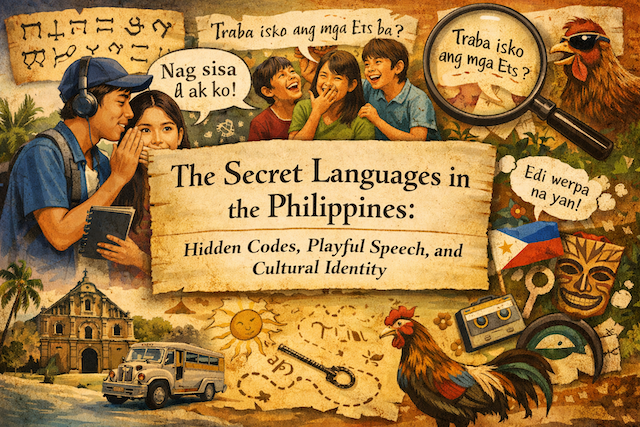
The Secret Languages in the Philippines: Hidden Codes, Playful Speech, and Cultural Identity
Contents
- The Secret Languages in the Philippines: Hidden Codes, Playful Speech, and Cultural Identity
- What Are “Secret Languages” in the Philippine Context?
- Swardspeak (Gay Lingo): The Most Famous Secret Language
- Jejemon Language: A Digital-Age Code
- Baliktad (Reversed Speech): Talking Backwards to Stay Private
- Beki + Baliktad: Layered Secret Speech
- Market Codes and Street Vendor Speech
- Regional Secret Languages and Local Codes
- Why Secret Languages Thrive in the Philippines
- The Influence of Media and Social Media
- Are These Secret Languages “Real” Languages?
- The Future of Secret Languages in the Philippines
- Conclusion
- FAQs (Frequently Asked Questions)
- What does “secret languages” mean in the Philippines?
- Are these secret languages the same as dialects or regional languages?
- What is Swardspeak, and why is it important?
- How does baliktad work?
- Is Jejemon still used today?
- Why do secret languages spread so quickly in the Philippines?
- Do vendors and street communities really use codes?
- Are secret languages only used by LGBTQ+ groups?
- How can learners of English benefit from studying these secret languages?
- Is it respectful for foreigners to use Swardspeak or other coded speech?
The Secret Languages in the Philippines: Hidden Codes, Playful Speech, and Cultural Identity
The Philippines is famous for its linguistic diversity. With more than 180 languages spoken across its islands, it is already one of the most multilingual countries in the world. But beyond well-known languages like Filipino (Tagalog), Cebuano, Ilocano, and Hiligaynon, there exists another fascinating layer of communication: secret languages.
These secret or coded ways of speaking are not officially recognized languages, yet they play an important role in daily life, youth culture, street communities, and social identity. Some are playful, some are practical, and others serve as a form of resistance or privacy. This article explores the most notable secret languages in the Philippines, how they work, why they exist, and what they reveal about Filipino culture.
What Are “Secret Languages” in the Philippine Context?
In the Philippines, a secret language is not usually a completely separate language with its own grammar and writing system. Instead, it is often a modified form of an existing language, such as Tagalog or Cebuano, altered through word reversal, syllable insertion, sound substitution, or creative borrowing.
These secret languages are used to:
-
Hide meaning from outsiders
-
Create group identity and belonging
-
Add humor and creativity to everyday speech
-
Express emotions or opinions discreetly
They are especially common among young people, market vendors, street communities, LGBTQ+ groups, and close-knit social circles.
Swardspeak (Gay Lingo): The Most Famous Secret Language
Swardspeak, often called gay lingo, is the most widely known secret language in the Philippines. It originated within the LGBTQ+ community, particularly among gay men, but has since influenced mainstream Filipino pop culture.
Swardspeak is primarily based on Tagalog, but it freely borrows words from English, Spanish, brand names, celebrity names, and even fictional characters.
How Swardspeak Works
Swardspeak uses several creative techniques:
-
Replacing common words with celebrity names
-
“Galit” (angry) becomes “Regine” (after Regine Velasquez, known for powerful emotions)
-
-
Using English or Spanish words with new meanings
-
“Stress” becomes “stressan”
-
-
Adding playful suffixes and exaggerations
-
“Ganda” (beautiful) becomes “ganders”
-
The vocabulary changes constantly, which keeps it exclusive and difficult for outsiders to fully understand.
Why Swardspeak Matters
Swardspeak is more than just fun slang. Historically, it allowed LGBTQ+ individuals to communicate safely in a society that was often conservative and judgmental. It also served as a form of cultural expression and empowerment. Today, many Swardspeak words have entered mainstream Filipino speech, appearing in TV shows, social media, and everyday conversations.
Jejemon Language: A Digital-Age Code
Jejemon emerged in the late 2000s alongside the rise of mobile phones and early social media platforms. It is a text-based secret language, characterized by unconventional spelling, random capitalization, and heavy use of numbers and symbols.
Examples of Jejemon Writing
-
“Kamusta ka?” becomes “kAmUsTaH kAuH?”
-
“Mahal kita” becomes “m4h4l k!t4h”
Jejemon was often criticized for “destroying” proper language, but linguists view it as a natural example of language evolution in digital spaces.
Social Meaning of Jejemon
Jejemon functioned as a form of identity for certain youth groups. It separated insiders from outsiders, especially those who valued formal grammar and spelling. Although it is less popular today, its influence can still be seen in online humor and ironic usage.
Baliktad (Reversed Speech): Talking Backwards to Stay Private
One of the simplest but most effective secret language techniques in the Philippines is baliktad, which means “reversed.” This involves flipping syllables or entire words backward.
Common Baliktad Examples
-
“Lodi” instead of “idol”
-
“Petmalu” instead of “malupit” (awesome)
-
“Werpa” instead of “power”
Baliktad is commonly used among young people and street communities. It allows speakers to talk openly while still keeping meaning hidden from authority figures, elders, or outsiders.
Why Baliktad Is Popular
Baliktad is easy to learn, playful, and flexible. New words can be created instantly, making it an efficient secret code. Some baliktad words become so popular that they eventually lose their secrecy and enter mainstream usage.
Beki + Baliktad: Layered Secret Speech
In many urban areas, especially in Manila, speakers combine Swardspeak and baliktad, creating a layered form of secret communication. This makes the speech even harder to decode for outsiders.
For example:
-
A Tagalog word is reversed
-
Then replaced with a pop-culture reference
-
Then modified with a playful suffix
This layered system highlights Filipino creativity and the joy of linguistic play.
Market Codes and Street Vendor Speech
In public markets across the Philippines, vendors often use subtle codes to communicate prices, profits, or warnings without customers understanding.
How Market Codes Work
-
Using numbers as substitute words
-
Referring to money with unrelated objects
-
Changing intonation to signal meaning
For example, a vendor might say a phrase that sounds casual but actually signals a discount, a police presence, or a difficult customer.
Purpose of Market Codes
These codes protect vendors’ interests and allow discreet communication in crowded, competitive environments. They are highly localized and vary from one market to another.
Regional Secret Languages and Local Codes
Different regions in the Philippines also have their own informal secret speech systems.
Cebuano Play Language
In Cebu, speakers sometimes insert extra syllables or sounds into Cebuano words, making them difficult for outsiders to follow. This is often used playfully among friends or children.
Ilocano and Kapampangan Variants
Some Ilocano and Kapampangan speakers use altered pronunciation or metaphor-based expressions that are understandable only within the community. These are not fixed systems but flexible, evolving codes.
Why Secret Languages Thrive in the Philippines
The popularity of secret languages in the Philippines is closely tied to cultural values and social realities.
Strong Sense of Community
Filipinos value belonging and group identity. Secret languages strengthen bonds by creating an “in-group” that shares knowledge and humor.
Multilingual Environment
Because many Filipinos already speak two or three languages, switching and modifying language feels natural. This makes experimentation and code creation easy.
Humor and Creativity
Filipino communication often emphasizes wit, playfulness, and emotional expression. Secret languages allow speakers to show personality and creativity through words.
In a society where age, authority, and social status matter, secret languages provide a way to speak freely without direct confrontation.
The Influence of Media and Social Media
Television, movies, and social media have accelerated the spread of secret languages. Words that once belonged to small communities can now go viral overnight.
-
Swardspeak words appear in comedy shows
-
Baliktad terms trend on TikTok
-
Jejemon is revived ironically in memes
As a result, secret languages constantly evolve. Once a term becomes too popular, it may lose its secrecy and be replaced by something new.
Are These Secret Languages “Real” Languages?
From a linguistic perspective, these are not separate languages like Tagalog or Cebuano. They are better described as argots, slangs, or sociolects. However, their cultural importance should not be underestimated.
They reflect:
-
Social history
-
Power dynamics
-
Creativity and resilience
-
The human need for connection and privacy
The Future of Secret Languages in the Philippines
Secret languages in the Philippines will not disappear. As long as people seek identity, privacy, and creative expression, new codes will continue to emerge.
Future forms may be shaped by:
-
AI and digital communication
-
Online gaming communities
-
New social movements
-
Global pop culture influences
What remains constant is the Filipino talent for turning language into something playful, meaningful, and deeply human.
Conclusion
The secret languages of the Philippines offer a unique window into the country’s social life and cultural imagination. From Swardspeak to baliktad, from market codes to digital slang, these hidden forms of communication reveal how Filipinos adapt language to express identity, protect themselves, and build community.
They remind us that language is not just a tool for communication, but also a living art form—one that evolves, hides, reveals, and connects people in ways that go far beyond words.
FAQs (Frequently Asked Questions)
What does “secret languages” mean in the Philippines?
In the Philippine context, “secret languages” usually refers to coded ways of speaking that are built from existing languages such as Tagalog, Cebuano, or English. They are not typically separate languages with official dictionaries or standardized grammar. Instead, they are flexible speech styles that use word reversal, syllable changes, playful substitutions, invented vocabulary, and pop-culture references to make conversations harder for outsiders to understand. People use these codes to keep messages private in public places, to create a sense of belonging inside a group, or simply to make everyday talk more fun and creative.
Are these secret languages the same as dialects or regional languages?
No. Regional languages in the Philippines (like Cebuano, Ilocano, Hiligaynon, Kapampangan, or Waray) are full languages with their own grammar, vocabulary, and long histories. Secret languages are more like slangs or coded registers that sit on top of those languages. A Cebuano speaker can still use a “secret” style while speaking Cebuano. In the same way, a Tagalog speaker can use Swardspeak or baliktad while still speaking mostly Tagalog. Secret languages change quickly, and the rules are often informal and community-based rather than officially taught.
What is Swardspeak, and why is it important?
Swardspeak (often called gay lingo or beki language) is one of the most well-known secret languages in the Philippines. It developed largely within LGBTQ+ communities as a creative and practical tool: creative because it is playful and expressive, and practical because it can provide privacy in environments where people might feel judged or unsafe. Swardspeak often borrows words from Tagalog, English, Spanish, brand names, and celebrity names, then reshapes them with humor. It has influenced mainstream Filipino culture through television, comedy, and social media, and many expressions have become widely understood outside the original community.
How does baliktad work?
Baliktad means “reversed,” and it refers to reversing sounds, syllables, or parts of words to form a coded version of everyday speech. A popular example is “lodi” from “idol.” Another is “werpa” from “power.” Some baliktad words reverse syllables in a straightforward way, while others are more creative and adjusted for easier pronunciation. Because it is simple and flexible, baliktad spreads quickly among young people and can change from one group to another. Once a baliktad word becomes too common, it may stop feeling secret and new terms take its place.
Is Jejemon still used today?
Jejemon is not as dominant as it was during the late 2000s and early 2010s, but it has not completely disappeared. Jejemon is mainly a text-based style that uses unusual spelling, mixed capitalization, and numbers or symbols. It became popular with mobile texting and early social media, and it functioned as an identity marker for certain youth communities. Today, many people use Jejemon patterns ironically in memes or nostalgic posts. Even if the original trend faded, it remains an important example of how digital spaces create new forms of coded communication.
Why do secret languages spread so quickly in the Philippines?
One reason is that many Filipinos are naturally multilingual, so switching between languages and experimenting with words feels normal. Another reason is cultural: humor, storytelling, and social bonding are central to Filipino communication. Secret languages also serve real-life needs. In crowded cities, markets, schools, or workplaces, people may want privacy without sounding suspicious. Social media also accelerates the spread. A catchy term can trend overnight on TikTok or Facebook, moving from a small community into nationwide usage. The result is a fast cycle: invention, popularity, mainstream adoption, and replacement.
Do vendors and street communities really use codes?
Yes, many markets and street communities develop informal codes, especially when discussing prices, discounts, profit margins, or sensitive situations. These codes can be simple (like alternative words for money) or complex (like signals based on tone, gestures, or local references). The exact vocabulary and style often depends on the market and the relationships among vendors. The goal is usually practical: to communicate efficiently without alerting customers, competitors, or authorities. Because these codes are local and change over time, an outsider may not notice them unless they spend significant time in that environment.
Are secret languages only used by LGBTQ+ groups?
No. While Swardspeak is closely associated with LGBTQ+ communities and is culturally significant for that reason, secret languages in the Philippines exist across many groups. Young people use baliktad and other playful speech forms. Friends may create inside jokes and coded phrases unique to their circle. Vendors may develop market codes for business reasons. Online communities form their own slang, abbreviations, and rules. The common theme is social function: secret languages help people build identity, create intimacy, and control who understands what is being said.
How can learners of English benefit from studying these secret languages?
Studying secret languages helps learners understand how language changes in real life. Many Philippine secret speech styles borrow heavily from English, but they also reshape English words with Filipino pronunciation, grammar, and humor. By noticing these patterns, learners can improve listening skills, learn informal vocabulary, and understand cultural context. It also teaches a key lesson: language is not only “correct” or “incorrect.” People use language strategically depending on audience, setting, and purpose. Understanding that flexibility can make learners more confident communicators in English and beyond.
Is it respectful for foreigners to use Swardspeak or other coded speech?
It depends on context and attitude. Using a few common expressions in a friendly, non-mocking way can be fine, especially if local friends use the same terms and you understand the meaning. However, it is important to avoid treating Swardspeak as a costume or a joke, because it has roots in identity and social history. If you are unsure, listen first, ask politely, and follow the lead of the community you are with. Respectful language learning focuses on understanding people, not copying them for entertainment.

How to Register for eTravel Philippines (2025 Guide)
Step-by-step guide to completing your eTravel registration before arriving in the Philippines, with images and tips.

Night Market in Cebu – Things You Don’t Know About Cebu Life
Discover the hidden charm of Cebu’s night markets, from street food stalls to local life tips you won’t find in tourist guides.

How to Use ChatGPT for IELTS Preparation: A Complete Guide
Learn how to prepare for IELTS using ChatGPT — including strategies for Writing, Reading, Listening, Speaking, and grammar support.

How to Build a Website Without Coding Using ChatGPT
Discover how to build your own website using AI—no coding skills needed. From structure planning to SEO and design, let ChatGPT guide you.