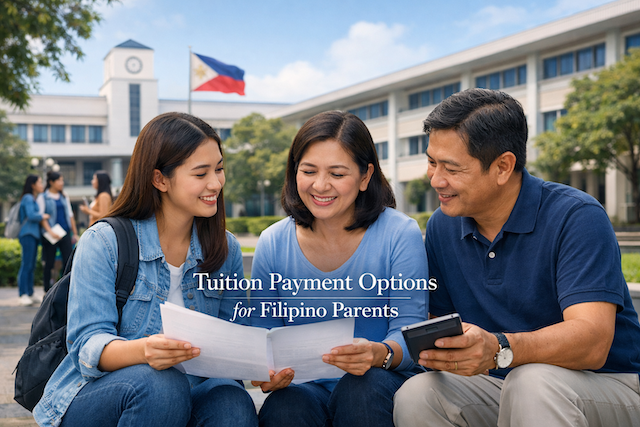
Tuition Payment Options for Filipino Parents:Philippines University Guide
Paying for a child’s education is one of the biggest financial responsibilities Filipino parents face. From kindergarten to university, tuition fees, miscellaneous charges, books, uniforms, and daily expenses can place long-term pressure on household income. In the Philippines, where many families rely on a mix of salaried income, overseas remittances, and small businesses, parents often need flexible and realistic ways to manage education costs.
This guide explains the main tuition payment options available to Filipino parents, how each option works, and what to consider when choosing the best approach for your family’s financial situation.
Understanding the Cost of Education in the Philippines
Tuition fees in the Philippines vary widely depending on the type of school, location, and level of education. Public schools are heavily subsidized, but private schools dominate at the preschool, secondary, and tertiary levels. Many parents choose private institutions due to perceived quality, facilities, and employment outcomes.
Beyond tuition, parents must also plan for:
-
Miscellaneous and laboratory fees
-
Enrollment and registration fees
-
Books, uniforms, and school supplies
-
Transportation, food, and allowances
-
Housing costs for students studying away from home
Because these costs recur every term or every month, tuition payment options play a critical role in maintaining financial stability.
Paying Tuition in Full (Cash or Lump Sum)
One of the most straightforward options is paying tuition in full at the start of the school year or semester.
How This Option Works
Parents pay the entire tuition amount upfront, usually during enrollment. Some schools offer discounts for full payment, especially in private elementary and high schools.
Advantages
-
Possible discounts or waived fees
-
No interest or financing charges
-
Less administrative hassle during the school year
-
Peace of mind knowing tuition is fully settled
Disadvantages
-
Large upfront cash requirement
-
Reduced liquidity for emergencies or investments
-
Not practical for families with irregular income
This option is best suited for parents with stable income, strong savings, or access to lump-sum funds such as bonuses or remittances.
School-Based Installment Plans
Most private schools and universities in the Philippines offer installment plans that allow parents to spread tuition payments over several months.
How This Option Works
Tuition is divided into monthly, quarterly, or per-term payments. An initial down payment is usually required upon enrollment, followed by scheduled payments throughout the semester or school year.
Advantages
-
More manageable cash flow
-
No need for external lenders
-
Often interest-free or with minimal administrative fees
-
Widely available across private schools
Disadvantages
-
Higher total cost compared to full payment (in some schools)
-
Strict deadlines and penalties for late payments
-
Possible restrictions on exams, enrollment, or records if payments are missed
Installment plans are one of the most common tuition payment methods for Filipino parents, especially for middle-income households.
Education Loans from Government Institutions
The Philippine government provides education-related loan programs through agencies such as SSS, GSIS, and government banks.
Common Government Loan Options
-
SSS Educational Assistance Loan Program for private-sector members
-
GSIS Education Loan for government employees
-
LandBank and Development Bank of the Philippines (DBP) education loans
Advantages
-
Lower interest rates compared to private lenders
-
Longer repayment terms
-
Payroll deduction options for employed parents
-
Government-backed reliability
Disadvantages
-
Eligibility requirements based on membership and contributions
-
Limited loan amounts
-
Processing time can be slow
-
Documentation requirements can be strict
Government loans are ideal for parents with stable employment and active membership in SSS or GSIS.
Bank Education Loans and Personal Loans
Commercial banks in the Philippines offer education loans or personal loans that parents can use for tuition and related expenses.
How This Option Works
Parents apply for a loan from a bank and receive the funds either as a lump sum or through disbursement. Repayment is usually monthly, with fixed interest rates.
Advantages
-
Higher loan amounts than government programs
-
Flexible use of funds
-
Clear repayment schedules
-
Available to parents and guardians
Disadvantages
-
Higher interest rates than government loans
-
Credit checks and income requirements
-
Longer-term debt obligation
-
Possible penalties for late payment
Bank loans are often used by middle- to upper-income families who need larger funding amounts for private universities or multiple children.
Tuition Financing Platforms and Education Fintech
In recent years, education-focused financing platforms have emerged in the Philippines, offering installment-based tuition solutions in partnership with schools.
How This Option Works
Parents apply through an online platform. If approved, the provider pays the school directly, and parents repay the amount in monthly installments.
Advantages
-
Fast application process
-
Minimal paperwork compared to banks
-
Flexible installment terms
-
Designed specifically for education expenses
Disadvantages
These platforms are especially popular among parents who do not qualify for traditional bank loans or need faster approval.
Some Filipino parents receive education assistance through their employers, particularly in multinational companies and large local corporations.
Common Employer Benefits
Advantages
Disadvantages
Parents should check with their HR department to understand available education-related benefits.
Scholarships, Grants, and Financial Aid
While scholarships are typically awarded to students, they indirectly reduce the financial burden on parents.
Types of Financial Aid
Advantages
Disadvantages
Parents should actively explore scholarship opportunities every academic year, even after enrollment.
Using Savings, Investments, and Education Funds
Some Filipino families prepare for tuition expenses by setting aside dedicated education savings.
Common Strategies
-
Bank savings accounts
-
Time deposits
-
Mutual funds and UITFs
-
Pre-need education plans
Advantages
Disadvantages
This option works best for parents who plan early, ideally when children are still very young.
Overseas Remittances and Family Support
Many Filipino parents rely on remittances from overseas family members to support education expenses.
How This Option Works
Tuition is paid using funds sent regularly or periodically by OFW parents or relatives.
Advantages
-
No interest or repayment obligation
-
Reliable income source for many families
-
Can cover multiple education-related costs
Disadvantages
-
Dependence on overseas employment stability
-
Exchange rate fluctuations
-
Emotional and family challenges
Remittances play a significant role in funding private education across the Philippines.
Choosing the Right Tuition Payment Option
There is no single best tuition payment option for all Filipino parents. The right choice depends on several factors:
-
Household income stability
-
Number of children in school
-
Type of institution (public vs private)
-
Long-term financial goals
-
Risk tolerance and debt capacity
Many families combine multiple options, such as installment plans supplemented by scholarships or partial loans.
Practical Tips for Filipino Parents
To manage tuition payments more effectively, parents should:
-
Compare total costs, not just monthly payments
-
Ask schools about discounts and penalties
-
Read loan terms carefully before signing
-
Build an emergency fund alongside tuition planning
-
Reassess payment strategies each school year
Education is a long-term commitment, and flexibility is key.
Final Thoughts
Tuition payment options for Filipino parents have expanded significantly over the years. From traditional installment plans and government loans to modern education financing platforms, families now have more tools to manage education costs responsibly.
By understanding each option and planning ahead, Filipino parents can support their children’s education without compromising overall financial well-being. Careful decision-making today can prevent long-term debt stress while ensuring access to quality education for the next generation.
FAQs (Frequently Asked Questions)
What are the most common tuition payment options for Filipino parents?
The most common options include paying in full during enrollment, using school-based installment plans, applying for government education loans (such as programs linked to SSS or GSIS), taking bank personal loans, and using tuition financing platforms that partner with schools. Many families also combine these with scholarships, employer benefits, savings, or remittances from overseas relatives. The best option depends on your income stability, the school’s rules, and how comfortable you are with borrowing.
Is paying tuition in full really cheaper than paying in installments?
Often, yes. Some schools offer discounts for full payment, and you also avoid any processing fees that may come with installment arrangements or financing services. However, paying in full is only “cheaper” if it does not force you to borrow elsewhere or drain your emergency fund. If paying in full causes cash flow problems, an installment plan can be financially safer even if the total cost is slightly higher.
How do school installment plans usually work in the Philippines?
Most private schools require a down payment at enrollment, then schedule the remaining balance through monthly, quarterly, or per-term payments. Schools typically set strict due dates and may charge penalties for late payments. Some institutions allow parents to choose between different installment schedules. Always ask if there are processing fees, what happens if a payment is delayed, and whether missed payments can affect exam permits, enrollment status, or access to school records.
What happens if I miss an installment payment?
Consequences vary by school, but late payments often lead to penalties, interest-like charges, or temporary restrictions such as withholding exam permits or clearance. In some cases, students may still attend classes but cannot take exams until the account is settled. If you anticipate difficulty paying on time, contact the school’s accounting office early. Schools sometimes allow revised payment arrangements when parents communicate before the due date rather than after penalties begin.
Are government education loans available to all Filipino parents?
Not always. Many government-linked education loans require the parent to be an active member of a specific program (for example, SSS for private-sector workers or GSIS for government employees) and to meet contribution, employment, and eligibility requirements. Loan amounts may also be limited. If you qualify, government loans can be attractive because they often have lower interest rates and more structured repayment terms than private loans.
Should I choose a bank loan or a tuition financing platform?
A bank loan may offer higher loan amounts, longer repayment terms, and predictable monthly amortization, but it usually requires stronger credit standing, proof of income, and more paperwork. Tuition financing platforms can be faster and may require fewer documents, but fees and effective interest can be higher, and partner school availability may be limited. Compare the total repayment amount, penalties, and whether the provider pays the school directly or reimburses you.
Do tuition financing services charge interest, and how can I compare costs?
Many financing services charge interest or service fees, even if the monthly amount looks affordable. To compare costs, focus on the total amount you will repay over the full term, not just the monthly installment. Ask for a clear breakdown of fees, late charges, and any upfront deductions. If the provider advertises a monthly rate, convert it into a total repayment figure and compare it against other options like school installment plans or bank loans.
Can scholarships and discounts be combined with installment plans?
In many cases, yes. Scholarships, grants, and discounts typically reduce the tuition amount, and the remaining balance can be paid via installments. However, rules differ by institution. Some discounts apply only to full payment, while others apply regardless of payment method. Some scholarships require maintaining a certain grade or enrollment status, so it’s important to confirm the conditions and whether payment delays could affect scholarship eligibility or renewal.
What documents do parents usually need for loans or financing?
Requirements vary, but common documents include valid IDs, proof of income (payslips, ITR, certificate of employment, or business permits), billing statements for address verification, and school enrollment documents such as assessment forms or registration details. Government programs may also require proof of membership and contribution history. Prepare digital copies in advance so you can submit applications faster, especially during peak enrollment periods.
How can Filipino parents plan ahead to avoid tuition payment stress?
Start by estimating total annual education costs, including tuition, fees, supplies, and transportation. Build a dedicated education fund and maintain a separate emergency fund so you don’t rely on debt during unexpected events. If your income is irregular, consider choosing an installment schedule that matches your cash flow, such as aligning payments with salary dates or remittance timing. Reassess your strategy each school year and apply early for scholarships or employer benefits.
Is it better to use savings or borrow for tuition?
Using savings avoids interest and long-term debt, but you should not empty your emergency fund. Borrowing can be reasonable if it protects cash flow and the repayment terms are manageable. A balanced approach is common: pay part of the tuition from savings or bonuses, then use school installments or a low-cost loan for the rest. The key is to avoid high-cost debt that grows faster than your ability to repay.
What is the safest option for parents with unstable income?
If income is unstable, the safest approach is typically a flexible school installment plan combined with disciplined budgeting, a small emergency buffer, and active scholarship searching. Avoid financing options with heavy penalties or high fees if you miss payments. If borrowing is necessary, prioritize lower-cost sources such as government loans or employer-based salary loans when available. Most importantly, communicate early with the school if you anticipate delays.
How do overseas remittances affect tuition planning?
Remittances can make tuition payments more predictable, but overseas work can be affected by contract changes, employment risks, and exchange rate fluctuations. If you rely on remittances, consider setting aside part of each transfer into an education fund and paying tuition on a schedule that matches transfer timing. It also helps to keep a buffer in case a remittance arrives late or is reduced. Planning with a cushion prevents last-minute borrowing at higher cost.