2026年1月23日
3D ACADEMY offers affordable English study programs in Cebu, Philippines – perfect for beginners, professionals, and exam takers.

3D UNIVERSAL ENGLISH INSTITUTE INC
info.3d-universal.com
8:00-17:00(Mon-Fri)
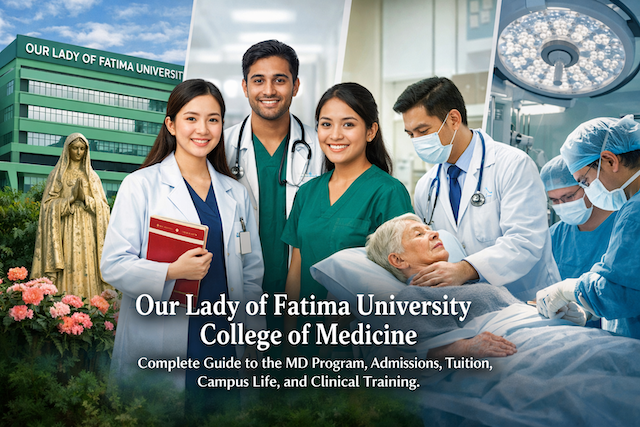
Our Lady of Fatima University College of Medicine: Complete Guide to the MD Program, Admissions, Tuition, Campus Life, and Clinical Training
Contents
- Our Lady of Fatima University College of Medicine: Complete Guide to the MD Program, Admissions, Tuition, Campus Life, and Clinical Training
- Overview: What OLFU College of Medicine Is Known For
- Campus Location and Learning Environment
- Doctor of Medicine (MD) Program Structure
- Curriculum and Academic Expectations
- Clinical Training and Clerkship Experience
- Admissions Requirements and Application Process
- Tuition Fees and Cost Considerations
- Student Life and Daily Routine
- Who Should Consider OLFU College of Medicine
- Career Path After Graduation
- Final Thoughts
- FAQs (Frequently Asked Questions)
- Is Our Lady of Fatima University College of Medicine recognized in the Philippines?
- What degree will I earn, and how long does the program take?
- Do I need an NMAT score to apply?
- What kind of pre-med background is preferred?
- What is the teaching style like in medical school?
- When does clinical training start, and what does clerkship involve?
- How much does it cost to study medicine at OLFU?
- Can international students apply to OLFU College of Medicine?
- What are the biggest challenges students face, and how can I prepare?
- Does graduating from OLFU guarantee internship, residency, or employment?
- How do I know if OLFU is the right medical school for me?
Our Lady of Fatima University College of Medicine: Complete Guide to the MD Program, Admissions, Tuition, Campus Life, and Clinical Training
Overview: What OLFU College of Medicine Is Known For
Our Lady of Fatima University (OLFU) is a private, non-sectarian university in the Philippines with its main campus located in Valenzuela City, Metro Manila. The College of Medicine is one of the university’s core professional programs and has built a reputation for producing graduates who proceed into clinical training and medical practice within the Philippine healthcare system.
The medical program offers a Doctor of Medicine (MD) degree designed to meet national standards for medical education while emphasizing structured learning and hospital-based training. OLFU attracts students who are looking for a comprehensive MD program within Metro Manila and who value proximity to clinical facilities as part of their education.
Campus Location and Learning Environment
The College of Medicine is primarily associated with OLFU’s Valenzuela campus. Being situated in Metro Manila places students in an urban environment where access to hospitals, clinics, and diverse patient populations is part of everyday medical training.
Living and studying in Valenzuela means students experience the realities of metropolitan life, including commuting, traffic, and a fast-paced daily routine. For many medical students, this environment mirrors the conditions they will eventually face as practicing physicians.
Doctor of Medicine (MD) Program Structure
The MD program in the Philippines typically spans four academic years following completion of a bachelor’s degree. OLFU follows this general structure, guiding students from foundational sciences to full clinical immersion.
- First Year: Core medical sciences such as anatomy, physiology, biochemistry, and introductory clinical concepts.
- Second Year: Pathology, pharmacology, microbiology, and integrated system-based subjects.
- Third Year: Advanced clinical subjects with an emphasis on diagnosis, case analysis, and patient management.
- Fourth Year: Clinical clerkship involving hands-on hospital rotations.
This progression allows students to gradually transition from theory-heavy coursework to applied clinical practice.
Curriculum and Academic Expectations
Medical education at OLFU emphasizes both knowledge acquisition and professional development. Students are expected to master a large volume of material while developing clinical reasoning and ethical decision-making skills.
The curriculum generally focuses on:
- Strong grounding in basic and clinical medical sciences
- Problem-solving through case discussions
- Development of communication and patient interaction skills
- Preparation for clinical responsibilities during clerkship
Assessment typically includes written examinations, practical assessments, and performance evaluations during clinical rotations.
Clinical Training and Clerkship Experience
Clinical training is a defining component of the MD program. During clerkship, students rotate through major medical departments and participate in day-to-day hospital activities under supervision.
Typical clerkship exposure includes:
- Internal Medicine
- Surgery
- Pediatrics
- Obstetrics and Gynecology
- Psychiatry
- Family and Community Medicine
Students learn to take patient histories, assist in procedures, present cases, and function as part of a healthcare team. This stage is often the most demanding but also the most formative.
Admissions Requirements and Application Process
Applicants to the OLFU College of Medicine are expected to meet general requirements common to medical schools in the Philippines.
- Completion of a bachelor’s degree
- Submission of a National Medical Admission Test (NMAT) score
- Academic transcripts and supporting documents
- Good moral character certification
- Interview or additional screening, if required
International applicants may need to submit additional documentation related to academic equivalency, immigration status, and language readiness.
Tuition Fees and Cost Considerations
Tuition fees for the MD program vary depending on year level and student status. In addition to tuition, students should budget for miscellaneous fees, learning materials, and daily living expenses.
Common cost factors include:
- Tuition and institutional fees
- Books and digital learning resources
- Medical equipment and uniforms
- Housing and transportation
- Expenses during clinical rotations
Planning a realistic budget before enrollment helps students manage the financial demands of medical school more effectively.
Student Life and Daily Routine
Life as a medical student at OLFU is structured around academic and clinical responsibilities. Study schedules are intensive, and time management is essential.
Students often experience:
- Long study hours and frequent assessments
- Group study and peer collaboration
- Gradual adjustment to hospital-based duties
Despite the demanding schedule, many students develop strong professional relationships and support networks during their training.
Who Should Consider OLFU College of Medicine
OLFU College of Medicine is suitable for students who are prepared for a rigorous academic program and who prefer to study in a Metro Manila environment.
- Students seeking structured MD education
- Those who value early and consistent clinical exposure
- Applicants comfortable with an urban lifestyle
Career Path After Graduation
Graduates of the MD program typically proceed to post-graduate internship, licensure examinations, and residency training. Career paths may include clinical practice, specialization, academic medicine, or healthcare administration.
Students with plans to pursue training abroad should begin preparation early to meet international requirements.
Final Thoughts
Our Lady of Fatima University College of Medicine offers a comprehensive medical education grounded in both academic learning and clinical practice. For students who can thrive in a demanding environment and who seek medical training within Metro Manila, OLFU provides a pathway toward professional development and a future in medicine.
FAQs (Frequently Asked Questions)
Is Our Lady of Fatima University College of Medicine recognized in the Philippines?
Our Lady of Fatima University (OLFU) College of Medicine operates as a professional medical program in the Philippines and is designed to meet the academic and clinical requirements expected of Doctor of Medicine (MD) education. Students typically choose OLFU because it follows a standard MD structure, includes supervised clinical exposure, and prepares graduates for the next steps in medical training. If recognition details matter for your personal pathway (such as internship placement, licensure planning, or future specialization), the safest approach is to verify the specific requirements you must meet based on your intended career route and the year you plan to enroll, since policies can vary over time.
What degree will I earn, and how long does the program take?
Students who complete the program earn the Doctor of Medicine (MD) degree. In the Philippines, the MD program is commonly structured as a four-year professional course taken after a bachelor’s degree. The first years focus heavily on foundational medical sciences and systems-based learning, while the later years transition to advanced clinical subjects and full hospital-based clerkship. Your total timeline can be longer than four years if you include your pre-med bachelor’s degree, board preparation, internship requirements, and residency training after graduation.
Do I need an NMAT score to apply?
Most medical schools in the Philippines use the National Medical Admission Test (NMAT) as part of the admissions process, and applicants should generally expect to submit an NMAT score. Competitive expectations can differ by school and by the applicant pool each year. If you want to improve your chances, treat NMAT preparation like a serious academic project: schedule your exam early enough to have a second attempt if needed, plan consistent review, and align your application timeline with the intake schedule of the university.
What kind of pre-med background is preferred?
Many MD students come from health-related bachelor’s degrees such as biology, nursing, medical technology, pharmacy, or psychology, but a variety of academic backgrounds can be considered as long as an applicant meets prerequisites and demonstrates readiness for medical study. A strong pre-med foundation helps, but more important is your ability to handle high-volume learning, integrate concepts quickly, and maintain discipline under pressure. If your degree is not traditionally “pre-med,” focus on showing academic strength, a clear motivation for medicine, and readiness to catch up on foundational sciences.
What is the teaching style like in medical school?
Medical education typically combines lectures, laboratory sessions, small-group discussions, case analysis, and skills training. Students are expected to move beyond memorization and develop clinical reasoning—learning how to interpret symptoms, connect them to physiology and pathology, and propose safe next steps. You should expect frequent assessments and a fast pace. Many students find that success depends less on “being smart” and more on building repeatable systems: active recall, spaced repetition, consistent note organization, and a weekly routine that protects sleep and prevents burnout.
When does clinical training start, and what does clerkship involve?
Clinical exposure usually increases as students progress through the program. Early years may include skills training and patient-oriented learning in controlled settings, while the final year commonly involves clerkship. Clerkship is a structured hospital rotation period where students train in major departments such as Internal Medicine, Surgery, Pediatrics, Obstetrics and Gynecology, Psychiatry, and Family and Community Medicine. During rotations, students learn to take patient histories, perform basic examinations, assist with supervised procedures, present cases, and function as part of a clinical team. The workload is demanding, but it is also where students build professional identity and practical confidence.
How much does it cost to study medicine at OLFU?
Costs vary by year level and may include tuition, miscellaneous fees, and other program-related expenses. Beyond tuition, you should budget for medical books or digital resources, equipment such as a stethoscope, uniforms, transportation, and day-to-day living expenses. Clinical years can add costs related to rotations and hospital requirements. A practical strategy is to calculate your full-year cost rather than only per-semester tuition, then add a buffer for unexpected expenses. Planning finances early reduces stress and lets you focus on training.
Can international students apply to OLFU College of Medicine?
International applicants may be able to apply, but requirements can be more document-heavy than local applications. You may need authenticated academic records, proof of degree completion, and additional immigration-related documentation. Processing times can be longer, so it helps to start early and keep a clear checklist. International students should also plan for adjustment challenges such as housing, transportation, and adapting to a different clinical environment and communication style. If your long-term goal is to practice outside the Philippines, you should research your target country’s rules early so you can align your medical school planning and post-graduate steps accordingly.
What are the biggest challenges students face, and how can I prepare?
The most common challenges in medical school are volume, time pressure, and sustained stress. Many students underestimate how quickly exams arrive and how long it takes to truly understand integrated topics. Prepare by improving your study habits before enrollment: practice active recall, build endurance for long study blocks, and learn how to review consistently rather than cramming. Once classes begin, treat your schedule like a professional commitment. Protect your sleep, track your weak areas weekly, and use study groups strategically—only if they improve clarity and accountability rather than becoming distractions.
Does graduating from OLFU guarantee internship, residency, or employment?
Graduation from an MD program is a major step, but it does not automatically guarantee internship placement, residency acceptance, or employment outcomes. These next stages depend on performance, availability of training slots, application competitiveness, and professional readiness. The strongest approach is to focus on building a solid academic record, strong clinical evaluations, and professional habits throughout medical school. Networking, mentorship, and early career planning can also help you identify realistic pathways and prepare the documents and skills you will need after graduation.
How do I know if OLFU is the right medical school for me?
OLFU may be a good fit if you want MD training in Metro Manila, prefer a structured educational pathway, and are comfortable with the pace of an urban environment. To decide wisely, compare your priorities against the program’s realities: location, daily commuting, clinical training setup, academic culture, and financial demands. If possible, speak with current students or recent graduates about workload, support systems, and how clerkship is organized. A medical school is a four-year commitment, so the best choice is the one where you can perform consistently, stay healthy, and keep progressing toward your long-term career goal.
Complete List of Medical Schools in the Philippines (All 78 MD Programs)
Best Medical Schools in the Philippines (Local & International Rankings)
Recommend
2026年1月23日
Sultan Kudarat State University College of Medicine: Complete Guide for Aspiring MD Students
2026年1月23日
University of Southern Mindanao College of Medicine: Complete Guide for Aspiring MD Students
2026年1月23日
Mindanao State University – General Santos College of Medicine: Complete Guide for Future MD Students

How to Register for eTravel Philippines (2025 Guide)
Step-by-step guide to completing your eTravel registration before arriving in the Philippines, with images and tips.

Night Market in Cebu – Things You Don’t Know About Cebu Life
Discover the hidden charm of Cebu’s night markets, from street food stalls to local life tips you won’t find in tourist guides.

How to Use ChatGPT for IELTS Preparation: A Complete Guide
Learn how to prepare for IELTS using ChatGPT — including strategies for Writing, Reading, Listening, Speaking, and grammar support.

How to Build a Website Without Coding Using ChatGPT
Discover how to build your own website using AI—no coding skills needed. From structure planning to SEO and design, let ChatGPT guide you.