2026年1月23日
3D ACADEMY offers affordable English study programs in Cebu, Philippines – perfect for beginners, professionals, and exam takers.

3D UNIVERSAL ENGLISH INSTITUTE INC
info.3d-universal.com
8:00-17:00(Mon-Fri)
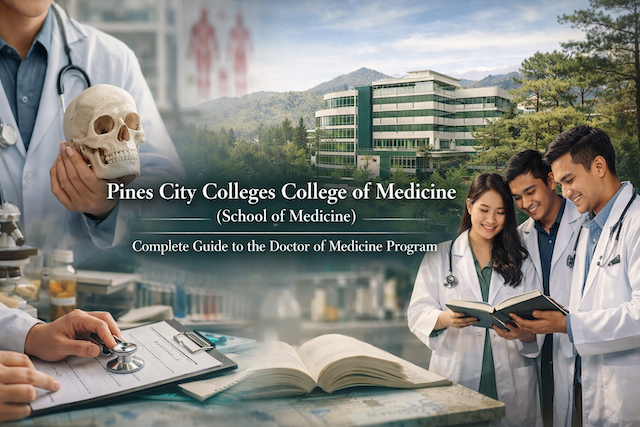
Pines City Colleges College of Medicine (School of Medicine): Complete Guide to the Doctor of Medicine Program
Contents
- Pines City Colleges College of Medicine (School of Medicine): Complete Guide to the Doctor of Medicine Program
- Quick Overview
- Why PCC School of Medicine Stands Out
- Mission, Vision, and Training Philosophy
- Campus Location and Learning Environment in Baguio City
- Doctor of Medicine Program Structure: What to Expect
- Clinical Training and Hospital Exposure
- Research, Community Engagement, and Systems-Based Thinking
- Admissions: Eligibility and Document Requirements
- How to Become a Stronger Applicant (Practical Tips)
- Tuition, Fees, and Budget Planning
- Student Life, Support Systems, and Professional Growth
- What Career Paths Can PCC MD Graduates Pursue?
- How to Decide if PCC School of Medicine Is Right for You
- Application Checklist You Can Use Today
- Final Thoughts
- FAQs (Frequently Asked Questions)
- Is Pines City Colleges College of Medicine the same as “PCC School of Medicine”?
- Where is PCC School of Medicine located?
- What degree does the program award?
- What are the common admission requirements for PCC School of Medicine?
- Is there a required NMAT score to apply?
- Does PCC accept international students?
- How competitive is admission to PCC School of Medicine?
- What should I expect during the first year of the MD program?
- How does clinical training work, and when does it start?
- How much does tuition cost at PCC School of Medicine?
- What learning style works best for success in PCC’s MD program?
- Can I work part-time while studying medicine at PCC?
- After graduating, can I practice immediately?
Pines City Colleges College of Medicine (School of Medicine): Complete Guide to the Doctor of Medicine Program
Pines City Colleges (PCC) in Baguio City, Benguet is widely recognized for its health-sciences roots and for building programs that connect classroom learning with real clinical exposure. Its School of Medicine (often referred to as the “College of Medicine” by applicants) was created in response to the country’s growing demand for physicians—especially those willing to serve communities outside major urban centers—while still preparing students for modern, globally aware medical practice.
This guide explains what to expect from the PCC Doctor of Medicine (MD) journey: the school’s training philosophy, a practical look at curriculum flow, admissions requirements, student life, and what you can do now to become a stronger applicant.
Quick Overview
School: Pines City Colleges – School of Medicine (Doctor of Medicine / MD)
Location: Magsaysay Avenue, Baguio City, Philippines
Training emphasis: Competent, community-oriented, research-aware physicians aligned with national health needs and global standards
Best fit for: Students who want structured learning, strong professional values, and a pathway toward clinical competence grounded in community health realities
Why PCC School of Medicine Stands Out
Medical students often choose a school based on three things: (1) the quality of clinical training, (2) the support system and learning culture, and (3) the school’s “fit” with their personal goals. PCC’s School of Medicine positions itself around producing physicians who are both clinically capable and socially responsive—meaning you’re not only trained to diagnose and treat, but also to understand the systems, communities, and real-world constraints that shape patient outcomes.
The school frames its medical training around competence and professionalism: effective communication, leadership in healthcare teams, research engagement, inter-professional collaboration, systems-based thinking, and continuous personal and professional development. In plain terms, PCC aims to graduate physicians who can function well in hospitals, community settings, and multidisciplinary teams—because that’s the reality of healthcare today.
Mission, Vision, and Training Philosophy
PCC’s School of Medicine explicitly aims to prepare future physicians who can meet both national needs and global expectations. The training philosophy highlights competence, social and cultural responsibility, leadership, research, and service. In the Philippine setting—where healthcare gaps remain significant—this approach is closely aligned with public health priorities and the push for a stronger, more equitable health system.
What this means for you as a student is that your education is not just about memorizing facts. You’ll be expected to develop professional behaviors early, communicate clearly with patients and colleagues, work effectively under supervision, and learn to apply knowledge in real clinical situations. If you’re the type of learner who wants a purpose-driven medical education (not only exam-driven), this approach can be a strong match.
Campus Location and Learning Environment in Baguio City
PCC is located along Magsaysay Avenue in Baguio City—an area known for being student-friendly, walkable in many parts, and filled with day-to-day necessities such as food options, printing shops, dorms/boarding houses, and transport routes. Baguio’s climate is also a major practical advantage for some students; cooler weather can make intense academic schedules more manageable, especially for learners who struggle with heat-related fatigue in other cities.
At the same time, Baguio can be busy and traffic can be real, particularly during peak tourism seasons. If you plan to study at PCC, it’s smart to choose housing that minimizes commute time and reduces the friction of daily routines.
Doctor of Medicine Program Structure: What to Expect
Like most MD programs in the Philippines, the MD track typically follows a progression from foundational sciences to clinical sciences and then to hands-on hospital training. While specific course sequences can vary by year and institutional design, you can generally expect the following flow:
- Early phase: Strong foundations in anatomy, physiology, biochemistry, and related subjects, paired with medical professionalism and communication training.
- Middle phase: Pathology, pharmacology, microbiology, and organ-system-based clinical correlations that bridge theory to practice.
- Clinical phase: Internal medicine, surgery, pediatrics, obstetrics and gynecology, psychiatry, family and community medicine, and other major clinical rotations.
- Internship phase: Supervised training in hospital departments with increasing responsibility, preparing you for licensure and residency.
Across these phases, you should expect ongoing assessments, practical exams, case discussions, and skills labs. Modern medical training increasingly relies on case-based learning and competency checklists—so your performance is measured not only by written exams, but also by practical skills and clinical reasoning.
Clinical Training and Hospital Exposure
A medical school’s credibility is strongly tied to clinical exposure. PCC’s identity as a health-professions-focused institution and its connection to a tertiary private hospital environment supports its emphasis on applied learning. In practical terms, students benefit when clinical training is organized, supervised, and aligned with classroom objectives—so what you study today can be practiced and observed in real cases tomorrow.
During your clinical years and internship, your experience typically includes:
- Ward work: Patient history-taking, physical examination practice, progress notes, and case presentations.
- Outpatient exposure: Clinic workflows, follow-ups, patient education, and continuity of care.
- Emergency and acute care settings: Learning triage thinking, urgent case recognition, and teamwork under pressure.
- Community and preventive medicine: Public health principles applied through outreach, community programs, or supervised field activities.
For many students, the biggest “jump” happens when you move from theory into the hospital. The key is to build habits early—clear communication, reliable note-taking, respectful teamwork, and consistent study—so that the clinical environment becomes a place to improve rather than a place to panic.
Research, Community Engagement, and Systems-Based Thinking
PCC’s School of Medicine includes research engagement and systems-based healthcare as part of its stated objectives. That’s important because modern healthcare is not just one doctor and one patient. It’s a system—referrals, lab turnaround times, insurance constraints, staffing, policies, and resource availability—all of which affect patient outcomes.
Research in medical school doesn’t always mean publishing in international journals (though that can be a goal for some). It can also mean learning how to ask better clinical questions, interpret evidence, and apply guidelines responsibly. If you plan to pursue residency training, research skills can become a real advantage—especially in competitive specialties or in programs that value academic performance and evidence-based decision-making.
Admissions: Eligibility and Document Requirements
PCC’s School of Medicine admissions require a baccalaureate degree background and standard medical school entry documentation. Based on the school’s published requirements, applicants should prepare the following:
- Official Transcript of Records (baccalaureate degree), original or certified true copy
- Certification of General Weighted Average (GWA) from your pre-med institution
- Certified true copy of NMAT score
- Good Moral Certificate (GMC)
- Recommendation letter(s) from college professors
- PSA Birth Certificate (photocopy)
- Marriage certificate (if married)
- Police clearance
- ID photos (2×2) following the school’s quantity and labeling requirements
- Additional transfer documents if you are a transferee (e.g., honorable dismissal/transfer credential and recommendations from prior school offices)
Because document requirements can evolve, your safest approach is to treat the school’s posted list as the baseline, then double-check for the most current submission format (online portal steps, envelope/folder requirements, and any updated medical clearance instructions).
How to Become a Stronger Applicant (Practical Tips)
Medical schools review more than a checklist. If you want to improve your chances and also set yourself up to succeed once you’re accepted, focus on the following:
- NMAT strategy: Aim for a score that reflects both readiness and competitiveness. Build consistency rather than relying on last-minute review.
- Pre-med performance: If your GWA is not ideal, strengthen your profile through clinical exposure, leadership, or research experience.
- Recommendation letters: Choose professors or supervisors who can speak about your discipline, learning attitude, and professionalism—not just your friendliness.
- Interview readiness (if applicable): Be ready to explain why medicine, why PCC, and how you handle stress, teamwork, and responsibility.
- Service orientation: PCC’s training objectives emphasize community-oriented physicians. Volunteer work, health outreach participation, and meaningful community involvement can support this alignment.
Also, be honest about your study habits. Medical school is less about being “smart” and more about being consistent. Admissions teams often look for signs of grit, maturity, and teachability.
Tuition, Fees, and Budget Planning
Tuition and fees vary by academic year and policy, and medical school costs are more complex than just “tuition.” Even if you don’t have exact numbers yet, you should build a budget plan that includes:
- Tuition and standard school fees
- Books and printing (which can be substantial in heavy lecture years)
- Uniforms, lab coats, and required clinical attire
- Medical instruments (stethoscope, BP apparatus, penlight, etc.)
- Transportation and daily meals
- Boarding/dorm costs in Baguio
- Clinical year costs (rotations can involve added expenses)
If you are funding your studies through family support, savings, or a combination of work and sponsorship, it helps to plan the entire MD journey as a multi-year project. Stability matters in medicine—financial stress can quietly sabotage performance if you don’t prepare for it early.
Student Life, Support Systems, and Professional Growth
Medical school is demanding, and your environment matters. Beyond lectures, you’ll grow through peer learning, mentorship, and student organizations that help build professional identity. Many medical students find that joining a student council or a health-focused organization gives structure to their non-academic life and builds real leadership experience—especially when the organization handles outreach, peer support, or academic coordination.
In your first year, it’s normal to feel overwhelmed. The students who thrive usually do three things consistently:
- They build routines (sleep, study blocks, meals, and exercise)
- They study with intention (active recall, practice questions, and case-based thinking)
- They ask for help early (from classmates, mentors, or faculty)
Medicine rewards long-term discipline. Your goal is not to “win” one exam week—it’s to maintain performance for years without burning out.
What Career Paths Can PCC MD Graduates Pursue?
The MD degree is a gateway to multiple paths. Most graduates proceed to the Physician Licensure Examination (PLE) and then enter residency training. Career directions often include:
- Hospital-based practice: Internal medicine, surgery, pediatrics, OB-GYN, anesthesiology, radiology, and other specialties
- Community and public health roles: Rural health units, municipal health offices, community hospitals, and preventive care programs
- Academic or research tracks: Teaching roles, clinical research coordination, evidence-based practice work
- Occupational and corporate health: Company clinics, industrial medicine, health program management
- Further specialization: Fellowship training after residency for advanced subspecialties
Your medical school experience shapes your direction, but it does not lock you in. What matters is building strong fundamentals: clinical reasoning, patient communication, professionalism, and a steady habit of learning.
How to Decide if PCC School of Medicine Is Right for You
Consider PCC if you want a medical education that emphasizes competence plus community responsiveness, and if you’re comfortable studying in Baguio City’s environment. PCC may be a strong match if you:
- Want a clear professional framework (competence, communication, leadership, research, and collaboration)
- Prefer a health-science-focused institution with a strong clinical orientation
- Are motivated by service and community health impact, not only prestige
- Thrive with structure and consistency rather than last-minute cramming
On the other hand, if you prefer a heavily research-intensive, lab-driven academic culture above clinical/community orientation, you may want to compare multiple schools and clarify what learning culture you perform best in.
Application Checklist You Can Use Today
- Confirm your NMAT schedule and target score range
- Request your TOR and GWA certification early (processing delays are common)
- Secure your Good Moral Certificate and police clearance
- Ask for recommendation letters with enough lead time
- Prepare IDs and required photos to specification
- Build a realistic budget for tuition and living costs in Baguio
- Write down your “why medicine” story in a clear, honest way
Final Thoughts
Pines City Colleges School of Medicine is built around a practical and mission-driven idea: train physicians who are clinically competent, socially responsible, and ready to work within real healthcare systems. If you’re looking for an MD program that takes professionalism seriously and aligns education with national health needs—while still pushing you toward global standards—PCC is a school worth considering.
Whether you are still preparing your NMAT or already gathering documents, treat medical school admission as the start of your professional identity. The habits you build now—discipline, integrity, and consistent learning—will matter just as much as your first set of grades once you begin.
FAQs (Frequently Asked Questions)
Is Pines City Colleges College of Medicine the same as “PCC School of Medicine”?
Yes. Applicants often use “Pines City Colleges College of Medicine” and “PCC School of Medicine” interchangeably to refer to the same unit that offers the Doctor of Medicine (MD) program. In many Philippine institutions, “College of Medicine” is used informally even when the official academic unit is called a “School of Medicine.” When you are filling out forms or preparing documents, follow the exact name used by the school on its admissions page or application instructions to avoid delays. If you are unsure, use the name that appears on your official receipt, acceptance letter, or application portal confirmation.
Where is PCC School of Medicine located?
Pines City Colleges is located in Baguio City, Benguet. Baguio is known as a major education hub in Northern Luzon and is generally considered student-friendly. Many medical students choose housing near the campus area to reduce commute time, especially during busy months when city traffic can increase. If you are relocating, it is smart to arrive early, explore nearby accommodations, and plan your daily route to school and clinical training sites so you can maintain a stable routine once classes begin.
What degree does the program award?
The program leads to the Doctor of Medicine (MD) degree. After completing the academic and clinical requirements, graduates typically proceed to the Physician Licensure Examination (PLE) in the Philippines. Passing the PLE is required to practice medicine as a licensed physician in the country. Many graduates also continue into residency training, which is where they specialize in fields such as Internal Medicine, Pediatrics, Surgery, Obstetrics and Gynecology, Family Medicine, Psychiatry, and other disciplines.
What are the common admission requirements for PCC School of Medicine?
Applicants generally need a completed bachelor’s degree, a valid NMAT score, and standard admissions documents. Typical requirements include an official Transcript of Records (TOR), certification of General Weighted Average (GWA), Good Moral Certificate, recommendation letters, PSA birth certificate, and other supporting documents such as police clearance and ID photos. If you are a transferee, additional documents are usually required (for example, honorable dismissal or transfer credentials and recommendations from prior school offices). Requirements can change, so always confirm the current list and submission format directly with PCC admissions before finalizing your application packet.
Is there a required NMAT score to apply?
Most medical schools in the Philippines require an NMAT score, and many set a minimum percentile rank for eligibility. PCC typically requires a certified true copy of the NMAT result as part of the application. Because cutoffs and competitiveness can vary by intake cycle, aim for the strongest score you can achieve rather than targeting only a minimum. A higher NMAT can help offset weaker areas in your profile and may also improve your confidence when you start the program, because your NMAT preparation often strengthens science fundamentals and test-taking discipline.
Does PCC accept international students?
Some Philippine medical schools accept international applicants, but the requirements and processes can be more detailed, especially regarding visa status, credential evaluation, and document authentication. If you are an international student, expect to provide additional paperwork such as passport copies, proof of legal stay, and authenticated academic records (depending on your country and the school’s rules). You should also ask early about timelines, because document processing and authentication can take longer for overseas applicants. Admissions offices usually provide the most accurate and updated guidance for foreign applicants.
How competitive is admission to PCC School of Medicine?
Competitiveness depends on applicant volume, available slots, and the school’s screening process. In general, medical school admission in the Philippines evaluates academic background, NMAT performance, documentation completeness, and sometimes interviews or other assessments. To improve your chances, submit your documents early, maintain a solid academic record, prepare thoroughly for the NMAT, and secure recommendation letters from professors or supervisors who can describe your work ethic and professionalism. A consistent track record matters because medical education is long-term and demanding.
What should I expect during the first year of the MD program?
The first year is usually heavy in foundational sciences and adjustment to medical-school learning speed. You can expect structured lectures, practical sessions, frequent quizzes, and major exams. Many students experience a steep learning curve, not because the content is impossible, but because medical school requires consistent repetition, active recall, and time management. Students who do well typically create a weekly schedule, review daily, and use practice questions to test understanding. Building strong habits early makes later clinical years much easier.
How does clinical training work, and when does it start?
Clinical exposure usually increases as you progress through the program. Early years focus on theory and skills development, while later years emphasize hospital-based learning through clerkships and rotations. During clinical phases, you may participate in ward rounds, patient interviews, physical examinations, case presentations, and supervised procedures depending on your level. The exact timing and structure can vary, but the general trajectory is from classroom foundations to clinical application to internship-level responsibility under supervision.
How much does tuition cost at PCC School of Medicine?
Tuition and fees can change by school year and policy, and they can vary depending on the student’s year level and required charges. Instead of relying on unofficial figures, request the official fee schedule from PCC admissions or the registrar. When budgeting, remember that medical school costs include more than tuition: books and printing, uniforms and clinical attire, required medical tools (like a stethoscope), transportation, meals, and housing in Baguio City. Planning financially for the full MD timeline reduces stress and improves focus.
What learning style works best for success in PCC’s MD program?
Regardless of school, medical education rewards consistency and active learning. The best approach is to study in small daily blocks, use active recall (testing yourself), and review with spaced repetition. Case-based thinking is also important: try to connect symptoms, mechanisms, diagnostics, and treatments instead of memorizing isolated facts. A supportive study group can help, but only if it improves efficiency rather than becoming a distraction. Most importantly, protect your sleep and health, because burnout reduces retention and performance.
Can I work part-time while studying medicine at PCC?
It is possible for some students to do limited work, but it is usually difficult—especially during the first two years when schedules are exam-heavy. If you must work, keep it minimal and flexible, and prioritize academic stability. Many students find that the opportunity cost is high: even a few hours of work can reduce study time and recovery time. If financial support is a concern, ask the school about scholarships, payment plans, or financial assistance options, and consider external funding sources early.
After graduating, can I practice immediately?
Graduating with an MD degree is not the final step to practice as a physician. In the Philippines, you typically need to pass the Physician Licensure Examination (PLE) to become a licensed physician. After licensure, many doctors proceed to residency training for specialization, while others enter general practice roles, community health positions, or healthcare-related work. Your long-term direction can evolve, but building strong fundamentals and professionalism in medical school
Complete List of Medical Schools in the Philippines (All 78 MD Programs)
Best Medical Schools in the Philippines (Local & International Rankings)
Recommend
2026年1月23日
Sultan Kudarat State University College of Medicine: Complete Guide for Aspiring MD Students
2026年1月23日
University of Southern Mindanao College of Medicine: Complete Guide for Aspiring MD Students
2026年1月23日
Mindanao State University – General Santos College of Medicine: Complete Guide for Future MD Students

How to Register for eTravel Philippines (2025 Guide)
Step-by-step guide to completing your eTravel registration before arriving in the Philippines, with images and tips.

Night Market in Cebu – Things You Don’t Know About Cebu Life
Discover the hidden charm of Cebu’s night markets, from street food stalls to local life tips you won’t find in tourist guides.

How to Use ChatGPT for IELTS Preparation: A Complete Guide
Learn how to prepare for IELTS using ChatGPT — including strategies for Writing, Reading, Listening, Speaking, and grammar support.

How to Build a Website Without Coding Using ChatGPT
Discover how to build your own website using AI—no coding skills needed. From structure planning to SEO and design, let ChatGPT guide you.