2025年12月31日
3D ACADEMY offers affordable English study programs in Cebu, Philippines – perfect for beginners, professionals, and exam takers.

3D UNIVERSAL ENGLISH INSTITUTE INC
info.3d-universal.com
8:00-17:00(Mon-Fri)
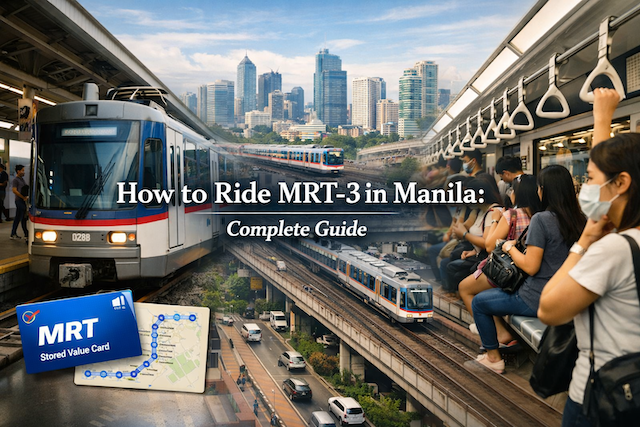
How to Ride MRT-3 in Manila: Complete Guide
Contents
- How to Ride MRT-3 in Manila: Complete Guide
- What Is MRT-3 and Where Does It Run?
- MRT-3 Station List (North to South)
- MRT-3 Operating Hours
- MRT-3 Fares: How Much Does It Cost?
- Ticket Options: Single-Journey Ticket vs Beep Card
- Step-by-Step: How to Ride MRT-3
- Step 1: Enter the Correct Station Side
- Step 2: Pass the Security Check
- Step 3: Buy a Ticket or Use Your Beep Card
- Step 4: Tap In at the Entry Gate
- Step 5: Follow Signs to the Correct Platform
- Step 6: Wait Safely and Board Properly
- Step 7: Ride and Track Your Stop
- Step 8: Exit the Train and Leave the Station
- Peak Hours: When MRT-3 Gets Extremely Crowded
- Common Transfers: Connecting MRT-3 to Other Lines
- MRT-3 Etiquette and Rules (What Locals Expect)
- Safety Tips on MRT-3
- Is MRT-3 Good for Tourists?
- Practical Tips to Make Your MRT-3 Ride Easier
- Conclusion
- FAQs (Frequently Asked Questions)
- Is MRT-3 safe for first-time riders and tourists?
- What is the difference between a single-journey ticket and a Beep card?
- How do I know which direction I need to take on MRT-3?
- What are the typical MRT-3 operating hours?
- How much does it cost to ride MRT-3?
- Can I bring luggage or a large backpack on MRT-3?
- When are the busiest times on MRT-3?
- What should I do if the station is extremely crowded?
- How do I transfer from MRT-3 to LRT lines?
- What etiquette rules should I follow on MRT-3?
- What if there is a service interruption or delay?
How to Ride MRT-3 in Manila: Complete Guide
MRT-3 (Metro Rail Transit Line 3) is one of the fastest ways to travel across Metro Manila—especially along EDSA, where road traffic can be brutal. If it’s your first time riding, the system is simple once you know the basics: pick the right station entrance, buy the correct ticket (or use a Beep card), pass security, follow platform signage, and exit at your destination.
This guide walks you through the entire process—step by step—plus practical tips for peak hours, transfers, safety, and common mistakes to avoid.
What Is MRT-3 and Where Does It Run?
MRT-3 is an elevated rail line that runs north–south along EDSA (Epifanio de los Santos Avenue). It connects major areas in Quezon City, Mandaluyong, Makati, Pasay, and nearby business districts. Because it stays above street level, it avoids traffic and often cuts travel time dramatically.
For many routes—especially between Quezon City, Ortigas, and Makati—MRT-3 is one of the most efficient choices available.
MRT-3 Station List (North to South)
Knowing the station order makes planning much easier. MRT-3 has 13 stations:
-
North Avenue
-
Quezon Avenue
-
GMA–Kamuning
-
Araneta Center–Cubao
-
Santolan–Annapolis
-
Ortigas
-
Shaw Boulevard
-
Boni
-
Guadalupe
-
Buendia
-
Ayala
-
Magallanes
-
Taft Avenue
Key “hub” stations:
-
Araneta Center–Cubao (connects to LRT-2 and a huge mall/transit area)
-
Taft Avenue (connects to LRT-1 and buses)
-
Ayala (major Makati access and bus connections)
MRT-3 Operating Hours
MRT-3 operates daily (including weekends), but schedules can shift slightly depending on station and direction.
General guideline:
-
First trains: early morning (around 4:30–5:00 AM range)
-
Last trains: late evening (often around 9:30–10:30 PM range)
If you’re traveling late, don’t cut it close—arrive earlier than you think, especially on weekends or holidays when operations can be adjusted.
MRT-3 Fares: How Much Does It Cost?
MRT-3 is distance-based: longer rides cost more, shorter rides cost less. Fares are affordable compared to taxis or ride-hailing, and they usually fall within a low range for most daily commutes.
You’ll typically choose between:
-
Single-journey ticket (one ride only)
-
Beep card (reusable stored-value card)
If you plan to ride multiple times over several days, a Beep card is almost always worth it.
Ticket Options: Single-Journey Ticket vs Beep Card
Single-Journey Ticket
Best for:
-
One-time riders
-
Tourists making just one MRT trip
How it works:
-
Buy a ticket for your destination station
-
Tap it at the entry gate
-
Insert it at the exit gate (you won’t get it back)
Downside:
-
You’ll line up each time
-
Slower during rush hour
Beep Card (Stored-Value)
Best for:
-
Anyone riding more than once
-
Commuters
-
Visitors staying for multiple days
Why it’s better:
-
Faster entry and exit
-
No repeated ticket lines
-
Works on MRT-3, LRT-1, LRT-2, and selected buses
You can buy and reload it at stations. Treat it like a transit wallet—keep it accessible and don’t bend it.
Step-by-Step: How to Ride MRT-3
Here’s the complete flow from entrance to exit.
Step 1: Enter the Correct Station Side
Most MRT-3 stations have entrances on both sides of EDSA, and not every entrance leads to both directions. Look for signs that indicate:
-
Northbound vs Southbound
-
Station name and platform direction
If unsure, ask station staff before you go upstairs—fixing direction mistakes after entering can waste time.
Step 2: Pass the Security Check
Security is standard at MRT stations. Expect:
-
Bag inspection or X-ray scanning
-
Walk-through metal detectors
To move faster:
-
Keep metal objects in a pocket you can easily empty
-
Avoid carrying sharp or restricted items
Step 3: Buy a Ticket or Use Your Beep Card
If you don’t have a Beep card:
-
Go to the ticket booth or vending machine
-
Tell them your destination station (or select it on the machine)
-
Pay and receive your ticket
If you have a Beep card:
-
Ensure it has enough load before you enter
-
You can reload at the station if needed
Step 4: Tap In at the Entry Gate
-
Single-journey: tap or scan the ticket (varies by gate type)
-
Beep card: tap the card on the reader until it accepts
If the gate rejects your card:
-
It may have insufficient balance
-
Tap again slowly
-
If it still fails, go to the booth for assistance
Step 5: Follow Signs to the Correct Platform
Once inside:
-
Follow arrows and signage for your direction
-
Some stations require walking over a footbridge within the station
Stay alert: station layouts vary, and crowds can pull you in the wrong flow.
Step 6: Wait Safely and Board Properly
On the platform:
-
Stand behind the safety line
-
Let passengers exit before you board
-
Don’t block the doors
During peak times, trains arrive full. If you can’t board safely, wait for the next train rather than forcing your way in.
Step 7: Ride and Track Your Stop
Stations are announced over speakers. Helpful habits:
-
Count stops using the station list on the train wall
-
Use offline maps or notes if mobile signal drops
-
If you’re unsure, ask someone politely (many commuters will help)
Step 8: Exit the Train and Leave the Station
When you arrive:
-
Move toward the exit gates with the crowd flow
-
Follow signs to the station exits (some exits lead directly to malls or footbridges)
At the exit gate:
-
Single-journey: insert the ticket into the gate slot
-
Beep card: tap out
Then follow walkways/footbridges down to street level or connected buildings.
Peak Hours: When MRT-3 Gets Extremely Crowded
If you want a more comfortable ride, avoid:
-
Morning rush (roughly 7:00–9:30 AM)
-
Evening rush (roughly 5:00–8:00 PM)
During these times:
-
Lines for tickets can be long
-
Platforms get packed
-
Trains may be full for multiple cycles
Best strategy if you must ride at rush hour:
-
Use a Beep card (huge time saver)
-
Arrive earlier than usual
-
Stand where doors open and be ready, but don’t push
Common Transfers: Connecting MRT-3 to Other Lines
MRT-3 becomes even more powerful when you know transfer points.
Cubao (Araneta Center–Cubao)
-
Connects to LRT-2
-
Also connects to malls and bus terminals
Taft Avenue
-
Connects to LRT-1
-
Close to major bus terminals and transport hubs
Ayala
-
Convenient for Makati
-
Easy access to bus routes and key commercial areas
Transfers often involve walking through footbridges and busy corridors, so factor in extra time.
MRT-3 Etiquette and Rules (What Locals Expect)
To avoid trouble or awkward moments:
-
No eating or drinking inside trains
-
Don’t block train doors
-
Offer priority seats if needed
-
Keep bags in front of you in tight crowds
-
Avoid loud calls or speaker audio
Small things matter because the system is crowded—being considerate makes everything smoother.
Safety Tips on MRT-3
MRT-3 is generally safe, but like any crowded metro:
-
Keep your phone and wallet secure
-
Use a crossbody bag or front-facing backpack
-
Avoid dangling phones near doors
-
Watch out for pickpocketing in dense crowds
-
Don’t run on stairs or escalators
If you lose something or need help, approach station staff rather than random commuters.
Is MRT-3 Good for Tourists?
Yes—MRT-3 is great for tourists who want to move along EDSA efficiently, especially to reach malls, business districts, and transit hubs. However, consider alternatives if you:
-
Have large luggage
-
Are traveling with a very young child during rush hour
-
Need door-to-door convenience
For first-time visitors, the easiest strategy is to ride mid-day (between late morning and mid-afternoon), when crowds are lighter.
Practical Tips to Make Your MRT-3 Ride Easier
-
Use a Beep card if you’ll ride more than once
-
Avoid rush hour for your first ride
-
Memorize your destination station and the station before it
-
Keep small cash if you need to buy a single-journey ticket
-
Travel light whenever possible
-
Don’t panic in crowds—move with the flow and stay patient
Conclusion
MRT-3 is one of the most practical ways to get around Metro Manila, especially along EDSA. Once you understand tickets, platform direction, and transfer points, it becomes a reliable tool that can save you a lot of time and stress.
If you’re riding for the first time, go during off-peak hours, use a Beep card if possible, and follow the step-by-step flow in this guide. After one or two rides, MRT-3 will feel straightforward—and you’ll wonder why you ever tried crossing EDSA by car during rush hour.
FAQs (Frequently Asked Questions)
Is MRT-3 safe for first-time riders and tourists?
MRT-3 is generally safe for first-time riders and tourists, especially if you follow basic precautions. Stations have security screening, and there are staff members on platforms and near ticketing areas. The biggest “risk” is usually petty theft in crowded conditions, not violent crime. Keep your phone and wallet secure, avoid placing valuables in open pockets, and stay alert when trains are packed. If you ride during off-peak hours (late morning to mid-afternoon), the experience is typically easier and less stressful. For tourists, MRT-3 is a convenient way to reach areas along EDSA without dealing with unpredictable traffic, but it may be uncomfortable if you have large luggage.
What is the difference between a single-journey ticket and a Beep card?
A single-journey ticket is valid for only one ride. You purchase it for a specific destination station, use it to enter, and surrender it when you exit. A Beep card is a reloadable stored-value card that works across MRT-3 and other rail lines in Metro Manila. It is usually faster because you do not need to line up at the ticket booth every time. If you plan to take MRT-3 more than once, a Beep card is almost always the better choice. It can also reduce stress during rush hours when ticket lines can become long.
How do I know which direction I need to take on MRT-3?
MRT-3 runs between North Avenue (north end) and Taft Avenue (south end). If your destination is closer to Quezon City, you are likely traveling northbound. If your destination is closer to Makati or Pasay, you are likely traveling southbound. Stations have signs that indicate direction and the terminal station name (North Avenue or Taft Avenue). Before entering the gates, confirm that you are on the correct side of the station. In some locations, crossing to the opposite platform after entering is not convenient, so it is better to confirm first.
What are the typical MRT-3 operating hours?
MRT-3 generally operates from early morning until late evening. The first trains typically run around the early morning window, and the last trains usually depart before midnight. Exact times can vary by station and direction, and schedules may shift during holidays, maintenance, or service disruptions. If you are traveling late at night, arrive earlier than you think you need to, because the last train time is not the same as the time you arrive at the station. You must also factor in queues and security checks.
How much does it cost to ride MRT-3?
MRT-3 fares are distance-based, meaning the price depends on how far you travel. The cost is generally affordable and lower than taxis or ride-hailing for most EDSA trips. Even with small variations, MRT-3 remains one of the best-value options for crossing the city quickly. If you are budgeting for daily travel, using a Beep card can make payment smoother, but it does not automatically mean the fare is cheaper. The biggest savings is time, because you avoid lining up for tickets.
Can I bring luggage or a large backpack on MRT-3?
You can bring luggage and backpacks, but large items can be difficult during peak hours due to limited space and heavy crowds. Security screening may also take longer if your bag is bulky. If you have a large suitcase, consider traveling outside rush hours or using an alternative option like a taxi or ride-hailing. If you do bring luggage, keep it close to your body, avoid blocking aisles or doors, and be mindful that crowded trains can be uncomfortable for both you and other passengers.
When are the busiest times on MRT-3?
MRT-3 is most crowded during weekday rush hours, typically in the morning when people commute to work and in the evening when they head home. During these periods, ticket lines can be long, platforms can become congested, and trains may arrive already full. If you want a more comfortable ride, travel in the mid-day window or later in the evening, while still allowing enough time before the last trains. Weekends can be less crowded, but certain stations near major malls can still become busy.
What should I do if the station is extremely crowded?
If the station is packed, prioritize safety and patience. Do not push toward the platform edge and do not force yourself into a train if the doors are struggling to close. Wait for the next train if boarding is unsafe. If possible, use a Beep card to reduce time spent in ticket lines. Stand in an orderly queue and follow station staff instructions, because crowd control measures may be used during peak times. If you feel uncomfortable, step away from dense areas and move to a safer spot until you can proceed calmly.
How do I transfer from MRT-3 to LRT lines?
Two major transfer points are commonly used. At Araneta Center–Cubao, you can connect to LRT-2, but the transfer usually involves walking through connected corridors and mall areas. At Taft Avenue, you can connect to LRT-1, which is useful for reaching locations further south or closer to central Manila. Transfers may require additional walking time, so plan for it, especially if you are traveling with children or during busy periods. Follow signs carefully and do not hesitate to ask station staff if you are unsure.
What etiquette rules should I follow on MRT-3?
Basic etiquette makes a big difference because MRT-3 is often crowded. Let passengers exit before you board, keep bags in front of you, and avoid blocking doors. Eating and drinking are generally not allowed, and loud calls are discouraged. Priority seats should be offered to seniors, pregnant passengers, and persons with disabilities. If you are standing near the doors, step aside to allow others to get off, even if you are not exiting. Following these small rules helps the ride feel smoother for everyone.
What if there is a service interruption or delay?
Delays can happen due to technical issues, maintenance, or heavy crowding. If you notice unusually long waiting times, listen for station announcements and check posted advisories. If you must arrive by a specific time (for a flight, appointment, or meeting), build extra buffer time into your schedule and consider having a backup plan such as a bus route or ride-hailing. When delays occur, crowds can increase quickly, so staying calm and adjusting your plan early can reduce stress.

How to Register for eTravel Philippines (2025 Guide)
Step-by-step guide to completing your eTravel registration before arriving in the Philippines, with images and tips.

Night Market in Cebu – Things You Don’t Know About Cebu Life
Discover the hidden charm of Cebu’s night markets, from street food stalls to local life tips you won’t find in tourist guides.

How to Use ChatGPT for IELTS Preparation: A Complete Guide
Learn how to prepare for IELTS using ChatGPT — including strategies for Writing, Reading, Listening, Speaking, and grammar support.

How to Build a Website Without Coding Using ChatGPT
Discover how to build your own website using AI—no coding skills needed. From structure planning to SEO and design, let ChatGPT guide you.