2026年1月9日
3D ACADEMY offers affordable English study programs in Cebu, Philippines – perfect for beginners, professionals, and exam takers.

3D UNIVERSAL ENGLISH INSTITUTE INC
info.3d-universal.com
8:00-17:00(Mon-Fri)
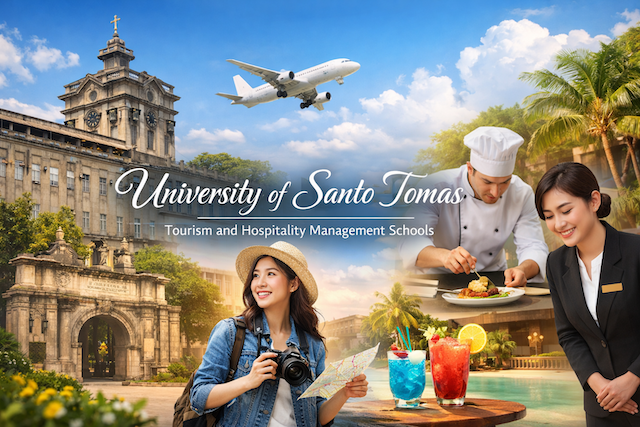
University of Santo Tomas (UST): Tourism and Hospitality Management Schools
Contents
- University of Santo Tomas (UST): Tourism and Hospitality Management Schools
- Overview of the University of Santo Tomas (UST)
- College Offering Tourism and Hospitality Management at UST
- Bachelor of Science in Tourism Management
- Bachelor of Science in Hospitality Management
- Specialized Training Facilities and Laboratories
- Internship and Industry Exposure
- Faculty Expertise and Academic Environment
- Career Opportunities for Graduates
- Global Recognition and Professional Certifications
- Student Life and Professional Development
- Admission Requirements and Academic Standards
- Why Choose UST for Tourism and Hospitality Management
- Conclusion
- FAQs (Frequently Asked Questions)
- Is the University of Santo Tomas (UST) a good school for Tourism and Hospitality Management?
- What programs are available under UST’s Tourism and Hospitality Management schools?
- What is the difference between Tourism Management and Hospitality Management?
- Do students get practical training and hands-on experience at UST?
- Are internships required, and where do students usually complete them?
- What skills should I expect to build in UST’s Tourism and Hospitality Management programs?
- What career paths can graduates pursue after finishing at UST?
- Is UST a good option if I want to work abroad in hospitality or tourism?
- What kind of student is likely to succeed in Tourism and Hospitality Management at UST?
- How can I choose between UST and other universities offering similar programs?
University of Santo Tomas (UST): Tourism and Hospitality Management Schools
Overview of the University of Santo Tomas (UST)
The University of Santo Tomas (UST) is widely recognized as one of the most prestigious and historically significant universities in the Philippines. Founded in 1611, UST is the oldest existing university in Asia and has built a strong reputation for academic excellence, professional education, and industry-aligned programs. Located in Manila, the university attracts students from across the Philippines and abroad who are seeking high-quality education in diverse disciplines, including medicine, engineering, business, education, and tourism.
UST’s approach to education emphasizes not only academic rigor but also ethical leadership, global competence, and practical skills. This philosophy is especially evident in its Tourism and Hospitality Management programs, which are designed to prepare students for dynamic, customer-focused, and globally competitive industries.
College Offering Tourism and Hospitality Management at UST
Tourism and Hospitality Management programs at UST are offered under the College of Tourism and Hospitality Management (CTHM). This college was established to meet the growing demand for professionally trained individuals in tourism, hospitality, hotel operations, culinary services, and event management.
The College of Tourism and Hospitality Management is known for blending theoretical knowledge with hands-on training. Students are exposed early to real-world hospitality environments, allowing them to develop technical competence, service excellence, and managerial skills.
Bachelor of Science in Tourism Management
The Bachelor of Science in Tourism Management (BSTM) at UST is designed to prepare students for careers in travel, tourism development, airline services, tour operations, destination marketing, and sustainable tourism planning.
Program Focus and Learning Outcomes
The Tourism Management program focuses on understanding the structure and operations of the tourism industry at local, national, and international levels. Students are trained to analyze tourism trends, manage tourism enterprises, and design tourism products that are both profitable and sustainable.
Graduates of the program are expected to:
-
Demonstrate strong knowledge of tourism systems and policies
-
Apply marketing and management principles in tourism settings
-
Promote sustainable and responsible tourism practices
-
Communicate effectively with multicultural clients and stakeholders
-
Utilize technology in tourism planning and operations
Key Courses in Tourism Management
The curriculum includes a balanced mix of general education, business, and specialized tourism subjects such as:
-
Introduction to Tourism and Hospitality
-
Tourism Planning and Development
-
Tour and Travel Management
-
Airline and Cruise Operations
-
Cultural Heritage and Ecotourism
-
Tourism Marketing and Promotion
-
Sustainable Tourism Practices
-
Research in Tourism and Hospitality
These courses help students gain a holistic understanding of the tourism ecosystem, from destination management to customer experience.
Bachelor of Science in Hospitality Management
The Bachelor of Science in Hospitality Management (BSHM) program at UST is tailored for students aiming to build careers in hotels, resorts, restaurants, food and beverage operations, event management, and related service industries.
Program Focus and Learning Outcomes
The Hospitality Management program emphasizes operational excellence, service quality, and leadership in hospitality settings. Students are trained to manage front office operations, food and beverage services, housekeeping, events, and hospitality enterprises.
Graduates are expected to:
-
Manage hospitality operations efficiently and ethically
-
Deliver high-quality guest experiences
-
Apply financial and human resource management in hospitality settings
-
Demonstrate leadership and teamwork skills
-
Adapt to global hospitality standards and trends
Key Courses in Hospitality Management
Students take a variety of hospitality-focused courses, including:
-
Hotel and Resort Operations
-
Food and Beverage Management
-
Culinary Fundamentals
-
Hospitality Marketing
-
Event Management
-
Hospitality Accounting and Finance
-
Service Quality Management
-
Strategic Hospitality Management
The curriculum is structured to progressively build students’ competencies from basic service skills to advanced managerial decision-making.
Specialized Training Facilities and Laboratories
One of the strengths of UST’s Tourism and Hospitality Management Schools is the availability of state-of-the-art training facilities. These facilities simulate real hospitality environments and allow students to practice their skills in controlled, professional settings.
Hospitality Laboratories
UST provides:
-
Training kitchens for culinary and food production classes
-
Mock hotel rooms for housekeeping and accommodation management
-
Front office and reservation system laboratories
-
Food and beverage service laboratories
These facilities enable students to gain hands-on experience before entering internships or professional roles.
Tourism Simulation and Learning Spaces
Tourism students benefit from:
-
Travel and tour operation simulation rooms
-
Case study and research centers
-
Multimedia-equipped classrooms for tourism marketing and presentations
Such environments enhance experiential learning and prepare students for real-world challenges in the tourism industry.
Internship and Industry Exposure
Practical training is a core component of UST’s Tourism and Hospitality Management programs. Students are required to complete internships and on-the-job training (OJT) in reputable organizations.
Local and International Internship Opportunities
UST has established partnerships with:
-
Luxury hotels and resorts
-
Airlines and travel agencies
-
Event management companies
-
Cruise lines
-
Tourism offices and destination management organizations
Students may complete internships locally or internationally, depending on availability and qualifications. These experiences allow them to apply classroom learning, build professional networks, and gain exposure to global service standards.
Faculty Expertise and Academic Environment
The faculty members of the College of Tourism and Hospitality Management are composed of experienced educators and industry practitioners. Many professors have professional backgrounds in hotel management, tourism planning, airline services, and international hospitality operations.
This blend of academic and industry expertise ensures that:
-
Course content remains relevant and updated
-
Students receive mentorship grounded in real-world experience
-
Industry trends and best practices are integrated into classroom discussions
The academic environment encourages critical thinking, creativity, and professional discipline.
Career Opportunities for Graduates
Graduates of UST’s Tourism and Hospitality Management Schools enjoy strong employability both in the Philippines and abroad. The university’s reputation, combined with industry-aligned training, makes UST graduates highly competitive.
Career Paths for Tourism Management Graduates
Possible careers include:
-
Tour and travel consultant
-
Destination marketing officer
-
Airline and cruise staff
-
Tourism development officer
-
Travel agency manager
-
Tourism researcher or planner
Career Paths for Hospitality Management Graduates
Hospitality graduates may pursue roles such as:
-
Hotel or resort manager
-
Front office supervisor
-
Food and beverage manager
-
Event and banquet coordinator
-
Restaurant operations manager
-
Hospitality entrepreneur
Many graduates also pursue international careers in hotels, cruise ships, and global hospitality brands.
Global Recognition and Professional Certifications
UST’s Tourism and Hospitality Management programs align with international standards, enabling graduates to compete globally. The curriculum is designed to meet industry requirements and support graduates seeking professional certifications in hospitality and tourism.
Graduates often find it easier to:
-
Apply for overseas employment
-
Pursue further studies abroad
-
Meet competency standards of international hospitality organizations
The global recognition of a UST degree adds significant value to graduates’ professional profiles.
Student Life and Professional Development
Beyond academics, students in the College of Tourism and Hospitality Management participate in various activities that enhance their professional growth.
Student Organizations and Events
Students can join organizations related to:
-
Tourism advocacy
-
Hospitality leadership
-
Event management
-
Culinary arts
These organizations provide opportunities for leadership, teamwork, and event planning, which are essential skills in service-oriented industries.
Competitions and Industry Events
UST students regularly participate in:
-
Hospitality and tourism competitions
-
Industry conferences and seminars
-
Career fairs and networking events
These activities help students build confidence, showcase their skills, and connect with potential employers.
Admission Requirements and Academic Standards
Admission to UST’s Tourism and Hospitality Management Schools is competitive. Applicants must meet academic standards set by the university and pass the UST Entrance Test or equivalent evaluation processes.
Students are expected to maintain high academic performance and professional conduct throughout their studies. This disciplined environment reflects the expectations of the global tourism and hospitality industries.
Why Choose UST for Tourism and Hospitality Management
Choosing UST for Tourism and Hospitality Management offers several advantages:
-
Long-standing academic reputation and credibility
-
Industry-oriented curriculum
-
Strong internship and employment networks
-
Comprehensive training facilities
-
Emphasis on ethics, leadership, and service excellence
UST provides a balanced education that prepares students not only for employment but also for long-term career growth and leadership roles.
Conclusion
The University of Santo Tomas (UST): Tourism and Hospitality Management Schools stand out as a premier choice for students aspiring to build successful careers in tourism and hospitality. With a well-structured curriculum, experienced faculty, modern training facilities, and strong industry connections, UST equips its students with the knowledge, skills, and values needed to thrive in a competitive global industry.
For students seeking a comprehensive, reputable, and future-oriented education in tourism and hospitality management, UST remains one of the top institutions in the Philippines and in Asia.
FAQs (Frequently Asked Questions)
Is the University of Santo Tomas (UST) a good school for Tourism and Hospitality Management?
Yes. The University of Santo Tomas (UST) is widely regarded as a strong choice for Tourism and Hospitality Management in the Philippines because it combines academic foundations with industry-oriented training. UST’s programs typically emphasize service excellence, operations, management principles, communication skills, and professional discipline—competencies that employers value in hotels, restaurants, travel organizations, and event companies. Students also benefit from a structured learning environment, campus-based training facilities, and exposure to professional standards that reflect how the hospitality and tourism industries operate in real settings. If you want a reputable university brand, a structured curriculum, and a professional learning culture, UST is often shortlisted by students aiming for hospitality and tourism careers.
What programs are available under UST’s Tourism and Hospitality Management schools?
UST commonly offers degree pathways aligned with two major tracks: Tourism Management and Hospitality Management. Tourism Management focuses on travel operations, destination planning, tourism marketing, tour design, airline and cruise concepts, sustainability, and heritage or culture-based tourism. Hospitality Management focuses on hotel operations, food and beverage service, culinary fundamentals, housekeeping and accommodations, customer experience, events, and hospitality business strategy. While course names and track structures can vary, these two tracks represent the main professional routes: one oriented toward travel and tourism systems, and the other oriented toward accommodation, food service, and hospitality operations.
What is the difference between Tourism Management and Hospitality Management?
Tourism Management is centered on the movement of people and the systems that support travel, such as tour operations, destination management, marketing, cultural tourism, and tourism development. It often involves working with travel agencies, airlines, tourism boards, or companies that design and sell travel experiences. Hospitality Management is centered on guest service and the operations of hospitality businesses, such as hotels, resorts, restaurants, and event venues. It is more directly tied to service operations, food and beverage management, lodging operations, and customer experience design. If you enjoy planning trips, promoting destinations, and building tourism products, Tourism Management may fit you. If you prefer hands-on service, hotel or restaurant operations, and guest experience, Hospitality Management may be the better match.
Do students get practical training and hands-on experience at UST?
In many Tourism and Hospitality programs, hands-on training is a core feature, and UST is often associated with structured skills development. Students usually practice service procedures, operational workflows, and professional standards through training laboratories and applied coursework. Hospitality students may develop competencies in food preparation basics, food and beverage service, front office procedures, and accommodations operations. Tourism students may focus on itinerary building, tour planning, tourism marketing presentations, and operational simulations related to travel services. This practical approach is important because employers often look for graduates who can perform professionally from day one, not only those with textbook knowledge.
Are internships required, and where do students usually complete them?
Internships or on-the-job training (OJT) are commonly required in Tourism and Hospitality Management degrees because the industry relies heavily on real workplace exposure. Students may complete training in hotels, resorts, restaurants, airlines, travel agencies, event companies, or tourism-related government and private organizations. The exact placement depends on internship availability, student qualifications, and program requirements. Internships help students build confidence, understand workplace culture, and develop professional networks. They also allow students to discover which department or career track fits them best—such as front office, food and beverage, events, sales and marketing, tour operations, or guest relations.
What skills should I expect to build in UST’s Tourism and Hospitality Management programs?
You can expect to build a mix of technical, interpersonal, and management skills. Technical skills may include service procedures, operational workflows, basic accounting concepts for hospitality, and industry-standard communication practices. Interpersonal skills include teamwork, customer handling, conflict management, professional etiquette, and cross-cultural communication. Management skills include planning, leadership fundamentals, problem-solving, quality management, and strategic thinking. You may also strengthen presentation skills and become more comfortable speaking to different audiences—an advantage in tourism and hospitality roles where communication and professionalism directly influence guest satisfaction.
What career paths can graduates pursue after finishing at UST?
Tourism graduates often work in tour operations, travel consultancy, airline-related roles, cruise operations support, destination marketing, tourism planning, and travel sales. Hospitality graduates often work in hotels and resorts, restaurants, event venues, and hospitality corporate offices, taking roles such as front office associate, guest relations officer, food and beverage supervisor, events coordinator, sales executive, or operations trainee. Over time, many graduates move into supervisory and managerial positions. Some also pursue entrepreneurship, such as opening a café, boutique accommodation, travel service, catering business, or events company.
Is UST a good option if I want to work abroad in hospitality or tourism?
It can be a good option if you build strong skills and practical experience during your studies. International employers often prioritize relevant experience, communication ability, service mindset, and professional conduct. A degree from a well-known university can help with credibility, but your internship performance, training record, and real competencies are usually what make you competitive. If your goal is to work abroad, it is smart to focus on English communication skills, customer-handling confidence, and operational excellence, while also building a portfolio of experiences (internships, competitions, leadership roles, or part-time industry exposure if possible).
What kind of student is likely to succeed in Tourism and Hospitality Management at UST?
Students who succeed often share a few traits: they enjoy working with people, they can stay calm under pressure, and they take pride in professionalism and attention to detail. The industry is service-driven, so patience, empathy, and consistency matter. It also helps if you are adaptable, because hospitality and tourism environments can change quickly—especially during peak seasons, events, or operational disruptions. If you are willing to learn through practice, accept feedback, and improve communication and teamwork skills, you are more likely to thrive in these programs.
How can I choose between UST and other universities offering similar programs?
Start by comparing training facilities, internship support, curriculum focus, and the professional culture of each school. Ask whether the program emphasizes operations (hands-on service and management) or leans more toward theory and business. Consider location and access to industry partners, because proximity to major hotels, event venues, and tourism hubs may affect internship opportunities. Also consider class environment, student organizations, and opportunities for competitions and seminars. Finally, reflect on your preferred career outcome—tour operations, airlines, hotels, restaurants, events, or entrepreneurship—and choose the program that best supports that direction.
Best Tourism and Hospitality Management Schools in the Philippines

How to Register for eTravel Philippines (2025 Guide)
Step-by-step guide to completing your eTravel registration before arriving in the Philippines, with images and tips.

Night Market in Cebu – Things You Don’t Know About Cebu Life
Discover the hidden charm of Cebu’s night markets, from street food stalls to local life tips you won’t find in tourist guides.

How to Use ChatGPT for IELTS Preparation: A Complete Guide
Learn how to prepare for IELTS using ChatGPT — including strategies for Writing, Reading, Listening, Speaking, and grammar support.

How to Build a Website Without Coding Using ChatGPT
Discover how to build your own website using AI—no coding skills needed. From structure planning to SEO and design, let ChatGPT guide you.