2026年1月9日
3D ACADEMY offers affordable English study programs in Cebu, Philippines – perfect for beginners, professionals, and exam takers.

3D UNIVERSAL ENGLISH INSTITUTE INC
info.3d-universal.com
8:00-17:00(Mon-Fri)
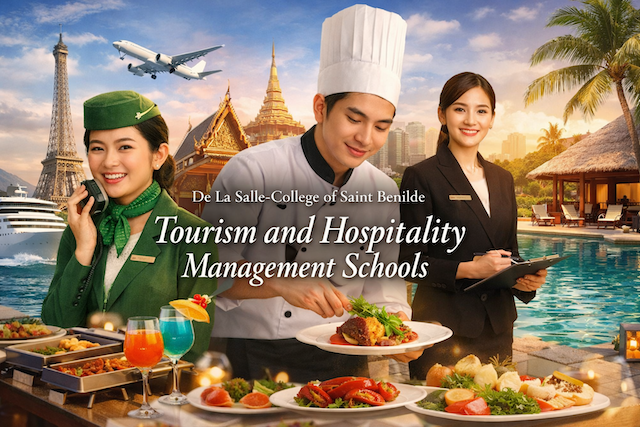
De La Salle-College of Saint Benilde (DLS-CSB): Tourism and Hospitality Management Schools
Contents
- De La Salle-College of Saint Benilde (DLS-CSB): Tourism and Hospitality Management Schools
- Overview: Why DLS-CSB Is Often Considered for Tourism and Hospitality
- Understanding Tourism and Hospitality Management as a Field
- What to Look for in a Strong Tourism and Hospitality School
- DLS-CSB as a Learning Environment for Hospitality-Focused Students
- Typical Curriculum Themes You’ll Encounter
- Skills That Matter Most for Tourism and Hospitality Careers
- Internships and Industry Training: How to Maximize the Experience
- Career Paths for Graduates: More Than Hotels
- Student Life and Professional Growth in Hospitality Programs
- How to Decide If DLS-CSB Is the Right Fit for You
- Admissions and Preparation Tips for Tourism and Hospitality Students
- What Success Looks Like After Graduation
- Final Thoughts: Making Your Choice with Confidence
- FAQs (Frequently Asked Questions)
- Is De La Salle-College of Saint Benilde (DLS-CSB) a good option for Tourism and Hospitality Management?
- What kinds of careers can I pursue after graduating from a Tourism and Hospitality program?
- What skills matter most for Tourism and Hospitality Management students?
- Does the program focus more on theory or hands-on training?
- How important is an internship for Tourism and Hospitality students?
- How can I prepare for interviews in hotels, events, or travel companies?
- Do I need to be extroverted to succeed in Tourism and Hospitality Management?
- What should I do while studying to improve my employability after graduation?
- How do I know if DLS-CSB is the right fit for my learning style?
- What does success look like in the first job after graduation?
De La Salle-College of Saint Benilde (DLS-CSB): Tourism and Hospitality Management Schools
Overview: Why DLS-CSB Is Often Considered for Tourism and Hospitality
Tourism and hospitality are people-centered industries where service quality, cultural awareness, and business fundamentals matter just as much as creativity and confidence. In the Philippines, many students look for schools that can balance academic grounding with practical, industry-facing training—especially in a setting where hotels, restaurants, events, airlines, and destination management companies are active and accessible.
De La Salle-College of Saint Benilde (DLS-CSB) is frequently discussed in that context because it is known for industry-oriented programs and a learning environment that encourages applied skills. For students aiming for careers in hotel operations, travel and tours, events management, culinary-adjacent roles, customer experience, or even entrepreneurship in the leisure sector, a school’s network, training approach, and student support can influence both competence and confidence before graduation.
This guide walks you through what to look for in a tourism and hospitality school, how to evaluate DLS-CSB as an option, what the learning journey typically involves, and how to plan your path from student to employable professional—without relying on hype.
Understanding Tourism and Hospitality Management as a Field
Tourism and hospitality management is not just about “travel” or “hotels.” It’s a broad discipline that combines operations, marketing, finance, human behavior, service design, and sometimes policy and sustainability. You’ll often study topics such as:
-
Service quality and guest experience design
-
Hotel and restaurant operations
-
Tourism planning and destination management
-
Events and meetings management
-
Marketing, branding, and sales for leisure businesses
-
Basic accounting, budgeting, and revenue thinking
-
Human resources and team supervision
-
Intercultural communication and professional ethics
In practice, graduates may start in roles that feel operational (front office, reservations, food and beverage, events coordination), then grow into supervisory or specialist roles (revenue, sales, guest relations, training, partnerships, product development). If you’re also entrepreneurial, the same foundation can help you build a small business—boutique stays, tours, events, catering concepts, or travel services.
What to Look for in a Strong Tourism and Hospitality School
Before choosing any school—including DLS-CSB—use a simple checklist. A strong program usually offers:
-
Practical training and simulation: not only lectures, but structured practice that mirrors workplace standards.
-
Industry exposure: internships, site visits, live projects, or partnerships that connect learning to real operations.
-
Business fundamentals: you need enough finance, marketing, and operations thinking to understand how the industry works beyond “service.”
-
Communication development: tourism and hospitality demand professional English, writing, presentations, and conflict-handling.
-
Values and professionalism: reliability, ethics, inclusivity, and teamwork are non-negotiable in service industries.
-
Career support: career advising, job placement support, portfolio guidance, and interview readiness.
When you evaluate a specific school, ask: “Will this environment turn me into someone who can perform on day one of training—and improve fast?”
DLS-CSB as a Learning Environment for Hospitality-Focused Students
Students who thrive in tourism and hospitality programs tend to do well in environments that are structured but creative, professional but not intimidating, and supportive of applied learning. Many hospitality students also value a campus culture where group work, presentations, and real-world projects are common—because the industry itself is collaborative and guest-facing.
When assessing DLS-CSB specifically, it helps to focus on the style of education you want:
-
Do you want a program that emphasizes skills demonstration (presentations, service standards, project outputs)?
-
Do you want a culture where professional identity is shaped early (appearance, communication habits, teamwork)?
-
Do you want to be in a setting where industry access is realistic because of proximity to major commercial areas?
If your answer is “yes,” you’re likely thinking in the right direction for a tourism and hospitality pathway.
Typical Curriculum Themes You’ll Encounter
Tourism and hospitality curricula vary, but students commonly experience a progression from foundation to specialization:
-
Year 1 foundation: service culture, communication skills, basic business concepts, and intro courses to tourism/hospitality systems.
-
Year 2 operations focus: hospitality operations (front office, housekeeping concepts, food and beverage flow), tourism planning basics, and customer experience.
-
Year 3 integration: marketing, finance, management, events, and applied projects that mimic industry scenarios.
-
Year 4 professional transition: internship or practicum, capstone projects, career readiness, and specialization depending on the track.
The most important point is not the list of subjects, but the learning outcomes: can you explain a service process, handle customer issues, work in teams, and think like a supervisor—even if you begin as a trainee?
Skills That Matter Most for Tourism and Hospitality Careers
Your school can teach you frameworks, but your career will depend on how well you build these skills:
-
Service mindset: anticipating needs, staying calm, and turning problems into solutions.
-
Professional communication: clear speaking, polite firmness, and confident English in real situations.
-
Operational discipline: accuracy, punctuality, attention to detail, and respect for standards.
-
Teamwork under pressure: handling peak hours, events deadlines, and difficult guests without falling apart.
-
Business awareness: understanding costs, revenue, customer segments, and brand positioning.
-
Cultural sensitivity: dealing with diverse customers, colleagues, and expectations respectfully.
A good program will repeatedly train these skills through group work, simulations, role-plays, presentations, and practical requirements—not just written exams.
Internships and Industry Training: How to Maximize the Experience
Internships can become your strongest advantage if you approach them strategically. Many students treat internship as “required hours,” but in hospitality and tourism, it can be your unofficial audition.
To maximize your internship:
-
Choose a placement aligned with your target path: hotel operations, events, travel services, or food and beverage.
-
Track measurable outcomes: number of guests handled, events supported, service recovery cases resolved, or sales tasks done.
-
Ask for feedback early: don’t wait for final evaluation—ask supervisors what “excellent” looks like.
-
Build references the right way: professionalism and consistency matter more than charisma.
-
Document your learning: keep a simple log and turn it into interview stories later.
If you do this well, you can graduate with a clearer direction and stronger employability—even before you have “experience.”
Career Paths for Graduates: More Than Hotels
Tourism and hospitality graduates are not limited to hotels. Depending on interest and specialization, entry points include:
-
Hotel operations: front office, reservations, guest relations, concierge, housekeeping coordination
-
Food and beverage: service management track, banquet operations, restaurant supervision support
-
Events and meetings: coordinator roles in events companies, venues, corporate events teams
-
Travel and tours: travel operations, product development, tour coordination, customer success
-
Sales and marketing: hotel sales support, partnerships, digital marketing for tourism brands
-
Cruise and aviation-related roles: customer service, ground operations-adjacent roles (varies by hiring)
-
Destination and tourism orgs: tourism promotions, community tourism, project support roles
-
Entrepreneurship: tours, stays, experiences, catering concepts, event styling, travel services
What matters is how you shape your profile: operations-focused, people-and-events-focused, marketing-focused, or entrepreneurial.
Student Life and Professional Growth in Hospitality Programs
Tourism and hospitality students often grow fastest outside the classroom through organizations, events, and practical leadership.
If you’re studying at a tourism/hospitality-focused school, you should actively look for:
-
Student orgs that run events or collaborate with external partners
-
Opportunities to host, coordinate, or manage logistics
-
Workshops for customer experience, public speaking, and professional English
-
Volunteer events that train you in time management and teamwork
Hospitality rewards “reliable leaders” more than “loud leaders.” If you can become the person who delivers quality work on time, you’ll stand out quickly.
How to Decide If DLS-CSB Is the Right Fit for You
Ask yourself these questions:
-
Do I enjoy interacting with people—even when it’s tiring?
-
Am I willing to be trained on standards and details (grooming, communication, procedure)?
-
Do I want a career where growth often starts with operational roles?
-
Do I like project-based work and presentations?
-
Can I handle teamwork and deadlines consistently?
If you’re more introverted, that’s not automatically a disadvantage—but you must be comfortable building professional communication skills. Hospitality doesn’t require a “big personality.” It requires composure, clarity, and service discipline.
Admissions and Preparation Tips for Tourism and Hospitality Students
Even before enrollment, you can prepare to succeed:
-
Strengthen your English: practice speaking clearly, writing emails, and presenting short reports.
-
Build basic computer comfort: spreadsheets, documents, and scheduling tools matter in operations.
-
Practice customer-facing confidence: simple volunteering, part-time work, or community leadership helps.
-
Learn the industry language: read about hotel departments, event workflows, or tourism segments.
-
Create a simple “career direction hypothesis”: hotel ops vs events vs travel—your choice can evolve later, but start with a direction.
The goal is not to “know everything,” but to enter with momentum.
What Success Looks Like After Graduation
Graduates who do well in tourism and hospitality typically share these habits:
-
They treat every role—especially entry-level roles—as skill-building, not “temporary suffering.”
-
They improve communication and service recovery ability every month.
-
They understand that promotions come from trust: attendance, accuracy, and calm performance.
-
They build a clear professional identity: “I’m an events person,” or “I’m a hotel operations person,” and then they support it with evidence.
-
They maintain a portfolio of projects, internships, and outcomes that can be explained in interviews.
If you choose DLS-CSB (or any strong program), your outcome will depend on how actively you use the environment: internships, projects, organizations, and professional training.
Final Thoughts: Making Your Choice with Confidence
Choosing a tourism and hospitality management school is not about chasing a brand name alone. It’s about selecting a training environment that matches your learning style and career target. DLS-CSB is a school many students consider because tourism and hospitality careers thrive when education is practical, professional, and connected to real industry expectations.
If you want a path that blends service excellence with business thinking—and you’re ready to build discipline, communication, and teamwork—then pursuing tourism and hospitality management at a school like DLS-CSB can be a strong step. The best approach is to enter with intention, commit to skill-building early, and use internships and projects as your launchpad into the industry.
FAQs (Frequently Asked Questions)
Is De La Salle-College of Saint Benilde (DLS-CSB) a good option for Tourism and Hospitality Management?
DLS-CSB is often considered a strong option by students who want a career-focused learning environment with practical training and industry exposure. Tourism and hospitality programs typically benefit from hands-on activities such as simulations, group projects, presentations, and real-world case work. If you learn best by doing—rather than only reading and testing—DLS-CSB can be a good fit. However, “good” also depends on your goals. If you want to work in hotel operations, events, travel services, or customer experience, you should evaluate the curriculum focus, internship support, and the kind of training culture you prefer.
What kinds of careers can I pursue after graduating from a Tourism and Hospitality program?
Graduates can pursue more than hotel jobs. Common pathways include hotel front office, guest relations, reservations, food and beverage operations, banquet and events coordination, travel and tours operations, destination marketing support, and customer success roles in tourism-related businesses. Some graduates move into sales, partnerships, or marketing functions for hotels and travel brands. Others build small businesses such as tours, events services, boutique stays, or experience-based ventures. Your career direction often becomes clearer once you experience internships and discover which work environment fits your personality and strengths.
What skills matter most for Tourism and Hospitality Management students?
The most valuable skills combine service excellence with business awareness. Communication is critical: clear speaking, professional writing, confident presentations, and calm handling of guest concerns. Operational discipline is also essential, including punctuality, attention to detail, and the ability to follow standards. Teamwork under pressure matters because hospitality and tourism involve deadlines, peak hours, and unpredictable situations. Cultural sensitivity, professionalism, and problem-solving are also key. If your program provides repeated practice in these areas through projects and training, you will be more prepared for real workplace expectations.
Does the program focus more on theory or hands-on training?
Tourism and hospitality programs generally combine both. You can expect foundational subjects that teach how the industry works (systems, planning, management principles) as well as applied activities that train you in operational thinking and service standards. Hands-on learning may include role-plays, simulations, group projects, event planning exercises, and presentation-based assessments. The exact balance can vary by term and subject. A good approach is to look for signs that the program measures performance through practical outputs, not only written tests.
How important is an internship for Tourism and Hospitality students?
Internship is one of the most important parts of a tourism and hospitality education because it connects classroom learning to real operations. Many employers treat internship performance like an extended interview. To maximize it, choose placements aligned with your target path (hotel operations, events, travel services, or food and beverage). Track what you actually did and learned, request feedback early, and show consistent professionalism. Even small responsibilities—handled well—can lead to strong references, repeat opportunities, or job offers after graduation.
How can I prepare for interviews in hotels, events, or travel companies?
Preparation should focus on communication, professionalism, and evidence of competence. Build a list of clear stories that show customer service, teamwork, problem-solving, and leadership under pressure. Employers value examples such as resolving a complaint, coordinating a project deadline, or improving a service process. Practice speaking in a calm and structured way: situation, action, result, and lesson learned. Prepare basic knowledge of departments and roles, and show that you understand operational realities such as shifting schedules, peak seasons, and service standards.
Do I need to be extroverted to succeed in Tourism and Hospitality Management?
No. Many successful hospitality professionals are not naturally extroverted. What matters more is your ability to communicate clearly, stay composed, and handle people respectfully—especially during stressful situations. Introverted students can succeed by developing professional routines: polite greetings, confident presentation structure, and calm service recovery language. Hospitality rewards reliability and consistency. If you can deliver quality work on time, support your team, and manage guest interactions professionally, you can thrive regardless of personality type.
What should I do while studying to improve my employability after graduation?
Start building a professional profile early. Join student organizations that run events or collaborate with external partners. Volunteer for roles that develop planning, coordination, hosting, and teamwork. Improve your English by practicing presentations and professional writing. Learn basic tools such as spreadsheets and scheduling systems. Document your projects and internship outcomes so you can explain them in interviews. If possible, identify a direction—hotel operations, events, travel services, or marketing—and choose electives, internships, and activities that support that direction.
How do I know if DLS-CSB is the right fit for my learning style?
Ask yourself how you perform in environments that require presentations, teamwork, and practical outputs. Tourism and hospitality programs often include performance-based assessments and group deadlines. If you prefer structured training, real-world projects, and learning by practice, you may feel comfortable. If you strongly dislike group work or customer-facing tasks, you may find the field challenging. A useful method is to list your target job roles, then check whether the program’s training style supports the skills those roles require.
What does success look like in the first job after graduation?
Success usually starts with reliability and growth mindset. Entry-level roles may involve operational tasks, guest interaction, or coordination work that feels repetitive at first. The professionals who advance quickly show punctuality, accuracy, calm behavior under pressure, and willingness to learn. They communicate well, accept feedback, and improve their performance consistently. They also build trust with supervisors and teammates. Over time, this trust leads to more responsibility, better assignments, and promotion opportunities.
Best Tourism and Hospitality Management Schools in the Philippines

How to Register for eTravel Philippines (2025 Guide)
Step-by-step guide to completing your eTravel registration before arriving in the Philippines, with images and tips.

Night Market in Cebu – Things You Don’t Know About Cebu Life
Discover the hidden charm of Cebu’s night markets, from street food stalls to local life tips you won’t find in tourist guides.

How to Use ChatGPT for IELTS Preparation: A Complete Guide
Learn how to prepare for IELTS using ChatGPT — including strategies for Writing, Reading, Listening, Speaking, and grammar support.

How to Build a Website Without Coding Using ChatGPT
Discover how to build your own website using AI—no coding skills needed. From structure planning to SEO and design, let ChatGPT guide you.