2026年1月9日
3D ACADEMY offers affordable English study programs in Cebu, Philippines – perfect for beginners, professionals, and exam takers.

3D UNIVERSAL ENGLISH INSTITUTE INC
info.3d-universal.com
8:00-17:00(Mon-Fri)
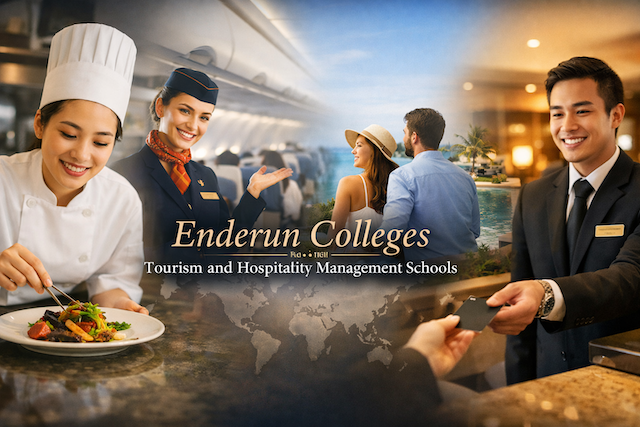
Enderun Colleges: Tourism and Hospitality Management Schools
Contents
- Enderun Colleges: Tourism and Hospitality Management Schools
- Overview of Enderun Colleges
- Focus on Tourism and Hospitality Management
- Academic Approach and Learning Philosophy
- Hospitality Management Curriculum Structure
- Internships and Industry Exposure
- Specialization Pathways in Hospitality
- Global Orientation and International Perspective
- Campus Environment and Location
- Student Profile: Who Is Enderun Best For?
- Career Paths After Graduation
- Preparing for Success in Hospitality Studies
- What to Consider Before Enrolling
- Conclusion
- FAQs (Frequently Asked Questions)
- What is Enderun Colleges known for in tourism and hospitality education?
- Does Enderun offer a hospitality management program that fits tourism careers too?
- What kinds of subjects do hospitality students typically study at Enderun?
- Are internships required for Enderun hospitality students?
- What is the advantage of completing more than one internship?
- Is Enderun better for hotel careers or culinary careers?
- What careers can graduates pursue after studying hospitality management?
- How can students maximize their learning while studying hospitality?
- What should applicants ask admissions before enrolling at Enderun?
- Is Enderun a good choice for students aiming to work abroad?
Enderun Colleges: Tourism and Hospitality Management Schools
Enderun Colleges is a private higher education institution in Taguig City, Metro Manila, known for its strong focus on business, hospitality, and service-oriented education. For students who want to pursue careers in tourism, hotels, resorts, restaurants, events, and other service-driven industries, Enderun positions hospitality management as both an academic discipline and a professional training ground. The school emphasizes practical readiness, global standards, and career-oriented learning rather than purely theoretical study.
This article provides a comprehensive overview of Enderun Colleges as a destination for tourism and hospitality management education, explaining its academic approach, learning structure, internships, specializations, and career outcomes.
Overview of Enderun Colleges
Enderun Colleges was established with a clear mission: to produce graduates who are ready for leadership roles in business and service industries. Unlike large public universities, Enderun operates as a relatively small, focused institution, which allows it to emphasize personalized education, industry alignment, and professional development.
Hospitality and tourism programs at Enderun are designed for students who see service not just as a job, but as a long-term profession. The curriculum highlights discipline, professionalism, communication, and operational competence—qualities that employers in hotels, resorts, and tourism-related businesses consistently demand.
Focus on Tourism and Hospitality Management
Tourism and hospitality are closely linked but distinct fields. Tourism often centers on travel systems, destinations, and visitor experiences, while hospitality focuses on managing service operations such as hotels, restaurants, events, and leisure facilities. Enderun’s programs typically lean toward hospitality management, while still providing a strong foundation that supports tourism-related careers.
Students who study hospitality management at Enderun gain skills that are directly applicable to tourism environments, including resorts, cruise-related operations, leisure destinations, and travel-focused service businesses. The emphasis on guest experience, service quality, and operational management makes the program relevant to both local and international tourism markets.
Academic Approach and Learning Philosophy
Enderun’s hospitality education is built on the idea that management knowledge must be paired with real-world application. Students are not trained only to understand concepts, but to apply them in professional settings.
The academic structure generally balances four major components:
-
Business foundations, including management principles, marketing, basic finance, and entrepreneurship
-
Hospitality operations, such as hotel systems, food and beverage management, guest services, and event operations
-
Professional development, focusing on communication skills, leadership, teamwork, and workplace etiquette
-
Experiential learning, including internships and practical exposure to industry environments
This approach reflects the reality of hospitality careers, where success depends on both strategic thinking and operational excellence.
Hospitality Management Curriculum Structure
While exact course offerings may change over time, hospitality management programs at Enderun typically cover a broad range of subjects relevant to tourism and service industries.
Core Business Subjects
Students usually begin with foundational courses in management, marketing, accounting basics, organizational behavior, and entrepreneurship. These subjects help students understand how hospitality businesses operate financially and strategically.
Hospitality-Specific Courses
Hospitality courses often include hotel operations, rooms division management, front office systems, housekeeping management, service quality, food and beverage operations, and event planning. These subjects are essential for students who want to work in hotels, resorts, restaurants, and event-driven tourism businesses.
Leadership and Professional Skills
Because hospitality is a people-focused industry, programs emphasize communication, teamwork, conflict management, and service leadership. Students are trained to interact confidently with guests, colleagues, and supervisors across different cultural and professional contexts.
Internships and Industry Exposure
One of the defining features of Enderun’s hospitality education is its strong emphasis on internships. Internships are treated as a core part of the degree pathway rather than optional extras.
Hospitality students typically complete multiple internships during their academic journey. These placements allow students to experience real work environments, understand daily operations, and apply classroom learning in practical settings.
Benefits of Internship-Based Learning
Internships help students:
-
Gain firsthand exposure to hospitality operations
-
Understand workplace standards and professional expectations
-
Build confidence in guest-facing roles
-
Identify preferred career paths early
-
Develop industry connections and references
By completing more than one internship, students have the opportunity to explore different departments or sectors, such as hotels, events, restaurants, or leisure businesses.
Specialization Pathways in Hospitality
Hospitality management programs often allow students to pursue specific areas of interest through specialization tracks or elective clusters. At Enderun, hospitality education commonly aligns with two broad directions: hotel administration and culinary-focused hospitality.
Hotel Administration-Oriented Path
This direction is suitable for students aiming for careers in:
-
Hotel and resort operations
-
Front office and guest services
-
Rooms division management
-
Sales, marketing, and reservations
-
Events and banquet management
Students following this path often aspire to management trainee programs or supervisory roles within hotel groups and hospitality organizations.
Culinary and Food-Focused Path
This direction is more suitable for students interested in:
-
Restaurant and kitchen operations
-
Food and beverage management
-
Catering and banquet services
-
Culinary entrepreneurship
Even for students who do not plan to become chefs, culinary exposure can strengthen operational understanding and leadership credibility within hospitality environments.
Global Orientation and International Perspective
Hospitality is a global industry, and Enderun positions its programs with an international mindset. Students are encouraged to adopt global service standards, professional communication skills, and cross-cultural awareness.
This international orientation is particularly valuable for students who aim to work with multinational hotel brands, international resorts, cruise operations, or overseas hospitality employers. While working abroad ultimately depends on experience and individual performance, a globally framed education can help students align with international expectations early in their careers.
Campus Environment and Location
Enderun Colleges is located in McKinley Hill, Taguig City, an area closely connected to business districts, international communities, and hospitality developments. This location provides advantages for hospitality students, including proximity to hotels, restaurants, corporate offices, and event venues.
A campus environment near active commercial and tourism zones can support internships, industry visits, guest lectures, and practical learning opportunities. For hospitality students, exposure to real service environments enhances learning beyond the classroom.
Student Profile: Who Is Enderun Best For?
Enderun Colleges tends to be a strong fit for students who:
-
Prefer a career-oriented learning environment
-
Want structured internship experiences
-
Are interested in hospitality management rather than purely academic tourism studies
-
Value professionalism, discipline, and service culture
-
Aim for leadership roles in hotels, resorts, restaurants, or events
Students who thrive at Enderun are often those who are willing to practice communication skills, embrace teamwork, and approach hospitality as a long-term profession.
Career Paths After Graduation
Graduates of hospitality management programs can pursue a wide range of careers within tourism and service industries.
Common entry-level and early-career roles include:
-
Front office associate or supervisor
-
Guest relations officer
-
Food and beverage supervisor
-
Events coordinator
-
Reservations or sales executive
-
Restaurant or café manager
With experience, graduates may progress into management roles or explore entrepreneurship, such as opening a restaurant, launching an events company, or developing a boutique accommodation concept.
Hospitality management also builds transferable skills—leadership, customer experience management, and operations—that can be applied across many service-driven industries.
Preparing for Success in Hospitality Studies
Students who want to maximize their education at Enderun should approach the program proactively. Success in hospitality education often depends on attitude as much as academic performance.
Practical tips include:
-
Treat internships as professional opportunities, not just requirements
-
Practice communication and service etiquette daily
-
Seek feedback from supervisors and instructors
-
Build confidence in guest-facing situations
-
Understand the business side of hospitality, not just operations
Developing these habits early can significantly improve employability after graduation.
What to Consider Before Enrolling
Before choosing Enderun or any hospitality school, prospective students should ask detailed questions about:
-
Internship structure and partner companies
-
Specialization options and career alignment
-
Support for career placement and interviews
-
Opportunities for industry networking
-
Balance between theory and practical training
Comparing answers across multiple schools can help students choose the program that best matches their career goals and learning style.
Conclusion
Enderun Colleges offers a tourism and hospitality management education that emphasizes professionalism, practical training, and career readiness. Its focus on internships, service leadership, and operational competence makes it well-suited for students who want to work in hotels, resorts, restaurants, events, and tourism-related service industries.
For students who see hospitality as more than just a job—and who are willing to commit to developing real-world skills—Enderun can provide a structured pathway into a competitive and global industry.
FAQs (Frequently Asked Questions)
What is Enderun Colleges known for in tourism and hospitality education?
Enderun Colleges is widely recognized in the Philippines for hospitality-focused education that blends business management foundations with practical, industry-oriented training. Students who choose hospitality-related degrees typically study core management subjects alongside hospitality operations, service leadership, and professional development. A major focus is employability, which means the learning experience often emphasizes work readiness, communication skills, and exposure to real hospitality environments through structured internship requirements. This combination can appeal to students who want a program aligned with hotel, restaurant, events, and service-industry career paths.
Does Enderun offer a hospitality management program that fits tourism careers too?
Yes. Tourism and hospitality are closely connected, and a hospitality management pathway can support many tourism-facing careers because it builds skills relevant to guest services, destination experiences, travel-facing operations, and customer experience management. If you want a career in resorts, leisure properties, cruise-related roles, event travel, or premium service businesses, hospitality management can be a strong foundation. Students interested in tourism should look carefully at electives, internship placements, and opportunities related to travel operations, destination experiences, and events, since these factors shape how “tourism-focused” your college experience becomes.
What kinds of subjects do hospitality students typically study at Enderun?
Hospitality students generally encounter a mix of business and operational courses. On the business side, you can expect topics like management, marketing, entrepreneurship, accounting basics, and organizational behavior. On the hospitality side, programs usually cover hotel operations, rooms division concepts, guest relations, food and beverage management, service quality, and event-related planning. Many schools also include professional communication, leadership development, and teamwork training because hospitality roles require confidence, consistency, and strong interpersonal skills. The exact course list can vary by curriculum updates, so it is best to confirm the current prospectus with admissions.
Are internships required for Enderun hospitality students?
Enderun emphasizes industry exposure, and internships are commonly treated as an important requirement for hospitality-focused degrees. The reason internships matter is simple: employers often prefer graduates who already understand workplace routines, standards, and professional expectations. Internships can also help students clarify which departments fit them best, such as front office, events, housekeeping systems, sales, or food and beverage operations. When comparing schools, ask how internships are arranged, what support students receive, and what types of partner properties are commonly involved in placements.
What is the advantage of completing more than one internship?
Completing multiple internships can help you build a clearer career direction and a stronger resume. One placement might show you what you enjoy, but a second placement can confirm your strengths or allow you to pivot into another area. For example, a first internship might focus on hotel operations, while a second internship could be in events, restaurant management, or guest experience roles. Multiple internships also increase your network, references, and confidence during job interviews. If you graduate with two distinct workplace experiences, you often have more concrete stories to share about skills, challenges, and results.
Is Enderun better for hotel careers or culinary careers?
Enderun can support both, but the best fit depends on your goals. If your target is hotel management, you may prioritize subjects connected to rooms division, front office leadership, guest experience, sales, and operational management. If your target is culinary leadership or food-focused entrepreneurship, you may prefer a pathway that includes deeper culinary training and food service operations. In practice, many hospitality careers cross these areas. Hotels rely heavily on food and beverage revenue, and restaurants require strong management systems. The most important step is choosing internships and projects that match the career track you want to develop.
What careers can graduates pursue after studying hospitality management?
Graduates commonly enter hotels and resorts in front office, guest services, reservations, events, and food and beverage operations. Others work in restaurants, catering companies, event firms, leisure and entertainment businesses, and premium service industries. Depending on your experience, you may also explore travel-facing roles such as tour operations, experience design, or destination-related work, especially if your internships connect you to tourism environments. Hospitality graduates can also pursue entrepreneurship, such as opening a café, launching an events service, building a catering brand, or creating a boutique accommodation concept.
How can students maximize their learning while studying hospitality?
The fastest way to grow is to treat the program like professional training, not just academics. First, build strong communication and teamwork habits, because hospitality is a people industry. Second, take internships seriously by setting goals, requesting feedback, and documenting achievements. Third, practice professionalism early: punctuality, grooming standards, and consistent service mindset matter in real workplaces. Fourth, develop business awareness by learning how hospitality businesses measure performance through guest satisfaction, costs, and operational efficiency. Finally, choose extracurricular activities, part-time work, or volunteer opportunities that strengthen confidence in customer-facing environments.
What should applicants ask admissions before enrolling at Enderun?
Ask questions that reveal how the program performs in real life. Useful questions include: What are typical internship partners? Are placements mostly hotels, restaurants, or events companies? What support exists if a student struggles during training? Are there international exposure opportunities or collaborations? How are specializations structured, and when do students choose a track? What career services are available for interviews and job placement? Also ask about facilities that support practical learning and the types of industry events, guest speakers, or employer connections students can access during the academic year.
Is Enderun a good choice for students aiming to work abroad?
It can be a good choice for students who want an internationally oriented hospitality education, but working abroad usually depends on more than the school name. Overseas employers often look for relevant experience, strong communication skills, and a professional track record. To improve your chances, choose internships that mirror international standards, build a portfolio of service and leadership achievements, and develop strong English communication. After graduation, many students gain local experience first and then pursue overseas opportunities. If working abroad is your priority, ask Enderun about current international pathways, partnerships, and career support resources.
Best Tourism and Hospitality Management Schools in the Philippines

How to Register for eTravel Philippines (2025 Guide)
Step-by-step guide to completing your eTravel registration before arriving in the Philippines, with images and tips.

Night Market in Cebu – Things You Don’t Know About Cebu Life
Discover the hidden charm of Cebu’s night markets, from street food stalls to local life tips you won’t find in tourist guides.

How to Use ChatGPT for IELTS Preparation: A Complete Guide
Learn how to prepare for IELTS using ChatGPT — including strategies for Writing, Reading, Listening, Speaking, and grammar support.

How to Build a Website Without Coding Using ChatGPT
Discover how to build your own website using AI—no coding skills needed. From structure planning to SEO and design, let ChatGPT guide you.