2026年1月9日
3D ACADEMY offers affordable English study programs in Cebu, Philippines – perfect for beginners, professionals, and exam takers.

3D UNIVERSAL ENGLISH INSTITUTE INC
info.3d-universal.com
8:00-17:00(Mon-Fri)
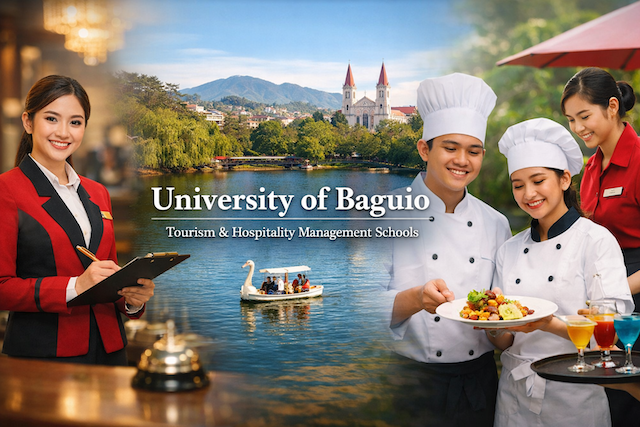
University of Baguio (UB): Tourism and Hospitality Management Schools
Contents
- University of Baguio (UB): Tourism and Hospitality Management Schools
- Overview of University of Baguio
- Tourism and Hospitality Management at UB
- Academic Programs Offered
- Curriculum Structure and Learning Approach
- Facilities and Training Resources
- Faculty and Industry Exposure
- Industry Partnerships and Linkages
- Career Opportunities for Graduates
- Global and Local Relevance
- Student Life and Learning Environment
- Admission Requirements and Academic Expectations
- Why Choose University of Baguio for Tourism and Hospitality
- Conclusion
- FAQs (Frequently Asked Questions)
- Does University of Baguio (UB) offer Tourism and Hospitality Management programs?
- What is the difference between Tourism Management and Hospitality Management at UB?
- Is UB a good school for students who want hands-on training?
- What kinds of internships or OJT opportunities can students expect?
- Do students need to be good at English to succeed in these programs?
- What skills will I develop if I study Tourism or Hospitality at UB?
- Is Baguio City a good learning environment for tourism and hospitality students?
- What are common career paths after graduating from UB’s tourism or hospitality programs?
- Do I need prior work experience before enrolling in these programs?
- How can I choose between Tourism Management and Hospitality Management?
- What can students do to maximize success while studying at UB?
University of Baguio (UB): Tourism and Hospitality Management Schools
Overview of University of Baguio
The University of Baguio (UB) is one of the most established private universities in Northern Luzon, Philippines. Founded in 1948, UB has developed a strong reputation for producing industry-ready graduates across multiple disciplines, including business, education, engineering, health sciences, and tourism-related programs. Located in Baguio City, a major tourist destination known for its cool climate and cultural diversity, the university offers an ideal academic environment for students pursuing Tourism and Hospitality Management.
UB emphasizes practical education, community engagement, and values-based learning. Its tourism and hospitality programs are designed to align academic foundations with real-world industry requirements, preparing students for careers in hotels, resorts, airlines, travel agencies, event management firms, and destination marketing organizations both in the Philippines and abroad.
Tourism and Hospitality Management at UB
Tourism and Hospitality Management programs at the University of Baguio focus on developing professional competence, service excellence, and global competitiveness. Students are trained to understand both the operational and managerial aspects of the tourism and hospitality industry, with strong attention to customer service, sustainability, and cultural awareness.
The curriculum integrates theoretical instruction with hands-on learning, ensuring that graduates are not only knowledgeable but also adaptable and job-ready. UB’s location in a tourism-driven city further enhances experiential learning opportunities through exposure to hotels, restaurants, tour operators, and festivals.
Academic Programs Offered
University of Baguio offers degree programs aligned with tourism and hospitality career paths. While program names and structures may evolve, they generally fall under the following areas:
Bachelor of Science in Tourism Management (BSTM)
The BS in Tourism Management program focuses on travel operations, destination management, tour planning, and tourism marketing. Students gain knowledge in domestic and international tourism systems, cultural heritage management, and sustainable tourism practices.
Core areas of study include:
-
Tourism planning and development
-
Travel agency and tour operations
-
Airline and cruise tourism fundamentals
-
Tourism marketing and promotion
-
Sustainable and responsible tourism
Graduates of this program are prepared for careers as travel consultants, tour coordinators, destination planners, airline staff, and tourism officers.
Bachelor of Science in Hospitality Management (BSHM)
The BS in Hospitality Management program emphasizes hotel and restaurant operations, food and beverage management, and hospitality entrepreneurship. It trains students to manage guest services while maintaining high standards of quality, safety, and professionalism.
Key areas of focus include:
-
Front office and housekeeping operations
-
Food production and culinary fundamentals
-
Food and beverage service management
-
Hospitality finance and cost control
-
Hotel and restaurant marketing
This program prepares graduates for supervisory and managerial roles in hotels, resorts, restaurants, and hospitality-related enterprises.
Curriculum Structure and Learning Approach
University of Baguio follows an outcome-based education framework. This means that each course is designed to develop specific competencies aligned with industry expectations. Students progress from foundational subjects to advanced professional courses, culminating in internships and capstone projects.
Core General Education Courses
Students begin with general education subjects such as communication, ethics, economics, and information technology. These courses help build critical thinking, communication skills, and professional values that are essential in service-oriented industries.
Major Professional Courses
As students advance, they take specialized tourism and hospitality courses covering operations, management, marketing, and sustainability. Case studies, simulations, and group projects are commonly used to replicate real-world scenarios.
Practicum and Internship
One of the strongest components of UB’s tourism and hospitality programs is the on-the-job training (OJT) or internship. Students are required to complete industry placements in accredited hotels, resorts, travel agencies, restaurants, or tourism offices.
These internships may be completed locally or, in some cases, internationally, depending on partnerships and student qualifications. Internships allow students to apply classroom knowledge, develop professional networks, and gain practical experience that enhances employability.
Facilities and Training Resources
University of Baguio supports tourism and hospitality education with facilities designed for experiential learning.
Hospitality Laboratories
Students have access to training kitchens, mock hotel rooms, and food and beverage service areas. These facilities simulate real hospitality environments where students practice service procedures, food preparation, and operational management.
Tourism Learning Resources
Classrooms are equipped with multimedia tools used for travel planning simulations, destination marketing projects, and case presentations. Students may also engage in tourism research, event planning activities, and fieldwork related to Baguio’s tourism sector.
Library and Digital Resources
UB’s library system provides access to hospitality and tourism journals, management books, and digital databases that support academic research and professional development.
Faculty and Industry Exposure
Tourism and hospitality programs at UB are handled by qualified faculty members with academic credentials and industry experience. Many instructors have backgrounds in hotel management, tourism operations, culinary arts, or tourism research.
Faculty members often integrate industry insights into lectures, sharing real-world examples and current trends. Guest speakers from hotels, airlines, travel companies, and tourism offices are sometimes invited to provide students with industry perspectives and career guidance.
Industry Partnerships and Linkages
University of Baguio maintains partnerships with various hospitality and tourism establishments in Baguio City and other parts of the Philippines. These partnerships support internships, training programs, and employment opportunities for students and graduates.
Baguio’s tourism ecosystem—including hotels, convention centers, restaurants, and local government tourism offices—serves as a living laboratory for students. Events such as festivals, conferences, and tourism campaigns provide additional learning exposure.
Career Opportunities for Graduates
Graduates of UB’s Tourism and Hospitality Management programs are prepared for a wide range of careers, both locally and internationally.
Tourism Career Paths
Possible roles include:
-
Travel consultant or tour coordinator
-
Airline ground staff or cabin crew
-
Tourism marketing officer
-
Destination management professional
-
Government tourism staff
Hospitality Career Paths
Graduates may work as:
-
Hotel front office supervisor
-
Food and beverage supervisor
-
Restaurant manager
-
Resort operations staff
-
Hospitality entrepreneur
With experience, many graduates move into managerial, executive, or entrepreneurial positions in the global hospitality and tourism industry.
Global and Local Relevance
Tourism and hospitality is a global industry, and UB designs its programs to meet international standards while remaining responsive to local needs. Students are trained to work with diverse cultures, understand global service expectations, and adapt to international work environments.
At the same time, the university promotes appreciation of Philippine culture, heritage, and sustainable tourism development. This balance ensures graduates are competitive abroad while contributing positively to local tourism growth.
Student Life and Learning Environment
Studying tourism and hospitality at the University of Baguio offers a unique student experience. Baguio City’s cool climate, cultural diversity, and strong tourism economy create an engaging learning environment.
Students often participate in:
-
Tourism-related student organizations
-
Event planning and hospitality competitions
-
Community outreach and sustainability projects
-
Cultural and tourism festivals
These activities help students develop leadership, teamwork, and interpersonal skills essential in service-oriented careers.
Admission Requirements and Academic Expectations
Admission to UB’s tourism and hospitality programs generally requires completion of senior high school, preferably under strands related to business, tourism, or services. Applicants must meet university admission standards and may undergo interviews or assessments.
Once enrolled, students are expected to maintain academic performance, complete practical requirements, and adhere to professional standards such as grooming, communication skills, and ethical conduct.
Why Choose University of Baguio for Tourism and Hospitality
University of Baguio stands out as a strong choice for tourism and hospitality education due to several factors:
-
Strategic location in a major tourist destination
-
Strong focus on practical and experiential learning
-
Industry-aligned curriculum
-
Qualified and experienced faculty
-
Supportive learning environment
For students seeking a balance between academic rigor and hands-on training, UB offers a solid foundation for long-term success in tourism and hospitality management.
Conclusion
The University of Baguio (UB) provides comprehensive and industry-oriented Tourism and Hospitality Management education designed to prepare students for dynamic careers in the global service industry. Through a balanced curriculum, practical training, industry exposure, and a tourism-rich learning environment, UB equips students with the skills, values, and adaptability required in today’s competitive hospitality and tourism sector.
For aspiring tourism professionals and hospitality leaders, the University of Baguio remains a respected and practical choice in Northern Luzon, offering pathways to both local and international career opportunities.
FAQs (Frequently Asked Questions)
Does University of Baguio (UB) offer Tourism and Hospitality Management programs?
Yes. University of Baguio offers programs that prepare students for careers in tourism and hospitality-related fields. Depending on the current academic structure, these programs typically fall under Tourism Management and Hospitality Management tracks. They are designed to build both operational skills (service, procedures, standards) and management skills (planning, supervision, finance, and marketing). If you are comparing schools, UB is often considered a strong option in Northern Luzon because Baguio City itself is a tourism-driven environment where students can observe and learn from real industry settings.
What is the difference between Tourism Management and Hospitality Management at UB?
Tourism Management generally focuses on travel and destination-related work, such as tour planning, travel agency operations, airline and transport basics, destination marketing, and sustainable tourism development. Hospitality Management focuses more on the service and operations side of hotels, resorts, restaurants, and related businesses, including front office, housekeeping, food and beverage service, kitchen fundamentals, and hospitality entrepreneurship. Many subjects overlap, especially in customer service, management, and marketing, but the career outcomes differ: tourism graduates often enter travel and destination roles, while hospitality graduates often enter hotel and restaurant operations.
Is UB a good school for students who want hands-on training?
UB is often chosen by students who value practical learning. Tourism and hospitality education works best when students can practice professional standards, communication, and service procedures, not just read about them. In many programs, hands-on training is supported through laboratory-style classes (for example, training kitchens or simulated service settings) and activity-based learning such as role plays, presentations, case analysis, and event planning exercises. The internship component is also critical, because it allows students to apply classroom learning in real workplaces.
What kinds of internships or OJT opportunities can students expect?
Tourism and hospitality students typically complete internships in settings such as hotels, resorts, restaurants, travel agencies, tour operators, event venues, and sometimes government tourism offices. Because UB is located in Baguio City, students may find learning opportunities within the city’s tourism ecosystem, including properties that handle conferences, holiday peaks, and group tours. Internship availability varies by semester, partner institutions, student qualifications, and the school’s placement process. The main goal is to ensure students gain practical exposure to real operations, professional teamwork, and customer-facing service.
Do students need to be good at English to succeed in these programs?
English proficiency is a major advantage in tourism and hospitality because many workplaces require professional communication with guests, clients, and colleagues. You do not have to be perfect at the start, but you should be willing to improve. Students usually build skill through presentations, report writing, customer service role plays, and internship training. If you want to strengthen your profile, focus on clear speaking, polite service language, email writing, and problem-solving conversations. These skills matter as much as academic grades when employers evaluate tourism and hospitality applicants.
What skills will I develop if I study Tourism or Hospitality at UB?
Students typically develop a mix of soft skills and technical skills. Soft skills include communication, service mindset, teamwork, leadership, conflict handling, cultural sensitivity, and professionalism. Technical skills may include basic operations knowledge (front office procedures, service standards, travel planning), marketing fundamentals, event coordination, cost awareness, and the ability to follow industry protocols. You also develop time management and resilience, because the industry can be fast-paced and requires consistent performance even during peak seasons.
Is Baguio City a good learning environment for tourism and hospitality students?
Yes. Baguio is one of the Philippines’ most recognizable tourist destinations, attracting local and international visitors, especially during peak holiday seasons. This environment can be beneficial because students can observe tourism patterns, accommodation standards, restaurant service trends, and how destinations manage crowds and events. The city also has a strong mix of culture, heritage, and nature-based tourism, which supports learning related to destination identity and sustainable tourism. Studying in a tourism hub can make lessons feel more practical and relevant.
What are common career paths after graduating from UB’s tourism or hospitality programs?
Tourism graduates often work as travel consultants, tour coordinators, reservations staff, destination marketing assistants, tourism office staff, or airline and transport-related personnel. Hospitality graduates commonly start in hotel operations (front office, housekeeping, guest services), food and beverage operations, restaurant management tracks, or resort operations. Many graduates begin in entry-level roles and move up to supervisory positions after building experience. Some graduates also pursue entrepreneurship, such as running small travel services, cafés, food businesses, or lodging-related ventures.
Do I need prior work experience before enrolling in these programs?
No prior work experience is required for most undergraduate tourism and hospitality programs. However, part-time work, volunteer experience, or involvement in school organizations can help you build skills earlier. Activities such as event support, customer service roles, student leadership, and community projects can make you more confident before internship placements. Employers in tourism and hospitality value attitude and trainability, so demonstrating responsibility and professionalism early can be helpful even before graduation.
How can I choose between Tourism Management and Hospitality Management?
Start by imagining your preferred workplace and daily tasks. If you enjoy planning itineraries, promoting destinations, organizing tours, or working in travel-related services, Tourism Management may fit better. If you enjoy hotel operations, restaurant service, food and beverage environments, and managing guest experiences on-site, Hospitality Management may be the better path. You can also consider your strengths: tourism may lean more on planning and marketing, while hospitality often emphasizes operations and service standards. If you are undecided, review course outlines and internship options and choose the track with activities you can imagine doing for years.
What can students do to maximize success while studying at UB?
Focus on professionalism early: communication, punctuality, teamwork, and grooming standards matter in this industry. Take internships seriously by treating them like real jobs, building references, and learning how operations work behind the scenes. Improve your English and customer service language, because those are transferable across roles. Join related student organizations or volunteer for events to gain practical experience. Finally, build a portfolio of projects (event plans, marketing proposals, presentations) because employers often value proof of skills, not just a diploma.
Best Tourism and Hospitality Management Schools in the Philippines

How to Register for eTravel Philippines (2025 Guide)
Step-by-step guide to completing your eTravel registration before arriving in the Philippines, with images and tips.

Night Market in Cebu – Things You Don’t Know About Cebu Life
Discover the hidden charm of Cebu’s night markets, from street food stalls to local life tips you won’t find in tourist guides.

How to Use ChatGPT for IELTS Preparation: A Complete Guide
Learn how to prepare for IELTS using ChatGPT — including strategies for Writing, Reading, Listening, Speaking, and grammar support.

How to Build a Website Without Coding Using ChatGPT
Discover how to build your own website using AI—no coding skills needed. From structure planning to SEO and design, let ChatGPT guide you.