2026年1月9日
3D ACADEMY offers affordable English study programs in Cebu, Philippines – perfect for beginners, professionals, and exam takers.

3D UNIVERSAL ENGLISH INSTITUTE INC
info.3d-universal.com
8:00-17:00(Mon-Fri)
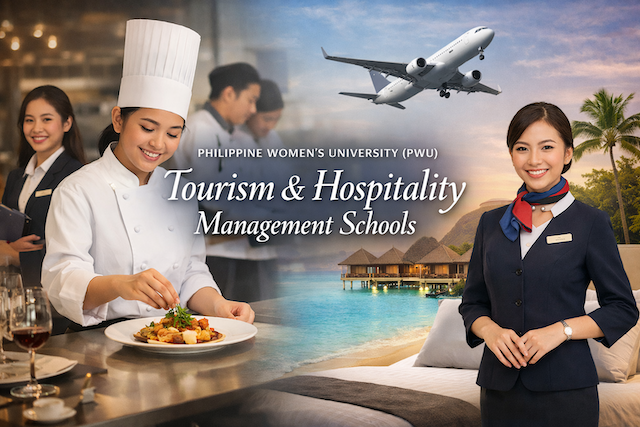
Philippine Women’s University (PWU): Tourism and Hospitality Management Schools
Contents
- Philippine Women’s University (PWU): Tourism and Hospitality Management Schools
- Overview of Philippine Women’s University and Its Hospitality Focus
- Why Study Tourism and Hospitality Management at PWU
- Program Structure and What You’ll Likely Study
- Skills You Build in a Hospitality-Focused Learning Environment
- Training Components: What Practical Learning May Look Like
- Internship and Industry Exposure: What Matters Most
- Career Paths After Graduating from PWU
- Student Fit: Who PWU May Be Best For
- How to Evaluate PWU Against Other Tourism and Hospitality Schools
- Tips for Students Planning to Enter PWU’s Tourism and Hospitality Program
- Final Thoughts
- FAQs (Frequently Asked Questions)
- Does Philippine Women’s University (PWU) offer a program related to Tourism and Hospitality Management?
- What is the difference between Tourism Management and Hospitality Management?
- What subjects can students expect in a Tourism and Hospitality Management program?
- Does PWU include hands-on training, or is it mostly theory?
- How important is internship or practicum for Hospitality and Tourism students?
- What career paths are available after graduating from a Tourism and Hospitality program?
- Is PWU only for women, and does that affect the learning environment?
- What skills should students build while studying Tourism and Hospitality Management?
- How can I tell if PWU is the right school for me compared with other universities?
- What should applicants prepare before starting a Tourism and Hospitality program?
Philippine Women’s University (PWU): Tourism and Hospitality Management Schools
Overview of Philippine Women’s University and Its Hospitality Focus
Philippine Women’s University (PWU) is one of the most established private universities in the Philippines, widely recognized for its legacy in women’s education while also welcoming a diverse student population. Within PWU’s academic offerings, tourism and hospitality-related education fits naturally with the university’s long-standing emphasis on professional training, service leadership, and people-centered careers.
Tourism and Hospitality Management is often chosen by students who want practical career paths, international mobility, and skills that apply across many industries. In the Philippine context, the sector remains closely connected to hotels, restaurants, airlines, events, travel agencies, resorts, and the broader service economy. PWU’s environment—built around professionalism, communication, and workplace readiness—can be a strong match for students aiming to enter these industries with confidence.
This guide explains what students can typically expect when considering PWU as a Tourism and Hospitality Management school: the learning experience, common curriculum structure, skills training, student life advantages, and how to evaluate fit based on career goals.
Why Study Tourism and Hospitality Management at PWU
Choosing a university for Tourism and Hospitality Management is not only about having the right subjects. It is also about the training culture—how the school builds confidence, communication ability, discipline, and service mindset. PWU’s identity as a university that historically developed professional women often translates into an academic culture that values leadership, maturity, and career readiness.
Students who thrive in this field usually enjoy structured training and frequent performance-based assessments such as presentations, role plays, service simulations, and event planning outputs. Many hospitality programs emphasize “learning by doing,” and PWU-style education tends to align with that: students are expected to speak clearly, work collaboratively, and deliver outputs that simulate real workplace expectations.
For students who want to work in hotels and resorts, tourism offices, events companies, airlines, or cruise-related services, it helps to study in a setting where communication, professionalism, and guest experience are emphasized throughout the learning process.
Program Structure and What You’ll Likely Study
Tourism and Hospitality Management programs in the Philippines generally follow a structured pathway that begins with foundational business and communication subjects, then gradually shifts into specialized tourism and hospitality courses, and eventually culminates in practicum or internship.
At PWU, students can typically expect a balance of the following:
-
General education and foundational skills: communication, ethics, understanding society and culture, and professional writing.
-
Business fundamentals: basic accounting concepts, entrepreneurship, service operations, and organizational management.
-
Tourism foundations: tourism systems, destination development, travel and tour operations, tourism marketing, and guiding principles.
-
Hospitality operations: front office, housekeeping principles, food and beverage operations, sanitation, service quality, and customer experience.
-
Events and MICE exposure: meetings, incentives, conventions, and exhibitions are common focus areas because events are a major employer in the sector.
-
Practicum and internship: real workplace exposure is often required for graduation and is one of the strongest career accelerators.
The most important thing to confirm is the specific program title and track options PWU currently offers, because schools sometimes structure hospitality as a dedicated hospitality management program, a tourism management program, or a combined track under hospitality and tourism.
Skills You Build in a Hospitality-Focused Learning Environment
Tourism and hospitality graduates are hired not only because they understand operations, but because they can handle pressure, communicate well, and represent a brand professionally. In a school like PWU, the learning environment may naturally reinforce these career-critical skills:
Communication and Guest Interaction
Students are trained to speak, write, and present professionally. This matters because hospitality roles—front desk, guest relations, reservations, events coordination—are communication-heavy jobs.
Service Mindset and Professional Standards
Hospitality education often includes training in etiquette, service sequence, complaint handling, and guest recovery strategies. Students learn how to keep service quality consistent even on difficult days.
Operational Thinking
Even entry-level hospitality workers benefit from understanding systems: how front office connects to housekeeping, how food and beverage operations affect guest satisfaction, how events flow from sales to execution.
Teamwork and Leadership
Hospitality is a team industry. University training commonly involves group events, research, planning tasks, and service simulations that build coordination and leadership skills.
Cultural Awareness
Tourism is cultural by nature. Students learn how to serve diverse guests, respect cultural differences, and present Philippine destinations responsibly.
Training Components: What Practical Learning May Look Like
When evaluating PWU as a Tourism and Hospitality Management school, it helps to focus on the “hands-on” side. Hospitality education becomes valuable when it includes realistic training environments and performance evaluation.
Practical learning may include:
-
Role play and simulation (front office check-in, guest complaint handling, phone reservations)
-
Event planning projects (proposal writing, budgeting, vendor coordination, and execution plans)
-
Food and beverage service exposure (service sequence, basic table set-up, guest interaction)
-
Tour planning outputs (itinerary building, costing, guiding scripts, and destination research)
-
Case studies on hotel operations, customer experience problems, and service recovery decisions
Even when facilities vary between universities, strong programs often compensate by requiring students to deliver professional-level outputs and to complete meaningful internships.
Internship and Industry Exposure: What Matters Most
For Tourism and Hospitality Management students, internship quality can strongly influence the first job opportunity. A good internship provides real tasks, real supervision, and a clear understanding of workplace culture.
When looking into PWU’s internship pipeline, consider these questions:
-
What types of partner establishments are common for interns (hotels, resorts, events companies, travel agencies, airlines support services)?
-
Are internships local, Metro Manila-based, or do they include placements in major tourism hubs?
-
Does the program help students prepare (resume training, interview preparation, grooming standards)?
-
Are students evaluated and mentored during the internship?
A strong university program usually supports internship readiness through professional development subjects, career guidance activities, and structured practicum requirements.
Career Paths After Graduating from PWU
A Tourism and Hospitality Management degree can lead to many career directions. Graduates often begin in entry-level roles and advance quickly if they build strong service skills and leadership potential.
Common career paths include:
-
Hotels and resorts: front office, reservations, guest relations, concierge, sales support, and later supervisory roles
-
Food and beverage operations: service team, banquet operations, restaurant supervision
-
Events and MICE: events coordinator, logistics staff, program assistant, venue operations
-
Travel and tour operations: tour coordinator, travel consultant, itinerary planner, operations assistant
-
Airline and airport services: ground handling, customer service support roles
-
Cruise and overseas hospitality: with additional training and strong communication skills, some graduates pursue international opportunities
-
Government and tourism offices: tourism promotions, destination projects, community tourism support
-
Entrepreneurship: small travel services, events styling, food businesses, or boutique accommodations
Students who do well tend to combine academic learning with portfolio-building: event proposals, tour itineraries, and internship achievements that show real capability.
Student Fit: Who PWU May Be Best For
PWU may be a particularly good fit for students who want a structured and professional environment, value communication-driven education, and see themselves working in guest-facing roles.
You may thrive at PWU if you are:
-
motivated by service and people-oriented work
-
comfortable with presentations and performance-based assessments
-
interested in leadership development and professionalism
-
aiming for careers in hotels, events, tourism promotions, or travel operations
On the other hand, students who want an extremely technical, culinary-heavy path may prefer a specialized culinary institution. PWU can still be a strong foundation, but culinary specialization sometimes requires additional training or certifications.
How to Evaluate PWU Against Other Tourism and Hospitality Schools
If you are comparing PWU with other Tourism and Hospitality Management schools in the Philippines, use a practical checklist. Reputation matters, but specific training outcomes matter more.
Curriculum and Tracks
Look for updated course outlines and see whether the program leans more toward tourism, hospitality operations, or events. Choose the one aligned with your desired career.
Internship Network
Ask where students commonly intern and whether the placements are meaningful. This is one of the best indicators of real-world readiness.
Training Culture
Some programs are theory-heavy, while others are performance-based and practical. Hospitality students often benefit from programs that simulate real guest situations.
Faculty and Industry Exposure
Industry-active faculty, guest lectures, and partnerships can help students understand current standards and hiring expectations.
Career Support
Resume workshops, interview training, and professional development activities can make a big difference for first job success.
Tips for Students Planning to Enter PWU’s Tourism and Hospitality Program
If you are considering PWU, here are practical ways to prepare and maximize your experience:
-
Build communication confidence early (speaking practice matters in hospitality).
-
Develop a professional portfolio: event proposals, tour itineraries, research outputs.
-
Take internships seriously and choose placements that provide real tasks, not just observation.
-
Improve your English communication skills because it expands your job options.
-
Learn customer service principles early—these skills transfer across hotels, events, travel, and airlines.
-
Practice professionalism: punctuality, grooming standards, and teamwork are evaluated in hospitality training.
Final Thoughts
Philippine Women’s University (PWU) can be a strong option for students who want a Tourism and Hospitality Management education anchored in professionalism, service leadership, and workplace readiness. Tourism and hospitality careers require more than academic knowledge—they require communication skills, service standards, and the ability to perform consistently under pressure. A university environment that emphasizes professional development can give students an advantage when transitioning from classroom to industry.
If your goal is to work in hotels, events, tourism operations, or guest services—either locally or internationally—PWU’s educational culture and training orientation may align well with what the industry expects.
FAQs (Frequently Asked Questions)
PWU is widely known for programs connected to professional careers, and Tourism and Hospitality Management is commonly positioned as a strong fit because the field requires communication skills, service leadership, and operational understanding. Program names and structures can vary by academic year (for example, Tourism Management, Hospitality Management, or a combined track). The most reliable approach is to confirm the exact current program title, curriculum, and specialization options directly through PWU’s official admissions or academic office. If you are comparing schools, always verify whether the program includes industry practicum requirements, internship hours, and whether the track leans more toward tourism operations, hotel management, or events and MICE.
What is the difference between Tourism Management and Hospitality Management?
Tourism Management usually focuses on travel systems, destinations, tour operations, tourism marketing, guiding, and how tourism supports local economies. Hospitality Management is more focused on service operations such as hotels, resorts, guest relations, food and beverage, housekeeping, and standards for service quality. Many schools combine both areas because the industries overlap in real life. When choosing between them, think about where you want to work after graduation. If you want to build itineraries, manage tours, or work with destinations, tourism may be a better fit. If you want to work in hotels, restaurants, or events at venues, hospitality may match your goals more closely.
What subjects can students expect in a Tourism and Hospitality Management program?
Most Philippine programs include a mix of general education, business foundations, and specialized courses. Common subjects include tourism systems, destination planning, tourism marketing, travel and tour operations, service quality management, customer experience, front office procedures, housekeeping fundamentals, food and beverage service basics, and event planning. Students may also study communication, professional ethics, entrepreneurship, and management. While course titles differ by university, you should expect increasing specialization each year, with higher-level subjects focusing on applied operations, planning, and industry standards.
Does PWU include hands-on training, or is it mostly theory?
Tourism and hospitality education is typically designed to be practical, even when classes include theoretical frameworks. Many programs use role plays, simulations, presentations, case studies, and project-based requirements such as event proposals and tour itineraries. The most important proof of hands-on learning is the practicum or internship component. Before enrolling, ask how students are trained for guest interaction, service recovery, and workplace standards, and whether there are structured assessments that measure professional behavior, not just written exams.
How important is internship or practicum for Hospitality and Tourism students?
Internship is one of the most important parts of a Tourism and Hospitality Management degree because it provides real workplace exposure, professional references, and confidence. Many graduates get their first job because they performed well during internship or built connections with supervisors. A strong internship should include meaningful tasks, supervision, and clear learning objectives rather than purely observational work. When evaluating a school, ask what types of partner companies typically accept interns, how placements are arranged, and how students are evaluated during the internship period.
What career paths are available after graduating from a Tourism and Hospitality program?
Graduates can enter hotels and resorts (front office, reservations, guest relations, sales support), food and beverage operations (service, banquets, restaurant supervision), events and MICE (events coordination, venue operations), travel agencies and tour companies (tour coordination, itinerary planning), tourism offices, and airline or airport-related service roles. Some graduates pursue international opportunities in cruise lines, overseas hotels, or global event companies, especially if they have strong English communication skills. Entrepreneurship is also common, such as starting a small travel service, events business, or hospitality-related venture.
Is PWU only for women, and does that affect the learning environment?
PWU has a historical identity centered on women’s education, but many of its programs and campuses welcome a diverse student population. In Tourism and Hospitality, the learning environment often benefits from a culture that values professionalism, communication, and leadership development. For many students, this can be an advantage because hospitality employers look for confidence, polished communication, and strong service standards. If the campus environment matters to you, consider visiting, attending an orientation session, or asking current students about class culture and training style.
What skills should students build while studying Tourism and Hospitality Management?
Beyond academics, students should focus on communication, teamwork, time management, and service mindset. Hospitality careers require calm problem-solving, guest handling, and consistent professionalism under pressure. It also helps to build digital skills, such as using spreadsheets for costing and planning, writing clear proposals, and creating presentations. If you aim for international work, improving English speaking and writing skills is a major advantage. Students who graduate with a portfolio (event plans, itineraries, case analyses) often perform better in interviews because they can show real outputs.
How can I tell if PWU is the right school for me compared with other universities?
Use a practical checklist: confirm the exact program offering, review the curriculum structure, ask about internship partners, and check whether the program supports career readiness through workshops and professional training. Also consider location, schedule flexibility, tuition expectations, and whether the program matches your preferred career direction (tour operations, hotel operations, or events). When possible, compare outcomes such as typical internship placements, graduate employment pathways, and opportunities for student organizations related to tourism, events, or hospitality operations.
What should applicants prepare before starting a Tourism and Hospitality program?
Applicants can prepare by practicing communication skills, building confidence in public speaking, and developing basic professionalism habits such as punctuality and organized work. Reading about tourism trends, hospitality service standards, and customer experience basics can give you an early advantage. If you have time, joining small volunteer events or assisting in family businesses can provide real service exposure. The best preparation is having a clear idea of your target career path and choosing electives, internships, and student activities that support that direction.
Best Tourism and Hospitality Management Schools in the Philippines

How to Register for eTravel Philippines (2025 Guide)
Step-by-step guide to completing your eTravel registration before arriving in the Philippines, with images and tips.

Night Market in Cebu – Things You Don’t Know About Cebu Life
Discover the hidden charm of Cebu’s night markets, from street food stalls to local life tips you won’t find in tourist guides.

How to Use ChatGPT for IELTS Preparation: A Complete Guide
Learn how to prepare for IELTS using ChatGPT — including strategies for Writing, Reading, Listening, Speaking, and grammar support.

How to Build a Website Without Coding Using ChatGPT
Discover how to build your own website using AI—no coding skills needed. From structure planning to SEO and design, let ChatGPT guide you.