2026年1月12日
3D ACADEMY offers affordable English study programs in Cebu, Philippines – perfect for beginners, professionals, and exam takers.

3D UNIVERSAL ENGLISH INSTITUTE INC
info.3d-universal.com
8:00-17:00(Mon-Fri)
De La Salle–College of Saint Benilde (DLS-CSB) – School of Design and Arts
Contents
- De La Salle–College of Saint Benilde (DLS-CSB) – School of Design and Arts
- Overview of De La Salle–College of Saint Benilde
- Introduction to the School of Design and Arts
- Academic Philosophy and Creative Approach
- Degree Programs Offered at the School of Design and Arts
- Multimedia Arts and Visual Communication
- Animation and Digital Media Arts
- Film, Photography, and Media Production
- Fashion Design and Creative Industries
- Facilities and Design-Focused Campus Environment
- Faculty Expertise and Industry Connections
- Student Life and Creative Culture
- Career Opportunities and Graduate Outcomes
- Global Perspective and Future-Oriented Education
- Conclusion
- FAQs (Frequently Asked Questions)
- What is De La Salle–College of Saint Benilde (DLS-CSB) known for?
- What is the School of Design and Arts (SDA) at DLS-CSB?
- What makes SDA different from traditional arts or design programs?
- What programs are typically offered under the School of Design and Arts?
- Is portfolio required to apply to SDA?
- What kind of learning environment should students expect at SDA?
- How important is technology and software in SDA programs?
- Are internships and industry partnerships part of the SDA experience?
- What career paths do SDA graduates commonly pursue?
- Is SDA suitable for students who are not “naturally artistic”?
- What should students do to prepare before entering SDA?
- How can applicants confirm the most accurate and updated information about SDA?
- What is the biggest advantage of studying at DLS-CSB SDA?
De La Salle–College of Saint Benilde (DLS-CSB) – School of Design and Arts
Overview of De La Salle–College of Saint Benilde
De La Salle–College of Saint Benilde (DLS-CSB) is one of the most progressive and design-forward higher education institutions in the Philippines. Established in 1988 as a member of the De La Salle Philippines network, the college has distinguished itself by focusing on applied arts, design, media, and creative industries. Unlike traditional universities that emphasize purely academic or theoretical approaches, DLS-CSB integrates practice-based learning, industry collaboration, and creative experimentation into its core educational philosophy.
Located primarily in Malate, Manila, with several modern campuses including the Design and Arts Campus, DLS-CSB attracts students who aim to pursue careers in creative fields such as visual communication, multimedia arts, film, fashion, animation, architecture-related disciplines, and game design. The institution is widely recognized for producing graduates who are industry-ready, adaptable, and globally competitive.
Introduction to the School of Design and Arts
The School of Design and Arts (SDA) is the flagship creative school of De La Salle–College of Saint Benilde. It serves as a hub for artistic innovation, interdisciplinary collaboration, and contemporary design education. The SDA was established to respond to the evolving demands of the creative economy, particularly in Southeast Asia, where design, media, and digital arts continue to expand rapidly.
The school offers a wide range of undergraduate and graduate programs that cover both traditional and emerging creative disciplines. Through a combination of studio-based learning, conceptual development, and technical training, the School of Design and Arts equips students with the skills and mindset necessary to thrive in competitive creative industries.
Academic Philosophy and Creative Approach
The School of Design and Arts follows an educational philosophy rooted in experiential learning, design thinking, and creative inquiry. Students are encouraged to explore ideas through hands-on projects, critiques, and collaborative processes rather than relying solely on lectures and examinations. This approach fosters originality, critical thinking, and problem-solving abilities.
Design thinking plays a central role in the curriculum. Students learn how to identify real-world problems, conduct research, develop concepts, and create design solutions that are both functional and meaningful. Ethical considerations, sustainability, and social impact are also integrated into creative projects, reflecting the school’s commitment to responsible design.
Degree Programs Offered at the School of Design and Arts
The School of Design and Arts offers a diverse portfolio of degree programs that cater to various creative interests and career paths. These programs are continuously updated to align with industry trends and technological advancements.
Key undergraduate programs include Multimedia Arts, Animation, Fashion Design and Merchandising, Film, Photography, Music Production, Production Design, Theater Arts, and Game Design and Development. Each program emphasizes both conceptual foundations and technical execution, ensuring students gain a balanced creative education.
At the graduate level, the school offers specialized programs designed for professionals seeking advanced creative training, leadership roles, or academic careers in the arts and design sectors.
Multimedia Arts and Visual Communication
One of the most popular programs under the School of Design and Arts is Multimedia Arts. This program focuses on visual communication, branding, digital media, and interactive design. Students learn how to create compelling visual narratives across multiple platforms, including print, web, mobile, and motion graphics.
The curriculum covers typography, layout design, illustration, user experience design, and digital storytelling. By working on real-world briefs and collaborative projects, students develop portfolios that demonstrate both creative vision and practical skill.
Animation and Digital Media Arts
The Animation program at DLS-CSB is widely regarded as one of the strongest in the Philippines. It covers 2D animation, 3D animation, character design, storyboarding, and visual effects. Students receive intensive training in both traditional animation principles and modern digital tools.
Faculty members often have professional experience in animation studios, game development companies, and media production houses. This ensures that students are exposed to current industry practices and workflows. Graduates of the program frequently find employment in animation studios, advertising agencies, and international media companies.
Film, Photography, and Media Production
The School of Design and Arts also offers comprehensive programs in Film and Photography. These programs emphasize storytelling, visual composition, technical proficiency, and critical analysis of media.
Film students gain hands-on experience in directing, cinematography, editing, and screenwriting. Photography students explore both commercial and fine art photography, developing a strong visual language and professional portfolio. Access to modern equipment and production facilities enhances the learning experience and prepares students for professional practice.
Fashion Design and Creative Industries
The Fashion Design and Merchandising program blends creativity with business acumen. Students learn garment construction, textile studies, fashion illustration, trend forecasting, and brand development. The program also introduces students to the commercial side of fashion, including marketing, retail management, and entrepreneurship.
Through fashion shows, exhibitions, and collaborations with local designers, students gain exposure to the fashion industry and develop confidence in presenting their work to professional audiences.
Facilities and Design-Focused Campus Environment
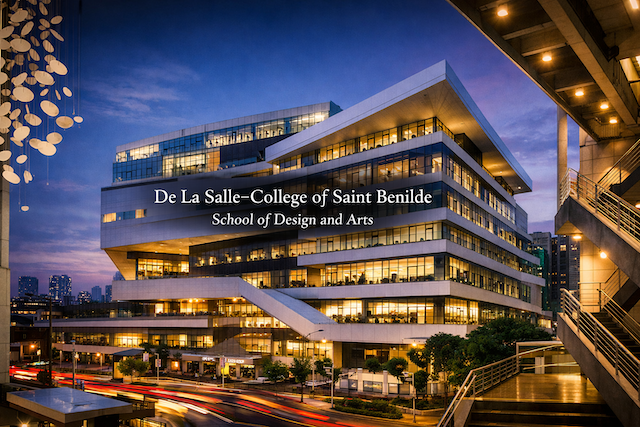
The Design and Arts Campus of DLS-CSB is purpose-built to support creative education. The building features studios, workshops, performance spaces, screening rooms, exhibition halls, and digital labs equipped with industry-standard software and equipment.
The open and collaborative layout of the campus encourages interaction among students from different programs. This interdisciplinary environment reflects real-world creative workplaces, where designers, artists, and media professionals often collaborate across disciplines.
Faculty Expertise and Industry Connections
Faculty members at the School of Design and Arts include practicing artists, designers, filmmakers, and creative professionals. Their industry experience enriches classroom instruction and provides students with practical insights into creative careers.
The school maintains strong connections with industry partners, creative agencies, production companies, and cultural institutions. Guest lectures, workshops, internships, and collaborative projects allow students to engage directly with professionals and gain valuable industry exposure.
Student Life and Creative Culture
Student life at the School of Design and Arts is vibrant and creatively driven. Numerous student organizations, exhibitions, performances, and film screenings provide platforms for self-expression and experimentation. Students are encouraged to participate in local and international competitions, festivals, and conferences.
The creative culture of DLS-CSB emphasizes inclusivity, innovation, and collaboration. This supportive environment helps students develop confidence, resilience, and a strong artistic identity.
Career Opportunities and Graduate Outcomes
Graduates of the School of Design and Arts pursue careers in a wide range of creative fields. Alumni work as graphic designers, animators, filmmakers, photographers, fashion designers, game developers, creative directors, and multimedia artists.
Many graduates also establish their own studios, brands, or independent creative practices. The strong emphasis on portfolio development and industry readiness ensures that students are well-prepared for both employment and entrepreneurship.
Global Perspective and Future-Oriented Education
The School of Design and Arts incorporates a global perspective into its curriculum by exploring international design trends, cultural contexts, and creative methodologies. Students are encouraged to think beyond local markets and consider global audiences.
As technology and creative industries continue to evolve, DLS-CSB remains committed to innovation and curriculum development. The School of Design and Arts plays a key role in shaping the future of creative education in the Philippines and the wider region.
Conclusion
De La Salle–College of Saint Benilde’s School of Design and Arts stands out as a leading institution for creative education in the Philippines. Through its practice-based learning model, industry engagement, and commitment to innovation, the school provides students with a comprehensive and future-ready design education.
For aspiring artists, designers, and creative professionals seeking an institution that values creativity, technical excellence, and real-world relevance, the School of Design and Arts at DLS-CSB offers an ideal academic environment to develop talent and pursue meaningful creative careers.
FAQs (Frequently Asked Questions)
What is De La Salle–College of Saint Benilde (DLS-CSB) known for?
DLS-CSB is widely recognized for its strong focus on applied, industry-oriented education, especially in creative and professional fields. While it is part of the broader De La Salle educational network, DLS-CSB has developed its own identity as a college that emphasizes practice-based learning, portfolio development, and career readiness. It is particularly known for programs in design, arts, film, animation, multimedia, fashion, and other creative disciplines, where students learn through studio work, projects, and real-world production experiences.
What is the School of Design and Arts (SDA) at DLS-CSB?
The School of Design and Arts (SDA) is one of the flagship academic units of DLS-CSB, dedicated to design, media, and creative industry education. It serves as a specialized environment for students who want to pursue careers in areas such as multimedia arts, animation, fashion, film, photography, game development, theater, music production, and related creative fields. The SDA is designed around a studio culture, where learning is driven by practice, experimentation, critique, and collaboration.
What makes SDA different from traditional arts or design programs?
SDA places strong emphasis on creative production, industry alignment, and interdisciplinary learning. Instead of focusing primarily on lecture-based instruction and exams, many courses rely on hands-on projects, studio exercises, presentations, and portfolio outputs. Students are trained to think like creative professionals: developing concepts, responding to briefs, refining their work through critique, and delivering finished outputs that meet professional standards. SDA also encourages collaboration across disciplines, reflecting how creative work often happens in real studios and agencies.
What programs are typically offered under the School of Design and Arts?
SDA commonly offers programs connected to multimedia arts, animation, film, photography, fashion design, and other creative tracks. Depending on the year and curriculum updates, offerings may include areas like game design, music production, theater arts, production design, and related creative industry pathways. Because programs and specializations can evolve, prospective students should verify the latest list of degree offerings and curriculum structure through official DLS-CSB sources before applying.
Is portfolio required to apply to SDA?
Some programs in design and arts schools may request a portfolio or require talent-based assessments, especially for highly studio-centered disciplines. However, admission requirements can vary by program and may change over time. If you are preparing to apply, it is best to build a basic portfolio showing your creative potential, even if it is not strictly required. This can include drawings, digital art, photography, design exercises, animation tests, or personal creative projects.
What kind of learning environment should students expect at SDA?
Students should expect a production-driven, critique-based environment. Many classes operate like creative studios, where students work on projects for extended periods, receive feedback, revise their outputs, and present final work. Time management and consistent output are important. Students often spend significant time completing assignments, improving technical skills, and building portfolios. Collaboration is also common, particularly in fields like film, animation, and game development, where teamwork mirrors real production settings.
How important is technology and software in SDA programs?
Technology plays a major role in many SDA programs, especially in multimedia arts, animation, film production, and game development. Students typically use digital tools for editing, illustration, layout, animation, sound design, and post-production. While the school may provide labs or facilities, students often benefit from having personal access to a capable laptop or workstation, depending on the program. It is also helpful to develop software literacy early, since technical workflow is a key part of creative industry readiness.
Are internships and industry partnerships part of the SDA experience?
Many practice-based creative programs include opportunities for internships, collaborative projects, or industry exposure. These experiences help students understand professional workflows, client expectations, deadlines, and team collaboration. Depending on the program, students may complete internships with creative agencies, studios, production companies, or brands. Industry partnerships may also appear through guest lectures, workshops, mentorship, or project briefs inspired by real-world needs.
What career paths do SDA graduates commonly pursue?
SDA graduates often enter creative roles such as graphic design, multimedia design, branding, animation, illustration, video editing, cinematography, photography, fashion design, creative direction, production design, and game development. Others pursue freelance careers or build their own studios and creative businesses. Because many SDA programs emphasize portfolio building, graduates typically use their body of work to apply for roles, secure clients, or compete for opportunities in both local and international markets.
Is SDA suitable for students who are not “naturally artistic”?
Yes, as long as the student is committed to learning and practicing consistently. Creative skill is not only based on innate talent; it is also built through repetition, feedback, and disciplined improvement. SDA programs are often designed to develop both conceptual thinking and technical execution, meaning students can progress significantly if they engage seriously with assignments and critiques. Curiosity, resilience, and willingness to revise work are often more important than being “naturally gifted.”
What should students do to prepare before entering SDA?
A practical preparation strategy includes building foundational skills and habits before the first term. Students can practice basic design principles, improve drawing or composition skills, experiment with beginner-level software, and start personal projects. Watching tutorials, studying creative references, and learning how to accept critique can also help. Time management preparation is important because many design and arts programs require sustained project work, revisions, and consistent output throughout the term.
How can applicants confirm the most accurate and updated information about SDA?
Because admission procedures, tuition, program lists, and curriculum details can change, applicants should verify information through official DLS-CSB communication channels. The best approach is to consult the official website, admissions office announcements, or direct inquiries to the school. This ensures you receive accurate guidance on requirements, application timelines, portfolio expectations, and program-specific details that may not be consistent across unofficial summaries.
What is the biggest advantage of studying at DLS-CSB SDA?
One major advantage is the school’s emphasis on industry-aligned creative education. Students learn through making, producing, revising, and presenting work—skills directly connected to professional creative careers. The SDA environment encourages experimentation, interdisciplinary collaboration, and portfolio development, helping students graduate with both practical competence and a clear creative identity. For learners who want a modern, output-driven approach to design and arts education, SDA can be a strong choice.

How to Register for eTravel Philippines (2025 Guide)
Step-by-step guide to completing your eTravel registration before arriving in the Philippines, with images and tips.

Night Market in Cebu – Things You Don’t Know About Cebu Life
Discover the hidden charm of Cebu’s night markets, from street food stalls to local life tips you won’t find in tourist guides.

How to Use ChatGPT for IELTS Preparation: A Complete Guide
Learn how to prepare for IELTS using ChatGPT — including strategies for Writing, Reading, Listening, Speaking, and grammar support.

How to Build a Website Without Coding Using ChatGPT
Discover how to build your own website using AI—no coding skills needed. From structure planning to SEO and design, let ChatGPT guide you.