2026年1月23日
3D ACADEMY offers affordable English study programs in Cebu, Philippines – perfect for beginners, professionals, and exam takers.

3D UNIVERSAL ENGLISH INSTITUTE INC
info.3d-universal.com
8:00-17:00(Mon-Fri)
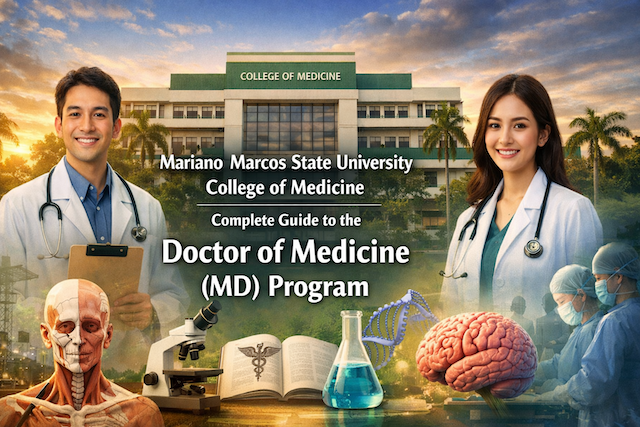
Mariano Marcos State University College of Medicine: Complete Guide to the Doctor of Medicine (MD) Program
Contents
- Mariano Marcos State University College of Medicine: Complete Guide to the Doctor of Medicine (MD) Program
- Overview of Mariano Marcos State University College of Medicine
- Why Students Choose MMSU for Medicine
- MD Program Structure in the Philippines (What to Expect)
- Curriculum and Teaching Approach
- Clinical Training and Hospital Exposure
- Admissions Requirements and Application Process
- How to Prepare a Strong Application
- Tuition, Fees, and Cost of Studying Medicine
- Scholarships, Financial Aid, and Public-School Pathways
- Student Life, Workload, and Mental Resilience
- Campus Location and Living in Northern Luzon
- Career Path After Graduation
- How to Decide if MMSU College of Medicine Is Right for You
- Practical Checklist for Applicants
- FAQs (Frequently Asked Questions)
- Is Mariano Marcos State University College of Medicine a public medical school?
- What degree do students earn from MMSU College of Medicine?
- How long is the MD program at MMSU?
- Does MMSU require the NMAT for admission?
- What pre-med course is best for MMSU College of Medicine?
- Is MMSU College of Medicine a good option for students from Northern Luzon?
- What is the workload like in MMSU medical school?
- What clinical exposure can students expect at MMSU?
- Does MMSU offer scholarships or financial assistance for medical students?
- What expenses should I budget for besides tuition?
- How can I improve my chances of being admitted to MMSU College of Medicine?
- What happens after I graduate with an MD from MMSU?
- How do I confirm the most accurate and updated information about MMSU College of Medicine?
Mariano Marcos State University College of Medicine: Complete Guide to the Doctor of Medicine (MD) Program
Overview of Mariano Marcos State University College of Medicine
Mariano Marcos State University (MMSU) is a public university in Northern Luzon that serves a wide region of students who want quality education with the accessibility and social mission often associated with state universities. The MMSU College of Medicine is commonly discussed by aspiring doctors who prefer a program rooted in community service, regional healthcare needs, and practical clinical exposure. For many students in Ilocos Norte and nearby provinces, studying medicine at a state university can be a realistic path toward becoming a physician without relocating far from home.
Like many medical schools in the Philippines, MMSU’s MD program is designed to develop students who can integrate scientific knowledge, clinical reasoning, and ethical patient care. While every medical school shares the same national context—such as aligning with competencies expected in Philippine medical education—each institution has its own culture, clinical environment, and focus areas. MMSU’s setting and regional healthcare landscape often shape student experiences, including patient demographics, public health priorities, and field-based learning.
This guide explains what you should know before applying: what the MD program generally looks like, how admissions typically work, what student life may feel like, and how to evaluate whether MMSU is a good fit for your goals.
Why Students Choose MMSU for Medicine
Choosing a medical school is not only about the name of the institution. It is also about learning environment, cost realities, clinical training opportunities, and whether the program matches your preferred learning style. Students who consider a state-university medical program often do so for a few practical reasons. The first is affordability relative to many private medical schools. Even when medicine is still a major financial commitment, a public institution can reduce certain cost pressures and make medical training more accessible to qualified students.
Another reason is geographic preference. Some students want to train in Northern Luzon because they plan to practice there after graduation. Studying in the same region where you want to build your future can help you develop local professional networks, understand regional health issues, and gain familiarity with the healthcare system you may later serve.
Finally, MMSU’s location can shape clinical exposure. Training outside major metropolitan centers may offer a different learning experience compared with schools located in large capital areas. Depending on affiliated hospitals and rotations, students may encounter a wide range of cases, community medicine experiences, and public health realities.
MD Program Structure in the Philippines (What to Expect)
Medical education in the Philippines generally follows a four-year Doctor of Medicine (MD) program after completion of a bachelor’s degree (or equivalent pre-med preparation). While each school has its own curriculum design, the general flow is similar nationwide.
First and second years are typically heavier on basic medical sciences and foundations of clinical practice. Subjects commonly include anatomy, physiology, biochemistry, histology, microbiology, pathology, pharmacology, and introductory clinical skills. Many schools also integrate early patient exposure, communication training, and professionalism modules.
Third year commonly transitions into more clinical-oriented learning, with subjects like internal medicine, surgery, pediatrics, obstetrics and gynecology, psychiatry, and preventive medicine. Depending on the school’s design, the third year may include more case-based discussions, simulations, and hospital exposure.
Fourth year is usually the clinical clerkship year, where students spend significant time in affiliated hospitals and clinical settings under supervision. Rotations commonly include internal medicine, surgery, pediatrics, OB-GYN, emergency medicine, family and community medicine, and other areas depending on the institution’s training network.
After earning the MD degree, graduates typically proceed to the post-graduate internship (PGI) and then take the Physician Licensure Examination (PLE). Many also pursue residency training after passing the licensure exam.
Curriculum and Teaching Approach
When evaluating MMSU College of Medicine, the most helpful approach is to look at how the program teaches and measures learning rather than focusing only on the list of subjects. Most Philippine medical schools use a mix of lectures, laboratory work, small group sessions, case discussions, and practical clinical skills training. Some programs lean more traditional, while others push more integration and problem-based learning.
Even in a lecture-heavy setting, success depends on your ability to study consistently and apply knowledge clinically. Medical school is less about memorizing isolated facts and more about building a structured mental framework: understanding disease mechanisms, connecting symptoms to physiology, and reasoning through differential diagnoses.
Look for signs of supportive learning systems such as mentoring, academic advising, skills labs, guided clinical exposure, and review support. If you can access details about MMSU’s academic calendar, grading system, and assessment style, you will have a clearer picture of how demanding the weekly rhythm may be.
Clinical Training and Hospital Exposure
Clinical training quality is one of the most important factors in selecting a medical school. Your ability to learn medicine deeply will depend on where you rotate, how supervisors teach, and what cases you see. In general, medical schools partner with hospitals and clinical facilities where students complete clerkship and other hands-on requirements.
As you research MMSU, focus on the program’s training network: which hospitals or medical centers are used for clerkship, what the patient volume is like, and whether students have opportunities for both inpatient and outpatient exposure. Community and public health experiences are also significant, especially for students interested in primary care, family medicine, or public health-related careers.
During clerkship, students learn through ward rounds, assisting in procedures (as appropriate), writing patient histories and physical exams, participating in conferences, and developing clinical judgment. The environment can be intense, but it is also where students begin to feel like future doctors rather than only learners in classrooms.
Admissions Requirements and Application Process
Admissions policies vary by school and can change over time, so applicants should treat official school announcements as the final authority. However, most medical schools in the Philippines typically require:
- Completion of a bachelor’s degree (often with recommended pre-med coursework)
- NMAT (National Medical Admission Test) results meeting the school’s required percentile score
- Official transcripts and other academic documents
- Application forms and fees (as required)
- Interview and/or additional screening steps (depending on the school)
- Recommendation letters and personal statement (varies by institution)
Because MMSU is a state university, there may be additional considerations such as regional priorities, scholarship pathways, return service requirements, or special eligibility criteria for certain applicant categories. You should also consider deadlines carefully, because missing a submission window can delay your plans by a full academic year.
How to Prepare a Strong Application
Medical school admissions is competitive, and even when a school emphasizes accessibility, it still needs students who can handle the academic and clinical demands. A strong application usually has three parts: academic readiness, a clear personal motivation, and evidence that you are capable of sustained discipline.
Academic readiness often includes solid grades in science-heavy subjects, an NMAT score that meets or exceeds the school’s threshold, and a transcript that shows consistent effort. If your grades are uneven, highlight improvements over time and demonstrate a clear study system.
Personal motivation should be realistic rather than overly dramatic. Medical school is long and difficult. Admissions committees often respond well to applicants who understand the realities of training and still show commitment. A focused explanation—such as wanting to serve communities, interest in a specific field, or a genuine drive to improve health outcomes—can be more convincing than generic statements.
Discipline and maturity can be demonstrated through research work, leadership roles, volunteer experience, healthcare exposure, or long-term responsibilities that show you can handle pressure and time management.
Tuition, Fees, and Cost of Studying Medicine
Cost is one of the biggest deciding factors for many students. Studying medicine includes more than tuition. Even if a program is relatively affordable, students should plan for multiple categories of expenses:
- Tuition and miscellaneous school fees
- Books and learning resources (print or digital)
- Medical equipment (stethoscope, BP apparatus, basic diagnostic tools, and supplies)
- Uniforms and clinical attire
- Transportation to campus and training sites
- Daily living expenses (food, rent, utilities if living away from home)
Students should also prepare for the increased cost during clinical years, when transportation, meals, and time constraints can become more challenging. If you are comparing schools, consider the total cost of living in the area as well as the tuition line item.
Scholarships, Financial Aid, and Public-School Pathways
Many medical students rely on scholarships, grants, or family support, and state universities sometimes provide pathways that private schools may not offer. Depending on national and local programs, students may find financial assistance tied to academic performance, regional healthcare development, or public service commitments.
If MMSU offers scholarships or financial support options, treat them as part of your planning but avoid relying on them without confirmed eligibility. Some financial aid options require maintaining a certain grade threshold or fulfilling service agreements after graduation. Service-based agreements can be a strong opportunity if your long-term goal aligns with practicing in underserved areas, but they should be considered carefully because they affect your post-graduation flexibility.
Student Life, Workload, and Mental Resilience
Medical student life is demanding regardless of the school. The workload is heavy, the volume of information is intense, and the pressure can be constant. What matters is not whether you will feel stressed—you likely will—but whether you have systems to handle it: study routines, supportive relationships, and strategies to prevent burnout.
Students often find that the first year is an adjustment period. Many high-achieving students feel challenged for the first time because medicine requires sustained effort across multiple difficult subjects at once. Over time, you develop better prioritization and learn how to study efficiently: focusing on high-yield concepts, practicing clinical reasoning, and building long-term memory through repetition and active recall.
Student organizations, peer groups, and mentorship can make a major difference. If MMSU has active student leadership, academic support groups, or community outreach programs, these can shape your sense of belonging and give you meaningful experiences beyond exams.
Campus Location and Living in Northern Luzon
Location affects your daily routine more than many applicants realize. Where you live determines commute time, cost of food and housing, access to quiet study environments, and lifestyle rhythm. Studying in Northern Luzon may offer a different pace compared with major urban centers, which can be beneficial for students who prefer a more grounded environment with fewer distractions.
When planning, consider practical factors such as housing availability near campus, safety, transportation options, and the distance to training hospitals. If you are coming from another region, you will also want to consider how often you can travel home and what your support network will look like during high-pressure exam periods.
Career Path After Graduation
Graduating with an MD is only the beginning of your medical career. After medical school, graduates typically enter a post-graduate internship program where they rotate through major clinical departments under supervision. Following internship, many take the Physician Licensure Examination (PLE) to become licensed physicians in the Philippines.
From there, the career path can branch in multiple directions. Many doctors proceed into residency training for specialization, such as internal medicine, surgery, pediatrics, OB-GYN, family medicine, psychiatry, or other specialties. Others may choose general practice, public health roles, research, healthcare administration, or opportunities abroad depending on their long-term goals and credential pathways.
When choosing a medical school, consider how its training environment may support your goals. If you are aiming for a highly specialized field, you may want strong exposure to that department during clerkship. If you are aiming for community medicine or family practice, a school with strong community engagement and regional health exposure may align well with your plans.
How to Decide if MMSU College of Medicine Is Right for You
There is no single “best” medical school for everyone. The right choice depends on your finances, learning style, geographic preference, and long-term goals. MMSU College of Medicine may be a good match if you are looking for a public-university environment, want training connected to regional healthcare needs, and prefer studying in Northern Luzon. It may also be attractive if your personal mission aligns with serving communities outside major urban centers.
To make a confident decision, gather information in a structured way. Look for official details about admissions and deadlines. Ask about the teaching approach and grading system. Understand clinical affiliations and clerkship sites. Estimate total cost of attendance including housing and daily living. Finally, reflect on your own strengths: are you self-directed, resilient under pressure, and ready for a multi-year commitment?
Medical school is challenging, but it is also one of the most meaningful professional journeys you can take. If your motivation is clear and your plan is realistic, a program like MMSU can become a strong foundation for a life in medicine.
Practical Checklist for Applicants
- Confirm current NMAT percentile requirement and application deadlines.
- Prepare all academic documents early (transcripts, certificates, identification requirements).
- Draft a personal statement that reflects real motivation and realistic expectations.
- Plan your budget beyond tuition: housing, transport, equipment, and daily expenses.
- Learn about clerkship sites and training hospitals to understand clinical exposure.
- Build a study system before school starts: active recall, spaced repetition, and time-blocking.
- Strengthen your mental resilience plan: rest, exercise, support network, and stress management.
FAQs (Frequently Asked Questions)
Is Mariano Marcos State University College of Medicine a public medical school?
Mariano Marcos State University (MMSU) is a state university, and its College of Medicine is generally understood as part of that public higher education system. For applicants, this usually means the program is mission-driven and aligned with regional healthcare needs. However, “public” does not automatically mean “easy” or “less demanding.” Medical training remains academically intense, and admissions can still be competitive depending on the number of slots and applicant pool. Always verify the latest institutional status, policies, and program details through MMSU’s official channels before you apply.
What degree do students earn from MMSU College of Medicine?
Students who complete the full medical program earn the Doctor of Medicine (MD) degree. The MD is the professional medical degree in the Philippines and is typically followed by post-graduate internship and the Physician Licensure Examination (PLE). After becoming a licensed physician, many graduates proceed to residency training for specialization, while others choose general practice, public health work, or other healthcare-related pathways.
How long is the MD program at MMSU?
The MD program in the Philippines is commonly structured as four years of medical school. The first two years usually focus more on foundational medical sciences and early clinical skills. The third year often becomes more clinically oriented, and the fourth year is typically a clerkship year with hospital rotations. Exact structure and sequencing can vary by school, so applicants should review MMSU’s most recent curriculum outline for the clearest expectations.
Does MMSU require the NMAT for admission?
Most medical schools in the Philippines require the National Medical Admission Test (NMAT) as a core admissions component, and applicants should expect to submit an NMAT result unless the school explicitly states otherwise. In practice, the NMAT is used to help assess readiness for medical training. Because percentile requirements can change, you should confirm the current required NMAT percentile score for MMSU and plan your test schedule accordingly.
What pre-med course is best for MMSU College of Medicine?
There is no single “best” pre-med course, but students with strong foundations in biology, chemistry, and related health sciences may find the transition into medical school more manageable. Common pre-med backgrounds include biology, medical technology, nursing, pharmacy, psychology, and other science-focused degrees. What matters most is not the title of your pre-med course but your mastery of fundamental concepts, study discipline, and ability to handle heavy reading and frequent examinations.
Is MMSU College of Medicine a good option for students from Northern Luzon?
For many applicants, studying medicine in the same region where they plan to practice can be a practical advantage. Training in Northern Luzon can help students build local networks, understand the region’s health priorities, and gain relevant community exposure. If your long-term goal is to serve patients in Ilocos Norte and surrounding provinces, MMSU may align well with your plans. That said, your decision should also consider curriculum fit, clinical training sites, finances, and personal learning preferences.
What is the workload like in MMSU medical school?
The workload in medical school is heavy regardless of institution. Expect frequent exams, extensive readings, laboratory work, case discussions, and performance-based assessments. Many students describe the first year as a major adjustment period due to the volume of information and the speed of coverage. Success often depends on consistent study habits, active recall strategies, good time management, and willingness to seek help early when you fall behind.
What clinical exposure can students expect at MMSU?
Clinical exposure typically increases as you move toward the later years of the MD program, with the clerkship year being the most hospital-intensive. Students commonly rotate through major departments such as internal medicine, surgery, pediatrics, obstetrics and gynecology, and other areas depending on the school’s affiliations. The quality of your clinical learning often depends on patient volume, the teaching culture of supervising physicians, and how structured the rotation requirements are. Applicants should research MMSU’s affiliated hospitals and clerkship sites to understand what day-to-day training may look like.
Does MMSU offer scholarships or financial assistance for medical students?
State-university environments often have access to scholarship pathways, grants, or assistance programs, but eligibility and availability can vary. Some support options may be merit-based, needs-based, or tied to service commitments after graduation. Because scholarship rules can change year to year, applicants should confirm current opportunities directly with MMSU and prepare backup funding plans to avoid delays if financial aid is limited.
What expenses should I budget for besides tuition?
Even if tuition is relatively manageable, medical students should plan for additional costs such as books or digital resources, medical equipment (for example, a stethoscope), uniforms or clinical attire, transportation to campus and hospitals, daily meals, and housing if you live away from home. Costs can increase during clinical years due to longer hours and more frequent travel to training sites. A realistic budget plan reduces stress and helps you focus on academics.
How can I improve my chances of being admitted to MMSU College of Medicine?
Start by meeting or exceeding required academic and admissions benchmarks, including NMAT expectations and document requirements. Prepare a clear and honest personal statement that explains your motivation for medicine and why MMSU fits your goals. If interviews are part of the process, practice communicating calmly and professionally, especially about your readiness for the workload and your interest in serving patients. Finally, show evidence of discipline—consistent grades, meaningful volunteer work, leadership, research exposure, or healthcare-related experiences can strengthen your profile.
What happens after I graduate with an MD from MMSU?
After earning the MD, graduates typically proceed to post-graduate internship (PGI) and then take the Physician Licensure Examination (PLE) to become licensed physicians. After licensure, you may enter residency training to specialize, work in general practice, pursue public health roles, or explore other health sector careers. Your medical school training forms the foundation, but your long-term success will also depend on licensure preparation, clinical competence, and commitment to continuous learning.
How do I confirm the most accurate and updated information about MMSU College of Medicine?
Policies on admissions, NMAT requirements, tuition, curriculum design, and deadlines can change. The safest approach is to consult MMSU’s official website and official announcements, and to contact the admissions or registrar’s office for clarifications. If you rely on informal sources, use them only as starting points, then verify critical details directly with the school before making application or financial decisions.
Complete List of Medical Schools in the Philippines (All 78 MD Programs)
Best Medical Schools in the Philippines (Local & International Rankings)
Recommend
2026年1月23日
Sultan Kudarat State University College of Medicine: Complete Guide for Aspiring MD Students
2026年1月23日
University of Southern Mindanao College of Medicine: Complete Guide for Aspiring MD Students
2026年1月23日
Mindanao State University – General Santos College of Medicine: Complete Guide for Future MD Students

How to Register for eTravel Philippines (2025 Guide)
Step-by-step guide to completing your eTravel registration before arriving in the Philippines, with images and tips.

Night Market in Cebu – Things You Don’t Know About Cebu Life
Discover the hidden charm of Cebu’s night markets, from street food stalls to local life tips you won’t find in tourist guides.

How to Use ChatGPT for IELTS Preparation: A Complete Guide
Learn how to prepare for IELTS using ChatGPT — including strategies for Writing, Reading, Listening, Speaking, and grammar support.

How to Build a Website Without Coding Using ChatGPT
Discover how to build your own website using AI—no coding skills needed. From structure planning to SEO and design, let ChatGPT guide you.