2026年1月23日
3D ACADEMY offers affordable English study programs in Cebu, Philippines – perfect for beginners, professionals, and exam takers.

3D UNIVERSAL ENGLISH INSTITUTE INC
info.3d-universal.com
8:00-17:00(Mon-Fri)
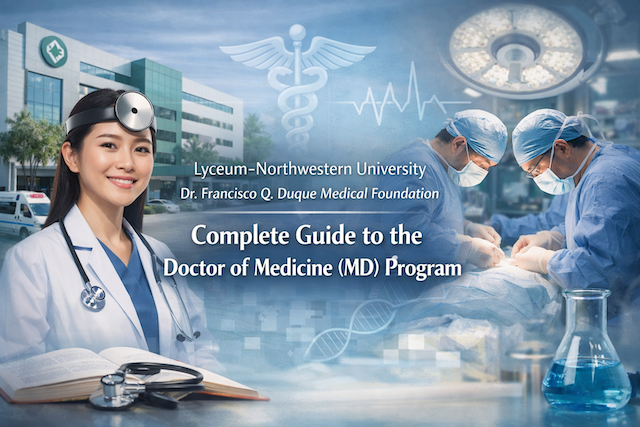
Lyceum-Northwestern University Dr. Francisco Q. Duque Medical Foundation: Complete Guide to the Doctor of Medicine (MD) Program
Contents
- Lyceum-Northwestern University Dr. Francisco Q. Duque Medical Foundation: Complete Guide to the Doctor of Medicine (MD) Program
- Overview: What This Medical School Is Known For
- Location and Campus Environment
- Mission, Vision, and Core Values
- Accreditation and Institutional Standing
- Doctor of Medicine Program Structure
- CHED-Aligned Enhanced Curriculum
- Clinical Training and Hospital Affiliations
- Research and Community Engagement
- Faculty and Academic Support
- Admissions Process and Preparation
- Tuition, Fees, and Financial Planning
- Licensure Preparation and Career Outlook
- Who Should Consider This Medical School
- Practical Tips for Medical Students
- Contact and Next Steps
- FAQs (Frequently Asked Questions)
- Is Lyceum-Northwestern University Dr. Francisco Q. Duque Medical Foundation a good choice for an MD program?
- Where is the medical school located, and what is student life like in Dagupan City?
- How long is the Doctor of Medicine program?
- What are the typical subjects covered in the early years of medical school?
- When do students start clinical exposure and hospital rotations?
- Which hospitals or clinical sites are used for training?
- What are the general admission requirements for the MD program?
- Do I need an entrance exam, NMAT, or an interview?
- How much is tuition, and what other costs should I prepare for?
- Is the program suitable for international students?
- Will graduating from this school allow me to practice medicine abroad?
- How should I prepare academically before starting medical school?
- What are practical study strategies for passing and thriving?
- What support systems should I look for once I enroll?
Lyceum-Northwestern University Dr. Francisco Q. Duque Medical Foundation: Complete Guide to the Doctor of Medicine (MD) Program
Overview: What This Medical School Is Known For
The Lyceum-Northwestern University Dr. Francisco Q. Duque Medical Foundation College of Medicine (often referred to as LNU–FQD College of Medicine) is a long-established private medical school located in Dagupan City, Pangasinan. It is recognized for its community-oriented medical education, regional healthcare integration, and emphasis on professional values alongside academic training.
The program generally appeals to students seeking a structured Doctor of Medicine (MD) education outside Metro Manila, with access to clinical exposure, a relatively lower cost of living, and a campus environment that supports focused medical training.
Location and Campus Environment
Dagupan City serves as a regional commercial and healthcare hub in Pangasinan. For medical students, this means access to hospitals, clinics, review centers, and essential urban infrastructure without the density and cost associated with larger metropolitan areas.
Students often find Dagupan conducive to disciplined study routines, especially when housing is secured close to campus. Transportation, food options, and daily necessities are generally accessible, allowing students to focus on academics and clinical preparation.
Mission, Vision, and Core Values
The College of Medicine aims to produce competent, ethical, and compassionate physicians who are responsive to the healthcare needs of the Filipino community. Its vision includes becoming a recognized center of excellence in medical education, research, and community service.
The school promotes core values commonly summarized as Excellence, Professionalism, Integrity, Creativity, and Spirituality. These values are integrated into academic policies, clinical training expectations, and student conduct standards.
Accreditation and Institutional Standing
The College of Medicine has operated for several decades and reports advanced accreditation status within the Philippine medical education system. It also follows quality management standards that support consistent academic delivery, assessment practices, and institutional improvement.
The school has indicated recognition by selected international medical councils. However, students planning to pursue licensure outside the Philippines are advised to independently confirm eligibility requirements based on their intended country of practice and year of graduation.
Doctor of Medicine Program Structure
The Doctor of Medicine degree is designed as a five-year graduate program. The curriculum generally follows a progression from basic medical sciences to integrated clinical sciences, followed by extensive clinical clerkship training.
Students can expect a combination of lectures, small-group discussions, laboratory work, case-based learning, and clinical exposure. Assessment methods typically include written examinations, practical exams, case presentations, and performance-based evaluations.
CHED-Aligned Enhanced Curriculum
The College of Medicine has implemented curriculum enhancements aligned with national higher education standards. These revisions aim to strengthen clinical integration, improve learning outcomes, and better prepare students for licensure examinations and real-world medical practice.
For students, this often translates into clearer learning objectives, improved subject integration, and more structured evaluation methods across different phases of the program.
Clinical Training and Hospital Affiliations
Clinical education is supported through hospital affiliations within the region, allowing students to gain hands-on experience in patient care across major medical disciplines. Rotations typically include internal medicine, surgery, pediatrics, obstetrics and gynecology, family medicine, psychiatry, and community medicine.
Effective clinical training emphasizes both patient volume and supervision. Students are expected to develop core competencies such as history taking, physical examination, diagnostic reasoning, and professional communication.
Research and Community Engagement
The College of Medicine encourages student participation in research activities, conferences, and academic symposia. Research exposure helps students develop critical thinking skills and familiarity with evidence-based medicine.
Community engagement is also an important component of training. Students participate in health education programs and community-based medical activities that reinforce the social responsibilities of the medical profession.
Faculty and Academic Support
Instruction is delivered by a mix of full-time faculty members and practicing clinicians. Teaching methods may include lectures, mentorship-based learning, and supervised clinical instruction.
Students benefit most when faculty members provide clear feedback, maintain accessible consultation hours, and actively support skill development in both academic and clinical settings.
Admissions Process and Preparation
Admission to the MD program typically involves document evaluation, academic screening, and an interview process. Requirements may vary by applicant category and academic year.
Applicants are generally expected to prepare academic records, identity documents, health clearances, and other supporting materials. Early preparation is strongly recommended to avoid delays.
Tuition, Fees, and Financial Planning
Tuition and other academic fees are determined annually and may include separate charges for laboratories, clinical training, and institutional services. Applicants should request the most current fee schedule directly from the university.
Beyond tuition, students should budget for housing, daily living expenses, academic resources, clinical supplies, and emergency costs. Sound financial planning helps reduce stress during the demanding years of medical education.
Licensure Preparation and Career Outlook
The College of Medicine places importance on preparing students for the Philippine Physician Licensure Examination. Preparation strategies may include internal assessments, review integration, and academic monitoring.
Graduates interested in international practice should plan early and verify all licensure and credentialing requirements specific to their target country.
Who Should Consider This Medical School
Lyceum-Northwestern University Dr. Francisco Q. Duque Medical Foundation College of Medicine is well-suited for students who value community-oriented training, a structured MD program, and a learning environment outside major metropolitan centers.
Prospective students should carefully review curriculum details, clinical rotation arrangements, assessment policies, and long-term career alignment before making a final decision.
Practical Tips for Medical Students
Success in medical school depends on consistent study habits, effective time management, and proactive use of academic support systems. Establishing a regular study schedule, prioritizing sleep, and engaging in active learning strategies can significantly improve performance.
Seeking feedback early, maintaining professional conduct, and building a small support network among peers are also key factors in long-term success.
Contact and Next Steps
For official and updated information regarding admissions, curriculum, and fees, prospective applicants should contact the College of Medicine directly through the university’s official communication channels.
When making inquiries, it is helpful to clearly state your intended year of entry, academic background, and specific questions to receive accurate and timely responses.
FAQs (Frequently Asked Questions)
Is Lyceum-Northwestern University Dr. Francisco Q. Duque Medical Foundation a good choice for an MD program?
It can be a good choice if you are looking for a university-based medical program in Northern Luzon with a community-oriented approach and access to clinical training within a regional healthcare setting. Like any medical school, the “best” choice depends on your learning style, your budget, your preferred location, and your long-term licensure plans. Before deciding, compare the curriculum structure, clinical rotation sites, student support systems, and academic policies such as grading, remediation, and progression requirements.
Where is the medical school located, and what is student life like in Dagupan City?
The medical school is based in Dagupan City, Pangasinan. Student life typically revolves around classes, laboratory sessions, group study, and clinical exposure, so most students prioritize convenient housing and predictable daily routines. Dagupan is a practical city for medical students because essential services are accessible, and commuting can be manageable if you live near campus. The key is to reduce friction in your schedule—shorter travel time often means more sleep, better focus, and more consistent study habits.
How long is the Doctor of Medicine program?
The MD program is commonly described as a five-year program, which generally includes the pre-clinical years (focused on foundational and clinical sciences) and the later phase dedicated to intensive clinical training. Exact sequencing and requirements may change due to curriculum updates, so it’s important to confirm the latest program outline directly with the school, especially if you are applying for a specific academic year.
What are the typical subjects covered in the early years of medical school?
In most Philippine medical schools, early years emphasize foundational sciences and integrated clinical concepts, often including anatomy, physiology, biochemistry, pathology, pharmacology, microbiology, and introductory clinical medicine. Many programs also integrate professionalism, medical ethics, communication skills, and public health concepts early on. Expect heavy reading loads, frequent exams, and increasing emphasis on clinical reasoning rather than memorization alone.
When do students start clinical exposure and hospital rotations?
Clinical exposure can begin earlier through skills training, patient interviews, and supervised clinical activities, while full hospital rotations are typically concentrated in the later phase of the program. The timing and format depend on the curriculum design. To understand what you will actually experience, ask the admissions office or current students about when bedside teaching begins, how skills are assessed, and which hospitals or clinical sites are used for rotations.
Which hospitals or clinical sites are used for training?
The school’s clinical training is supported by affiliated hospitals and regional clinical partners. In practical terms, your experience will depend on patient volume, case variety, supervision quality, and the structure of teaching rounds. When evaluating a program, ask how rotations are scheduled, how student performance is evaluated, and whether there are enough opportunities to practice core clinical skills such as history taking, physical examination, and case presentations.
What are the general admission requirements for the MD program?
Admission requirements typically include academic records, proof of completion of a pre-med or equivalent degree, identification documents, and other university forms. Applicants may also undergo interviews and screening processes. Because requirements can change, you should request the current admissions checklist, deadlines, and any additional conditions for transferees or international applicants directly from the school.
Do I need an entrance exam, NMAT, or an interview?
Many medical schools in the Philippines use standardized admission criteria such as the NMAT along with interviews. Policies differ by institution and can be updated. If you are planning your application timeline, confirm whether the school requires an NMAT score, the minimum percentile accepted (if applicable), interview formats, and submission deadlines. Clarifying these early helps you avoid last-minute issues that can delay enrollment.
How much is tuition, and what other costs should I prepare for?
Tuition and fees vary by academic year and may include additional charges for laboratories, clinical training, institutional services, and miscellaneous expenses. Beyond tuition, plan for housing, food, transportation, uniforms, basic medical tools, printing, and learning resources such as books or subscriptions. A practical approach is to request the latest fee schedule from the university and build a monthly budget with a buffer for unexpected expenses.
Is the program suitable for international students?
International students may be accepted depending on university policies, documentation requirements, and academic eligibility. If you are applying from abroad, confirm the list of required documents, authentication rules, visa-related considerations, and whether there are specific academic prerequisites. Also verify how the program aligns with your home country’s licensing pathway, because international credentialing rules can change over time.
Will graduating from this school allow me to practice medicine abroad?
Practicing abroad depends less on a single school and more on the licensing and credentialing rules of the target country, which may include exams, internships, supervised practice, and credential verification. You should research your target pathway early, then confirm the school’s status in internationally used directories and the current eligibility rules for your intended country. If your goal is the United States, for example, you should carefully review the latest requirements connected to ECFMG-related processes and exam eligibility for your graduation year.
How should I prepare academically before starting medical school?
A strong foundation in basic sciences helps, but the bigger advantage is developing effective study systems. Before classes start, practice active recall, spaced repetition, and question-based learning. Improve reading speed and note organization. If possible, preview core topics like anatomy terminology, physiology concepts, and basic pharmacology principles. Entering medical school with disciplined routines—sleep, exercise, and time blocking—often matters more than trying to memorize everything in advance.
What are practical study strategies for passing and thriving?
Most successful students build a weekly routine: review lectures within 24 hours, convert notes into recall-based formats, and regularly practice questions. Use case-based thinking to connect facts to real clinical scenarios. Keep your materials organized, identify your weak areas early, and seek feedback from instructors. Avoid “all-nighters” as a habit; long-term retention and clinical reasoning improve when sleep and recovery are protected.
What support systems should I look for once I enroll?
Useful support systems include academic advising, accessible faculty consultation, clear remediation policies, mental health resources, and structured mentoring during clinical training. You should also build your own support network: a small, reliable peer group, healthy study spaces, and routines that reduce stress. If you ever struggle academically, address it early—medical school becomes harder when problems compound over time.
Complete List of Medical Schools in the Philippines (All 78 MD Programs)
Best Medical Schools in the Philippines (Local & International Rankings)
Recommend
2026年1月23日
Sultan Kudarat State University College of Medicine: Complete Guide for Aspiring MD Students
2026年1月23日
University of Southern Mindanao College of Medicine: Complete Guide for Aspiring MD Students
2026年1月23日
Mindanao State University – General Santos College of Medicine: Complete Guide for Future MD Students

How to Register for eTravel Philippines (2025 Guide)
Step-by-step guide to completing your eTravel registration before arriving in the Philippines, with images and tips.

Night Market in Cebu – Things You Don’t Know About Cebu Life
Discover the hidden charm of Cebu’s night markets, from street food stalls to local life tips you won’t find in tourist guides.

How to Use ChatGPT for IELTS Preparation: A Complete Guide
Learn how to prepare for IELTS using ChatGPT — including strategies for Writing, Reading, Listening, Speaking, and grammar support.

How to Build a Website Without Coding Using ChatGPT
Discover how to build your own website using AI—no coding skills needed. From structure planning to SEO and design, let ChatGPT guide you.