2026年1月23日
3D ACADEMY offers affordable English study programs in Cebu, Philippines – perfect for beginners, professionals, and exam takers.

3D UNIVERSAL ENGLISH INSTITUTE INC
info.3d-universal.com
8:00-17:00(Mon-Fri)
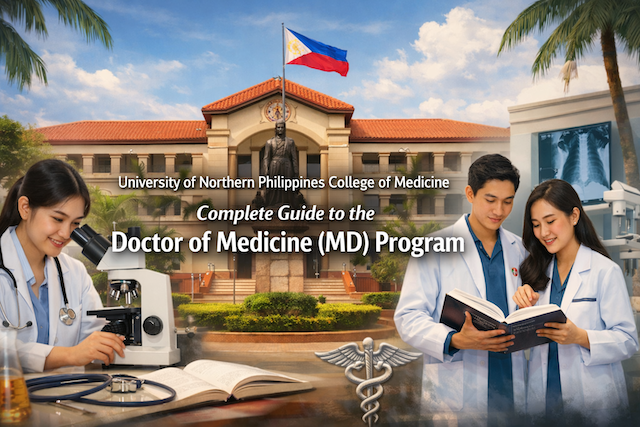
University of Northern Philippines College of Medicine: Complete Guide to the Doctor of Medicine (MD) Program
Contents
- University of Northern Philippines College of Medicine: Complete Guide to the Doctor of Medicine (MD) Program
- Quick Overview of UNP College of Medicine
- Why Students Consider UNP for Medicine
- MD Program Structure and Curriculum (What to Expect)
- Clinical Training and Hospital Exposure
- Admissions Requirements (General Guidance)
- How to Strengthen Your Application
- Tuition, Fees, and Cost of Living
- Campus Life in Vigan City
- Learning Style Fit: Who Usually Thrives in a Program Like UNP’s
- Career Path After Graduation
- How to Verify the Latest Information (Important)
- Final Thoughts
- FAQs (Frequently Asked Questions)
- Does the University of Northern Philippines College of Medicine accept students from outside Ilocos Sur?
- What is the usual educational pathway before entering the MD program?
- Is the NMAT required, and what score should applicants aim for?
- What documents are usually needed for the application?
- Does the school conduct interviews, and how should I prepare?
- How is the MD curriculum typically structured?
- What is clerkship like, and when does it begin?
- Are there scholarships or financial support options?
- Is living in Vigan City manageable for medical students?
- Can UNP College of Medicine be a good choice if I plan to practice in Northern Luzon?
- Where can I confirm the latest admissions timeline, tuition, and requirements?
University of Northern Philippines College of Medicine: Complete Guide to the Doctor of Medicine (MD) Program
The University of Northern Philippines (UNP) College of Medicine is a public medical school based in Vigan City, Ilocos Sur, in Northern Luzon. As part of a state university, it is commonly viewed by applicants as a more accessible pathway to medical education—especially for students who want to train in a regional center with strong community health needs, a close-knit academic environment, and clinical exposure that reflects real-world practice outside Metro Manila.
This guide explains what to expect from the UNP College of Medicine MD program: how the program is typically structured in the Philippines, what admissions usually require, what student life can look like in Vigan, and how to evaluate whether UNP matches your learning style and long-term goals.
Quick Overview of UNP College of Medicine
UNP College of Medicine offers medical education leading to the Doctor of Medicine (MD) degree. Like other Philippine medical schools, the MD proper is usually a four-year professional program taken after completing a pre-med undergraduate degree. The overall journey to becoming a licensed physician in the Philippines generally includes:
- Completion of a pre-med bachelor’s degree (commonly Biology, Nursing, Medical Technology, Pharmacy, Psychology, or related fields)
- Taking the NMAT (National Medical Admission Test) and meeting the school’s required percentile rank
- Four years of MD program (including clinical clerkship in later years)
- Postgraduate internship (PGI) after graduation (often arranged through the national matching system and partner hospitals)
- Philippine Physician Licensure Examination (PLE) after internship
UNP’s setting in Ilocos Sur can be a major draw for students who want a less congested city environment, lower day-to-day living costs compared with major capitals, and clinical learning grounded in community needs.
Why Students Consider UNP for Medicine
Medical students choose schools for different reasons, and UNP tends to appeal to applicants who value some combination of these factors:
- Regional medical training: Learning medicine in a provincial or regional hub can give you earlier exposure to a wide variety of cases, including primary care and community health concerns.
- Public university environment: Some students prefer a state university culture that feels mission-driven and service-oriented.
- Community connection: Training in Ilocos Sur can be a good fit for students who plan to practice in Northern Luzon or serve in community-based settings after graduation.
- Focused academic community: Many regional medical schools offer smaller community dynamics where mentorship and peer support can be strong.
That said, “best” depends on your goals. If you want a hyper-specialized research track, a very large tertiary hospital system, or a heavily international student cohort, you should compare UNP with other institutions that emphasize those features.
MD Program Structure and Curriculum (What to Expect)
While exact course titles and sequencing differ by school and may change over time, Philippine MD programs typically follow a similar structure. At UNP College of Medicine, you can generally expect a progression that builds from foundational sciences to clinical medicine, with increasing patient exposure as you move forward.
First Year (Foundations): The early phase usually focuses on core medical sciences and an introduction to clinical thinking. Common subject areas include anatomy, histology, physiology, biochemistry, and basic clinical skills. You may also encounter early topics in public health, ethics, and doctor-patient communication.
Second Year (Systems and Pathophysiology): The second year often intensifies with organ systems, microbiology, pathology, pharmacology, and introductory clinical correlations. Many schools integrate case discussions and practical sessions so that basic science knowledge connects to real clinical reasoning.
Third Year (Clinical Subjects): This year typically moves deeper into clinical medicine, including internal medicine, surgery, pediatrics, obstetrics and gynecology, psychiatry, and related disciplines. Depending on the program design, you may have more hospital exposure, skills labs, and case-based learning. Students often describe third year as a turning point where time management becomes crucial.
Fourth Year (Clerkship): Clerkship is a hands-on hospital-based year where you rotate through major departments and learn by participating in ward work, outpatient clinics, and supervised procedures. You build professional habits: history taking, physical exam skills, writing orders and notes under supervision, presenting cases, and communicating with patients and the healthcare team. This year can be demanding, but it is also when many students feel they “become” clinicians.
Because curriculum frameworks can be updated and rotation sites can change, it’s wise to confirm the latest curriculum outline and clerkship arrangements directly through the school’s official communications.
Clinical Training and Hospital Exposure
Clinical training quality is one of the most important factors in choosing a medical school. Students generally want rotations that offer:
- Sufficient patient volume and variety of cases
- Opportunities to practice clinical skills under supervision
- Supportive residents and consultants who teach
- Clear expectations, fair evaluation, and feedback
At UNP College of Medicine, clinical exposure is tied to its affiliated clinical training environment in the region. Training in a provincial setting can be an advantage if you want to build strong generalist skills and learn medicine where resource management and practical decision-making matter.
When evaluating clinical training, ask practical questions (or look for answers in official materials): Which departments host rotations? How are night duties scheduled? What is the student-to-patient ratio? Are there structured teaching rounds? What is the process if students need remediation or extra support?
Admissions Requirements (General Guidance)
Admissions criteria can change from year to year, but Philippine medical school admissions typically include the following components. UNP College of Medicine generally follows the national norms for MD admissions.
- Pre-med bachelor’s degree: Applicants usually must have completed an undergraduate program from a recognized institution.
- NMAT score: The NMAT percentile rank is a standard requirement. Schools set minimum cutoffs and may apply higher expectations for competitive applicant pools.
- Academic records: Transcript of records, GPA, and sometimes prerequisite science coursework can matter.
- Application documents: Typical documents include birth certificate, certificate of good moral character, recommendation letters, and other school-specific forms.
- Interview and/or screening: Many medical schools conduct interviews to assess communication skills, maturity, motivation, and readiness for the program’s intensity.
Tip: If you are planning your timeline, think backward from your intended start date. NMAT testing windows, document processing times, and interview schedules can affect when you should apply.
How to Strengthen Your Application
Medical admissions are not only about grades. Schools want students who can handle the workload, communicate well, and stay resilient. Consider these ways to strengthen your candidacy:
- Prepare strategically for the NMAT: Aim not only to “pass” but to meet or exceed the school’s expectations. A strong NMAT can offset weaker areas in your profile.
- Build consistent academic habits: If your transcript shows improvement over time, highlight that growth in your interview.
- Gain relevant exposure: Volunteer work, hospital exposure, community programs, or research experience can show commitment and maturity.
- Develop your “why medicine” story: Interviewers often look for clarity, realism, and a service mindset—not a perfect script.
If you’re a local applicant, emphasize your connection to the community and your willingness to train and potentially practice in the region. If you’re coming from outside the area, show that you’ve thought seriously about relocating and adapting to a new environment.
Tuition, Fees, and Cost of Living
Tuition and fees vary across Philippine medical schools and may change annually. As a public university environment, students often explore UNP as a potentially more affordable option compared with some private institutions, but the exact cost depends on the university’s current fee structure, your residency status (if applicable), and additional charges (laboratory fees, clinical fees, uniforms, insurance, and miscellaneous items).
Beyond tuition, consider these real costs:
- Housing: Boarding houses, apartments, or dorm-style arrangements (depending on availability)
- Daily expenses: Food, transportation, utilities, and study supplies
- Clinical year needs: Uniforms, medical tools (stethoscope, BP apparatus, penlight), duty shoes, and possible extra transport costs
- Board preparation: Review resources and exam-related expenses later in the program
Vigan City is often considered more manageable in cost than larger metropolitan areas, but your personal spending style makes a big difference. Budgeting early is one of the simplest ways to reduce stress during medical school.
Campus Life in Vigan City
Student life is not only about academics—it’s also about whether you can sustain the pace for years. Vigan is known for its heritage atmosphere, walkable areas, and calmer lifestyle compared with major cities. Many students appreciate having fewer distractions and a quieter environment for studying, while still having access to essential services, food options, and community life.
In medical school, your routine often revolves around:
- Lectures, labs, and small group discussions
- Self-study and review sessions
- Practical exams and written assessments
- Skills practice (sometimes with peers)
- Hospital exposure and duty schedules (especially in later years)
Outside academics, students often rely on peer support systems, study groups, and mentorship to stay grounded. If the school has student organizations, community outreach activities, or interest groups, those can be healthy outlets—so long as you keep your priorities balanced.
Learning Style Fit: Who Usually Thrives in a Program Like UNP’s
Different schools have different “fit” profiles. You may thrive at UNP College of Medicine if you are:
- Self-directed and able to learn independently between structured sessions
- Comfortable training in a regional setting with community health realities
- Motivated by service and practical clinical exposure
- Adaptable, resilient, and able to work well with a team
You may need to think more carefully if you strongly prefer a large metropolitan hospital network, a highly research-heavy environment, or a setting with extensive subspecialty exposure from the earliest years. That does not mean UNP is “worse”—only that your preferences should match the training environment you’ll live in every day.
Career Path After Graduation
Graduating with an MD is only one step. After completing the MD program, students typically proceed to postgraduate internship, then take the Physician Licensure Examination (PLE). Once licensed, doctors may:
- Enter residency training (in specialties such as Internal Medicine, Surgery, Pediatrics, OB-GYN, Family Medicine, etc.)
- Work in government or private hospitals
- Pursue community-based practice or public health roles
- Continue into further training (fellowship/subspecialty) later on
If you plan to practice in a specific region, it can be beneficial to train there because you build networks with mentors, hospitals, and local systems. Many physicians end up working where they completed significant portions of their clinical training, simply because relationships and familiarity matter in healthcare.
How to Verify the Latest Information (Important)
Medical school policies can change—especially admissions timelines, NMAT cutoffs, tuition schedules, and clinical rotation arrangements. Before making final decisions, verify the latest details directly through UNP’s official channels. In particular, confirm:
- Application period and deadlines for the incoming batch
- Minimum NMAT percentile requirement (and any preferred target)
- Updated tuition and miscellaneous fee schedule
- Document checklist and submission process
- Interview format and evaluation criteria
- Clerkship training sites and schedule structure
Doing this step early helps you avoid preventable delays and ensures your application is complete and competitive.
Final Thoughts
The University of Northern Philippines College of Medicine can be a strong option for students who want a grounded, community-connected medical education in Northern Luzon. If you value practical clinical learning, a regional training environment, and the culture of a public university, UNP may be worth serious consideration. The best next step is to review the most current admissions announcement and prepare your NMAT and documents early so you can apply with confidence.
If you want, I can also create a 750-word FAQs section (H2 headings, HTML only) tailored to UNP College of Medicine—covering NMAT, admissions timeline, tuition expectations, living in Vigan, clerkship, and licensure steps.
FAQs (Frequently Asked Questions)
Does the University of Northern Philippines College of Medicine accept students from outside Ilocos Sur?
Yes. Applicants are commonly accepted from various provinces and regions, as long as they meet the school’s admissions requirements and can complete the application process on time. Studying in Vigan City may require relocation, so it helps to plan housing and daily logistics early. If you are coming from outside the area, be prepared to explain your motivation for training in a regional setting and how you will adapt to the pace and expectations of medical school.
What is the usual educational pathway before entering the MD program?
In the Philippines, the Doctor of Medicine (MD) program is typically taken after completing a bachelor’s degree (often called “pre-med”). Common undergraduate backgrounds include Biology, Nursing, Medical Technology, Pharmacy, Psychology, and other health or science-related degrees. The MD program itself is usually four years, followed by a postgraduate internship and then the Physician Licensure Examination (PLE). Because the MD curriculum assumes a strong study foundation, it is useful to enter with solid habits in reading comprehension, note-taking, and exam preparation.
Is the NMAT required, and what score should applicants aim for?
Most Philippine medical schools require the NMAT (National Medical Admission Test), and UNP College of Medicine generally follows that national standard. The school typically sets a minimum NMAT percentile requirement, but competitive applicants often aim higher than the minimum when possible. Because NMAT cutoffs can change depending on policy and the applicant pool, you should verify the latest requirement directly from official announcements. As a practical strategy, plan your NMAT schedule early so you can retake the test if needed without missing the admissions window.
What documents are usually needed for the application?
While the exact checklist can vary by year, applicants commonly submit an accomplished application form, transcript of records, proof of bachelor’s degree completion (or expected graduation documents), NMAT result, a certificate of good moral character, and other identification or civil documents. Some schools also request recommendation letters or specific institutional forms. Because document processing can take time, especially for official transcripts, it is wise to request these early and keep both physical and digital copies organized.
Does the school conduct interviews, and how should I prepare?
Many medical schools in the Philippines include an interview or screening step, and applicants should be ready for that possibility. Interviews often assess communication skills, maturity, ethical thinking, and readiness for an intensive workload. Preparation does not mean memorizing perfect answers; it means being clear about your reasons for pursuing medicine and understanding the realities of medical training. Be ready to discuss your study habits, how you handle stress, and how you plan to improve if you have weak areas in your academic record.
How is the MD curriculum typically structured?
Although subject sequencing differs among institutions, most MD programs progress from foundational sciences to clinical medicine. Early years often cover anatomy, physiology, biochemistry, pathology, pharmacology, microbiology, and introductory clinical skills. Later years emphasize major clinical fields such as Internal Medicine, Surgery, Pediatrics, Obstetrics and Gynecology, Psychiatry, and related disciplines. The final phase usually includes clerkship rotations, where students learn in hospital settings under supervision and develop practical competence in patient care.
What is clerkship like, and when does it begin?
Clerkship usually takes place in the later part of the MD program (often the fourth year in many Philippine schools). During clerkship, students rotate through hospital departments and participate in supervised patient care activities such as history-taking, physical examinations, case presentations, charting, and basic procedures according to training rules. Workload can be demanding, with early mornings, duty schedules, and frequent evaluations. Students who thrive in clerkship typically stay organized, seek feedback, and treat every rotation as a chance to build reliable clinical habits.
Are there scholarships or financial support options?
Financial support can come from several sources: institutional scholarships, government programs, local government units, private organizations, or merit-based assistance. Availability and eligibility rules can change, so it is best to check official UNP information and relevant government scholarship announcements. Even with assistance, students should budget for non-tuition costs such as housing, meals, transportation, uniforms, and basic medical tools. Planning a realistic monthly budget can reduce stress during exam-heavy months and clinical rotations.
Is living in Vigan City manageable for medical students?
Many students find Vigan City manageable due to its calmer environment compared with large metropolitan areas. A quieter setting can support consistent study routines, which is crucial in medical school. However, “manageable” still depends on your personal lifestyle and schedule. Clerkship and heavy academic weeks can limit free time, so choosing housing that is practical in terms of commute and daily necessities matters. When possible, prioritize safety, reliable internet, and a living space that supports rest and focused study.
Can UNP College of Medicine be a good choice if I plan to practice in Northern Luzon?
Yes. Training in a region often helps you understand local health needs and build professional networks with mentors, hospitals, and communities. Many physicians eventually work in areas where they trained, because clinical relationships and familiarity with local systems can shape opportunities. If your long-term plan is to serve Northern Luzon or nearby provinces, studying in Vigan can align your education with your future practice environment and strengthen your commitment to community-based medicine.
Where can I confirm the latest admissions timeline, tuition, and requirements?
The most reliable source is the university’s official announcements and the UNP College of Medicine’s official communications. Admissions timelines, NMAT minimums, and fee structures can change from year to year. Before finalizing your plan, verify the current application period, required documents, interview schedule, and any updated policies. Doing this early helps you avoid delays and ensures that your application meets the most recent standards for the incoming batch.
Complete List of Medical Schools in the Philippines (All 78 MD Programs)
Best Medical Schools in the Philippines (Local & International Rankings)
Recommend
2026年1月23日
Sultan Kudarat State University College of Medicine: Complete Guide for Aspiring MD Students
2026年1月23日
University of Southern Mindanao College of Medicine: Complete Guide for Aspiring MD Students
2026年1月23日
Mindanao State University – General Santos College of Medicine: Complete Guide for Future MD Students

How to Register for eTravel Philippines (2025 Guide)
Step-by-step guide to completing your eTravel registration before arriving in the Philippines, with images and tips.

Night Market in Cebu – Things You Don’t Know About Cebu Life
Discover the hidden charm of Cebu’s night markets, from street food stalls to local life tips you won’t find in tourist guides.

How to Use ChatGPT for IELTS Preparation: A Complete Guide
Learn how to prepare for IELTS using ChatGPT — including strategies for Writing, Reading, Listening, Speaking, and grammar support.

How to Build a Website Without Coding Using ChatGPT
Discover how to build your own website using AI—no coding skills needed. From structure planning to SEO and design, let ChatGPT guide you.