2026年1月23日
3D ACADEMY offers affordable English study programs in Cebu, Philippines – perfect for beginners, professionals, and exam takers.

3D UNIVERSAL ENGLISH INSTITUTE INC
info.3d-universal.com
8:00-17:00(Mon-Fri)
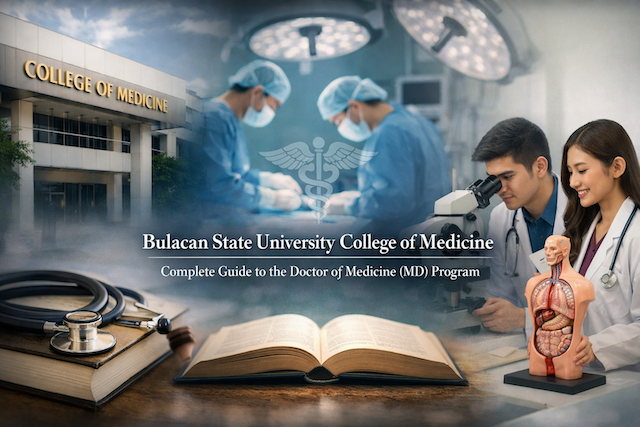
Bulacan State University College of Medicine: Complete Guide to the Doctor of Medicine (MD) Program
Contents
- Bulacan State University College of Medicine: Complete Guide to the Doctor of Medicine (MD) Program
- Quick Overview of BulSU College of Medicine
- Why a Public MD Program in Central Luzon Matters
- Program Structure: What the MD Journey Usually Looks Like
- Admissions: Typical Requirements and What to Prepare
- Scholarships, Financial Support, and Return Service
- Where BulSU Medicine Fits in BulSU’s Wider Academic Ecosystem
- Clinical Training and Hospital Exposure: What to Look For
- Student Life: What Medical School Days Really Feel Like
- Cost of Studying Medicine: Practical Budgeting Beyond Tuition
- How to Strengthen Your BulSU Medicine Application
- Career Path After BulSU MD: What Comes Next
- Final Thoughts
- FAQs (Frequently Asked Questions)
- Is Bulacan State University College of Medicine a public medical school?
- When did BulSU begin offering a Doctor of Medicine (MD) program?
- What degree do I need before applying to the BulSU MD program?
- Is the NMAT required for admission to BulSU College of Medicine?
- How competitive is admission, and what does BulSU look for in applicants?
- What is the typical structure of the MD program?
- Where will clinical training happen, and do affiliations matter?
- How much does it cost to study medicine at BulSU, and what expenses should I expect?
- Are scholarships available, including Doktor Para sa Bayan?
- What does “return service” mean, and should I be cautious about it?
- What is student life like in medical school at BulSU?
- How can I improve my chances of success once I’m admitted?
- What happens after graduating from the BulSU MD program?
Bulacan State University College of Medicine: Complete Guide to the Doctor of Medicine (MD) Program
Bulacan State University (BulSU) has expanded its role in public higher education by opening a Doctor of Medicine (MD) program through its College of Medicine. For many students in Central Luzon, this matters for one simple reason: medicine has traditionally been concentrated in Metro Manila or in private institutions with higher total costs. A public MD program closer to home can reduce living expenses, widen access, and help address doctor shortages in underserved areas.
This guide explains what BulSU’s College of Medicine is, how the MD program typically works, what to expect from admissions and student life, and how scholarships and return-service pathways (such as the Doktor Para sa Bayan framework) can shape your medical journey and career planning. Where official details may change by academic year, the safest approach is to use this guide as a roadmap, then confirm the latest requirements and deadlines through BulSU’s official channels before you apply.
Quick Overview of BulSU College of Medicine
BulSU’s Doctor of Medicine program received authorization to accept students for Academic Year 2024–2025 as part of the growing number of state universities and colleges (SUCs) offering MD education nationwide. :contentReference[oaicite:0]{index=0}
In practical terms, this means BulSU is positioned as a public-university option for aspiring doctors who want rigorous medical training while staying closer to Central Luzon communities. For students who plan to serve in government health facilities after graduation, a public MD program can also align naturally with scholarship and return-service models designed to strengthen the public health workforce. :contentReference[oaicite:1]{index=1}
Why a Public MD Program in Central Luzon Matters
The Philippines continues to strengthen policies that improve access to medical education and increase the number of practicing physicians—especially in areas that historically struggle to attract and retain doctors. When a state university opens a medical program, it can reduce barriers in several ways:
- Geographic access: Students from Bulacan and nearby provinces may not need to relocate far, lowering living costs and improving family support.
- Public mission: SUC medical programs are often designed with community-oriented training, preventive care, and service in mind.
- Scholarship alignment: National frameworks such as Doktor Para sa Bayan emphasize funding support paired with service in underserved areas. :contentReference[oaicite:2]{index=2}
For many applicants, the decision is not only “Where can I study medicine?” but also “How can I study medicine sustainably and build a career with real impact?” BulSU’s MD program is part of that broader answer.
Program Structure: What the MD Journey Usually Looks Like
While each medical school has its own curriculum design, most MD programs in the Philippines follow a similar progression from foundational sciences to clinical training and internship preparation. As you evaluate BulSU, you can expect the learning experience to generally include:
- Pre-clinical years: Core medical sciences (anatomy, physiology, biochemistry, pathology, pharmacology, microbiology, and related courses) plus early clinical exposure and skills training.
- Clinical years: Rotations in major hospital departments (internal medicine, surgery, pediatrics, obstetrics and gynecology, psychiatry, family and community medicine, and others), with increasing responsibility under supervision.
- Research and community exposure: Many programs integrate research methods, public health, and community immersion—especially in schools with a strong public-service mission.
As a new program, BulSU’s College of Medicine may also emphasize structured mentoring, a carefully monitored pioneer-batch approach, and incremental expansion of facilities and partnerships as cohorts grow. BulSU has publicly described welcoming its pioneer batch of medical students, signaling the early-stage development of its medical community and traditions. :contentReference[oaicite:3]{index=3}
Admissions: Typical Requirements and What to Prepare
BulSU will set specific admissions requirements for the Doctor of Medicine program, and these may evolve as the College of Medicine matures. Even so, MD admissions in the Philippines commonly require most (or all) of the following:
- Completed pre-med degree: A bachelor’s degree from an accredited institution (often in a science or health-related field, though many schools accept diverse backgrounds if prerequisites are met).
- NMAT results: The National Medical Admission Test is a standard requirement for most MD programs.
- Academic documents: Transcript of records, diploma, certificate of graduation, and other school credentials.
- Personal documents: Birth certificate and identification documents, plus medical/health clearances depending on school policy.
- Interview and screening: Many medical schools conduct interviews to evaluate motivation, readiness, communication skills, and ethical reasoning.
Because BulSU has centralized admissions portals and announcement systems for various programs, applicants should prioritize official postings and portals for the most accurate steps and schedules. :contentReference[oaicite:4]{index=4}
Application tip: Prepare your documents early and build a clean digital file set (PDF format, consistent naming, readable scans). Medical admissions can move quickly once application windows open, and missing documents are one of the most common avoidable problems.
Scholarships, Financial Support, and Return Service
One of the most important topics for any medical applicant is affordability. Beyond tuition, medicine has “hidden” costs—laboratory requirements, books, uniforms, equipment, transportation to clinical sites, and exam fees.
Nationally, the Doktor Para sa Bayan Act (Republic Act No. 11509) is designed to support medical scholars and strengthen doctor deployment in areas that need physicians most. It provides a medical scholarship and return-service program that can cover a wide set of expenses and then requires graduates to render service equivalent to the years of support received. :contentReference[oaicite:5]{index=5}
How this matters for BulSU applicants:
- Cost planning becomes more realistic: If you are eligible for scholarship pathways, you can map your finances across multiple years rather than relying on short-term budgeting.
- Career planning becomes more defined: Return-service obligations can shape where you live and work after passing the Physician Licensure Examination.
- Public health impact is built into your path: Scholars are typically expected to serve communities that may have limited access to doctors, which can be professionally meaningful and clinically challenging.
Even if you are not under a national scholarship, many universities also coordinate local or provincial support programs, grants, or partnerships. When reviewing BulSU options, look for both national frameworks and any BulSU- or LGU-linked assistance that may be announced per academic year.
Where BulSU Medicine Fits in BulSU’s Wider Academic Ecosystem
BulSU is a large state university with multiple campuses and a broad academic portfolio. This matters because medical students often benefit from an ecosystem that already includes science laboratories, research culture, student services, library systems, and administrative experience supporting board and professional programs.
In addition, being part of a larger university can create opportunities for interdisciplinary work—public health projects with community stakeholders, research collaborations with science and technology units, and joint initiatives that connect medicine to education, governance, or disaster response. While your daily life as an MD student will be intense and specialized, the wider BulSU environment can still be a valuable advantage.
Clinical Training and Hospital Exposure: What to Look For
Strong clinical training depends on real patient exposure, quality supervision, and structured rotations. As you evaluate BulSU’s College of Medicine, pay attention to:
- Affiliated hospitals and training sites: These partnerships determine the range of cases you will see and the departments available for rotations.
- Faculty and clinician mentors: A good mentor system is especially important for a newer program building its clinical culture.
- Skills labs and simulation: Simulation supports safer learning before you perform procedures in real clinical environments.
- Community medicine and public health exposure: For students who will serve in public settings, community-based training is not optional—it’s central.
As BulSU’s program grows, expect continued development of training agreements and facilities. Newer programs often start carefully with a limited cohort, then expand training capacity as partnerships, faculty hiring, and infrastructure strengthen.
Student Life: What Medical School Days Really Feel Like
Medical school is not just “hard classes.” It is a lifestyle shift. Regardless of where you study, the MD experience typically includes long study hours, frequent assessments, and a steady transition from classroom learning to patient-centered responsibilities.
In the early years, your schedule may revolve around lectures, labs, small-group discussions, and practical exams. You’ll also build habits that become critical later: time blocking, high-yield note systems, active recall, and disciplined sleep strategies. In clinical years, the intensity changes form—more time in hospitals, early mornings, patient rounds, documentation, case presentations, and the emotional weight of real patient outcomes.
If BulSU’s College of Medicine continues its pioneer-batch culture, you may also experience a strong sense of shared identity: your class becomes the foundation for student organizations, traditions, peer tutoring systems, and the informal “how things are done” knowledge that future batches inherit.
Cost of Studying Medicine: Practical Budgeting Beyond Tuition
Even in public settings, medical education has significant costs. When you plan your budget, consider these categories:
- Academic costs: Lab fees, manuals, printing, and occasional course-specific requirements.
- Learning resources: Textbooks, review materials, subscriptions, and question banks.
- Equipment: Stethoscope, sphygmomanometer, penlight, basic diagnostic tools, and later, clinical gear required by rotations.
- Transportation: Commuting to campus and clinical sites can become a major recurring expense.
- Food and health: Long days make nutrition and basic self-care both harder and more important.
If you are aiming for a scholarship pathway (national or local), treat budgeting as part of your application strategy: organized documents, clear eligibility understanding, and early submission can directly reduce your financial stress later.
How to Strengthen Your BulSU Medicine Application
If BulSU is a target school for you, build an application that shows both capability and mission fit. Here are high-impact steps:
- Raise your NMAT readiness: Start early, practice consistently, and diagnose weak areas. A stronger NMAT score can widen your options.
- Organize your story: In interviews and personal statements, show why you want medicine and why public service (if relevant) matches your goals.
- Show evidence of discipline: Medicine rewards consistency. Academic performance, leadership roles, research exposure, or volunteer work can signal readiness.
- Understand return-service implications: If you plan to apply for scholarship programs aligned with Doktor Para sa Bayan, be ready to discuss your willingness to serve where needed. :contentReference[oaicite:6]{index=6}
Mindset note: A medical school interview is often less about perfect answers and more about professional maturity—how you think, how you handle ethical dilemmas, and whether you understand what medicine demands.
Career Path After BulSU MD: What Comes Next
After completing the MD program, graduates typically proceed through the national licensure pathway and then build clinical careers through internship, residency training, public health service, or a combination of routes depending on goals and obligations.
If you pursue scholarship pathways that require return service, your early career may be shaped by placement in public health facilities and communities that need physicians most. For many doctors, this becomes a formative period that builds clinical breadth, leadership skills, and a deeper understanding of health inequities. :contentReference[oaicite:7]{index=7}
From there, your path may branch into:
- Residency training in a chosen specialty (internal medicine, pediatrics, surgery, OB-GYN, family medicine, and others).
- Public health and community medicine roles, especially for graduates committed to population health impact.
- Academic medicine and research, if you develop strong interests in teaching, clinical studies, or policy-relevant research.
Final Thoughts
Bulacan State University’s College of Medicine represents a meaningful development for aspiring doctors in Central Luzon: a public MD pathway designed to expand access, reduce geographic barriers, and potentially align closely with national scholarship-and-service strategies. :contentReference[oaicite:8]{index=8}
If you’re considering BulSU for medicine, the best next steps are practical: track official admissions announcements, build your document set early, strengthen your NMAT preparation, and reflect on whether a service-oriented medical pathway fits your long-term life plan. Done well, your medical education becomes more than a degree—it becomes a structured route to building competence, credibility, and impact where it matters most.
FAQs (Frequently Asked Questions)
Is Bulacan State University College of Medicine a public medical school?
Bulacan State University (BulSU) is a state university, so its College of Medicine is part of a public higher-education institution. In practice, this means the program is designed to support broader access to medical education and often aligns with public-service goals, such as strengthening healthcare delivery in nearby communities. Because program policies can evolve during the early years of a new medical school, applicants should always confirm the latest official details (admissions, tuition, and scholarships) through BulSU’s official announcements and offices.
When did BulSU begin offering a Doctor of Medicine (MD) program?
BulSU’s MD program was authorized to accept students starting Academic Year 2024–2025. This is important because newer programs may start with a pioneer batch and gradually expand their facilities, clinical training partnerships, and student systems as cohorts progress. If you are applying, verify the current application cycle, available slots, and any updates to admission criteria, because requirements and timelines can change as the college refines its processes.
What degree do I need before applying to the BulSU MD program?
Medical schools in the Philippines generally require a completed bachelor’s degree (a “pre-med” course). Many applicants come from health and science programs, but some schools accept graduates from other fields as long as they meet prerequisite subjects and are academically prepared for medical school. If BulSU specifies prerequisite coursework, you should check your transcript early and plan to complete any missing subjects before the application deadline.
Is the NMAT required for admission to BulSU College of Medicine?
The National Medical Admission Test (NMAT) is a standard requirement for most MD programs in the Philippines, and it is commonly used as a screening tool alongside grades and interviews. Even when schools accept a wide range of academic backgrounds, NMAT performance helps demonstrate readiness for the intensity of medical training. To strengthen your application, schedule your NMAT early enough to allow a retake if needed and keep your score validity period in mind.
How competitive is admission, and what does BulSU look for in applicants?
Admission competitiveness depends on the number of applicants and the number of seats available for a given year. In general, medical schools evaluate a combination of academic performance, NMAT results, document completeness, and interview performance. Beyond metrics, schools often look for maturity, communication skills, ethical reasoning, and a clear motivation for studying medicine. For a public university medical program, demonstrating commitment to community service and long-term contribution to Philippine healthcare can be an advantage.
What is the typical structure of the MD program?
Most MD programs follow a progression from foundational medical sciences to clinical clerkship training. Early years usually emphasize anatomy, physiology, biochemistry, pathology, pharmacology, microbiology, and clinical skills. Later years focus more on hospital-based learning across core departments such as internal medicine, surgery, pediatrics, obstetrics and gynecology, psychiatry, and family/community medicine. While exact course sequencing can differ by school, you should expect increasing clinical responsibility as you move forward.
Where will clinical training happen, and do affiliations matter?
Clinical training quality is strongly influenced by affiliated hospitals and community health sites. These partnerships determine case variety, patient volume, supervision quality, and rotation opportunities. For newer medical programs, affiliations may expand over time as the school builds capacity and formalizes training agreements. As an applicant, it is reasonable to ask about clinical sites, rotation schedules, mentorship structure, and how clerkship experiences are monitored to ensure consistent learning outcomes.
How much does it cost to study medicine at BulSU, and what expenses should I expect?
Even in public universities, MD training can be costly when you include non-tuition expenses. Common costs include laboratory and practical fees, books and learning resources, uniforms, transportation to clinical sites, and basic medical instruments such as a stethoscope and blood pressure apparatus. Budgeting also needs to account for food and daily living costs during hospital rotations, which can involve early mornings and long days. Always confirm the latest tuition and fee schedule through official BulSU channels for your intended academic year.
Are scholarships available, including Doktor Para sa Bayan?
The Doktor Para sa Bayan framework is designed to support eligible medical students through financial assistance paired with return-service obligations, helping increase physician deployment in underserved areas. Availability, eligibility, and coverage can depend on national guidelines and the implementing processes of partner schools. In addition, students may find support through local government units (LGUs), provincial scholarships, and other public or private grant programs. If you plan to pursue scholarship support, prepare early: scholarship timelines and documentary requirements can be strict.
What does “return service” mean, and should I be cautious about it?
Return service generally means working in a designated public-health setting after graduation (and typically after passing required exams), for a period equivalent to the scholarship support received. This can be a powerful pathway for students who want to serve communities and gain broad clinical experience early in their careers. However, it also affects your freedom to choose location and training timing, so you should consider it carefully. If you are unsure, compare multiple scholarship options, read the conditions closely, and map your long-term career plan before committing.
What is student life like in medical school at BulSU?
Medical school is demanding regardless of institution. Expect dense study schedules, frequent assessments, and a steady shift from classroom learning to patient-centered responsibilities. Your first years may revolve around lectures, laboratories, small-group learning, and skills practice. In clinical years, hospital schedules become central, and time management becomes a survival skill. For a pioneer or early cohort, student life can also feel uniquely collaborative as students help build organizations, traditions, peer-support systems, and study resources for future batches.
How can I improve my chances of success once I’m admitted?
Success in medicine depends more on consistency than on occasional bursts of motivation. Build a study system early (active recall, spaced repetition, and disciplined practice with question banks). Protect your sleep and health as much as possible, because burnout can quietly reduce performance over time. Learn teamwork and communication skills, since medicine is collaborative by nature. Finally, treat every clinical exposure as a professionalism test: punctuality, respect, accurate documentation, and patient-centered behavior matter as much as exam scores.
What happens after graduating from the BulSU MD program?
After completing the MD program, graduates typically proceed toward the Philippine Physician Licensure Examination and then decide on next steps such as internship-related pathways, residency training, public-health work, or service obligations tied to scholarships. Your early years can be shaped by where you train and serve, and many doctors use this period to identify a specialty, build clinical confidence, and develop leadership skills. If you are under a return-service program, plan ahead so your service placement and long-term training goals can align as smoothly as possible.
Complete List of Medical Schools in the Philippines (All 78 MD Programs)
Best Medical Schools in the Philippines (Local & International Rankings)
Recommend
2026年1月23日
Sultan Kudarat State University College of Medicine: Complete Guide for Aspiring MD Students
2026年1月23日
University of Southern Mindanao College of Medicine: Complete Guide for Aspiring MD Students
2026年1月23日
Mindanao State University – General Santos College of Medicine: Complete Guide for Future MD Students

How to Register for eTravel Philippines (2025 Guide)
Step-by-step guide to completing your eTravel registration before arriving in the Philippines, with images and tips.

Night Market in Cebu – Things You Don’t Know About Cebu Life
Discover the hidden charm of Cebu’s night markets, from street food stalls to local life tips you won’t find in tourist guides.

How to Use ChatGPT for IELTS Preparation: A Complete Guide
Learn how to prepare for IELTS using ChatGPT — including strategies for Writing, Reading, Listening, Speaking, and grammar support.

How to Build a Website Without Coding Using ChatGPT
Discover how to build your own website using AI—no coding skills needed. From structure planning to SEO and design, let ChatGPT guide you.