2026年1月23日
3D ACADEMY offers affordable English study programs in Cebu, Philippines – perfect for beginners, professionals, and exam takers.

3D UNIVERSAL ENGLISH INSTITUTE INC
info.3d-universal.com
8:00-17:00(Mon-Fri)
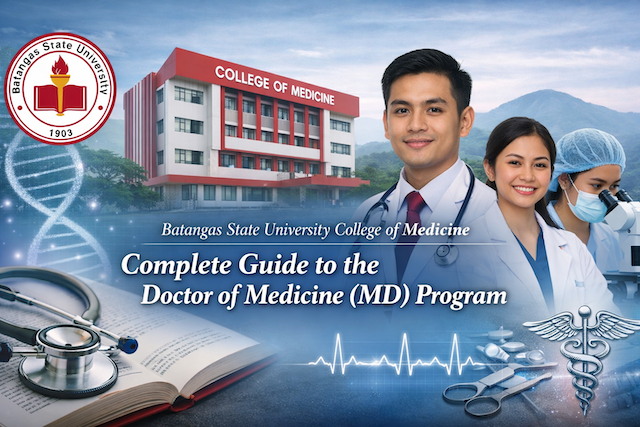
Batangas State University College of Medicine: Complete Guide to the Doctor of Medicine (MD) Program
Contents
- Batangas State University College of Medicine: Complete Guide to the Doctor of Medicine (MD) Program
- Overview of Batangas State University College of Medicine
- When the College of Medicine Started and Why It Matters
- Mission and Educational Philosophy
- Doctor of Medicine (MD) Program Structure
- Learning Approach: Community-Oriented and Patient-Centered
- Clinical Training and Hospital Exposure
- Admission Requirements: What Applicants Typically Need
- CHED MSRS (Medical Scholarship and Return Service): A Major Feature for Students
- Tuition, Fees, and Financial Planning
- Campus Location and Learning Environment
- Facilities, Skills Labs, and Academic Support
- What Makes BatStateU College of Medicine Different
- Student Life, Workload, and Success Strategies
- Career Path After Graduation
- How to Apply: Practical Checklist
- Is BatStateU College of Medicine Right for You?
- Final Thoughts
- FAQs (Frequently Asked Questions)
- Is Batangas State University College of Medicine a good choice for becoming a doctor in the Philippines?
- When did Batangas State University College of Medicine start offering the MD program?
- What degree do I need before applying to the Doctor of Medicine (MD) program?
- Is the NMAT required for admission to BatStateU College of Medicine?
- Does BatStateU College of Medicine offer scholarships, including CHED MSRS?
- What does “return service” mean, and how should I think about it before applying?
- How long is the MD program, and what does the timeline look like after graduation?
- What kind of learning approach should I expect at BatStateU College of Medicine?
- Where will I get clinical training and hospital exposure?
- What costs should I plan for beyond tuition?
- Is a newer medical school risky compared to older, established schools?
- What qualities does BatStateU College of Medicine likely look for in applicants?
- How can I improve my chances of success once I’m admitted?
- Where can I find the most accurate and updated admission details for BatStateU College of Medicine?
Batangas State University College of Medicine: Complete Guide to the Doctor of Medicine (MD) Program
Overview of Batangas State University College of Medicine
Batangas State University (BatStateU), known as The National Engineering University, is a public university in the Philippines with a growing portfolio of health and community-centered programs. The Batangas State University College of Medicine is one of the newer medical schools in the country, created to help address physician shortages and strengthen healthcare capacity in Batangas and nearby areas.
The College of Medicine was developed during a time when the national conversation around equitable healthcare access became more urgent. In addition to producing competent physicians, the program is designed to train future doctors who are grounded in community needs, responsive to public health realities, and equipped to work in resource-limited settings. As a state university medical school, it also carries a strong public-service mandate and aims to make medical education more accessible to qualified students, particularly those willing to serve in underserved communities.
When the College of Medicine Started and Why It Matters
The College of Medicine began operations around Academic Year 2021–2022, following planning and approval steps that reflected both local and national priorities. For aspiring doctors, this “newness” is significant in two ways. First, a newer medical school often brings an updated curriculum aligned with contemporary competency standards, including community medicine, preventive care, and technology-supported learning. Second, newer colleges typically develop partnerships and training systems that reflect current healthcare demands rather than legacy structures.
For Batangas, the impact is direct: training doctors locally increases the likelihood that graduates will practice and serve in the region. For students, it means studying medicine in an institution designed to produce physicians who understand the province’s health profile—common conditions, access issues, referral patterns, and the realities of delivering care beyond major metropolitan centers.
Mission and Educational Philosophy
BatStateU College of Medicine emphasizes community-oriented medicine and aims to develop holistic, technology-oriented medical graduates. In practical terms, this philosophy can be understood as a balance of three pillars:
- Clinical competence: a strong foundation in medical sciences, diagnostics, and patient management.
- Community responsiveness: training that prepares students for preventive care, public health programs, and service in communities with limited resources.
- Innovation and technology: openness to digital tools, systems thinking, and problem-solving approaches that improve health outcomes.
This approach is particularly relevant for modern physicians. Today’s doctors are expected not only to treat disease, but also to navigate healthcare systems, coordinate care, communicate effectively with diverse patients, and use data and technology responsibly.
Doctor of Medicine (MD) Program Structure
In the Philippines, the Doctor of Medicine program typically follows a four-year medical proper curriculum after completion of a bachelor’s degree (or an equivalent pre-med track), followed by post-graduate internship and the Physician Licensure Examination (PLE). While exact structures vary by school, students generally progress through:
- Years 1–2 (Pre-clinical years): intensive foundations in basic medical sciences integrated with early clinical exposure, communication training, and case-based learning.
- Year 3 (Clinical clerkship preparation / transition): deeper clinical integration with patient assessment skills, diagnostic reasoning, and hospital-based learning.
- Year 4 (Clinical clerkship): rotations in major clinical departments and affiliated hospitals, with direct patient care responsibilities under supervision.
Because BatStateU’s program is designed with community orientation in mind, students can expect public health and community medicine themes to be reinforced throughout training—not only as a separate subject, but also as a mindset applied to clinical decision-making.
Learning Approach: Community-Oriented and Patient-Centered
Community-oriented medical education goes beyond classroom lectures. It focuses on training physicians who can identify health needs at the population level while still providing compassionate individual care. This often includes:
- Community diagnosis activities (understanding local health problems using data and field exposure)
- Health promotion and preventive strategies
- Family and community case management
- Collaboration with local health units and community stakeholders
Patient-centered training also matters. Medical students must learn to communicate clearly, take accurate histories, respect patient values, and provide culturally appropriate counseling. These skills become critical in real-world settings where trust and clarity can determine outcomes as much as medication and procedures.
Clinical Training and Hospital Exposure
Clinical training is where medical education becomes real. Students transition from learning concepts to applying them at the bedside, in outpatient clinics, emergency settings, and community health environments. In clerkship, typical major rotations include:
- Internal Medicine
- Surgery
- Pediatrics
- Obstetrics and Gynecology
- Family and Community Medicine
- Psychiatry / Behavioral Medicine
- Emergency Medicine exposure (often integrated into other rotations)
During these rotations, students practice history-taking, physical examination, clinical reasoning, documentation, and teamwork with nurses, residents, consultants, and allied professionals. Over time, they develop the confidence to handle common cases, identify emergencies, and know when to refer.
Admission Requirements: What Applicants Typically Need
Admission requirements can change from year to year, so applicants should always check official announcements. However, Philippine medical schools commonly require:
- A completed bachelor’s degree (any field may be accepted, though health/science backgrounds help)
- NMAT (National Medical Admission Test) results meeting the school’s minimum requirement
- Transcript of records and documentary requirements
- Application forms and fees (if applicable)
- Interview and/or additional screening steps
As a practical tip, applicants should prepare early: request documents in advance, schedule NMAT strategically, and build a strong personal statement (if required) that reflects motivation for service, resilience, and readiness for the intensity of medical training.
CHED MSRS (Medical Scholarship and Return Service): A Major Feature for Students
One of the most important features associated with Batangas State University College of Medicine is its alignment with the CHED Medical Scholarship and Return Service (MSRS) program under the “Doktor Para sa Bayan” initiative. This scholarship program is intended to help deserving students pursue an MD degree and, in exchange, commit to return service—often in underserved or priority areas.
For many students, MSRS can be a game-changer because medical education is expensive and financially demanding. A scholarship reduces the burden and allows students to focus on learning. However, it also comes with responsibility. Applicants should understand that return service is a serious commitment and should align with genuine willingness to work where doctors are needed most.
If you are considering BatStateU College of Medicine primarily because of scholarship access, treat it as a long-term service pathway. The best candidates are those who are not only academically prepared, but also ethically motivated to improve healthcare equity.
Tuition, Fees, and Financial Planning
Exact tuition and fees vary depending on policies, government guidelines, and scholarship status. As a state university, BatStateU generally aims to make education more accessible than many private institutions, but medicine still involves costs beyond tuition. Students should budget for:
- Books and learning materials (including digital subscriptions)
- Medical instruments (stethoscope, BP set, penlight, etc.)
- Uniforms and clinical attire
- Transportation for hospital and community rotations
- Meals and daily living costs during long duty days
- Board exam review expenses later on
If you are under MSRS or another scholarship, clarify what is covered and what is not. Good financial planning reduces stress and helps you sustain performance across the demanding years of training.
Campus Location and Learning Environment
BatStateU has multiple campuses, and the College of Medicine is associated with the university’s Batangas City presence (commonly linked with the Pablo Borbon campus area). For medical students, the key questions are practical: proximity to training sites, availability of study spaces, reliability of transportation, and access to clinical facilities.
A healthy learning environment is not just buildings and classrooms. It includes mentorship culture, academic support, clear assessment systems, and policies that encourage professional growth. As a new medical school, BatStateU’s culture is still evolving—meaning students may have opportunities to shape organizations, traditions, and improvement initiatives.
Facilities, Skills Labs, and Academic Support
Modern medical education increasingly relies on skills laboratories and simulation-based training. Even before clerkship, students need hands-on practice in:
- Physical examination techniques
- Basic clinical procedures (under supervision and within training scope)
- Patient communication and counseling scenarios
- Clinical documentation and case presentation
In many schools, simulation provides a safer place to make mistakes and learn correctly before real patient exposure. Students should also look for academic support systems such as remediation processes, mentoring, mental health support, and structured feedback.
What Makes BatStateU College of Medicine Different
Every medical school claims quality training, but students should look for real differentiators. BatStateU College of Medicine stands out through:
- Public service alignment: a clear link to national and provincial health needs, not just academic prestige.
- Community-oriented direction: an emphasis on serving diverse populations and addressing real health burdens in the province.
- Technology-aware mindset: the intention to develop graduates who can use innovative solutions in healthcare delivery.
- New program energy: a developing institution where motivated students can help build a strong culture and legacy.
For the right student—especially one who wants to practice in the Philippines, serve in communities, and build a meaningful career—these strengths can translate into a fulfilling training experience.
Student Life, Workload, and Success Strategies
Medical school is academically intense, emotionally demanding, and physically exhausting. Students must manage large volumes of content, frequent exams, practical evaluations, and long duty hours in clinical years. Success often comes from systems, not just motivation. Helpful strategies include:
- Create a sustainable routine: consistent study blocks beat last-minute cramming.
- Use active learning: practice questions, flashcards, teaching peers, and case discussions improve retention.
- Protect sleep and health: burnout undermines performance and compassion.
- Build a support network: classmates, mentors, family, and friends matter.
- Reflect on purpose: service-oriented goals help students persist through difficult weeks.
Because BatStateU emphasizes community medicine, students may also find fulfillment in outreach activities and public health engagement—experiences that remind them why the work matters.
Career Path After Graduation
After completing the MD program, graduates typically proceed to post-graduate internship (PGI) in an accredited hospital and then take the Physician Licensure Examination (PLE) to become licensed physicians. From there, paths may include:
- General practice (including community practice and primary care roles)
- Residency training in a specialty (e.g., Internal Medicine, Pediatrics, Surgery, OB-GYN, Family Medicine, Psychiatry, etc.)
- Public health and government service roles
- Academic medicine and research pathways
- Further training and subspecialization after residency
For MSRS scholars, return service is an important component of early career planning. Students should treat return service as a professional opportunity to gain real-world leadership, improve community health outcomes, and build practical competence.
How to Apply: Practical Checklist
Because application steps can change, the best approach is to follow the official BatStateU channels closely and prepare a clean application package early. A practical checklist includes:
- Plan and take the NMAT on a schedule that matches application deadlines
- Request transcripts and official documents ahead of time
- Prepare identification documents and any required certificates
- Write a clear statement of purpose that highlights readiness and service motivation
- Practice for interviews: professionalism, ethics, and commitment to medicine are commonly assessed
- Understand MSRS requirements if scholarship application is part of the process
A common mistake is focusing only on grades. Medical schools also assess character, maturity, communication, and long-term commitment—especially for programs tied to return service.
Is BatStateU College of Medicine Right for You?
Batangas State University College of Medicine is a strong option if your goals align with public service, community health impact, and building a medical career that directly contributes to Philippine healthcare needs. It may be an especially good fit if you:
- Want a mission-driven medical education with community orientation
- Are open to scholarship-linked return service commitments
- Prefer studying in or near Batangas and serving the region long-term
- Value a newer program with modern direction and room for student leadership
On the other hand, if you are looking for a long-established institution with decades of alumni networks and historical board exam trends, you may want to compare multiple schools carefully. A newer college can still provide excellent training, but you should do your due diligence: read official program updates, talk to current students if possible, and confirm application and scholarship details directly through university channels.
Final Thoughts
Choosing a medical school is one of the most important decisions in your professional life. Batangas State University College of Medicine offers a purpose-driven pathway: training physicians who can serve communities, strengthen public health, and use innovation responsibly in healthcare. If you are committed to becoming not just a doctor, but also a contributor to equitable healthcare access in the Philippines, BatStateU’s mission and structure may align strongly with your goals.
As you prepare, focus on both excellence and service. Medicine rewards competence, but it also demands character. A program designed around community-oriented medicine will expect you to develop both—and that is ultimately what makes a doctor truly valuable to society.
FAQs (Frequently Asked Questions)
Is Batangas State University College of Medicine a good choice for becoming a doctor in the Philippines?
Batangas State University College of Medicine can be a strong option for students who want a mission-driven medical education in a public university setting. As a state university program, it is generally built to support regional health needs and produce physicians who can serve communities, especially outside major metropolitan areas. A “good choice” depends on your priorities: academic fit, learning culture, clinical training environment, financial plan, and long-term career goals. If you value community-oriented training, public service, and the opportunity to learn in a developing program that is still shaping its identity, BatStateU can be a meaningful pathway.
When did Batangas State University College of Medicine start offering the MD program?
The College of Medicine is considered a relatively new medical school in the Philippines, with operations beginning around Academic Year 2021–2022. Because newer programs can evolve quickly, applicants should confirm the most recent updates through official university announcements. The benefit of entering a newer program is that the curriculum and teaching approach may be aligned with current competency standards and public health priorities. The trade-off is that systems, partnerships, and long-term performance metrics (like multi-decade board trends) may still be developing compared to older schools.
What degree do I need before applying to the Doctor of Medicine (MD) program?
In the Philippines, applicants typically need to complete a bachelor’s degree before entering medical proper. Many students come from science-related fields such as Biology, Nursing, Pharmacy, Medical Technology, or Psychology, but medical schools often accept applicants from various academic backgrounds as long as they meet prerequisite requirements. What matters is your readiness for the intensity of medical training, your academic foundation for basic sciences, and your ability to demonstrate motivation, maturity, and commitment to the profession.
Is the NMAT required for admission to BatStateU College of Medicine?
Most medical schools in the Philippines require the National Medical Admission Test (NMAT) as part of admissions screening, and applicants should expect it to be required unless the school states otherwise. The NMAT is used to assess aptitude for medical studies and often has a minimum percentile requirement. Because cutoffs can vary per application cycle, it is important to check the latest official admission guidelines. As a practical strategy, take the NMAT early enough to allow a retake if needed and plan your schedule around the school’s deadline.
Does BatStateU College of Medicine offer scholarships, including CHED MSRS?
BatStateU College of Medicine is commonly associated with the CHED Medical Scholarship and Return Service (MSRS) program under the “Doktor Para sa Bayan” initiative. This scholarship is designed to help students complete medical school with financial support in exchange for a return service commitment after graduation. Scholarship availability, coverage, and eligibility requirements can change, so you should verify current details through official channels. If you are applying primarily because of scholarship support, make sure you fully understand the return service obligation and are genuinely willing to fulfill it.
What does “return service” mean, and how should I think about it before applying?
Return service generally means you will work as a physician in an assigned area or public service setting for a required period after graduation, internship, and licensure, depending on program rules. You should treat this as a serious professional commitment rather than a simple requirement. Before applying, reflect on your willingness to practice in underserved communities, your adaptability to resource-limited settings, and your long-term goals. Students who thrive under return service pathways usually have a strong sense of purpose, patience, and the ability to collaborate with local health systems.
How long is the MD program, and what does the timeline look like after graduation?
The MD program in the Philippines is typically four years of medical proper education, followed by a post-graduate internship (PGI) and then the Physician Licensure Examination (PLE). After passing the PLE, graduates may pursue general practice, residency training in a specialty, public health roles, or other medical careers. If you are under MSRS or another return service scholarship, your early career pathway should include the return service period as part of your planning. This affects where you work, how you build experience, and how soon you can pursue certain residency or specialization routes depending on the scholarship conditions.
What kind of learning approach should I expect at BatStateU College of Medicine?
Students can generally expect a blend of foundational medical sciences and clinical integration, with an emphasis on community-oriented and patient-centered training. Community-oriented medical education focuses on understanding health needs at both individual and population levels. This may include community exposure, preventive medicine themes, public health perspectives, and practical engagement with local health realities. Patient-centered learning also emphasizes communication, professionalism, ethics, and teamwork. While the exact teaching methods may evolve, you should prepare for an academically demanding environment that expects discipline, self-directed study, and consistent performance.
Where will I get clinical training and hospital exposure?
Clinical training is usually conducted through affiliated hospitals and healthcare facilities where students complete rotations and supervised patient care experiences. In a newer medical school, clinical partnerships and rotation systems may continue to expand over time. Applicants should look for official information about affiliated training hospitals, clerkship structure, and community sites. When evaluating clinical exposure, focus on factors like patient volume, case variety, supervision quality, duty schedules, and learning support. Strong clinical training is not only about seeing many cases, but also about receiving good feedback and developing safe clinical judgment.
What costs should I plan for beyond tuition?
Even in a state university setting, medical school includes additional expenses. Students should budget for books or digital resources, medical instruments (such as a stethoscope and blood pressure set), uniforms and clinical attire, transportation to hospitals and community sites, meals during long days, and eventual board review costs. If you have a scholarship, clarify what expenses are covered and what remains out-of-pocket. Financial planning is important because money stress can affect study focus and overall well-being during medical training.
Is a newer medical school risky compared to older, established schools?
A newer medical school can be an excellent opportunity, but it comes with different considerations. Advantages may include a modern curriculum, newer facilities, and a program identity designed for current healthcare needs. Challenges may include evolving systems, developing alumni networks, and limited long-term performance data compared to older institutions. To reduce uncertainty, applicants should do practical research: review official updates, confirm accreditation-related information where applicable, understand clinical training arrangements, and consider talking to current students or faculty if possible. The key is matching your expectations with the school’s current stage of growth.
What qualities does BatStateU College of Medicine likely look for in applicants?
Medical schools typically assess both academic readiness and professional potential. Beyond grades and NMAT results, schools often look for maturity, communication skills, ethical judgment, resilience, and a clear motivation to pursue medicine. For a program aligned with public service and community health, applicants who show sincere commitment to healthcare improvement, willingness to serve where needed, and capacity to handle demanding workloads may stand out. Interviews, personal statements, and supporting documents often help schools evaluate these non-academic qualities.
How can I improve my chances of success once I’m admitted?
Success in medical school is less about perfection and more about consistency. Build a stable study routine, use active learning methods (practice questions, flashcards, case discussions), and seek feedback early when you struggle. Protect sleep and basic health as much as possible, because burnout reduces learning efficiency. Develop a support system among classmates and mentors. Finally, keep your purpose clear: medicine is a long journey, and students who stay connected to “why” they started often handle stress better and remain compassionate throughout training.
Where can I find the most accurate and updated admission details for BatStateU College of Medicine?
The most reliable source is Batangas State University’s official channels, including its website and official social media pages, where announcements about application timelines, requirements, NMAT cutoffs, scholarship opportunities, and submission procedures are published. Because policies can change, avoid relying only on third-party summaries. If anything is unclear, contact the university’s admissions or the College of Medicine office directly. Verifying details early prevents missed deadlines and ensures you prepare the correct documents for your application cycle.
Best Medical Schools in the Philippines (Local & International Rankings)
Best Medical Schools in the Philippines (Local & International Rankings)
Recommend
2026年1月23日
Sultan Kudarat State University College of Medicine: Complete Guide for Aspiring MD Students
2026年1月23日
University of Southern Mindanao College of Medicine: Complete Guide for Aspiring MD Students
2026年1月23日
Mindanao State University – General Santos College of Medicine: Complete Guide for Future MD Students

How to Register for eTravel Philippines (2025 Guide)
Step-by-step guide to completing your eTravel registration before arriving in the Philippines, with images and tips.

Night Market in Cebu – Things You Don’t Know About Cebu Life
Discover the hidden charm of Cebu’s night markets, from street food stalls to local life tips you won’t find in tourist guides.

How to Use ChatGPT for IELTS Preparation: A Complete Guide
Learn how to prepare for IELTS using ChatGPT — including strategies for Writing, Reading, Listening, Speaking, and grammar support.

How to Build a Website Without Coding Using ChatGPT
Discover how to build your own website using AI—no coding skills needed. From structure planning to SEO and design, let ChatGPT guide you.