2026年4月3日
3D ACADEMY offers affordable English study programs in Cebu, Philippines – perfect for beginners, professionals, and exam takers.

3D UNIVERSAL ENGLISH INSTITUTE INC
info.3d-universal.com
8:00-17:00(Mon-Fri)
Cagayan State University College of Law: Complete Guide for Prospective Students
Contents
- Cagayan State University College of Law: Complete Guide for Prospective Students
- Introduction to Cagayan State University College of Law
- History and Institutional Background
- Campus and Location
- Academic Programs and Curriculum
- Admission Requirements and Process
- Tuition Fees and Cost of Study
- Faculty and Teaching Approach
- Bar Exam Performance and Reputation
- Student Life and Academic Culture
- Career Opportunities After Graduation
- Advantages of Studying at CSU College of Law
- Challenges and Considerations
- Who Should Consider CSU College of Law?
- Tips for Success at CSU College of Law
- Conclusion
- FAQs (Frequently Asked Questions)
- What is Cagayan State University College of Law known for?
- Where is Cagayan State University College of Law located?
- What degree does Cagayan State University College of Law offer?
- Is Cagayan State University College of Law a good option for aspiring lawyers?
- How much is the tuition at Cagayan State University College of Law?
- What are the admission requirements for Cagayan State University College of Law?
- Is the study of law at CSU difficult?
- Can working students enroll in Cagayan State University College of Law?
- What career opportunities are available after graduating from CSU College of Law?
- How can a student succeed at Cagayan State University College of Law?
Cagayan State University College of Law: Complete Guide for Prospective Students
Introduction to Cagayan State University College of Law
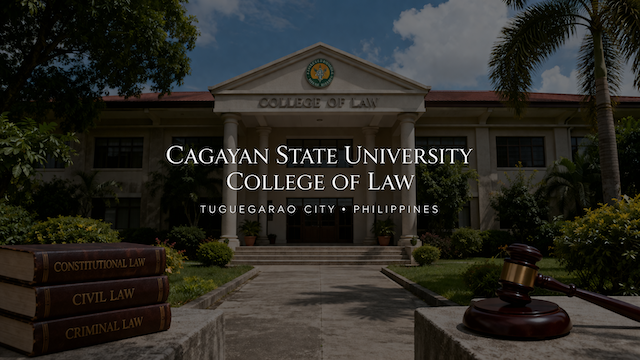
Cagayan State University (CSU) College of Law is one of the key public law schools in Northern Luzon, Philippines. Located primarily in Tuguegarao City, the university plays a vital role in providing accessible and quality legal education to students from Cagayan Valley and surrounding regions.
As a state university, CSU is committed to offering affordable tuition while maintaining academic standards aligned with the Legal Education Board (LEB). The College of Law, in particular, focuses on developing competent, ethical, and socially responsible lawyers who can contribute to both local and national legal systems.
For students who prefer studying outside Metro Manila, CSU College of Law is an attractive option due to its lower cost of living, community-oriented environment, and strong regional relevance.
History and Institutional Background
Cagayan State University was established in 1978 through Presidential Decree No. 1436, merging several state colleges in the Cagayan Valley region. Since then, CSU has grown into a multi-campus institution offering a wide range of academic programs.
The College of Law was established to address the growing demand for legal professionals in Northern Luzon. Before its existence, aspiring lawyers from the region often had to relocate to Manila or other major cities. CSU changed this by providing a local, affordable pathway to legal education.
Over the years, the College of Law has produced graduates who now serve as judges, prosecutors, public attorneys, and private practitioners across the region.
Campus and Location
The CSU College of Law is mainly based in Tuguegarao City, the capital of Cagayan province. Tuguegarao is known as the “Premier City of the North” and serves as an educational hub in the region.
Key Features of the Location:
- Accessibility: Tuguegarao is accessible by air and land, with regular flights from Manila.
- Affordable Living Costs: Rent, food, and transportation are significantly cheaper than in Metro Manila.
- Peaceful Environment: The city offers a quieter and more focused academic atmosphere.
- Regional Opportunities: Students can engage with local courts, government offices, and law firms.
The campus itself provides essential facilities such as classrooms, libraries, and study areas. While it may not have the same level of infrastructure as top-tier private universities, it offers a practical and conducive learning environment.
Academic Programs and Curriculum
The CSU College of Law offers the Juris Doctor (JD) program, which is the standard law degree in the Philippines.
Juris Doctor Program Overview:
- Duration: Typically 4 years
- Structure: Semester-based system
- Curriculum: Based on LEB-mandated subjects
Core Subjects Include:
- Constitutional Law
- Civil Law
- Criminal Law
- Remedial Law
- Commercial Law
- Legal Ethics
- Political Law
- Taxation Law
The program emphasizes both theoretical knowledge and practical application. Students are trained in legal writing, case analysis, and courtroom procedures.
Admission Requirements and Process
Admission to CSU College of Law is competitive but generally more accessible compared to top-tier law schools in Metro Manila.
Basic Requirements:
- Bachelor’s degree from a recognized institution
- Transcript of Records (TOR)
- Entrance examination
- Interview (in some cases)
Additional Notes:
- Some applicants may be required to submit recommendation letters
- English proficiency is essential, as all classes are conducted in English
CSU aims to provide opportunities to students from diverse backgrounds, including working professionals and those from rural areas.
Tuition Fees and Cost of Study
One of the biggest advantages of CSU College of Law is its affordability.
Estimated Costs:
- Tuition Fee: Significantly lower than private law schools (often subsidized)
- Miscellaneous Fees: Minimal compared to urban universities
- Living Expenses: Affordable housing and daily expenses
Students can expect to spend a fraction of what they would in Metro Manila, making CSU an excellent option for budget-conscious students.
Faculty and Teaching Approach
CSU College of Law has a mix of full-time professors and practicing legal professionals.
Teaching Characteristics:
- Practical Insights: Many instructors are judges, lawyers, or government officials
- Case-Based Learning: Emphasis on analyzing real legal cases
- Interactive Discussions: Socratic method is commonly used
- Community Focus: Legal issues relevant to the region are often highlighted
While resources may be limited compared to elite institutions, the faculty’s real-world experience adds significant value to the learning process.
Bar Exam Performance and Reputation
Bar exam performance is an important metric for evaluating law schools in the Philippines.
CSU College of Law has shown steady performance over the years, with graduates consistently passing the bar exams. While it may not rank among the top-performing law schools nationally, it maintains a respectable standing, particularly within Northern Luzon.
Key Points:
- Growing number of bar passers each year
- Strong presence in regional legal professions
- Increasing recognition among employers
Student Life and Academic Culture
Student life at CSU College of Law is characterized by discipline, resilience, and strong peer support.
What to Expect:
- Heavy Reading Load: Law school requires extensive reading and preparation
- Recitations: Regular class participation is essential
- Study Groups: Students often collaborate to understand complex topics
- Work-Life Balance Challenges: Many students juggle studies with work
Despite the challenges, the supportive environment helps students succeed.
Career Opportunities After Graduation
Graduates of CSU College of Law have diverse career paths.
Common Career Options:
- Attorney (after passing the bar exam)
- Public Attorney’s Office (PAO)
- Prosecutor’s Office
- Judiciary (clerks, judges after experience)
- Corporate Legal Counsel
- Government Agencies
Because CSU is well-established in Northern Luzon, many graduates find opportunities within the region, though some also pursue careers nationwide.
Advantages of Studying at CSU College of Law
1. Affordability
CSU offers one of the most cost-effective legal education options in the Philippines.
2. Accessibility
Ideal for students in Northern Luzon who prefer not to relocate far from home.
3. Practical Training
Faculty with real-world legal experience provide valuable insights.
4. Community Impact
Graduates often serve local communities, making a tangible difference.
Challenges and Considerations
1. Limited Facilities
Compared to top universities, CSU may have fewer advanced resources.
2. National Recognition
While respected regionally, it may not have the same prestige as top Manila schools.
3. Competitive Environment
Law school remains demanding regardless of institution.
Who Should Consider CSU College of Law?
CSU College of Law is ideal for:
- Students seeking affordable legal education
- Residents of Northern Luzon
- Working professionals looking for accessible programs
- Individuals committed to serving regional communities
It may be less suitable for those aiming for elite law firms in Metro Manila immediately after graduation, though success is still possible with strong performance.
Tips for Success at CSU College of Law
1. Develop Strong Study Habits
Consistency is key in law school.
2. Master Legal English
Understanding legal terminology is essential.
3. Participate Actively
Recitations and discussions are crucial for learning.
4. Build a Support Network
Study groups and peer support can make a big difference.
5. Stay Resilient
Law school is challenging, but persistence pays off.
Conclusion
Cagayan State University College of Law stands as a valuable institution for aspiring lawyers in Northern Luzon. With its affordable tuition, practical teaching approach, and strong regional presence, CSU provides a solid foundation for a legal career.
While it may not have the prestige of top-tier law schools in Metro Manila, it offers something equally important: accessibility, community relevance, and the opportunity to pursue law without overwhelming financial burden.
For students who are determined, disciplined, and committed to making an impact, CSU College of Law is a practical and rewarding choice.
FAQs (Frequently Asked Questions)
What is Cagayan State University College of Law known for?
Cagayan State University College of Law is known as one of the important public law schools in Northern Luzon. It gives students in Cagayan and nearby provinces a more affordable way to study law without having to move to Metro Manila. Many prospective students are interested in the school because it combines the advantages of a state university with the professional training required for future lawyers. It is especially relevant for students who want to build legal careers in regional courts, local government, prosecution, public service, or private practice in Northern Philippines.
Where is Cagayan State University College of Law located?
The College of Law is associated with Cagayan State University in Tuguegarao City, which is a major academic and administrative center in the Cagayan Valley region. Tuguegarao is an accessible city compared with many other provincial locations because it can be reached by land travel and domestic flights. For law students, the location matters because it offers access to courts, government offices, legal institutions, and a relatively lower cost of living. This makes it attractive for students who want a more focused and less expensive law school experience.
What degree does Cagayan State University College of Law offer?
Like most law schools in the Philippines today, the college offers the Juris Doctor program. This is the standard professional law degree for students who want to qualify for the Philippine Bar Examinations after graduation. The program generally takes four years to complete, although the exact pace may vary depending on the student’s academic load and institutional policies. The Juris Doctor curriculum usually includes foundational and advanced legal subjects such as constitutional law, civil law, criminal law, labor law, taxation, commercial law, remedial law, legal ethics, and legal writing.
Is Cagayan State University College of Law a good option for aspiring lawyers?
It can be a very good option for students who prioritize affordability, accessibility, and regional relevance. Not every future lawyer needs to study in an elite private law school in Manila. Many students succeed by choosing a law school that matches their financial capacity, lifestyle, and long-term career goals. If a student wants to practice in Northern Luzon, work in government, or stay closer to family while studying, Cagayan State University College of Law may be a practical and realistic choice. What matters most in law school is not only the name of the institution, but also the student’s discipline, reading habits, class performance, and bar exam preparation.
How much is the tuition at Cagayan State University College of Law?
One of the biggest reasons students consider this school is the lower cost compared with many private law schools. Since it is part of a state university system, tuition and school fees are generally more affordable. However, the exact amount may change depending on university rules, miscellaneous fees, and updates in public education policies. Students should always verify the latest fees directly with the university before applying. Even so, in general terms, the total cost of studying law at a public institution like CSU is usually much more manageable than studying in a major private university in Metro Manila.
What are the admission requirements for Cagayan State University College of Law?
Applicants usually need a completed bachelor’s degree from a recognized college or university. They are also commonly required to submit academic records such as a transcript of records, identification documents, and other standard admission forms. Many law schools also require an entrance examination and may conduct an interview to assess the applicant’s readiness for legal education. Because policies can change, students should check the latest requirements directly with the admissions office. It is also helpful to prepare early, especially if the applicant needs to request school documents or take an entrance test within a limited application period.
Is the study of law at CSU difficult?
Yes, like any serious law school in the Philippines, the program is academically demanding. Students should expect heavy reading assignments, case analysis, class recitations, quizzes, and major examinations. Law school is challenging not because of memorization alone, but because students must learn how to interpret laws, understand legal principles, apply cases, and argue logically. Even in an affordable public university setting, the expectations remain high. A student who enters law school should be ready for long study hours, regular preparation, and a disciplined routine. Success usually depends on consistency more than raw intelligence.
Can working students enroll in Cagayan State University College of Law?
Many prospective law students ask this because a large number of law students in the Philippines balance work and study. In many regional law schools, including public institutions, there are often students who are already employed in government offices, private companies, education, or local businesses. Whether the schedule is ideal for working students depends on how classes are arranged in a given academic year. Students who plan to work while studying should ask about class schedules, attendance expectations, and academic load options. Even when a school is open to working students, time management remains extremely important because law school requires sustained preparation.
What career opportunities are available after graduating from CSU College of Law?
Graduates who complete the Juris Doctor program and later pass the bar exam can pursue a wide range of legal careers. They may enter private practice, work in government agencies, join the Public Attorney’s Office, apply to the prosecution service, or work in compliance, human resources, contracts, and legal research roles. Some may also begin in court-related positions or become involved in public policy and community service. For students in Northern Luzon, the school’s regional presence may also help build professional networks in local institutions. Over time, graduates may develop careers in litigation, public service, corporate work, or the judiciary.
How can a student succeed at Cagayan State University College of Law?
The best way to succeed is to enter law school with realistic expectations and strong discipline. Students should build a weekly reading schedule, review cases consistently, and avoid last-minute cramming. It is also important to improve legal writing, class participation, and time management. Joining study groups can help, but independent reading remains essential. Students should also protect their health, because law school is mentally and physically demanding over several years. Most importantly, they should remember why they started. A clear purpose, whether it is public service, family advancement, or personal ambition, often helps students stay committed through the difficult parts of legal education.

How to Register for eTravel Philippines (2025 Guide)
Step-by-step guide to completing your eTravel registration before arriving in the Philippines, with images and tips.

Night Market in Cebu – Things You Don’t Know About Cebu Life
Discover the hidden charm of Cebu’s night markets, from street food stalls to local life tips you won’t find in tourist guides.

How to Use ChatGPT for IELTS Preparation: A Complete Guide
Learn how to prepare for IELTS using ChatGPT — including strategies for Writing, Reading, Listening, Speaking, and grammar support.

How to Build a Website Without Coding Using ChatGPT
Discover how to build your own website using AI—no coding skills needed. From structure planning to SEO and design, let ChatGPT guide you.