2026年1月9日
3D ACADEMY offers affordable English study programs in Cebu, Philippines – perfect for beginners, professionals, and exam takers.

3D UNIVERSAL ENGLISH INSTITUTE INC
info.3d-universal.com
8:00-17:00(Mon-Fri)
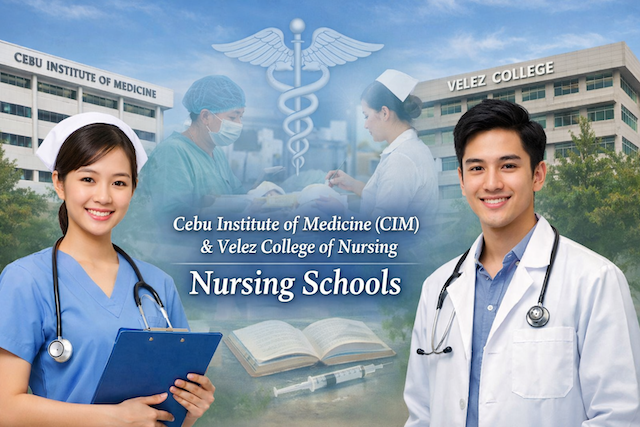
Cebu Institute of Medicine (CIM) and Velez College of Nursing: Nursing Schools
Contents
- Cebu Institute of Medicine (CIM) and Velez College of Nursing: Nursing Schools
- Why compare CIM and Velez for a “nursing school” search?
- Quick profile: what each school is known for
- Program focus and curriculum differences
- Clinical exposure and hospital affiliations: what to look for
- Admissions expectations and student profile
- Learning environment, culture, and day-to-day student life
- Costs, ROI, and practical career outcomes
- Licensing and board exam preparation
- “Which one should I choose?” practical decision guide
- How to evaluate both schools like a pro
- Final takeaway
- FAQs (Frequently Asked Questions)
- Is Cebu Institute of Medicine (CIM) a nursing school?
- Is Velez College a good choice for studying nursing in Cebu?
- What is the biggest difference between CIM and Velez College of Nursing?
- Can I become a nurse and later study medicine at CIM?
- What should I ask about clinical training and hospital exposure?
- How do I compare the learning environment at CIM versus Velez?
- What are the typical admission requirements for nursing programs in Cebu?
- Is it better to choose nursing or medicine if I want to work abroad?
- How can I decide if Velez College of Nursing is the right fit for me?
Cebu Institute of Medicine (CIM) and Velez College of Nursing: Nursing Schools
Why compare CIM and Velez for a “nursing school” search?
If you’re researching nursing schools in セブ島, you’ll often see Velez College of Nursing listed alongside other health-science institutions. You may also come across Cebu Institute of Medicine (CIM) because it’s one of the most recognized medical schools in the region and frequently appears in “health education” searches.
However, it’s important to clarify the focus of each institution:
-
CIM is primarily a medical school (medicine-centric education and training). It’s most relevant if your end goal is becoming a physician or if you’re thinking long-term about advancing beyond nursing into medicine.
-
Velez College of Nursing is directly aligned with nursing education, preparing students for nursing licensure and clinical practice.
So this guide compares them in a practical way: Velez as a direct nursing pathway, and CIM as a medicine-focused institution that often enters the same search funnel, especially for students aiming for broader healthcare careers.
Quick profile: what each school is known for
Cebu Institute of Medicine (CIM)
CIM is best understood as a medicine-first institution. It tends to attract students who are committed to becoming doctors and want rigorous academic and clinical preparation. Even if you’re searching for nursing schools, CIM may appear in your research because it’s part of the wider healthcare training ecosystem in セブ島 and because some students compare “nursing vs medicine” pathways at the same time.
Best fit if you are:
-
Set on becoming a physician
-
Interested in research-heavy or academically intense medical training
-
Comparing long-term healthcare career tracks (nursing now vs medicine later)
Velez College of Nursing
Velez is a more direct match for students who want a Bachelor of Science in Nursing (BSN) route and structured clinical exposure. When students say “I want to study nursing in セブ島,” Velez is typically closer to what they mean: a program designed for nursing competencies, clinical placements, and licensure preparation.
Best fit if you are:
-
Focused on becoming a registered nurse
-
Want early and consistent clinical training
-
Looking for nursing-centered faculty, facilities, and peer environment
Program focus and curriculum differences
Nursing-centered learning at Velez
A strong nursing program usually emphasizes:
-
Foundational sciences (anatomy, physiology, microbiology)
-
Nursing theory and evidence-based practice
-
Patient-centered communication
-
Health assessment skills
-
Pharmacology relevant to nursing practice
-
Rotations in medical-surgical, maternal-child, pediatrics, community health, psychiatric nursing, and leadership/management
In a nursing-centered environment, most coursework and skills labs are designed around the nurse’s role: assessment, planning, implementation, evaluation, documentation, patient education, team coordination, and safety.
At Velez College of Nursing, you should expect your academic journey to be organized around nursing outcomes—especially competencies that translate directly to clinical work and board exam readiness.
Medicine-centered training at CIM
Medicine education typically goes deeper into:
-
Disease mechanisms and diagnosis
-
Clinical reasoning and differential diagnosis
-
Advanced pathology and pharmacology for physician decision-making
-
Intensive rotations with physician-level responsibilities under supervision
This is not “better” or “worse,” it’s simply a different professional track. CIM is likely to have a curriculum structure aimed at producing doctors. If your goal is nursing, this is a major distinction: nursing is not a “lighter version of medicine.” It’s a distinct profession with its own competencies, patient advocacy role, and practice scope.
Clinical exposure and hospital affiliations: what to look for
Clinical training is the heart of nursing education. When evaluating Velez (or any nursing program), ask how they ensure:
-
Variety of clinical settings: hospital wards, community clinics, maternal-child settings, emergency exposure, mental health settings
-
Quality and structure: clear learning objectives per rotation, supervised practice, feedback loops
-
Student-to-instructor ratio: how many students per clinical instructor per shift
-
Skills lab integration: whether skills are taught, practiced in simulation, then evaluated before real patient care
-
Clinical hours planning: consistent scheduling that supports learning, not just “attendance”
For CIM, clinical training exists too, but with a physician-track orientation. If you’re comparing the two while still deciding your path, pay attention to what kinds of responsibilities students are trained for during clinical exposure.
Admissions expectations and student profile
Velez College of Nursing: typical admissions considerations
While exact requirements vary by year and intake policies, nursing admissions commonly evaluate:
-
Academic background (especially science and English)
-
Entrance exams and/or interviews
-
Health clearance and immunizations
-
Documentation for clinical placements (medical records, background checks depending on policy)
A good nursing program also screens for non-academic readiness:
-
Communication skills
-
Professionalism
-
Stress tolerance and time management
-
Empathy and patient-centered mindset
CIM: admissions often geared toward medicine applicants
Medical schools typically require:
-
A pre-med background or relevant bachelor’s degree
-
Entrance tests and interviews
-
Strong academic performance and readiness for intensive study
If you are currently a nursing-track student but considering CIM later, your question becomes: “What’s the pathway from nursing to medicine?” That’s a legitimate plan for some students, but it’s not automatic. It requires careful academic planning, financial readiness, and clarity about why you want to change tracks.
Learning environment, culture, and day-to-day student life
What to observe during a campus visit (or virtual inquiry)
Regardless of school, try to learn:
-
Teaching style: lecture-heavy vs skills/simulation vs problem-based learning
-
Support systems: tutoring, remediation policies, counseling, mentorship
-
Clinical readiness culture: are students coached to be safe and professional, or thrown into rotations unprepared?
-
Facilities: nursing skills lab (for Velez), simulation mannequins, library resources, study spaces
-
Scheduling realism: clinical rotations can start early and include long days; ask how students manage
Nursing cohort experience at Velez
In a dedicated nursing program, your peers are mostly nursing students. That matters because:
-
Group study naturally aligns with board topics and clinical skills
-
Peer support becomes a major success factor during rotations
-
Student organizations and activities often reinforce nursing leadership and community health work
Medicine cohort experience at CIM
A medicine-centric environment can be highly competitive and academically demanding. If you thrive on intense study and clinical reasoning challenges, it can be energizing. But if your goal is nursing, you may find the environment is simply oriented toward a different professional identity and skill set.
Costs, ROI, and practical career outcomes
Costs change over time, but you can still compare intelligently by looking at:
-
Total program length: nursing (typically a bachelor’s degree timeline) vs medicine (longer training timeline)
-
Hidden costs: uniforms, clinical supplies, transport to hospitals, review materials, exam fees
-
Opportunity cost: years spent studying instead of earning
-
Post-graduation timeline: how quickly you can enter the workforce after licensure
Nursing ROI (Velez)
Nursing can offer:
-
Faster entry to paid clinical work after graduation and licensure
-
Mobility across specialties (ICU, OR, ER, community health, etc.)
-
Potential international pathways (depending on licensing and credential evaluation requirements of the target country)
Medicine ROI (CIM)
Medicine typically requires:
-
Longer training and higher overall investment
-
Higher long-term earning potential in many contexts
-
A multi-stage pathway (school → internship/clinical training → residency, depending on the system)
If you are choosing between these two tracks, define your priority: speed to employment, scope of practice, long-term specialization, financial runway, and life timeline.
Licensing and board exam preparation
For nursing students, the key is whether the program builds:
-
Strong fundamentals from Year 1
-
Repetition and testing culture (quizzes, practical exams, OSCE-style assessments)
-
Clinical reasoning for nurses (prioritization, safety, patient education)
-
Structured review support near graduation
Ask Velez specifically about:
-
How they monitor board readiness
-
What remediation looks like if you struggle in a major subject
-
How clinical performance is evaluated and coached
For CIM, board exam preparation is a different category (medical licensure pathway). It’s relevant only if your goal is medicine.
“Which one should I choose?” practical decision guide
Choose Velez College of Nursing if:
-
You are confident you want a nursing career
-
You want a program whose entire structure is built around nursing competencies
-
You value a nursing cohort community and nursing-specific clinical training
Consider CIM if:
-
Your true goal is to become a physician
-
You’re comparing healthcare career paths and want a medicine-focused institution
-
You are prepared for the length, cost, and intensity of medical training
If you’re unsure between nursing and medicine
Use these questions to decide:
-
Do you want to diagnose and prescribe, or do you want to deliver continuous patient care, education, advocacy, and coordination within the nursing scope?
-
Are you prepared for many additional years of training before full earning power (medicine)?
-
Do you enjoy hands-on bedside care and patient coaching (often a strong nursing indicator) or are you primarily motivated by diagnostic problem-solving and medical decision-making (often a medicine indicator)?
-
What timeline do you need for work, family, financial independence, or migration plans?
A lot of students make better decisions when they stop asking “which is more prestigious?” and start asking “which daily job do I actually want to do for years?”
How to evaluate both schools like a pro
Before committing, gather concrete evidence:
-
Request the program outline and course descriptions
-
Ask where clinical rotations typically happen and how supervision works
-
Ask about pass/fail policies and academic support
-
Talk to current students or recent graduates if possible
-
Compare estimated total costs (tuition + clinical expenses + living costs)
-
If you have an international plan, ask how graduates handle credential evaluation and what support exists for documentation
Final takeaway
If your search is strictly “nursing school in セブ島,” Velez College of Nursing is the more direct match because it is structured specifically to produce competent nurses ready for licensure and clinical work.
Cebu Institute of Medicine (CIM) appears in the same research orbit because it’s a major healthcare education institution in the region, but it is primarily relevant when your goal is medicine or you’re still deciding between nursing and a physician pathway.
If you tell me your target (local hospital work in the Philippines, overseas nursing pathway, or long-term plan toward medicine), I can also recommend a decision checklist tailored to your timeline and constraints.
FAQs (Frequently Asked Questions)
Is Cebu Institute of Medicine (CIM) a nursing school?
Cebu Institute of Medicine (CIM) is primarily known as a medical school focused on training future physicians. While it is part of the broader health education ecosystem in Cebu, it is not typically categorized as a nursing school in the same way institutions with a dedicated Bachelor of Science in Nursing (BSN) program are. If your goal is to become a registered nurse, you should confirm whether CIM offers a full nursing degree program or if its offerings are mainly medicine-related. Many students encounter CIM in “healthcare schools” searches and then compare it with nursing colleges, but the academic track, licensing pathway, and clinical training outcomes may be very different.
Is Velez College a good choice for studying nursing in Cebu?
Velez College is widely recognized in Cebu for health sciences and is commonly searched for its nursing education. A “good choice” depends on your priorities: clinical exposure, teaching style, student support, costs, and alignment with your long-term career plan. When evaluating Velez College of Nursing, ask about the structure of clinical rotations, the availability of skills labs and simulation training, and how the program supports students academically. It also helps to look for clear outcomes such as completion rates, student feedback, and preparation systems for nursing licensure exams.
What is the biggest difference between CIM and Velez College of Nursing?
The biggest difference is the professional outcome each institution is designed to support. CIM is medicine-focused and generally aligns with the pathway toward becoming a doctor, which involves longer training and a different licensure process. Velez College of Nursing is nursing-focused and typically aligns with the BSN-to-licensure route for becoming a registered nurse. Nursing and medicine are distinct professions with different scopes of practice, responsibilities, and day-to-day work. Choosing between them is less about ranking and more about matching the institution to your intended career path.
Can I become a nurse and later study medicine at CIM?
Some students begin in nursing and later pursue medicine, but it requires careful planning. Nursing is not automatically a “direct pipeline” into medical school, because medicine programs often have specific admission requirements such as prerequisite courses, entrance exams, and interviews. If your long-term plan includes medical school after nursing, you should map out the timeline, cost, and academic requirements early. Also consider your motivation: do you want nursing as a long-term career, or is it primarily a stepping stone? Being honest about your goal helps you choose the right first program.
What should I ask about clinical training and hospital exposure?
Clinical training is a critical factor for nursing students. Ask where clinical rotations typically occur, how early clinical exposure begins, and how students are supervised in hospital settings. Useful questions include: How many students are assigned per clinical instructor? How are skills assessed before you perform procedures on real patients? What departments are included (medical-surgical, maternal-child, pediatrics, community health, psychiatric nursing, leadership/management)? Also ask how the school handles clinical schedule changes and whether there is a structured feedback system for student performance.
How do I compare the learning environment at CIM versus Velez?
CIM’s learning environment is usually framed around medicine-level clinical reasoning, diagnosis-oriented study, and long-term physician training. Velez College of Nursing is typically framed around nursing competencies such as patient assessment, nursing care planning, patient education, safety practices, documentation, and bedside communication. To compare them, focus on the daily student experience: course load, exam frequency, access to learning support, availability of faculty consultation, and how practical skills are integrated into coursework. If possible, attend an orientation, request program details, or talk to current students to understand culture and expectations.
What are the typical admission requirements for nursing programs in Cebu?
Admission requirements can vary by institution and year, but nursing programs commonly consider academic records, entrance exams or screening processes, interviews, and health clearance requirements needed for clinical placements. Some schools require documentation related to immunizations and medical fitness, especially because students will be exposed to clinical environments. If you are an international applicant, you may need additional documents such as passport identification, transcripts with authentication, and proof of English proficiency depending on the school’s policy. Always verify the most current requirements directly with the admissions office.
Is it better to choose nursing or medicine if I want to work abroad?
Both nursing and medicine can lead to international careers, but the pathways are different. Nursing may offer a faster route to employment after graduation and licensure, while medicine typically requires a longer training timeline and additional steps such as internships, residencies, and country-specific licensure exams. If your goal is to work abroad, you should research the target country’s requirements for licensure, credential evaluation, and language exams. For nursing, documentation of clinical hours and course content can matter. For medicine, the process can be longer and more complex. Your timeline, budget, and preferred scope of work should guide the choice.
How can I decide if Velez College of Nursing is the right fit for me?
Start with your personal priorities: hands-on clinical experience, a supportive learning environment, manageable costs, and a clear pathway to licensure. Request a program outline and ask how the school supports students who struggle academically. Look into skills lab resources, simulation training, and the quality of clinical supervision. Also consider practical factors like commute, scheduling, and the intensity of rotations. If you can, speak with recent graduates about what they found most challenging and what helped them succeed. A good fit is one where you can realistically thrive for several years and graduate prepared for real clinical work.

How to Register for eTravel Philippines (2025 Guide)
Step-by-step guide to completing your eTravel registration before arriving in the Philippines, with images and tips.

Night Market in Cebu – Things You Don’t Know About Cebu Life
Discover the hidden charm of Cebu’s night markets, from street food stalls to local life tips you won’t find in tourist guides.

How to Use ChatGPT for IELTS Preparation: A Complete Guide
Learn how to prepare for IELTS using ChatGPT — including strategies for Writing, Reading, Listening, Speaking, and grammar support.

How to Build a Website Without Coding Using ChatGPT
Discover how to build your own website using AI—no coding skills needed. From structure planning to SEO and design, let ChatGPT guide you.