2026年1月9日
3D ACADEMY offers affordable English study programs in Cebu, Philippines – perfect for beginners, professionals, and exam takers.

3D UNIVERSAL ENGLISH INSTITUTE INC
info.3d-universal.com
8:00-17:00(Mon-Fri)
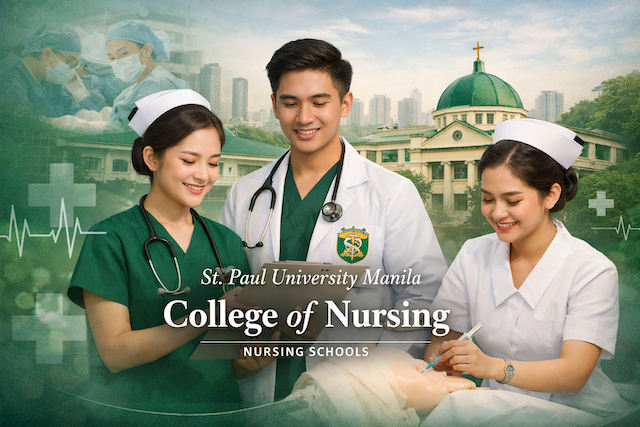
St. Paul University Manila – College of Nursing: Nursing Schools
Contents
- St. Paul University Manila – College of Nursing: Nursing Schools
- Overview of St. Paul University Manila
- College of Nursing at St. Paul University Manila
- Academic Programs Offered
- Curriculum Structure and Learning Approach
- Affiliated Hospitals and Clinical Training Sites
- Faculty and Academic Excellence
- Facilities and Learning Resources
- Values-Based and Holistic Education
- Research and Community Engagement
- Licensure Examination Performance
- Career Opportunities for Graduates
- International Exposure and Global Outlook
- Student Life and Support Services
- Admission Requirements and Selectivity
- Why Choose St. Paul University Manila for Nursing
- Conclusion
- FAQs (Frequently Asked Questions)
- Is St. Paul University Manila a good school for nursing?
- What degree do I need to become a nurse through SPU Manila?
- How long is the BSN program at St. Paul University Manila?
- What kinds of clinical training can nursing students expect?
- Does SPU Manila emphasize a values-based approach in nursing?
- How does SPU Manila help students prepare for the PNLE?
- What are the usual admission requirements for nursing applicants?
- What skills should I develop before starting nursing school?
- Can graduates work internationally after studying at SPU Manila?
- What is student life like for nursing students in Manila?
- How do I know if SPU Manila is the right nursing school for me?
St. Paul University Manila – College of Nursing: Nursing Schools
Overview of St. Paul University Manila
St. Paul University Manila (SPU Manila) is one of the most established private Catholic universities in the Philippines, known for its strong emphasis on health sciences, education, and values-based learning. Founded in 1912 by the Sisters of St. Paul of Chartres, the university has more than a century of experience in shaping professionals who combine academic excellence with ethical responsibility and compassionate service.
Located in Malate, Manila, SPU Manila benefits from proximity to major hospitals, medical centers, and government institutions. This strategic location makes it an ideal environment for nursing education, where clinical exposure and real-world healthcare experience are essential. Over the decades, the university has built a solid reputation for producing competent and globally competitive nursing graduates.
College of Nursing at St. Paul University Manila
The College of Nursing at St. Paul University Manila is one of the flagship academic units of the university. It was established to address the growing need for highly trained nurses in both local and international healthcare settings. The program integrates scientific knowledge, clinical skills, research competence, and Paulinian values into a comprehensive nursing education.
SPU Manila’s nursing program emphasizes holistic care, focusing not only on physical health but also on psychological, social, cultural, and spiritual dimensions of patient care. This approach aligns with the university’s mission of forming professionals who serve with compassion, integrity, and social responsibility.
Academic Programs Offered
Bachelor of Science in Nursing (BSN)
The Bachelor of Science in Nursing (BSN) is the primary program offered by the College of Nursing. It is a four-year degree program designed to prepare students for professional nursing practice and licensure.
The curriculum follows the standards set by the Commission on Higher Education (CHED) and incorporates both theoretical instruction and extensive clinical training. Students are trained to provide safe, evidence-based, and patient-centered care across different healthcare settings.
Program Objectives
The BSN program aims to:
-
Develop competent and compassionate professional nurses
-
Equip students with strong clinical and decision-making skills
-
Foster ethical practice and leadership in healthcare
-
Prepare graduates for national licensure and international practice
-
Encourage lifelong learning and research engagement
Curriculum Structure and Learning Approach
Foundation and General Education
During the first year, students complete general education courses such as communication, ethics, psychology, and basic sciences. These subjects build critical thinking, communication skills, and an understanding of human behavior—essential foundations for nursing practice.
Core Nursing Courses
From the second year onward, students take core nursing subjects, including:
-
Fundamentals of Nursing
-
Health Assessment
-
Community Health Nursing
-
Maternal and Child Nursing
-
Medical-Surgical Nursing
-
Psychiatric and Mental Health Nursing
-
Gerontological Nursing
-
Nursing Research and Evidence-Based Practice
These courses are designed to progressively develop students’ competencies, moving from basic nursing skills to complex clinical decision-making.
Clinical Practicum and Internship
Clinical exposure is a major strength of SPU Manila’s nursing program. Students undergo extensive hands-on training in affiliated hospitals, community health centers, and specialized healthcare institutions.
Clinical rotations allow students to:
-
Apply classroom knowledge to real patient care
-
Develop technical skills and professional confidence
-
Work with multidisciplinary healthcare teams
-
Understand diverse patient populations and healthcare systems
Affiliated Hospitals and Clinical Training Sites
St. Paul University Manila maintains partnerships with reputable hospitals and healthcare institutions in Metro Manila and nearby regions. These affiliations provide students with access to a wide range of clinical experiences, including tertiary hospitals, specialty clinics, and community-based healthcare facilities.
Exposure to different healthcare environments helps students adapt to various nursing roles, from bedside care to public health nursing and leadership positions.
Faculty and Academic Excellence
The College of Nursing is staffed by highly qualified faculty members who hold advanced degrees in nursing and related fields. Many instructors are licensed nurses with extensive clinical experience, research backgrounds, and professional affiliations.
Faculty members at SPU Manila emphasize:
-
Student-centered learning
-
Clinical competence and patient safety
-
Ethical nursing practice
-
Research literacy and critical inquiry
Small class sizes allow for closer mentorship, personalized feedback, and effective skills development.
Facilities and Learning Resources
Nursing Skills Laboratories
SPU Manila is equipped with modern nursing skills laboratories that simulate real clinical settings. These labs include hospital beds, mannequins, medical equipment, and simulation tools that allow students to practice procedures in a controlled and supportive environment.
Simulation-based learning helps students build confidence and competence before entering actual clinical settings.
Library and Digital Resources
The university library offers extensive nursing and medical collections, including textbooks, journals, research databases, and online learning platforms. Students have access to both physical and digital resources to support coursework, research, and self-directed learning.
Values-Based and Holistic Education
One of the distinguishing features of St. Paul University Manila is its commitment to values-based education. The College of Nursing integrates Paulinian values such as compassion, respect for human dignity, service, and social responsibility into all aspects of training.
Students are encouraged to:
-
Practice ethical and culturally sensitive care
-
Engage in community outreach and health missions
-
Reflect on the moral and social dimensions of healthcare
This holistic approach prepares graduates to become not only skilled nurses but also empathetic caregivers and responsible global citizens.
Research and Community Engagement
Nursing Research
Research is an integral part of the nursing curriculum at SPU Manila. Students are trained in research methods, data analysis, and evidence-based practice. They are encouraged to participate in research projects that address real healthcare challenges.
Research activities help students develop critical thinking skills and contribute to the advancement of nursing knowledge and practice.
Community Health Programs
Community engagement is a core component of the nursing program. Students participate in health education campaigns, medical missions, and community-based health initiatives, particularly in underserved areas.
These activities reinforce the university’s mission of service and social responsibility while providing students with practical experience in public health nursing.
Licensure Examination Performance
Graduates of St. Paul University Manila’s College of Nursing are well-prepared for the Philippine Nurse Licensure Examination (PNLE). The university implements comprehensive review programs, mock examinations, and academic support systems to help students succeed.
Consistent board examination performance has contributed to the strong reputation of SPU Manila as a reliable nursing school in the Philippines.
Career Opportunities for Graduates
Graduates of the BSN program at SPU Manila have diverse career pathways available to them. These include:
-
Hospital and clinical nursing
-
Community and public health nursing
-
School and occupational health nursing
-
Research and academic roles
-
Healthcare administration
-
International nursing practice
Many alumni have pursued successful nursing careers abroad, particularly in countries such as the United States, Canada, the Middle East, and parts of Europe.
International Exposure and Global Outlook
St. Paul University Manila promotes a global perspective in nursing education. The curriculum aligns with international standards, and the university actively supports global partnerships, exchange programs, and international exposure opportunities.
This global outlook enhances graduates’ adaptability and competitiveness in international healthcare environments.
Student Life and Support Services
Student Organizations
Nursing students at SPU Manila can join academic and professional organizations that support leadership development, peer learning, and community service. These organizations provide opportunities for networking, skills enhancement, and personal growth.
Academic and Personal Support
The university offers academic advising, counseling services, spiritual formation programs, and career guidance to support students throughout their academic journey. These services ensure that students receive holistic support for both academic success and personal well-being.
Admission Requirements and Selectivity
Admission to the College of Nursing at St. Paul University Manila is competitive. Applicants are typically required to meet academic standards, pass entrance examinations, and undergo interviews or assessments.
The selective admissions process ensures that students admitted to the program are well-prepared for the academic rigor and professional demands of nursing education.
Why Choose St. Paul University Manila for Nursing
St. Paul University Manila stands out as a nursing school for several reasons:
-
Over a century of educational excellence
-
Strong emphasis on values-based and holistic care
-
Comprehensive clinical training and hospital affiliations
-
Experienced and dedicated faculty
-
Solid licensure examination preparation
-
Global outlook and international career opportunities
For students seeking a nursing education that balances academic rigor, clinical competence, and ethical formation, SPU Manila offers a well-rounded and respected program.
Conclusion
St. Paul University Manila’s College of Nursing is a trusted institution for aspiring nurses in the Philippines. With its strong academic foundation, extensive clinical training, commitment to values-based education, and global perspective, the university prepares graduates to meet the evolving demands of healthcare both locally and internationally.
For students who aim to become compassionate, competent, and globally competitive nursing professionals, St. Paul University Manila remains a strong and reputable choice among nursing schools in the Philippines.
FAQs (Frequently Asked Questions)
Is St. Paul University Manila a good school for nursing?
St. Paul University Manila is widely considered a solid choice for nursing education because it combines professional training with a values-based approach. Students typically benefit from structured coursework, supervised clinical practice, and an environment that emphasizes compassion and ethical care. As with any nursing school, “good” also depends on your learning style, preferred location, budget, and long-term goals. If you value a Catholic university setting with a holistic view of patient care, SPU Manila can be a strong fit. It is still important to compare the program with other nursing schools in Metro Manila by reviewing clinical exposure, student support, facilities, and outcomes such as licensure exam preparation.
What degree do I need to become a nurse through SPU Manila?
The standard pathway is the Bachelor of Science in Nursing (BSN), which is the primary undergraduate degree that prepares students for entry-level professional nursing practice. After completing the BSN, graduates typically pursue licensure by taking the Philippine Nurse Licensure Examination (PNLE). If your goal is to work abroad later, the BSN is also the common academic foundation used for credential evaluation in many countries. Some graduates pursue postgraduate study after gaining experience, but the BSN is the essential first step for becoming a registered nurse in the Philippines.
How long is the BSN program at St. Paul University Manila?
The BSN program in the Philippines is commonly structured as a four-year degree, combining classroom instruction, skills laboratory training, and clinical rotations. The timeline can vary slightly depending on curriculum design, academic policies, and whether a student has credited courses from previous study. Expect the later years to be heavier in clinical requirements and major nursing subjects. Planning your schedule, sleep, and study routine early is helpful because nursing programs become more demanding as clinical duties increase.
What kinds of clinical training can nursing students expect?
Nursing students generally complete supervised clinical placements in hospitals and community settings. Clinical training usually includes exposure to medical-surgical nursing, maternal and child health, mental health nursing, community health, and other essential areas. Students practice skills such as patient assessment, medication safety, communication, charting basics, and care planning under the guidance of clinical instructors. The goal is to bridge theory and real patient care while learning professionalism, teamwork, and safety protocols. Exact rotation sites and schedules can change, so students should confirm current clinical partners and requirements directly with the program.
Does SPU Manila emphasize a values-based approach in nursing?
Yes. As a Catholic university with Paulinian tradition, SPU Manila is known for integrating values such as compassion, respect for human dignity, and service into education. In a nursing context, this often translates into holistic care, cultural sensitivity, ethical decision-making, and strong patient advocacy. Values-based training can be especially meaningful in stressful clinical environments because it helps students develop resilience, empathy, and professionalism. Even if you are not Catholic, you may still benefit from a learning environment that encourages ethical reflection and service-oriented leadership.
How does SPU Manila help students prepare for the PNLE?
Most nursing schools support PNLE preparation through structured academic progression, review activities, and practice examinations. Students can also strengthen PNLE readiness by building strong fundamentals early, consistently reviewing core concepts, and actively learning during clinical exposure. A helpful strategy is to maintain organized notes by subject area (for example, maternal nursing, medical-surgical, and community health) and regularly practice test questions. If you are choosing a school based on board exam preparation, ask about review formats, academic coaching, remediation support, and how the program monitors student progress.
What are the usual admission requirements for nursing applicants?
Admission requirements can vary by year, but applicants typically submit academic records, complete an entrance examination or assessment, and follow the university’s application procedures. Some programs also require interviews or additional screening because nursing is a high-demand and high-responsibility course. Competitive programs often prioritize strong performance in science subjects and English, as these are important for nursing study and clinical communication. For the most accurate requirements and deadlines, applicants should check SPU Manila’s official admissions guidance for the current intake.
What skills should I develop before starting nursing school?
Before entering nursing school, it helps to build strong study habits, basic science understanding, and communication skills. Nursing requires memorization and application, so active learning methods—such as spaced repetition, practice questions, and concept mapping—can be very effective. Communication matters because students must explain procedures, collect patient history, and work with healthcare teams. Time management is also essential due to heavy reading loads, lab requirements, and clinical schedules. Emotional resilience is another key skill, since clinical exposure can be physically and mentally demanding.
Can graduates work internationally after studying at SPU Manila?
Many nursing graduates from the Philippines pursue careers abroad, but working internationally depends on the destination country’s licensing, credential evaluation, and language requirements. Some countries require additional exams, supervised practice hours, or bridging programs. Students aiming for international work should plan early by maintaining strong academic performance, developing clinical competence, and gaining experience after graduation. It is also wise to keep records of course descriptions and clinical hours, since these may be requested for credential evaluation. Always verify the most current requirements with the relevant nursing regulatory body in the country where you want to work.
What is student life like for nursing students in Manila?
Nursing student life in Manila is typically busy and structured, balancing lectures, lab practice, clinical rotations, and group projects. Many students form strong peer support networks because teamwork is important for surviving intense semesters. Living in a major city can also mean easier access to transport, hospitals, and part-time opportunities, but it may come with higher living costs and longer commutes. Students often benefit from planning housing and transportation carefully, especially during clinical periods when schedules can start early and end late.
How do I know if SPU Manila is the right nursing school for me?
The best way is to match the school’s strengths to your goals. If you want values-based training, structured clinical exposure, and a Manila location with access to major healthcare institutions, SPU Manila may be a good match. To decide confidently, ask about current clinical partners, typical weekly schedules, student support services, tuition and fees, lab facilities, and how the program handles academic remediation. If possible, speak with current students or alumni to understand the workload, teaching style, and the overall learning environment.

How to Register for eTravel Philippines (2025 Guide)
Step-by-step guide to completing your eTravel registration before arriving in the Philippines, with images and tips.

Night Market in Cebu – Things You Don’t Know About Cebu Life
Discover the hidden charm of Cebu’s night markets, from street food stalls to local life tips you won’t find in tourist guides.

How to Use ChatGPT for IELTS Preparation: A Complete Guide
Learn how to prepare for IELTS using ChatGPT — including strategies for Writing, Reading, Listening, Speaking, and grammar support.

How to Build a Website Without Coding Using ChatGPT
Discover how to build your own website using AI—no coding skills needed. From structure planning to SEO and design, let ChatGPT guide you.