2026年1月9日
3D ACADEMY offers affordable English study programs in Cebu, Philippines – perfect for beginners, professionals, and exam takers.

3D UNIVERSAL ENGLISH INSTITUTE INC
info.3d-universal.com
8:00-17:00(Mon-Fri)
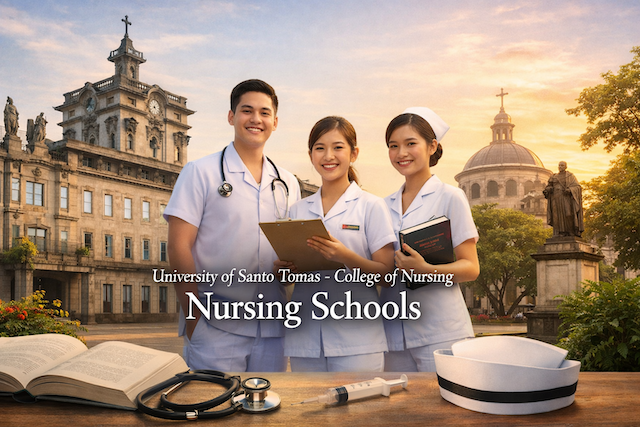
University of Santo Tomas (UST) – College of Nursing: Nursing Schools
Contents
- University of Santo Tomas (UST) – College of Nursing: Nursing Schools
- Overview of the University of Santo Tomas (UST)
- History and Background of the UST College of Nursing
- Academic Programs Offered
- Curriculum Structure and Teaching Approach
- Clinical Facilities and Learning Resources
- Faculty and Academic Leadership
- Admission Requirements and Selection Process
- Licensure Examination Performance
- Career Opportunities for Graduates
- Student Life and Campus Experience
- Values, Ethics, and Professional Formation
- Why Choose UST College of Nursing?
- Conclusion
- FAQs (Frequently Asked Questions)
- Is the UST College of Nursing considered one of the top nursing schools in the Philippines?
- What degree does UST College of Nursing offer?
- How long is the BSN program at UST?
- Is admission to the UST College of Nursing competitive?
- What are the common requirements for applying to the UST College of Nursing?
- Do nursing students at UST get hospital training?
- Does UST use simulation labs for nursing skills practice?
- How does UST College of Nursing prepare students for the PNLE?
- Can UST nursing graduates work abroad after graduation?
- What career paths are available for BSN graduates from UST?
- What kind of student life can nursing students expect at UST?
- Is UST College of Nursing a good choice for students who value ethics and patient-centered care?
- How can applicants verify the latest admission guidelines and fees?
University of Santo Tomas (UST) – College of Nursing: Nursing Schools
Overview of the University of Santo Tomas (UST)
The University of Santo Tomas (UST) is the oldest existing university in Asia, founded in 1611 by the Dominican Order in Manila, Philippines. With more than four centuries of academic tradition, UST is widely regarded as one of the most prestigious universities in the country, particularly in the fields of medicine, nursing, pharmacy, and allied health sciences.
UST consistently ranks among the top universities in the Philippines and is recognized for its strong emphasis on academic excellence, ethical formation, and service-oriented education. The university is home to a large healthcare ecosystem, including UST Hospital, which plays a central role in clinical education and research.
Within this academic environment, the UST College of Nursing stands out as one of the country’s most respected nursing schools, producing graduates who excel in both local and international healthcare settings.
History and Background of the UST College of Nursing
The UST College of Nursing was established in 1946, shortly after World War II, to address the growing demand for professional nurses in the Philippines. Since its founding, the college has remained committed to producing competent, compassionate, and globally competitive nurses.
Over the decades, the College of Nursing has built a reputation for:
-
High licensure examination passing rates
-
Strong clinical training grounded in real hospital experience
-
Graduates who succeed in international nursing practice
-
A curriculum aligned with global healthcare standards
The college operates under the core values of Christian ethics, discipline, leadership, and service, reflecting both UST’s Dominican heritage and modern professional expectations.
Academic Programs Offered
The UST College of Nursing primarily offers the Bachelor of Science in Nursing (BSN) program, which serves as the foundation for professional nursing practice in the Philippines and abroad.
Bachelor of Science in Nursing (BSN)
The BSN program at UST is a four-year degree designed to equip students with comprehensive theoretical knowledge and extensive clinical experience. The curriculum integrates:
-
Basic and advanced nursing concepts
-
Medical-surgical nursing
-
Maternal and child health nursing
-
Psychiatric and mental health nursing
-
Community and public health nursing
-
Nursing research and leadership
Students are trained to provide holistic patient care, emphasizing not only physical health but also psychological, social, and spiritual well-being.
Preparation for Advanced Studies
Graduates of the UST BSN program are well-prepared to pursue:
-
Master’s degrees in nursing or healthcare management
-
Medical school or allied health programs
-
Specialized nursing certifications locally and internationally
UST nursing alumni are commonly accepted into top graduate programs both in the Philippines and overseas.
Curriculum Structure and Teaching Approach
The curriculum at the UST College of Nursing follows guidelines set by the Commission on Higher Education (CHED) while incorporating international best practices in nursing education.
Strong Theoretical Foundation
Students begin with foundational courses in:
-
Anatomy and physiology
-
Microbiology and parasitology
-
Biochemistry and nutrition
-
Psychology and sociology
These subjects support a deeper understanding of patient care and clinical decision-making.
Extensive Clinical Training
One of the defining strengths of UST’s nursing program is its early and continuous clinical exposure. Students undergo hands-on training in:
-
UST Hospital
-
Affiliated government hospitals
-
Private medical centers
-
Community health clinics
Clinical rotations are carefully supervised by licensed nursing instructors and experienced clinical mentors.
Research and Evidence-Based Practice
Research plays a key role in the curriculum. Students are trained to:
-
Interpret medical and nursing research
-
Apply evidence-based practices
-
Conduct nursing research projects
This focus ensures graduates can adapt to evolving healthcare standards and technologies.
Clinical Facilities and Learning Resources
UST Hospital
The UST Hospital is one of the largest and most comprehensive teaching hospitals in the Philippines. It provides nursing students with exposure to:
-
Tertiary-level patient care
-
Specialized medical units
-
Modern diagnostic and treatment technologies
This hospital-based training gives UST nursing students a competitive advantage in real-world clinical competence.
Simulation Laboratories
The College of Nursing is equipped with advanced simulation labs that replicate real hospital environments. These labs allow students to practice:
-
Patient assessment
-
Emergency response procedures
-
Medication administration
-
Clinical decision-making
Simulation-based learning helps students build confidence before working with actual patients.
Library and Academic Support
UST offers extensive academic resources, including:
-
A central university library with nursing and medical journals
-
Online databases and research tools
-
Academic advising and mentoring programs
These resources support both academic success and professional development.
Faculty and Academic Leadership
The UST College of Nursing is staffed by highly qualified faculty members, many of whom hold:
-
Master’s or doctoral degrees
-
Specialized nursing certifications
-
Clinical and administrative experience
Faculty members are actively involved in:
-
Nursing research
-
Community outreach programs
-
Professional nursing organizations
This ensures that students receive instruction grounded in both theory and practical expertise.
Admission Requirements and Selection Process
Admission to the UST College of Nursing is highly competitive, reflecting the college’s reputation and academic standards.
Basic Admission Requirements
Applicants are typically required to submit:
-
High school academic records
-
Results of the UST Entrance Test (USTET)
-
Medical examination results
-
Interview or additional screening (if required)
Strong performance in science subjects such as biology and chemistry is particularly important.
Selective Screening
Due to limited slots, only applicants with excellent academic credentials and strong aptitude for healthcare professions are admitted. This selective process contributes to the consistently high performance of UST nursing graduates.
Licensure Examination Performance
The UST College of Nursing is well-known for its high passing rates in the Philippine Nurse Licensure Examination (PNLE). Many years have seen UST graduates achieving:
-
Passing rates significantly above the national average
-
Top-performing examinees
This consistent success reflects the quality of instruction, curriculum design, and clinical training provided by the college.
Career Opportunities for Graduates
Graduates of the UST College of Nursing enjoy a wide range of career opportunities both locally and internationally.
Local Employment
In the Philippines, UST nursing graduates commonly work in:
-
Major private and government hospitals
-
Specialized medical centers
-
Community health programs
-
Academic and research institutions
Their training prepares them for leadership and supervisory roles over time.
International Nursing Careers
UST nursing graduates are highly sought after in countries such as:
-
United States
-
Canada
-
United Kingdom
-
Middle East
-
Australia
The strong English proficiency, rigorous clinical training, and ethical grounding of UST graduates make them competitive in global healthcare markets.
Student Life and Campus Experience
Academic Environment
UST provides a disciplined yet supportive academic environment. Nursing students are known for their demanding schedules, but they also benefit from:
-
Structured academic support
-
Peer mentoring
-
Faculty guidance
Campus Culture
UST’s historic campus offers a vibrant student experience, including:
-
Student organizations and nursing societies
-
Cultural and religious activities
-
Community outreach and medical missions
These activities help students develop leadership, teamwork, and social responsibility.
Values, Ethics, and Professional Formation
The UST College of Nursing emphasizes the development of ethical and compassionate healthcare professionals. Students are trained to uphold:
-
Patient dignity and respect
-
Professional integrity
-
Service to underserved communities
This values-based education distinguishes UST nursing graduates in both clinical competence and character.
Why Choose UST College of Nursing?
Choosing the UST College of Nursing offers several advantages:
-
Long-standing academic reputation
-
Excellent licensure exam performance
-
Strong hospital-based clinical training
-
Global recognition of graduates
-
Comprehensive ethical and professional formation
For students seeking a nursing education that balances academic rigor, clinical excellence, and moral values, UST remains a top choice.
Conclusion
The University of Santo Tomas (UST) – College of Nursing is widely recognized as one of the premier nursing schools in the Philippines. With its rich history, rigorous academic program, advanced clinical training, and strong ethical foundation, the college continues to produce nurses who excel in both local and international healthcare environments.
For aspiring nurses who aim for professional excellence, global opportunities, and meaningful service, the UST College of Nursing stands as a benchmark institution in nursing education.
FAQs (Frequently Asked Questions)
Is the UST College of Nursing considered one of the top nursing schools in the Philippines?
Yes. The University of Santo Tomas (UST) College of Nursing is widely regarded as one of the leading nursing schools in the Philippines due to its long-standing reputation, strong academic culture, and consistent emphasis on clinical competence and professional ethics. Many students consider UST a top option because it combines rigorous classroom instruction with structured hospital exposure and values-based formation. While rankings and performance vary from year to year, UST remains a common benchmark school in discussions about quality nursing education in the country.
What degree does UST College of Nursing offer?
UST primarily offers the Bachelor of Science in Nursing (BSN), which is the standard undergraduate degree required to become a registered nurse in the Philippines. The BSN program is designed to provide students with both theoretical knowledge and extensive clinical training in a wide range of healthcare settings. After completing the degree, graduates may take the Philippine Nurse Licensure Examination (PNLE). Many graduates also pursue further studies such as master’s programs, specialized certifications, or pathways to international nursing careers.
How long is the BSN program at UST?
The BSN program is typically completed in four academic years. The schedule includes general education courses, nursing foundation subjects, laboratory skills training, and progressive clinical rotations. Students often experience heavier workloads in the higher years, when clinical exposure intensifies and requirements include research activities, case studies, and leadership-related coursework. Actual completion time may vary if a student shifts programs, takes a leave of absence, or needs to repeat certain subjects based on academic policies.
Is admission to the UST College of Nursing competitive?
Yes. Admission is generally competitive because UST is a well-known university and the nursing program attracts many applicants each year. Applicants usually need strong academic records, especially in science subjects, and must take the UST Entrance Test (USTET). Depending on the year and university policies, additional screening may include interviews, health clearance, or other evaluation steps. Because slots can be limited, meeting minimum requirements does not always guarantee acceptance.
What are the common requirements for applying to the UST College of Nursing?
Applicants are typically expected to submit academic documents such as high school or senior high school records, complete the UST application process, and take the USTET. Some applicants may also be required to submit proof of eligibility for admission based on UST guidelines, along with medical or health-related documentation. Requirements can change, so applicants should confirm the latest details through official UST channels before applying, especially regarding deadlines, test schedules, and document formats.
Do nursing students at UST get hospital training?
Yes. Hospital exposure is a major part of nursing education at UST. Students undergo supervised clinical training where they practice essential nursing skills, patient assessment, communication, documentation, and team-based care. Clinical rotations typically include exposure to various areas such as medical-surgical wards, maternal and child health settings, mental health services, community health programs, and other specialized units. The goal is to ensure students can apply classroom learning to real patient care scenarios in a safe and structured way.
Does UST use simulation labs for nursing skills practice?
Yes. Like many established nursing schools, UST uses skills laboratories and simulation-based learning to help students practice procedures before working in real clinical environments. Simulation activities may include basic nursing skills, emergency response drills, communication scenarios, and structured patient-care routines. These labs are especially useful for building confidence, improving clinical judgment, and reinforcing safety standards such as infection control, medication accuracy, and professional conduct.
How does UST College of Nursing prepare students for the PNLE?
Preparation for the Philippine Nurse Licensure Examination (PNLE) is typically integrated throughout the curriculum. Students build knowledge through structured nursing courses, skills laboratories, and clinical training that reinforce core competencies tested in the board exam. Many nursing schools also provide review activities, practice exams, and faculty-led reinforcement sessions near graduation. Strong clinical exposure and consistent academic discipline are often cited as key factors that help graduates become more prepared and confident when taking the PNLE.
Can UST nursing graduates work abroad after graduation?
Yes, many UST nursing graduates pursue international career pathways. However, working abroad generally requires meeting the specific licensing and immigration requirements of the destination country. This may include additional exams (such as NCLEX for the United States), language tests (such as IELTS or OET in some regions), verification of clinical experience, and credential evaluation. UST’s training can provide a strong foundation, but the process of working overseas depends on individual planning, timelines, and compliance with foreign regulations.
What career paths are available for BSN graduates from UST?
UST BSN graduates can pursue a broad range of healthcare careers. Many begin as staff nurses in hospitals, while others move into specialized departments such as intensive care, operating room nursing, pediatrics, or emergency nursing after gaining experience. Some graduates work in public health, community clinics, school nursing, occupational health, or research. Others pursue teaching, clinical instruction, healthcare administration, or advanced practice pathways through graduate education.
What kind of student life can nursing students expect at UST?
Nursing students at UST often experience a structured and demanding schedule due to laboratory requirements, clinical duties, and academic workload. At the same time, UST offers a vibrant campus environment with student organizations, academic support systems, and opportunities for community service. Many nursing students participate in outreach activities, health-related volunteer programs, and leadership opportunities that help develop communication skills, teamwork, and a stronger sense of professional identity.
Is UST College of Nursing a good choice for students who value ethics and patient-centered care?
Yes. UST is known for combining professional training with values-based education. Nursing education at UST typically emphasizes compassion, integrity, accountability, and respect for human dignity. These values are important in real healthcare environments where nurses must balance technical competence with empathy, patient advocacy, and ethical decision-making. Students who want a program that integrates professional standards with character formation often consider UST a strong fit.
How can applicants verify the latest admission guidelines and fees?
The most reliable approach is to check official UST sources, such as the university’s admissions pages and announcements, because requirements, timelines, and fees may change. Applicants should confirm application deadlines, test schedules, required documents, and any program-specific screening steps. If anything is unclear, contacting the official admissions office is recommended. Relying on unofficial posts or outdated information can lead to missed deadlines or incomplete requirements.

How to Register for eTravel Philippines (2025 Guide)
Step-by-step guide to completing your eTravel registration before arriving in the Philippines, with images and tips.

Night Market in Cebu – Things You Don’t Know About Cebu Life
Discover the hidden charm of Cebu’s night markets, from street food stalls to local life tips you won’t find in tourist guides.

How to Use ChatGPT for IELTS Preparation: A Complete Guide
Learn how to prepare for IELTS using ChatGPT — including strategies for Writing, Reading, Listening, Speaking, and grammar support.

How to Build a Website Without Coding Using ChatGPT
Discover how to build your own website using AI—no coding skills needed. From structure planning to SEO and design, let ChatGPT guide you.