2026年1月12日
3D ACADEMY offers affordable English study programs in Cebu, Philippines – perfect for beginners, professionals, and exam takers.

3D UNIVERSAL ENGLISH INSTITUTE INC
info.3d-universal.com
8:00-17:00(Mon-Fri)
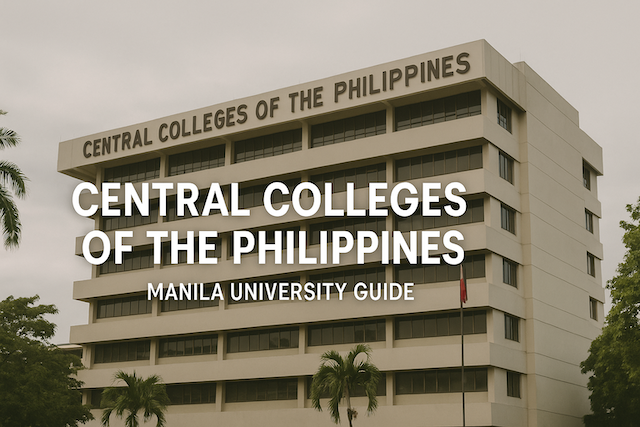
Central Colleges of the Philippines: Manila University Guide
Contents
- Central Colleges of the Philippines: Manila University Guide
- Introduction
- Campus Location and Environment
- History and Institutional Profile
- Academic Programs
- Engineering Excellence at CCP
- Campus Facilities
- Student Life and Organizations
- Admissions Process
- Tuition Fees and Financial Assistance
- Career Opportunities and Industry Connections
- Why Choose Central Colleges of the Philippines?
- Conclusion
- FAQs (Frequently Asked Questions)
- Where is Central Colleges of the Philippines located?
- What programs does Central Colleges of the Philippines offer?
- Is CCP known for strong engineering programs?
- How much is the tuition fee at Central Colleges of the Philippines?
- Does CCP offer scholarships and financial assistance?
- What are the admission requirements for new students?
- Is the campus easily accessible by public transportation?
- What facilities are available for students at CCP?
- Are there dormitories near Central Colleges of the Philippines?
- What is student life like at CCP?
- What career opportunities are available to CCP graduates?
- How can I get more information about Central Colleges of the Philippines?
Central Colleges of the Philippines: Manila University Guide
Introduction
Central Colleges of the Philippines (CCP) is one of the long-established private educational institutions in Manila, known for its strong engineering programs, industry-aligned curriculum, and accessible tuition rates. Located in Quezon City, CCP attracts a mix of local and international students seeking high-quality yet affordable education. This guide provides a comprehensive overview of the institution—covering history, academics, campus life, facilities, admissions, tuition, and student experience—designed to help prospective students decide if CCP is the right fit.
Campus Location and Environment
CCP is strategically located in Aurora Boulevard, Quezon City, a highly accessible area near major transportation routes, residential neighborhoods, and commercial hubs. The location makes it convenient for students commuting from various parts of Metro Manila.
The bustling environment near Cubao and New Manila offers numerous options for housing, dining, shopping, and transportation, making student life comfortable and manageable.
Accessibility
-
Nearby Transport: LRT-2 Betty Go-Belmonte Station, EDSA buses, jeepney routes
-
Surrounding Landmarks: Gateway Mall, Araneta City, Robinsons Magnolia
-
Student-Friendly Services: Dormitories, study cafés, photocopy shops, convenience stores
History and Institutional Profile
Founded in 1954, Central Colleges of the Philippines was established to offer accessible quality education to Filipino students. Over the decades, the college expanded its academic programs, improved infrastructure, and developed strong alumni networks—particularly in the fields of engineering, business, and computer studies.
CCP is recognized by the Commission on Higher Education (CHED) and maintains accreditation for several of its programs through PAASCU and other bodies. The school’s mission continues to emphasize academic excellence, character formation, and industry readiness.
Academic Programs
CCP offers a wide range of undergraduate and graduate programs. Its engineering programs—especially Mechanical Engineering and Civil Engineering—are some of the most notable.
Undergraduate Programs
-
College of Engineering
-
BS Civil Engineering
-
BS Mechanical Engineering
-
BS Electrical Engineering
-
BS Electronics Engineering
-
BS Computer Engineering
-
-
College of Business Administration
-
BS Business Administration (Major in Marketing, Management, HR, or Finance)
-
BS Accountancy
-
BS Accounting Information System
-
-
College of Computer Studies
-
BS Computer Science
-
BS Information Technology
-
BS Information Systems
-
-
College of Arts and Sciences
-
BA Communication
-
BA Psychology
-
BS Biology
-
-
College of Education
-
BSEd and BEEd majors
-
Graduate Programs
-
Master in Business Administration (MBA)
-
Continuing professional education courses
Engineering Excellence at CCP
One of CCP’s strongest points is its engineering curriculum, which blends theory and hands-on application. The college is known for producing board passers and competitive graduates who secure positions in top construction firms, manufacturing companies, and multinational corporations.
Engineering Features
-
State-of-the-art laboratories
-
Competency-based assessments
-
Student organizations like Engineering Society
-
Frequent seminars, industry talks, and fieldwork
Campus Facilities
CCP provides a wide range of facilities to support the academic and extracurricular needs of its students.
Key Facilities
-
Engineering and Computer Laboratories
Equipped with modern tools and updated software for engineering and IT courses. -
Library and Learning Resource Center
Houses updated references, digital materials, and study spaces. -
Gymnasium and Fitness Facilities
Venue for sports activities, intramurals, and PE classes. -
Auditorium and Multi-Purpose Halls
Used for assemblies, seminars, and events. -
Student Lounges and Study Areas
Comfortable, quiet spaces for group or solo study. -
Cafeteria and Food Stalls
Affordable meals catering to student budgets.
Student Life and Organizations
CCP fosters a vibrant student life culture with various clubs and organizations focusing on academics, sports, arts, volunteer work, entrepreneurship, and student governance.
Popular Organizations
-
Engineering Society
-
CCP Student Council
-
Computer Studies Guild
-
Communication Arts Society
-
Dance Troupes and Performing Arts Clubs
Events and Activities
-
Foundation Day celebrations
-
Engineering week
-
Sports tournaments
-
Cultural showcases
-
Academic competitions
-
Community outreach and CSR programs
Admissions Process
CCP’s admission process is straightforward and designed to be accessible for freshmen, transferees, and returning students.
Step-by-Step Admission Guide
-
Online or On-Campus Application
Fill out the application form through CCP’s admissions portal or registrar’s office. -
Submit Requirements
-
High school report card (Form 138)
-
PSA Birth Certificate
-
Good Moral Certificate
-
Transcript of Records (for transferees)
-
-
Take Entrance Evaluation (if required for your program)
-
Pay Reservation Fee
-
Enroll by submitting documents and paying initial tuition
Admission Tips
-
Apply early to secure desired schedules.
-
Prepare documents ahead of time.
-
Contact the admissions office for program-specific requirements.
Tuition Fees and Financial Assistance
CCP offers affordable tuition compared to many private colleges in Manila. Costs vary depending on the program, especially for engineering and computer studies courses requiring laboratory units.
Estimated Tuition Range
-
Non-lab programs: PHP 25,000–35,000 per semester
-
Lab-heavy programs (Engineering, Computer Studies): PHP 35,000–50,000 per semester
Scholarships and Discounts
-
Academic scholarships for honor students
-
Financial grants for low-income applicants
-
Athletic scholarships
-
Sibling discounts
-
Alumni discounts
Career Opportunities and Industry Connections
CCP has strong ties with industries in engineering, business, and IT. The Career and Placement Office connects students to internships, job fairs, and career development sessions.
Common Career Paths
-
Engineers in construction, manufacturing, energy, and technology sectors
-
IT specialists, programmers, network administrators
-
Business analysts, accountants, and marketing professionals
-
Hospital and research staff for science-related programs
-
Educators and communication specialists
Alumni Strength
Many CCP graduates now work in multinational corporations, local government offices, and private firms across the Philippines and abroad.
Why Choose Central Colleges of the Philippines?
Key Advantages
-
Affordable tuition with good academic quality
-
Strong engineering and technology programs
-
Accessible location in Quezon City
-
Supportive student organizations and active campus life
-
Good industry connections for internships and employment
Considerations
-
Campus facilities are functional but may not be as modern as larger universities
-
Engineering workload can be demanding, requiring strong math and science foundation
Conclusion
Central Colleges of the Philippines remains a reputable and practical choice for students looking for quality yet affordable education in Metro Manila. With strong engineering programs, accessible location, industry connections, and a supportive learning environment, CCP continues to be a preferred institution for many aspiring professionals. Whether you are interested in engineering, business, IT, or arts and sciences, the college offers well-rounded programs that prepare students for meaningful careers.
If you are considering studying in Metro Manila, CCP is worth exploring as a solid and dependable option.
FAQs (Frequently Asked Questions)
Where is Central Colleges of the Philippines located?
Central Colleges of the Philippines (CCP) is located along Aurora Boulevard in Quezon City, within Metro Manila. It is close to key transport hubs such as the LRT-2 line (Betty Go-Belmonte station) and major roads like EDSA. The campus is also near commercial areas such as Araneta City, Gateway Mall, and Robinsons Magnolia, making it convenient for students who commute and those who need access to food, housing, and services.
What programs does Central Colleges of the Philippines offer?
CCP offers a wide range of undergraduate programs in engineering, business, computer studies, arts and sciences, and education. Popular courses include Civil Engineering, Mechanical Engineering, Electrical Engineering, Computer Engineering, Computer Science, Information Technology, Business Administration, Accountancy, Psychology, and Biology. The college also offers graduate programs such as the Master in Business Administration (MBA), as well as short-term and continuing professional development courses, depending on current offerings and demand.
Is CCP known for strong engineering programs?
Yes. CCP is particularly recognized for its engineering programs. The College of Engineering offers degrees in Civil, Mechanical, Electrical, Electronics, and Computer Engineering. These programs emphasize both theoretical foundations and hands-on applications through laboratory work, projects, and industry exposure. Many CCP engineering graduates have gone on to pass licensure examinations and build careers in construction, manufacturing, utilities, technology, and related sectors, both in the Philippines and abroad.
How much is the tuition fee at Central Colleges of the Philippines?
Tuition fees at CCP are generally more affordable compared to many private universities in Metro Manila. While exact amounts vary by program and number of units, non-laboratory courses typically range around a moderate bracket per semester, and laboratory-intensive programs such as engineering and computer studies are slightly higher due to additional lab fees. Students should contact the Admissions or Registrar’s Office directly or visit the official website for updated and accurate fee schedules, including miscellaneous and other charges.
Does CCP offer scholarships and financial assistance?
Yes. CCP provides several forms of financial assistance to help students manage their educational expenses. These may include academic scholarships for students with high grades, entrance scholarships for honor graduates, discounts for siblings studying at CCP, and scholarships for athletes or student leaders. Some programs may also be offered in partnership with external organizations. Availability and criteria may change over time, so applicants are advised to inquire directly with the Scholarship or Admissions Office for the latest requirements.
What are the admission requirements for new students?
For incoming freshmen, typical admission requirements include a completed application form, high school report card (Form 138 or its equivalent), a Certificate of Good Moral Character, a PSA birth certificate, and identification photos. Some programs may require an entrance exam or additional screening. Transferees and second coursers usually need to submit their Transcript of Records, Honorable Dismissal, and course descriptions for evaluation. It is best to confirm the exact list of requirements with the admissions staff before applying.
Is the campus easily accessible by public transportation?
Yes. CCP’s location along Aurora Boulevard makes it highly accessible by various modes of public transportation. Students can use the LRT-2 line and get off at Betty Go-Belmonte or nearby stations. Jeepneys, buses, UV Express vans, and taxis also pass through or near the area. Because it is in Quezon City and close to Cubao, students coming from different parts of Metro Manila usually find it manageable to commute on a daily basis.
What facilities are available for students at CCP?
The campus offers a range of facilities designed to support academic and student life. These commonly include classrooms, engineering and computer laboratories, a library and learning resource center, multipurpose halls and an auditorium, gymnasium or sports areas, and dedicated study spaces and lounges. There are also food stalls or a cafeteria where students can buy affordable meals and snacks. While facilities may not always be as large as those in bigger universities, they are generally sufficient for instruction and activities.
Are there dormitories near Central Colleges of the Philippines?
CCP itself may not always have on-campus dormitories, but there are usually boarding houses, apartments, and dorm-style accommodations in nearby areas such as New Manila, Cubao, and surrounding neighborhoods. Many students opt to rent shared rooms or small studio units within walking distance or a short ride from the campus. Rental prices vary depending on room size, facilities, and proximity to commercial centers. Students are encouraged to visit and inspect potential housing options before signing any lease.
What is student life like at CCP?
Student life at CCP is active and community-oriented. There are academic organizations for different departments, student councils, interest-based clubs, and performing arts or sports groups. The college holds events such as foundation celebrations, academic fairs, cultural shows, seminars, and outreach programs. These activities give students opportunities to build leadership skills, develop friendships, and gain experiences beyond the classroom. Overall, campus life balances academics with social and extracurricular involvement.
What career opportunities are available to CCP graduates?
Graduates of CCP pursue diverse career paths depending on their program. Engineering graduates commonly work in construction firms, utilities, manufacturing plants, engineering consultancies, and government offices. IT and computer studies alumni often join software companies, tech startups, BPO firms, and corporate IT departments. Business and accountancy graduates enter roles in banking, finance, marketing, human resources, and entrepreneurship. The college’s Career and Placement Office, along with alumni networks, helps connect students to internships, job fairs, and entry-level employment opportunities.
How can I get more information about Central Colleges of the Philippines?
Prospective students can get more information by visiting the official CCP website or social media pages, where announcements, program details, and admission updates are posted. They may also contact the Admissions or Registrar’s Office via email, phone, or in-person inquiries. Attending campus orientations or open house events, when available, is also helpful for seeing the facilities, meeting faculty, and asking specific questions about courses, schedules, and financial options.
Philippines University Guide
Manila University Guide
Manila Province All Universities Lists

How to Register for eTravel Philippines (2025 Guide)
Step-by-step guide to completing your eTravel registration before arriving in the Philippines, with images and tips.

Night Market in Cebu – Things You Don’t Know About Cebu Life
Discover the hidden charm of Cebu’s night markets, from street food stalls to local life tips you won’t find in tourist guides.

How to Use ChatGPT for IELTS Preparation: A Complete Guide
Learn how to prepare for IELTS using ChatGPT — including strategies for Writing, Reading, Listening, Speaking, and grammar support.

How to Build a Website Without Coding Using ChatGPT
Discover how to build your own website using AI—no coding skills needed. From structure planning to SEO and design, let ChatGPT guide you.