2026年4月5日
3D ACADEMY offers affordable English study programs in Cebu, Philippines – perfect for beginners, professionals, and exam takers.

3D UNIVERSAL ENGLISH INSTITUTE INC
info.3d-universal.com
8:00-17:00(Mon-Fri)
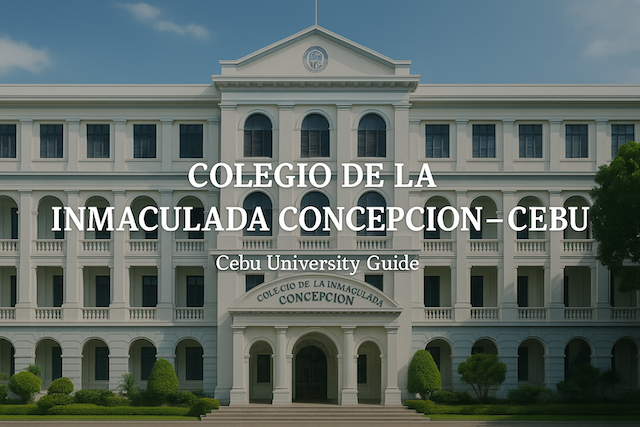
Colegio de la Inmaculada Concepcion – Cebu: Cebu University Guide
Contents
- Colegio de la Inmaculada Concepcion – Cebu: Cebu University Guide
- Overview of Colegio de la Inmaculada Concepcion – Cebu
- History and Founding
- Academic Programs
- Learning Environment and Teaching Approach
- Campus Facilities
- Student Life and Culture
- Admission Process
- Tuition and Fees
- Why Choose CIC Cebu?
- Location and Accessibility
- Support Services
- Extracurricular Opportunities
- Community Engagement
- Guidance for Parents
- Final Thoughts
- FAQs (Frequently Asked Questions)
- Is Colegio de la Inmaculada Concepcion – Cebu a Catholic school?
- What levels of education does CIC Cebu offer?
- Which strands are available in the Senior High School program?
- How does CIC Cebu integrate values and character formation into its curriculum?
- What is the typical class size at CIC Cebu?
- How much is the tuition fee at CIC Cebu?
- Does CIC Cebu accept transfer students or new enrollees from other schools?
- Are non-Catholic students allowed to enroll at CIC Cebu?
- What kinds of extracurricular activities and clubs are available?
- What facilities can students use on campus?
- How can parents stay updated on their child’s progress and school activities?
Colegio de la Inmaculada Concepcion – Cebu: Cebu University Guide
Overview of Colegio de la Inmaculada Concepcion – Cebu
Colegio de la Inmaculada Concepcion – Cebu (CIC Cebu) is one of the longest-running private Catholic educational institutions in the region, known for its holistic academic approach, values-driven formation, and strong emphasis on character development. Operated by the Daughters of Charity of St. Vincent de Paul, the institution has built a reputation for nurturing young learners into responsible, competent, and community-oriented individuals.
CIC Cebu offers basic education and selected college-level programs designed to help students excel academically while developing life skills and leadership competencies. With its balanced curriculum, spiritual foundation, and supportive learning environment, CIC remains a top choice among families seeking high-quality private education.
The campus combines tradition with modern educational practices, providing students with a structured yet engaging atmosphere. Whether you are a parent evaluating schools for your child or a student looking for a well-rounded academic experience, CIC Cebu offers strong academic programs, well-maintained facilities, and a community-centered culture.
History and Founding
CIC Cebu traces its origins back to the vision of the Daughters of Charity, a Catholic congregation known worldwide for its commitment to education, health care, and social missions. The school was founded to provide accessible yet high-quality Christian education in the region.
Through decades of operation, the institution has maintained its commitment to developing students spiritually, academically, socially, and emotionally. Many of its alumni have become successful professionals in fields like education, business, healthcare, and public service, reflecting the school’s strong formation and values-based foundation.
CIC continues to evolve by integrating contemporary learning methods while preserving its Catholic heritage. The school regularly updates its curriculum to meet modern standards, ensuring that students receive education relevant to the demands of the 21st century.
Academic Programs
CIC Cebu offers a structured academic pathway that supports student growth from the early years up to senior high school and beyond. The programs emphasize academic excellence, moral development, and personal responsibility.
Basic Education
The Basic Education Department is the core of CIC Cebu’s academic system. It includes:
-
Preschool / Early Childhood Education
Focuses on foundational learning, motor skills, creativity, and socialization. -
Grade School
Provides strong academic grounding in English, Math, Science, Filipino, and Araling Panlipunan, supported by values education. -
Junior High School
Enhances critical thinking, analytical skills, and character development as students transition to more advanced subjects.
Senior High School
CIC Cebu offers Senior High School programs aligned with the K–12 curriculum, helping students prepare for college or employment. Track offerings typically include:
-
Academic Track – ABM (Accountancy, Business, and Management)
For future entrepreneurs, business majors, and finance-related careers. -
Academic Track – HUMSS (Humanities and Social Sciences)
Ideal for students pursuing education, psychology, communication, and social sciences. -
Academic Track – GAS (General Academic Strand)
A flexible strand for students still exploring college pathways.
College-Level Programs
Some CIC campuses offer selected higher education programs. These may include teacher education, business-related programs, and other fields aligned with the institution’s strengths. Offerings may vary depending on the campus setup and program approvals.
Learning Environment and Teaching Approach
CIC Cebu places strong emphasis on values-based teaching rooted in Catholic tradition. Its teaching approach is centered on:
-
Academic rigor combined with moral formation
-
Student-centered learning environments
-
Teachers who are trained to integrate discipline with compassion
-
Strong parent-school collaboration
-
Extracurricular activities that promote leadership and service
The institution aims to cultivate learners who excel academically and live out Vincentian virtues such as humility, charity, and service to others.
Campus Facilities
CIC Cebu maintains facilities designed to support holistic student development. These include:
Classrooms
Clean, well-lit, and equipped to support modern instruction. Multimedia tools are available for enhanced learning.
Laboratories
Science laboratories and computer rooms provide hands-on learning experiences for students across grade levels.
Library
A resource-rich library offering academic references, digital materials, and quiet study spaces.
Chapel
Spiritual formation is central at CIC, and the campus chapel serves as a space for reflection, Mass, and other religious activities.
Multi-Purpose Halls and Activity Spaces
Used for assemblies, events, performances, and various student activities.
Sports Facilities
Depending on the campus, facilities may include courts for basketball, volleyball, and other sports. Physical education is an essential part of the curriculum.
Student Life and Culture
CIC Cebu promotes an inclusive and values-oriented student community. Student life revolves around:
-
Academic clubs
-
Religious organizations
-
Cultural groups
-
Sports teams
-
Outreach and service programs
The school encourages leadership, cooperation, and involvement in community service. Students experience a balanced learning environment where academics and extracurricular activities complement each other.
Admission Process
Admission requirements vary depending on the level, but common steps include:
-
Online or On-Campus Application
Students submit application forms and initial documents. -
Entrance Assessment
Some levels may require written exams or interviews. -
Document Submission
Required documents often include report cards, birth certificates, and certificates of good moral character. -
Enrollment Confirmation
Once accepted, students secure slots through payment arrangements and orientation processes.
The school welcomes students from diverse backgrounds as long as they are willing to participate in its academic and spiritual formation programs.
Tuition and Fees
CIC Cebu is a private Catholic institution with tuition fees that reflect its quality of education and facilities. While rates vary by level, the school offers flexible payment schemes, installment options, and possible discounts for siblings or academic achievement.
Tuition typically covers:
-
Instructional fees
-
Laboratory charges
-
Miscellaneous fees
-
Learning materials (depending on level)
Exact amounts should be obtained directly from the registrar or admissions office.
Why Choose CIC Cebu?
Many families choose CIC Cebu because of:
-
Strong academic foundation
-
Values-centered education
-
Safe and structured environment
-
Experienced teachers and administrators
-
Balanced student life
-
Deep-rooted Catholic identity
CIC is ideal for families seeking a school that fosters discipline, academic success, and moral integrity.
Location and Accessibility
The campus is accessible via major public transportation routes, making it convenient for students from different parts of the city. Surrounding areas include commercial centers, shops, food establishments, and residential neighborhoods.
Its central location ensures students have access to daily necessities while maintaining a safe and organized campus environment.
Support Services
To help students succeed, CIC Cebu provides:
-
Guidance and counseling services
-
Campus ministry programs
-
Health and clinic services
-
Student support for academics and personal development
-
Parent-teacher coordination programs
These services ensure that students receive well-rounded support throughout their academic journey.
Extracurricular Opportunities
Students can join a variety of clubs and organizations that match their interests:
-
Academic clubs
-
Leadership councils
-
Arts and music groups
-
Religious organizations
-
Sports teams
-
Community outreach programs
These activities build confidence, teamwork, and real-world skills.
Community Engagement
Service is a major component of the CIC educational philosophy. Students participate in outreach programs, charity work, and advocacy projects that help them understand social responsibility.
Working with communities—especially underserved groups—instills empathy, humility, and social awareness.
Guidance for Parents
Parents play an essential role in the CIC educational system. The school regularly involves families through:
-
Parent-teacher conferences
-
School events and activities
-
Formation programs
-
Communication platforms
The institution believes that student success is achieved through strong home–school collaboration.
Final Thoughts
Colegio de la Inmaculada Concepcion – Cebu stands as a reputable Catholic institution offering a balanced, values-driven education for students from preschool to senior high school. With its long history, strong spiritual foundation, competent educators, and supportive learning environment, CIC remains a trusted choice among families seeking high-quality private education rooted in character formation.
CIC Cebu continues to evolve while staying committed to its mission of shaping students into academically competent, socially responsible, and morally grounded individuals prepared for future challenges.
FAQs (Frequently Asked Questions)
Is Colegio de la Inmaculada Concepcion – Cebu a Catholic school?
Yes. Colegio de la Inmaculada Concepcion – Cebu (CIC Cebu) is a private Catholic educational institution run by a religious congregation. The school integrates Catholic teachings, values education, and regular religious activities such as Masses, recollections, and outreach programs into its formation. Students of different backgrounds are welcome, but they are expected to respect and participate in the school’s religious and values-based programs as part of their holistic education.
What levels of education does CIC Cebu offer?
CIC Cebu typically offers basic education from preschool to senior high school, with a strong emphasis on academic excellence and character formation. The basic education program usually includes preschool or early childhood, grade school, junior high school, and senior high school. Some campuses may also offer selected college-level or higher education programs, depending on government approvals and institutional focus. For the most accurate and updated list of programs, it is best to contact the registrar or admissions office directly.
Which strands are available in the Senior High School program?
The Senior High School department usually offers strands under the Academic Track such as ABM (Accountancy, Business, and Management), HUMSS (Humanities and Social Sciences), and GAS (General Academic Strand). These options are designed to prepare students for various college courses and future careers. The exact strands offered may change over time based on demand, faculty availability, and government regulations. Parents and students are encouraged to verify the current strand offerings with the school’s guidance office or SHS coordinator.
How does CIC Cebu integrate values and character formation into its curriculum?
Values and character formation are central to CIC Cebu’s educational philosophy. Aside from formal Values Education and Religion classes, teachers are encouraged to integrate moral lessons, reflection, and social awareness into regular subjects. School activities such as retreats, recollections, prayer services, and community outreach projects are used to deepen students’ sense of responsibility and compassion. The goal is to form students who are not only academically capable but also kind, honest, and socially conscious individuals.
What is the typical class size at CIC Cebu?
Class sizes may vary by level and school year, but CIC Cebu generally aims to keep classes manageable so that teachers can monitor each learner’s progress. A moderate-sized class supports classroom interaction, group work, and personalized feedback. Exact numbers may change depending on enrollment, facilities, and health or safety guidelines. Prospective families may ask the admissions office for updated information on current class sizes, especially for specific levels or strands.
How much is the tuition fee at CIC Cebu?
Tuition and other fees at CIC Cebu depend on the grade level or program and may be updated each school year. As a private Catholic institution, the school charges tuition that reflects the quality of instruction, facilities, and student services provided. There may be different payment options such as full payment, semestral, or installment plans, and some discounts might be available for siblings or academic achievers. For precise figures, families should request an official statement of fees or schedule of charges from the school finance or registrar’s office.
Does CIC Cebu accept transfer students or new enrollees from other schools?
Yes. CIC Cebu generally accepts both new and transfer students, provided they meet the school’s admission requirements and undergo the standard screening process. Applicants usually need to submit report cards, recommendation forms, birth certificates, and other relevant documents. Some levels may require entrance exams, interviews, or placement assessments. Since policies can vary by level and school year, it is advisable to contact the admissions office for detailed instructions on the current process for transferees and new students.
Are non-Catholic students allowed to enroll at CIC Cebu?
Non-Catholic students are usually welcome to enroll at CIC Cebu as long as they and their families understand and respect the school’s Catholic identity. All students, regardless of religious background, are typically required to attend values education classes, school liturgies, and formation activities as part of the regular program. The focus is on common values such as integrity, respect, service, and compassion. Parents who have specific concerns about religious practices may discuss them with the guidance office or school administration.
What kinds of extracurricular activities and clubs are available?
CIC Cebu offers a range of extracurricular opportunities that support holistic formation. Students may join academic clubs, performing arts groups, student councils, sports teams, religious organizations, and community service groups. These activities help learners develop confidence, teamwork, leadership skills, and creativity beyond the classroom. The exact list of clubs and organizations may vary per year, so students are usually oriented during the start of the school year about the options available to them.
What facilities can students use on campus?
Students at CIC Cebu generally have access to essential learning facilities such as classrooms, science laboratories, computer rooms, and a well-stocked library. There is typically a chapel for spiritual activities and various common areas for assemblies and events. Depending on the campus, there may also be covered courts, open spaces, and multi-purpose halls for sports and cultural activities. The school continuously maintains and improves its facilities to provide a safe and conducive environment for learning and formation.
How can parents stay updated on their child’s progress and school activities?
CIC Cebu encourages strong home–school collaboration. Parents can stay informed through parent–teacher conferences, official announcements, school bulletins, and digital communication platforms that the school may adopt. Many departments provide regular updates on student performance, behavior, and upcoming events. Parents are welcome to coordinate with class advisers, guidance counselors, and department heads whenever they have concerns or questions about their child’s academic and personal development.
Philippines University Guide
Cebu University Guide
Cebu Province All Universities Lists

How to Register for eTravel Philippines (2025 Guide)
Step-by-step guide to completing your eTravel registration before arriving in the Philippines, with images and tips.

Night Market in Cebu – Things You Don’t Know About Cebu Life
Discover the hidden charm of Cebu’s night markets, from street food stalls to local life tips you won’t find in tourist guides.

How to Use ChatGPT for IELTS Preparation: A Complete Guide
Learn how to prepare for IELTS using ChatGPT — including strategies for Writing, Reading, Listening, Speaking, and grammar support.

How to Build a Website Without Coding Using ChatGPT
Discover how to build your own website using AI—no coding skills needed. From structure planning to SEO and design, let ChatGPT guide you.