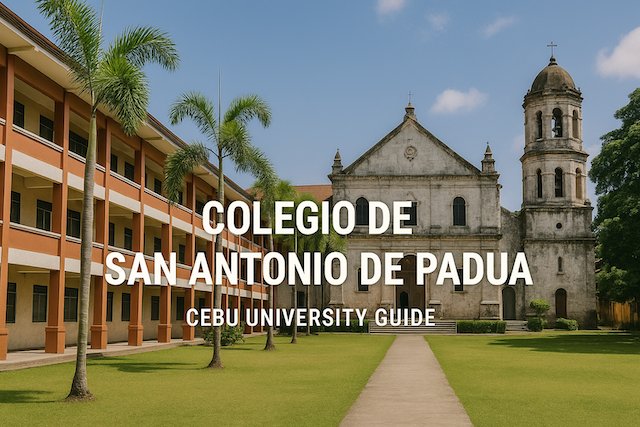
Colegio de San Antonio de Padua: Cebu University Guide
Overview of Colegio de San Antonio de Padua
Colegio de San Antonio de Padua (CSAP) is a private educational institution known for its strong values-based formation and community-oriented academic approach. Located in Cebu, the school offers a nurturing environment designed to support students in their academic, personal, and spiritual growth. With its commitment to character building and accessible education, CSAP has become a recognized choice for students seeking a holistic learning experience.
The institution serves learners across multiple levels, from basic education to selected tertiary programs, and maintains a mission centered on Catholic values, discipline, and academic excellence. Its campus environment is supportive, safe, and structured, making it suitable for younger learners as well as college students looking for a modest, community-focused school.
History and Mission
CSAP was founded with the goal of providing quality yet affordable education rooted in faith and service. Over the years, it has continuously strengthened its curricular offerings while maintaining small class sizes and personalized instruction. Its mission emphasizes moral development, academic competence, and social responsibility — preparing students not just for careers but for meaningful participation in society.
Academic Programs
Colegio de San Antonio de Padua provides a range of academic offerings that support learners at different stages. While its strongest focus is on basic education, the school has expanded to include higher education programs that are aligned with industry needs.
Basic Education
-
Preschool – A program focused on foundational learning, motor skills development, and social interaction.
-
Elementary – Emphasizes core subjects such as math, science, English, and Filipino, while integrating values education throughout the curriculum.
-
Junior High School – Offers a balanced academic load that prepares students for senior high school through project-based learning and formative assessments.
-
Senior High School (SHS) – Provides the standard tracks commonly required by students preparing for college:
-
Academic Track (e.g., ABM, HUMSS, and GAS)
-
Technical-Vocational-Livelihood (TVL) Track
The SHS programs are recognized for providing practical skill development, career planning, and college readiness.
Higher Education Programs
While smaller compared to major universities in Cebu, the school offers selected degree programs designed to be affordable and aligned with local job markets. Typical offerings include:
-
Education programs (e.g., Bachelor of Elementary Education, Bachelor of Secondary Education)
-
Business-related courses (e.g., BS in Business Administration)
-
Information Technology programs, depending on campus availability
These programs emphasize practical skills, internships, and values formation.
Campus Facilities
CSAP’s campus is designed to provide essential facilities that support effective learning and student development. While modest compared to large universities, the school ensures that all key services and learning spaces are well-maintained.
Key Facilities
-
Classrooms – Clean, ventilated, and equipped for multi-level instruction.
-
Computer Laboratories – Used for ICT subjects and technical-vocational courses.
-
Library – Provides reference materials, study areas, and research support.
-
Science Laboratories – Equipped for basic and intermediate science experiments.
-
Audio-Visual Rooms – Used for presentations, seminars, and school programs.
-
Covered Gym or Multipurpose Area – For events, sports, and community activities.
-
Canteen – Serves affordable meals and snacks for students.
The school’s environment is secure and community-based, offering a comfortable place for learners to grow academically and socially.
Student Life and Culture
Colegio de San Antonio de Padua fosters a culture centered on respect, discipline, and faith. Student life is enriched through activities that encourage leadership, creativity, and teamwork.
Common Student Activities and Organizations
-
Campus Ministry and Religious Clubs
-
Student Council
-
Academic Clubs (Math, Science, English clubs, etc.)
-
Performing Arts Groups
-
Sports Teams and Intramurals
Regular events such as foundation days, outreach programs, school fairs, and competitions contribute to a lively and engaging campus experience.
Admission Requirements
Admission to CSAP is generally straightforward and designed to be accessible.
Basic Requirements
-
Filled-out application form
-
Recent ID photos
-
Report card or Form 138 (for transferees and freshmen)
-
Good moral certificate
-
PSA birth certificate
-
Entrance exam or interview (depending on level and program)
Admission for College Programs
For degree-level applicants, additional requirements may include:
Tuition and Fees
One of the key reasons many students choose CSAP is its affordability. Tuition varies by level, but in general:
-
Basic education tuition is on the lower to mid-range compared with private schools in Cebu.
-
Senior high school may offer vouchers or financial assistance depending on student eligibility.
-
College tuition is cost-effective and designed to be accessible to working students or families seeking budget-friendly options.
The school also provides flexible payment schemes and installment plans.
Location and Accessibility
CSAP is easily accessible from surrounding barangays and nearby communities. Public transportation routes typically pass close to the campus, making it convenient for daily commuting.
The immediate area around the school usually includes eateries, convenience stores, churches, and residential spaces, supporting the needs of both younger and older students.
Why Choose Colegio de San Antonio de Padua?
Students and families often choose CSAP for several key reasons:
-
Values-oriented education with an emphasis on character development
-
Affordability without compromising academic quality
-
Supportive community environment suitable for young learners
-
Practical academic offerings in senior high school and college
-
Small class sizes for more personalized instruction
It is an ideal option for students who prefer a modest, family-like school environment grounded in Catholic values.
FAQs (Frequently Asked Questions)
What levels of education does Colegio de San Antonio de Padua offer?
Colegio de San Antonio de Padua typically offers basic education from preschool to senior high school, and in some cases selected college programs such as education, business, or technology-related courses. Exact offerings may vary by school year, so it is important to check directly with the registrar or official school channels for the latest list of available programs. If you are planning long-term studies, ask specifically about continuity from junior high to senior high and up to college.
Is Colegio de San Antonio de Padua a Catholic or religious school?
Yes, Colegio de San Antonio de Padua is generally a values-oriented institution with a strong Catholic identity. This is reflected in its regular religious activities, values education in the curriculum, and school policies that emphasize discipline, respect, and service to others. Students can expect activities such as masses, retreats, recollections, and outreach programs. However, non-Catholic students are usually welcome, provided they respect the school’s religious practices and participate in community activities as required.
How much is the tuition fee at Colegio de San Antonio de Padua?
Tuition fees are designed to be relatively affordable compared with many private schools in Cebu, but the exact amount depends on the grade level and program. Preschool and elementary fees are usually lower, while senior high school and college programs may cost more per term. Because fees change periodically, you should request an updated schedule of tuition, miscellaneous fees, and other charges directly from the school. Many families also ask about installment options, so it is recommended to inquire about payment plans during enrollment.
Does the school offer scholarships or financial assistance?
Colegio de San Antonio de Padua may provide selected forms of financial assistance, such as academic scholarships, discounts for siblings, or government-supported programs like senior high school vouchers where applicable. Availability and criteria can change each year, so it is best to ask the guidance office or registrar which types of grants or discounts are currently offered. When applying, prepare your report cards, certificates, and any required documents that show your academic performance or financial need.
What senior high school (SHS) tracks are available?
The school typically offers common senior high tracks found in many Philippine schools, such as the Academic Track (for example, ABM for Accountancy, Business and Management; HUMSS for Humanities and Social Sciences; or GAS for General Academic Strand) and possibly a Technical-Vocational-Livelihood (TVL) track. However, each campus chooses its tracks based on demand and resources. Before enrolling, confirm which strands are actually open for the coming school year, and ask about subject offerings, work immersion, and possible career or college paths after graduation.
What are the class sizes and learning environment like?
Class sizes at Colegio de San Antonio de Padua are generally moderate, allowing teachers to provide more individualized attention than in very large schools. The learning environment is usually structured and disciplined but also supportive, with teachers encouraged to guide students not only academically but also in their values and behavior. Parents often appreciate the family-like atmosphere and approachable staff. If you are concerned about class size, you can ask the school for an estimate of average students per section at your target grade level.
What facilities can students use on campus?
Students typically have access to standard educational facilities such as classrooms, a library, computer laboratories, and science laboratories, along with a multipurpose hall or covered court for school events and sports. There is usually a canteen that offers affordable food and snacks. Some campuses may also include audio-visual rooms, prayer areas, or small gardens and open spaces. Since facilities can be upgraded or expanded over time, consider visiting the campus personally or joining an open house to see the actual learning environment.
How does the school support student development outside academics?
Colegio de San Antonio de Padua encourages students to join clubs, organizations, and co-curricular activities that develop leadership, confidence, and social skills. These may include student councils, academic clubs, religious or service groups, performing arts, and sports teams. Activities such as intramurals, school fairs, community outreach, and religious events are usually scheduled throughout the year. Parents and students who value holistic education often view these opportunities as a key part of the school experience.
Is the school suitable for transfer students or late enrollees?
Yes, the school often accepts transfer students, particularly at the beginning of the school year or semester, as long as they meet academic and conduct requirements. Transfer applicants are usually asked to submit report cards, good moral certificates, and other standard documents. Late enrollment may be possible within a specific grace period, but policies differ depending on DepEd guidelines and internal school rules. It is important to contact the registrar early to clarify deadlines and any conditions for transferees.
How can I get more accurate and updated information about the school?
Because details such as tuition fees, available courses, staff, and schedules can change, the most reliable way to get updated information is to contact the school directly through its official phone number, email, or social media page. You may also visit the campus during office hours to speak with the registrar, guidance counselor, or admissions staff. When you inquire, prepare your questions in advance—such as program availability, payment terms, requirements, and deadlines—to make your visit or call more efficient.