2026年4月5日
3D ACADEMY offers affordable English study programs in Cebu, Philippines – perfect for beginners, professionals, and exam takers.

3D UNIVERSAL ENGLISH INSTITUTE INC
info.3d-universal.com
8:00-17:00(Mon-Fri)
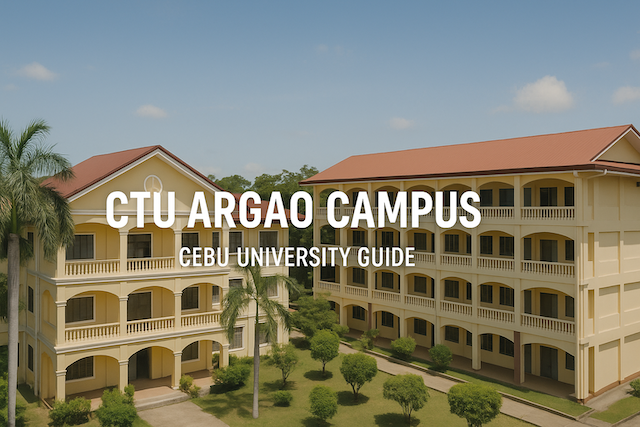
CTU Argao Campus: Cebu University Guide
Contents
- CTU Argao Campus: Cebu University Guide
- Overview of CTU Argao Campus
- Academic Programs Offered
- Admission Requirements and Process
- Campus Facilities and Resources
- Student Life at CTU Argao Campus
- Research, Extension, and Community Programs
- Why Choose CTU Argao Campus?
- Final Thoughts
- FAQs (Frequently Asked Questions)
- Where is CTU Argao Campus located?
- What academic programs are offered at CTU Argao Campus?
- Is CTU Argao Campus a public university?
- How much is the tuition fee at CTU Argao Campus?
- What are the basic admission requirements for freshmen?
- Does CTU Argao Campus accept transferees and second coursers?
- Are there dormitories or boarding houses near the campus?
- What kind of facilities can students use on campus?
- Is CTU Argao Campus a good choice for agriculture and fisheries students?
- How is student life at CTU Argao Campus?
- How do I travel from Cebu City to CTU Argao Campus?
- Are there scholarship or financial assistance programs available?
CTU Argao Campus: Cebu University Guide
Cebu Technological University (CTU) Argao Campus is one of the most established satellite campuses in the southern part of セブ島. Known for its strong programs in agriculture, fisheries, engineering, and teacher education, the campus serves as a key academic hub for students coming from Argao, Dalaguete, Sibonga, and surrounding municipalities. This comprehensive guide provides everything you need to know about CTU Argao Campus—courses, facilities, admissions, student life, and what to expect if you choose to study here.
Overview of CTU Argao Campus
CTU Argao Campus traces its roots to vocational and agricultural education, eventually expanding into a full state university campus under the CTU system. Today, it offers a mix of technology-driven and community-oriented programs that support the economic strengths of southern Cebu, particularly in agriculture, marine resources, and teacher training.
Located in the historic town of Argao—famous for its heritage sites, beaches, and eco-tourism attractions—the campus provides a laid-back but academically focused environment suitable for students who want quality education away from the busier urban centers.
Academic Programs Offered
CTU Argao Campus offers a wide array of undergraduate and graduate programs designed to meet regional labor demands and academic pathways for students.
College of Agriculture
Agriculture remains one of the strongest pillars of CTU Argao. Programs emphasize sustainable practices, crop science, animal production, and innovative agricultural technologies.
Common offerings include:
-
Bachelor of Science in Agriculture
-
Bachelor of Agricultural Technology
-
Diploma programs related to agri-entrepreneurship and farm management
These programs incorporate laboratory work, field demonstrations, and community extension projects in surrounding farming barangays.
College of Fisheries
Given the town’s coastal nature, CTU Argao also focuses on fisheries education. Programs under this college prepare students for careers in marine resource management, aquaculture, and fishery science.
Typical courses include:
-
Bachelor of Science in Fisheries
-
Diploma in Fishery Technology
Students often participate in hands-on training at municipal fishery centers and coastal projects.
College of Engineering
While agriculture and fisheries are core strengths, engineering programs have grown significantly over the years. CTU Argao typically offers entry-level engineering programs such as:
-
Industrial Technology specializations
-
Mechanical and Electrical Technology tracks
-
Civil technology-focused programs
These programs blend technical skills with practical workshops, preparing students for industry employment or further licensure examinations.
College of Teacher Education
The campus supports aspiring teachers through programs aligned with national CHED and LET competencies.
Programs may include:
-
Bachelor of Elementary Education
-
Bachelor of Secondary Education
-
Majors such as Mathematics, English, or Science
Practice teaching usually takes place in partner schools across Argao and nearby towns.
Graduate Programs
CTU Argao also provides graduate studies for working professionals seeking advancement. These may include:
-
Master of Arts in Education (various majors)
-
Master in Public Administration
-
Post-graduate certificates
Graduate classes are often offered on flexible schedules to accommodate professionals.
Admission Requirements and Process
Admission to CTU Argao Campus follows the standard CTU system procedures. Freshmen, transferees, and graduate applicants are required to complete basic academic and documentary requirements.
Basic Requirements
For most undergraduate programs, applicants need:
-
High school / Senior High School report card
-
PSA birth certificate
-
Certificate of Good Moral Character
-
2×2 ID photos
-
Application form provided by the campus
Certain programs (particularly Teacher Education and Fisheries) may have additional requirements such as interviews or qualifying exams.
Application Process
-
Submit initial documents to the Registrar’s Office.
-
Undergo evaluation for program eligibility.
-
Take admission exams if required by the department.
-
Wait for confirmation and enrollment schedule.
-
Proceed with enrollment, payment of fees (if any), and orientation.
Since CTU is a public university, tuition fees are largely covered under the Universal Access to Quality Tertiary Education Act for qualified students.
Campus Facilities and Resources
CTU Argao Campus offers essential facilities that support academic, laboratory, and student life needs.
Academic Buildings
The campus has multiple classroom buildings equipped for general education and specialized programs. Agriculture and fisheries classes often take place in separate laboratory areas to support practical learning.
Laboratories
-
Agriculture laboratories for soil testing, crop science, and animal husbandry
-
Fisheries labs with aquaculture tanks and marine biology instruments
-
Technology and engineering workshops with tools and equipment
-
Science laboratories for teacher education majors
These labs ensure students gain hands-on experience throughout their degrees.
Library and Learning Resource Center
The campus library provides:
-
Textbooks and reference materials
-
Quiet study areas
-
Computer terminals
-
Digital resources through the CTU system
ICT and E-Learning Resources
The campus integrates modern e-learning tools including CTU’s online portals, research databases, and digital learning systems. Computer labs are available for students needing internet access.
Student Support Services
CTU Argao offers:
-
Guidance counseling services
-
Student Affairs Office
-
Scholarships and financial aid coordination
-
Health and medical services
-
Clubs, student organizations, and campus activities
These services promote academic success and holistic student development.
Sports and Recreational Facilities
While facilities vary by year, the campus generally provides:
-
Open-field courts
-
Spaces for physical education
-
Areas for campus events and student gatherings
Participation in CTU-wide athletic events is also common.
Student Life at CTU Argao Campus
Life at CTU Argao is peaceful and community-oriented. The town itself offers a pleasant environment for students to focus on their studies.
Affordable Living
Argao is known for its low cost of living. Students benefit from:
-
Affordable dormitories or boarding houses
-
Low-cost local eateries
-
Budget-friendly transportation options
This makes CTU Argao an ideal campus for students seeking economical education.
Community and Culture
Argao is rich in cultural heritage, with Spanish-era structures and local festivals such as the Siloy Festival. Students often blend academic life with exposure to local customs, events, and community involvement.
Accessibility
CTU Argao is easily reachable from Cebu City via bus or van services running daily along the southern highway. The roads are well-maintained, and transportation is consistent.
Research, Extension, and Community Programs
As part of the CTU system, CTU Argao engages in extension programs supporting local development.
Agriculture and Livelihood Projects
The campus frequently partners with local government units to conduct training programs in:
-
Sustainable farming
-
Livestock management
-
Agri-entrepreneurship
-
Community gardens
Marine and Coastal Projects
Fisheries programs often collaborate with coastal barangays on:
-
Marine conservation
-
Aquaculture sustainability
-
Coastal clean-up drives
Education and Literacy Initiatives
Teacher Education students participate in outreach teaching programs, literacy projects, and internship placements benefiting local public schools.
Why Choose CTU Argao Campus?
Students choose CTU Argao for several compelling reasons:
-
Strong academic foundation in agriculture, fisheries, and education
-
Affordable tertiary education with government tuition subsidies
-
Peaceful learning environment suited for focused study
-
Active involvement in community development programs
-
Accessibility for students in southern Cebu municipalities
The campus provides a balanced mix of academic excellence, practical learning, and cultural experience.
Final Thoughts
CTU Argao Campus stands out as a well-rounded academic institution offering accessible, relevant, and community-driven education in southern セブ島. Whether you are pursuing agriculture, fisheries, engineering, teacher education, or graduate studies, the campus provides a solid foundation for your academic and professional growth. Its combination of affordability, hands-on programs, and strong community engagement makes it an excellent choice for both local and regional students.
FAQs (Frequently Asked Questions)
Where is CTU Argao Campus located?
CTU Argao Campus is located in the municipality of Argao in southern Cebu. It sits along the main southern route that connects Cebu City to towns like Sibonga, Dalaguete, and Oslob. The campus is generally accessible by bus or van from Cebu City’s South Bus Terminal, making it convenient for students from nearby municipalities in this part of the island.
What academic programs are offered at CTU Argao Campus?
CTU Argao Campus offers a range of undergraduate and some graduate programs. Common fields of study include Agriculture, Fisheries, Industrial or Technology-related programs, Engineering-related tracks, and Teacher Education. The campus also supports selected master’s programs such as education- or public administration-related degrees, aimed at working professionals in the area. Exact offerings may change, so applicants should always verify the current list with the Registrar or official CTU channels.
Is CTU Argao Campus a public university?
Yes. CTU Argao Campus is part of Cebu Technological University, a state university in the Philippines. As a government institution, it follows national policies for state universities and colleges (SUCs), including participation in the Universal Access to Quality Tertiary Education Act, subject to eligibility and guidelines. Because of this, students may benefit from tuition subsidies or free tuition if they meet government requirements.
How much is the tuition fee at CTU Argao Campus?
Since CTU is a state university, tuition for qualified undergraduate students is generally covered by the Universal Access to Quality Tertiary Education Act. However, students may still need to pay for minimal school fees, ID fees, or other miscellaneous charges, as well as personal expenses for projects and fieldwork. Fee structures can change over time, so it is best to check directly with the campus Cashier or Registrar’s Office for the latest information.
What are the basic admission requirements for freshmen?
Typical admission requirements for new students include a completed application form, original or certified true copy of the Senior High School report card or its equivalent, a PSA birth certificate, a Certificate of Good Moral Character, and recent ID photos. Some programs might also require entrance examinations, interviews, or additional documents. Because requirements can vary by program and school year, applicants are encouraged to follow official admissions announcements from CTU Argao Campus.
Does CTU Argao Campus accept transferees and second coursers?
Yes, CTU Argao Campus generally accepts transferees and second coursers, subject to evaluation. Transferees usually need to submit their Transcript of Records or certified copy of grades, a certificate of honorable dismissal, and other standard documents. The college or department concerned will assess which subjects can be credited and whether the student meets the program’s academic standards. Availability of slots may also influence acceptance in certain courses.
Are there dormitories or boarding houses near the campus?
CTU Argao Campus is situated in a town environment where students can find affordable boarding houses and rented rooms within a short distance of the campus. Some students also share apartments to lower their living costs. While on-campus dormitories may be limited or dependent on current policy, the surrounding community is accustomed to students and offers a variety of housing options. It is advisable to visit Argao ahead of time to compare prices and conditions.
What kind of facilities can students use on campus?
Students at CTU Argao Campus typically have access to general classroom buildings, specialized laboratories, a library or learning resource center, and computer facilities. Agriculture and fisheries students make use of field or lab areas for practical training, while education and technology students may access specific workshops and science labs. There are also basic student support offices, such as guidance and student affairs, as well as areas for sports or campus events.
Is CTU Argao Campus a good choice for agriculture and fisheries students?
Yes, CTU Argao Campus is especially well known for programs related to agriculture and fisheries, which align with the economic profile of southern Cebu. Students can expect a mix of classroom instruction, hands-on laboratory work, and community-based projects in fields and coastal areas. For those planning to work in farming, aquaculture, marine resource management, or local government agriculture units, the campus offers strong context-based training and community exposure.
How is student life at CTU Argao Campus?
Student life at CTU Argao Campus is generally relaxed and community-oriented. The town of Argao offers a quieter environment compared to major urban centers, which helps many students focus on their studies. At the same time, there are organizations, clubs, and campus events that promote leadership, culture, sports, and social responsibility. Outside of class, students can explore local heritage sites, beaches, and town festivities that enrich their overall experience.
How do I travel from Cebu City to CTU Argao Campus?
To reach CTU Argao Campus from Cebu City, students typically ride a bus or van going to Argao or further south from the South Bus Terminal. Travel time may range from about two to three hours depending on traffic and stops. Buses will usually drop passengers at or near the town proper, from where local transport options—such as motorcycles or tricycles—can bring them closer to the campus. New students should allocate extra time on their first trip to become familiar with the route.
Are there scholarship or financial assistance programs available?
Yes. In addition to national government support for tuition, CTU Argao Campus may assist students in applying for various scholarships and grants, such as those offered by government agencies, local governments, and private sponsors. Some programs may also provide stipends or allowances for qualified scholars. Availability and criteria differ by scholarship, so students should regularly check with the campus Scholarship Office, Guidance Office, or Student Affairs for current opportunities and application schedules.
Cebu Technological University (CTU) Guide: Courses, Campuses, and Admissions

How to Register for eTravel Philippines (2025 Guide)
Step-by-step guide to completing your eTravel registration before arriving in the Philippines, with images and tips.

Night Market in Cebu – Things You Don’t Know About Cebu Life
Discover the hidden charm of Cebu’s night markets, from street food stalls to local life tips you won’t find in tourist guides.

How to Use ChatGPT for IELTS Preparation: A Complete Guide
Learn how to prepare for IELTS using ChatGPT — including strategies for Writing, Reading, Listening, Speaking, and grammar support.

How to Build a Website Without Coding Using ChatGPT
Discover how to build your own website using AI—no coding skills needed. From structure planning to SEO and design, let ChatGPT guide you.