2026年4月5日
3D ACADEMY offers affordable English study programs in Cebu, Philippines – perfect for beginners, professionals, and exam takers.

3D UNIVERSAL ENGLISH INSTITUTE INC
info.3d-universal.com
8:00-17:00(Mon-Fri)
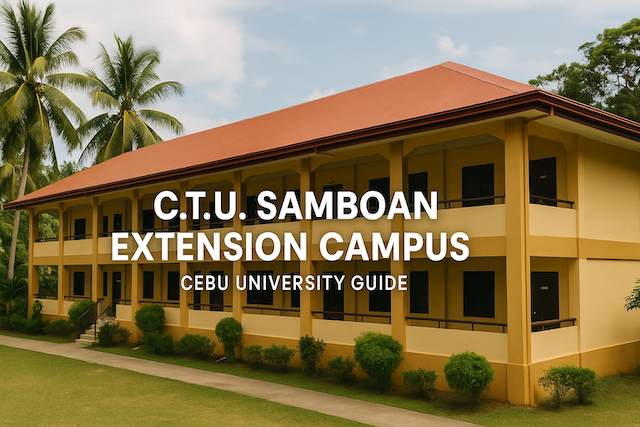
CTU Samboan Extension Campus: Cebu University Guide
Contents
- CTU Samboan Extension Campus: Cebu University Guide
- Overview of CTU Samboan Extension Campus
- History and Institutional Background
- Academic Programs Offered
- Campus Facilities and Learning Environment
- Student Life and Community Environment
- Admission Requirements
- How to Apply
- Tuition and Fees
- Career Opportunities After Graduation
- How to Get to CTU Samboan Extension Campus
- Final Thoughts
- FAQs (Frequently Asked Questions)
- Where is CTU Samboan Extension Campus located?
- What programs are offered at CTU Samboan Extension Campus?
- Is tuition free at CTU Samboan Extension Campus?
- What are the admission requirements for new students?
- How can I apply to CTU Samboan Extension Campus?
- What facilities are available on campus?
- Is student life active at CTU Samboan Extension Campus?
- What are the common career paths for graduates?
- How do I get to CTU Samboan Extension Campus from Cebu City?
- Is it safe and affordable to live in Samboan as a student?
- Does the campus offer scholarships or financial assistance?
- Who should consider studying at CTU Samboan Extension Campus?
CTU Samboan Extension Campus: Cebu University Guide
Overview of CTU Samboan Extension Campus
Cebu Technological University (CTU) Samboan Extension Campus serves as one of the key academic hubs in the southern part of Cebu Province. Located in the peaceful municipality of Samboan, this extension campus provides accessible education to students living in remote southern barangays, helping reduce travel time and educational costs. Over the years, the campus has grown into an important educational center supporting local development, industry-aligned training programs, and community‐based projects.
Samboan is known for its serene environment, waterfalls, natural landscapes, and a predominantly agricultural economy. CTU Samboan Extension Campus complements this setting by offering degree programs that support agriculture, fisheries, technology, and community development. Students benefit from a calm study environment, lower living costs, and strong community support.
History and Institutional Background
CTU Samboan Extension Campus was established as part of CTU’s expansion efforts to bring high-quality public education to underserved areas in Cebu. The university administration recognized that students in the far south of the island faced difficulties traveling to larger campuses in Cebu City, Argao, or Danao. By building more extension campuses, CTU aimed to enhance educational equity and local economic participation.
Over time, CTU Samboan developed partnerships with municipal officials, local industries, agricultural cooperatives, and NGOs. These collaborations expanded its program offerings, allowing the campus to address community needs such as sustainable farming, rural entrepreneurship, environmental conservation, and digital literacy.
Academic Programs Offered
The campus primarily offers undergraduate programs tailored to local industries and regional development. Program availability may vary each academic year depending on faculty staffing, student demand, and administrative updates. Common offerings include:
Bachelor of Science in Agriculture (BSA)
A core program aligned with the agriculture-based economy of Samboan. Students learn crop science, soil management, livestock raising, pest management, agribusiness, and sustainable farming. Practicum and fieldwork are integrated into the curriculum.
Bachelor of Science in Fisheries or Fishery Technology
Given Samboan’s proximity to coastal areas, programs related to fisheries are typically available. Courses focus on aquaculture, fish processing, coastal resource management, and marine conservation.
Bachelor of Science in Industrial Technology (BSIT)
Specializations may include:
-
Automotive Technology
-
Electrical Technology
-
Electronics Technology
-
Food Technology
-
Welding and Fabrication
These programs prepare students for technical careers in regional industries.
Education Programs
Depending on the academic year, the campus may offer programs such as:
-
Bachelor of Elementary Education (BEEd)
-
Bachelor of Secondary Education (BSEd)
These programs meet the growing demand for qualified teachers in southern Cebu.
Certificate Programs and Short Courses
Short-term community training programs are also regularly conducted, including:
-
Basic computer applications
-
Organic farming
-
Skills training aligned with TESDA
-
Livelihood and entrepreneurship workshops
These help local residents improve their skills and access better job opportunities.
Campus Facilities and Learning Environment
CTU Samboan Extension Campus features essential facilities designed to support academic learning in a rural context. While smaller than the main campuses, it maintains quality by providing the following:
Classrooms and Lecture Halls
Standardized classrooms equipped with projectors, whiteboards, and ventilation systems ensure suitable environments for learning.
Laboratory Facilities
Programs in agriculture, fisheries, and industrial technology often require specialized laboratories. These labs include:
-
Crop production labs
-
Aquaculture tanks
-
Food processing labs
-
Computer laboratories
-
Workshops for welding, electrical, and mechanical work
Library and Learning Resource Center
A modest but functional library provides textbooks, academic references, journals, and digital resources. Students also have access to CTU’s online library system.
Administrative Offices
Campus administration, registrar services, student affairs offices, and faculty rooms are all located on-site to ensure smooth support for academic operations.
Outdoor Learning Areas
Given the nature of agriculture and environmental programs, the campus also makes use of:
-
Demo farms
-
Plant nurseries
-
Open training fields
-
Aquaculture demonstration ponds
These spaces enhance hands-on learning experiences.
Student Life and Community Environment
Students at CTU Samboan enjoy a calm, friendly, and supportive environment. The small campus size encourages close interactions among students, faculty, and staff. Key aspects of campus life include:
Affordable Living
Samboan offers low-cost housing, food, and transportation. Boarding houses near the campus provide budget-friendly accommodations for students.
Peaceful Surroundings
The rural setting creates fewer distractions and encourages focus on academics. Students can enjoy nature, waterfalls, marine activities, and small community events.
Student Organizations
Clubs and organizations help promote leadership, cultural involvement, academic development, and volunteerism. These typically include:
-
Agriculture or environmental clubs
-
Student government organizations
-
Technical and engineering associations
-
Cultural and performing arts groups
Community Engagement
CTU Samboan actively initiates community outreach programs, such as:
-
Environmental cleanups
-
Agricultural extension services
-
Digital literacy workshops
-
Health and education seminars
These allow students to apply their knowledge while giving back to the community.
Admission Requirements
Admission policies follow CTU System guidelines. Applicants typically need to submit:
-
Senior High School Report Card (Form 138)
-
PSA Birth Certificate
-
Certificate of Good Moral Character
-
2×2 ID photos
-
Entrance exam results (when applicable)
-
Additional documents for transferees or second-degree students
Requirements may vary by program. Some programs, such as Industrial Technology, may require medical or physical fitness clearances.
How to Apply
Students can apply through CTU’s central online admission system or by visiting the campus. The steps usually include:
-
Create an online application profile.
-
Upload required documents.
-
Choose CTU Samboan Extension Campus as preferred campus.
-
Take the entrance exam if required.
-
Attend interview or orientation when scheduled.
-
Wait for admission results.
-
Proceed with enrollment once accepted.
Tuition and Fees
As a public university, CTU Samboan Extension Campus offers tuition-free education under the Universal Access to Quality Tertiary Education Act. Students only need to cover minimal fees for:
-
Miscellaneous charges
-
Laboratory usage
-
Uniforms
-
Personal tools (for technical programs)
-
Boarding or transportation
This makes CTU one of the most accessible institutions for low-income students in Cebu.
Career Opportunities After Graduation
Graduates from CTU Samboan are employed in various fields relevant to their programs. Common career paths include:
Agriculture Graduates
-
Agricultural technician
-
Farm supervisor or manager
-
Agribusiness entrepreneur
-
Livestock specialist
-
Agricultural extension worker
Fisheries Graduates
-
Aquaculture technician
-
Fishery inspector
-
Marine conservation aide
-
Seafood processing technician
Industrial Technology Graduates
-
Automotive or electrical technician
-
Food processing plant worker
-
Welder or fabricator
-
Production supervisor in manufacturing
Education Graduates
-
Licensed teacher in public or private schools
-
Tutor or academic facilitator
-
Community educator
The university’s strong community ties help graduates secure internships, training opportunities, and employment within the region.
How to Get to CTU Samboan Extension Campus
Samboan is located about 140 km from Cebu City. Common transportation routes include:
-
Ceres Bus (South Terminal → Samboan) – Daily trips available.
-
V-Hires (van transport) – Faster but limited seating.
-
Local motorcycles or tricycles – For last-mile travel from Samboan proper to the campus.
Travel time from Cebu City ranges from 4 to 5 hours depending on traffic and weather conditions.
Final Thoughts
CTU Samboan Extension Campus is a vital educational institution for southern Cebu, offering accessible and affordable programs to students who may otherwise struggle to pursue higher education. With its agriculture-focused curriculum, community-driven mission, and peaceful location, it provides a strong foundation for students seeking meaningful careers in rural development, environmental stewardship, and technical professions.
ChatGPT said:
FAQs (Frequently Asked Questions)
Where is CTU Samboan Extension Campus located?
CTU Samboan Extension Campus is located in the municipality of Samboan in southern Cebu. It serves students from nearby barangays and coastal towns, offering an accessible alternative to studying in Cebu City. The campus is usually situated close to the town proper, making it easy to reach by local transport such as buses, tricycles, and motorcycles.
What programs are offered at CTU Samboan Extension Campus?
The campus typically offers undergraduate programs aligned with local needs, such as Agriculture, Fisheries or Fishery Technology, Industrial Technology, and selected Education programs like Elementary or Secondary Education. Short-term courses and community training programs in digital literacy, organic farming, and livelihood skills may also be available. Specific program offerings can change by academic year, so applicants should always confirm with the campus before applying.
Is tuition free at CTU Samboan Extension Campus?
Yes. As part of a state university, CTU Samboan Extension Campus follows the Philippine government’s free tuition policy under the Universal Access to Quality Tertiary Education Act. This means that qualified students do not pay tuition fees for approved undergraduate programs. However, they still need to budget for miscellaneous fees, laboratory costs, uniforms, personal tools, and daily living expenses such as food, transport, and boarding.
What are the admission requirements for new students?
Admission requirements generally include a Senior High School Report Card (Form 138), PSA Birth Certificate, Certificate of Good Moral Character, and recent ID photos. Some programs may require medical or physical fitness certificates, especially for technical or field-based courses. Applicants may also need to take an entrance examination and attend orientations or interviews. Requirements can be updated, so it is important to check the latest announcements from the campus or CTU system.
How can I apply to CTU Samboan Extension Campus?
Most applicants apply through CTU’s online admission portal by creating an account, uploading required documents, and selecting CTU Samboan Extension Campus as their preferred campus. In some cases, on-site submission at the campus is allowed, especially for applicants from nearby areas. After screening, applicants may be scheduled for examinations or interviews. Successful candidates will receive enrollment instructions and must complete registration within the announced period.
What facilities are available on campus?
CTU Samboan Extension Campus typically has standard classrooms, specialized laboratories for agriculture and fisheries, workshops for industrial technology, and a computer lab. A small library or learning resource center provides textbooks, references, and access to digital materials. Administrative offices handle enrollment, records, and student affairs. Outdoor areas such as demo farms, nurseries, and aquaculture ponds are used for hands-on training and practical activities.
Is student life active at CTU Samboan Extension Campus?
Yes, although it is a smaller campus, student life is active and community-oriented. Students can join organizations such as student government, program-based clubs (agriculture, fisheries, or technology), cultural groups, and volunteer organizations. Activities often focus on leadership, environmental awareness, community outreach, and cultural events. The close-knit setting makes it easy to build friendships and interact closely with faculty and staff.
What are the common career paths for graduates?
Career paths depend on the student’s program. Agriculture graduates may work as farm supervisors, agricultural technicians, or agribusiness entrepreneurs. Fisheries graduates often become aquaculture technicians, fishery inspectors, or marine resource assistants. Industrial Technology graduates can work as technicians, welders, electricians, or production workers in manufacturing and service industries. Education graduates typically pursue licensure exams and become teachers in public or private schools. Many graduates also start small businesses or engage in community-based projects.
How do I get to CTU Samboan Extension Campus from Cebu City?
From Cebu City, students usually travel from the South Bus Terminal, taking a Ceres bus bound for Samboan or nearby southern towns such as Bato or Santander. The trip often takes around four to five hours, depending on traffic and road conditions. Upon reaching Samboan, local transport such as tricycles or motorcycles (habal-habal) can be used to reach the campus. Students are advised to travel early and check the latest bus schedules.
Is it safe and affordable to live in Samboan as a student?
Living in Samboan is generally more affordable than in major urban centers. Boarding houses and rented rooms around the town are usually budget-friendly, and food and daily expenses are relatively low. The community is small and peaceful, which contributes to a safe study environment. As with any place, students should still follow basic safety practices, respect local customs, and maintain good relationships with landlords and neighbors.
Does the campus offer scholarships or financial assistance?
Aside from the national free tuition benefit, students at CTU Samboan Extension Campus may access scholarships and grants from government agencies, local government units, and private organizations. These may include academic scholarships, financial aid for low-income families, or allowances for specific programs. Availability and criteria differ by scholarship, so students should regularly check campus announcements and coordinate with the scholarship or student affairs office.
Who should consider studying at CTU Samboan Extension Campus?
CTU Samboan Extension Campus is ideal for students who prefer a peaceful, rural learning environment and are interested in agriculture, fisheries, industrial technology, education, or community development. It is especially suitable for learners from southern Cebu who want quality, affordable education without relocating to Cebu City. Those who value hands-on training, community engagement, and nature-friendly surroundings will likely find the campus a good fit for their academic and personal growth.
Cebu Technological University (CTU) Guide: Courses, Campuses, and Admissions

How to Register for eTravel Philippines (2025 Guide)
Step-by-step guide to completing your eTravel registration before arriving in the Philippines, with images and tips.

Night Market in Cebu – Things You Don’t Know About Cebu Life
Discover the hidden charm of Cebu’s night markets, from street food stalls to local life tips you won’t find in tourist guides.

How to Use ChatGPT for IELTS Preparation: A Complete Guide
Learn how to prepare for IELTS using ChatGPT — including strategies for Writing, Reading, Listening, Speaking, and grammar support.

How to Build a Website Without Coding Using ChatGPT
Discover how to build your own website using AI—no coding skills needed. From structure planning to SEO and design, let ChatGPT guide you.