2026年3月30日
3D ACADEMY offers affordable English study programs in Cebu, Philippines – perfect for beginners, professionals, and exam takers.

3D UNIVERSAL ENGLISH INSTITUTE INC
info.3d-universal.com
8:00-17:00(Mon-Fri)
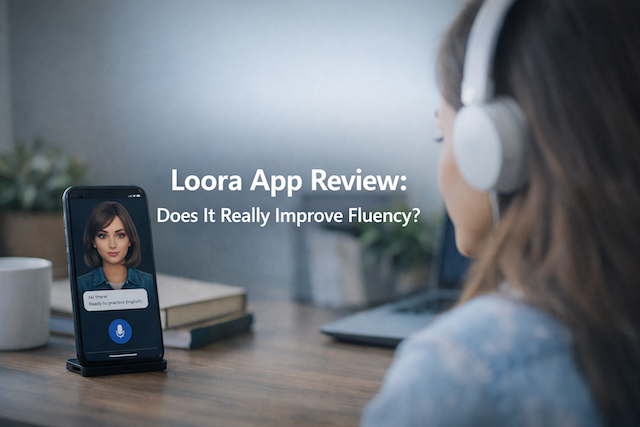
Loora App Review: Does It Really Improve Fluency?
Contents
- Loora App Review: Does It Really Improve Fluency?
- Introduction
- What Is Loora App?
- How Loora Works
- Key Features of Loora
- Real-Time AI Conversations
- Pronunciation Feedback
- Natural Conversation Flow
- Topic-Based Practice
- No Pressure Environment
- Strengths of Loora App
- Excellent for Speaking Practice
- Builds Confidence Quickly
- Convenient and Accessible
- Encourages Active Learning
- Weaknesses of Loora App
- Limited Grammar Explanation
- Feedback Can Be Basic
- Conversations Can Feel Repetitive
- Requires Strong Self-Motivation
- Who Should Use Loora?
- Best for Beginners to Intermediate Learners
- Not Ideal for Advanced Learners
- Great for Busy Professionals
- Loora vs Other AI Speaking Apps
- Loora vs ELSA Speak
- Loora vs Speak App
- Loora vs ChatGPT
- Pricing and Value
- Does Loora Really Improve Fluency?
- How to Use Loora Effectively
- Final Verdict
- Conclusion
- FAQs (Frequently Asked Questions)
- Is Loora good for improving English fluency?
- Can Loora replace an English teacher?
- Is Loora suitable for beginners?
- Does Loora help with pronunciation?
- How often should I use Loora to see results?
- Is Loora better than other AI speaking apps?
- What are the biggest advantages of Loora?
- What are the limitations of Loora?
Loora App Review: Does It Really Improve Fluency?
Introduction
With the rapid rise of AI-powered language learning tools, English learners now have more options than ever before. Among these tools, Loora has gained attention as a speaking-focused AI app designed to simulate real-life conversations and improve fluency. Unlike traditional language apps that emphasize grammar drills or vocabulary memorization, Loora positions itself as a personal AI conversation partner available anytime.
But the key question remains: Does Loora actually help improve English fluency, or is it just another trendy app?
In this detailed review, we will explore how Loora works, its core features, strengths, weaknesses, pricing, and whether it is truly effective for improving speaking skills.
What Is Loora App?
Loora is an AI-powered English speaking app that allows users to practice conversations in real-time using voice interaction. It is designed to replicate natural conversations, making it feel like you are speaking with a real person rather than using a traditional learning app.
The app focuses primarily on:
-
Speaking practice
-
Pronunciation improvement
-
Real-life conversation simulation
-
Fluency development
Unlike apps such as Duolingo or Babbel, Loora does not prioritize grammar exercises or quizzes. Instead, it emphasizes active speaking, which is often the most difficult skill for learners to develop.
How Loora Works
Loora uses advanced AI speech recognition and natural language processing to interact with users. Once you open the app, you can start speaking immediately.
Here’s how a typical session works:
-
You choose a topic or scenario (e.g., travel, business, daily conversation)
-
The AI starts a conversation
-
You respond using your voice
-
The AI replies naturally and keeps the conversation going
-
You receive feedback on pronunciation and fluency
The experience is designed to feel like a real conversation, with minimal interruptions.
Key Features of Loora
Real-Time AI Conversations
The most important feature of Loora is its ability to hold real-time conversations. The AI responds quickly and contextually, allowing you to practice speaking without delays.
This is particularly useful for learners who:
-
Feel nervous speaking with real people
-
Do not have access to native speakers
-
Want unlimited practice opportunities
Pronunciation Feedback
Loora analyzes your speech and provides feedback on pronunciation. While it may not be as detailed as specialized pronunciation apps like ELSA Speak, it still offers useful corrections.
The feedback helps you:
-
Identify unclear words
-
Improve accent and clarity
-
Build confidence when speaking
Natural Conversation Flow
One of Loora’s strengths is how natural the conversations feel. The AI does not simply follow a script—it adapts based on your responses.
This creates a more realistic experience compared to:
-
Repetitive sentence drills
-
Pre-recorded dialogues
-
Multiple-choice exercises
Topic-Based Practice
Loora offers different conversation topics, including:
-
Daily life
-
Travel situations
-
Business English
-
Casual conversations
This allows users to practice specific scenarios they are likely to encounter in real life.
No Pressure Environment
Because you are speaking with AI, there is no fear of judgment. This is a major advantage for beginners or shy learners.
You can:
-
Make mistakes freely
-
Speak slowly
-
Repeat sentences without embarrassment
Strengths of Loora App
Excellent for Speaking Practice
Loora excels in one key area: getting you to speak consistently.
Many learners struggle because they:
-
Study grammar but don’t speak
-
Understand English but cannot express themselves
-
Lack opportunities for real conversations
Loora solves this by providing unlimited speaking practice anytime.
Builds Confidence Quickly
Regular use of Loora can significantly improve confidence. Speaking to AI removes the anxiety that comes with human interaction.
As a result, users often:
-
Speak more freely
-
Use longer sentences
-
Become less afraid of making mistakes
Convenient and Accessible
You don’t need to:
-
Schedule lessons
-
Find a language partner
-
Pay high tutoring fees
Loora is available 24/7, making it ideal for busy learners.
Encourages Active Learning
Unlike passive learning methods (watching videos, reading), Loora forces you to actively participate. This is crucial for developing fluency.
Speaking regularly helps:
-
Improve reaction speed
-
Strengthen sentence formation
-
Develop natural rhythm
Weaknesses of Loora App
Limited Grammar Explanation
Loora is not designed to teach grammar in detail. If you want structured grammar lessons, this app alone is not enough.
You may need additional resources for:
-
Grammar rules
-
Writing skills
-
Test preparation
Feedback Can Be Basic
While Loora provides feedback, it is sometimes limited compared to more specialized tools.
For example:
-
It may not explain why something is incorrect
-
Corrections can be brief
-
Advanced learners may want deeper analysis
Conversations Can Feel Repetitive
After extended use, some users notice that conversations can become repetitive.
This is common with AI apps and may reduce long-term engagement if not combined with other learning methods.
Requires Strong Self-Motivation
Loora does not have a structured curriculum like traditional courses.
This means:
-
You must practice regularly on your own
-
Progress depends on consistency
-
There is less guidance compared to classroom learning
Who Should Use Loora?
Best for Beginners to Intermediate Learners
Loora is ideal for learners who:
-
Understand basic English
-
Want to improve speaking confidence
-
Need more conversation practice
It is especially helpful for those stuck at the “I understand but can’t speak” stage.
Not Ideal for Advanced Learners
Advanced learners may find Loora too simple, especially if they need:
-
Academic English
-
Complex discussions
-
Detailed corrections
However, it can still be useful for maintaining speaking habits.
Great for Busy Professionals
If you don’t have time for classes or tutors, Loora offers a flexible solution.
You can practice:
-
During breaks
-
While commuting
-
Anytime you have a few minutes
Loora vs Other AI Speaking Apps
Loora vs ELSA Speak
-
Loora focuses on conversation
-
ELSA focuses on pronunciation accuracy
If your goal is fluency → Loora is better
If your goal is perfect pronunciation → ELSA is better
Loora vs Speak App
-
Loora is more conversation-based
-
Speak App includes structured lessons and explanations
If you prefer free conversation → Loora
If you want guided learning → Speak App
Loora vs ChatGPT
-
Loora is optimized for voice interaction
-
ChatGPT is more flexible and customizable
If you want simple speaking practice → Loora
If you want full control and variety → ChatGPT
Pricing and Value
Loora typically operates on a subscription model. While exact pricing may vary, it is generally positioned as a premium app.
When evaluating value, consider:
Pros:
-
Unlimited speaking practice
-
No need for expensive tutors
-
Convenient access
Cons:
-
Limited features outside speaking
-
Subscription cost may add up
Compared to hiring a tutor, Loora is much more affordable, but it may not fully replace human interaction.
Does Loora Really Improve Fluency?
The short answer is: Yes—but with conditions.
Loora can significantly improve fluency if used correctly.
Here’s why:
-
Fluency requires practice, not just knowledge
-
Speaking regularly builds automatic responses
-
Real-time interaction improves thinking speed
However, results depend on how you use the app.
How to Use Loora Effectively
To maximize results, follow these strategies:
Practice Daily
Even 10–15 minutes per day can make a difference. Consistency is more important than long sessions.
Focus on Speaking, Not Perfection
Do not worry about grammar mistakes. The goal is to communicate clearly and confidently.
Repeat and Improve
If you struggle with a sentence, try saying it again more smoothly. Repetition helps build fluency.
Combine with Other Resources
Loora works best when combined with:
-
Grammar study
-
Vocabulary building
-
Listening practice
Simulate Real-Life Situations
Use Loora to practice scenarios like:
-
Job interviews
-
Travel conversations
-
Daily interactions
This makes your learning more practical and relevant.
Final Verdict
Loora is a powerful tool for improving English speaking fluency, especially for learners who lack opportunities to practice in real life.
Its biggest strengths are:
-
Real-time conversation practice
-
Confidence building
-
Ease of use
However, it is not a complete learning solution. It works best as part of a broader learning strategy.
If your main goal is to start speaking more confidently and naturally, Loora is absolutely worth trying.
But if you need:
-
Structured lessons
-
Deep grammar explanations
-
Academic English training
You will need additional tools alongside it.
Conclusion
In today’s AI-driven world, apps like Loora are changing how people learn languages. By removing barriers such as fear, cost, and accessibility, they make speaking practice more available than ever before.
Loora may not replace human teachers completely, but it fills a critical gap: consistent, low-pressure speaking practice.
For many learners, that is exactly what they need to finally become fluent.
If you have been struggling to speak English despite studying for years, Loora could be the missing piece in your learning journey.
FAQs (Frequently Asked Questions)
Is Loora good for improving English fluency?
Loora can be a useful app for improving English fluency, especially for learners who need more speaking practice. One of the biggest reasons people struggle with fluency is not a lack of grammar knowledge, but a lack of real speaking time. Loora helps solve that problem by giving users a chance to speak out loud on a regular basis. Because the app focuses on conversation rather than passive study, it encourages learners to think in English and respond more naturally. Over time, this kind of repeated practice can improve speed, confidence, and comfort in spoken communication. However, fluency improvement depends on consistency. Using Loora once in a while will not produce the same results as daily practice. It is best viewed as a practical fluency tool rather than a complete English course.
Can Loora replace an English teacher?
Loora can support your English learning, but it usually cannot fully replace a good teacher. A teacher can understand your personal weaknesses, explain grammar in detail, answer complex questions, and guide your progress in a structured way. Loora, on the other hand, is better at providing flexible speaking practice whenever you want it. This makes it useful for learners who do not have access to teachers or who want extra conversation time outside class. In that sense, Loora works well as a supplement. It can help you build confidence, practice common situations, and develop the habit of speaking every day. But if you need academic writing help, test preparation, detailed corrections, or highly personalized instruction, a real teacher is still more effective. The best approach for many learners is to use Loora together with lessons, self-study, or human feedback.
Is Loora suitable for beginners?
Loora can be suitable for beginners, but it depends on the learner’s starting level. If someone already knows basic vocabulary and simple sentence patterns, the app can be very helpful because it pushes them to start speaking early. That is often what beginners need most. However, absolute beginners may find the experience difficult if they cannot yet understand simple questions or produce short answers. Since Loora is mainly conversation-based, it is easier for learners who already have a small foundation in English. Beginners who use the app should keep expectations realistic. At first, they may speak very slowly, use short answers, and repeat themselves often. That is normal. In fact, that repeated effort can be valuable. For the best results, beginners may want to combine Loora with basic grammar study, vocabulary learning, and listening practice so that conversations feel less overwhelming over time.
Does Loora help with pronunciation?
Yes, Loora can help with pronunciation, but it is not primarily a pronunciation-training app. Its main strength is conversation practice, so pronunciation feedback is usually part of the experience rather than the full focus. This can still be very useful because many learners need to know whether their speech is clear enough to be understood. By speaking regularly and receiving corrections, users can become more aware of unclear sounds, word stress, and speaking rhythm. That said, learners who want highly detailed pronunciation analysis may prefer a specialized app. Loora is better for combining pronunciation improvement with fluency practice in a more natural setting. Instead of practicing isolated sounds all day, you are speaking in full sentences and real conversation patterns. That makes the learning feel more practical. For many users, this balance is enough to improve clarity while also building confidence in spoken English.
How often should I use Loora to see results?
The most effective way to use Loora is to practice consistently, ideally every day or at least several times a week. Short daily sessions are often more powerful than long sessions done only once in a while. For example, practicing for 10 to 20 minutes a day can help you develop faster speaking habits and reduce hesitation. Fluency grows through repetition. The more often you speak, the more natural sentence building becomes. If you only use the app occasionally, progress may feel slow because your brain does not get enough repeated exposure to active speaking. Learners who see the best results usually treat Loora as part of a routine rather than an occasional tool. It can be used in the morning, during a lunch break, or in the evening after work. What matters most is not perfection, but regular use over time. Consistency creates confidence, and confidence supports fluency.
Is Loora better than other AI speaking apps?
Whether Loora is better than other AI speaking apps depends on your goal. If your main priority is open speaking practice and natural conversation, Loora can be a very strong option. It is especially useful for learners who want to talk more and worry less about formal lessons. However, some other apps may be better in specific areas. For example, pronunciation-focused apps may offer more detailed feedback on sounds, while structured learning apps may provide clearer lesson paths, grammar explanations, or vocabulary systems. That means Loora is not automatically the best choice for everyone. It is best for learners who want to improve spoken fluency through regular conversation practice. If you prefer a more guided approach, you may find another app more suitable. A smart way to judge Loora is to ask what problem you want to solve. If that problem is “I need to speak English more often,” Loora is likely a good fit.
What are the biggest advantages of Loora?
The biggest advantage of Loora is accessibility. Many learners know they need more speaking practice, but they do not have a tutor, a class, or a conversation partner available every day. Loora makes speaking practice much easier to access because it is available anytime. Another major advantage is the low-pressure environment. Many English learners feel embarrassed when speaking to real people, especially when they make mistakes. With Loora, that pressure is reduced, so learners are more likely to speak freely and experiment with new phrases. The app is also convenient for busy people who do not want to schedule lessons. In addition, its focus on active speaking makes it more practical for fluency building than apps that rely heavily on passive exercises. These benefits make Loora attractive for learners who want a simple way to build confidence, speak more regularly, and turn English from a study subject into a real communication skill.
What are the limitations of Loora?
Loora has clear strengths, but it also has limitations. First, it is not a full English curriculum. If you need structured lessons, grammar explanations, writing correction, or exam preparation, Loora alone will probably not be enough. Second, its feedback may not always be as detailed as what you would receive from a teacher or a specialized learning platform. Some learners want deeper explanations about why a sentence sounds unnatural or how to fix repeated mistakes. Third, conversation-based apps can sometimes feel repetitive after long-term use, especially if the learner does not actively explore new topics and challenges. Finally, progress with Loora depends heavily on self-discipline. Because the app is flexible, users must motivate themselves to practice consistently. In other words, Loora can be an effective tool, but it works best when used with clear goals and, in many cases, alongside other English learning resources.
How to Improve English Speaking Using AI Apps (Complete Guide 2026)

How to Register for eTravel Philippines (2025 Guide)
Step-by-step guide to completing your eTravel registration before arriving in the Philippines, with images and tips.

Night Market in Cebu – Things You Don’t Know About Cebu Life
Discover the hidden charm of Cebu’s night markets, from street food stalls to local life tips you won’t find in tourist guides.

How to Use ChatGPT for IELTS Preparation: A Complete Guide
Learn how to prepare for IELTS using ChatGPT — including strategies for Writing, Reading, Listening, Speaking, and grammar support.

How to Build a Website Without Coding Using ChatGPT
Discover how to build your own website using AI—no coding skills needed. From structure planning to SEO and design, let ChatGPT guide you.