2026年4月5日
3D ACADEMY offers affordable English study programs in Cebu, Philippines – perfect for beginners, professionals, and exam takers.

3D UNIVERSAL ENGLISH INSTITUTE INC
info.3d-universal.com
8:00-17:00(Mon-Fri)
Northeastern Cebu Colleges – Danao City: Cebu University Guide
Contents
- Northeastern Cebu Colleges – Danao City: Cebu University Guide
- Overview of Northeastern Cebu Colleges
- Location and Accessibility
- Academic Programs Offered
- Campus Facilities
- Tuition Fees and Affordability
- Student Life and Campus Culture
- Internship and Industry Connections
- Career Opportunities After Graduation
- Why Choose Northeastern Cebu Colleges?
- FAQs (Frequently Asked Questions)
- What degree programs does Northeastern Cebu Colleges offer?
- Where is Northeastern Cebu Colleges located in Danao City?
- Is Northeastern Cebu Colleges an affordable school?
- Does NCC offer scholarships or accept government financial assistance?
- What is the campus environment like?
- Are there dormitories or housing options for students near NCC?
- What are the usual admission requirements for new college students?
- Does Northeastern Cebu Colleges accept transferees and working students?
- What internship or on-the-job training opportunities are available?
- How does NCC support student development outside academics?
- How can I get the most up-to-date information about Northeastern Cebu Colleges?
Northeastern Cebu Colleges – Danao City: Cebu University Guide
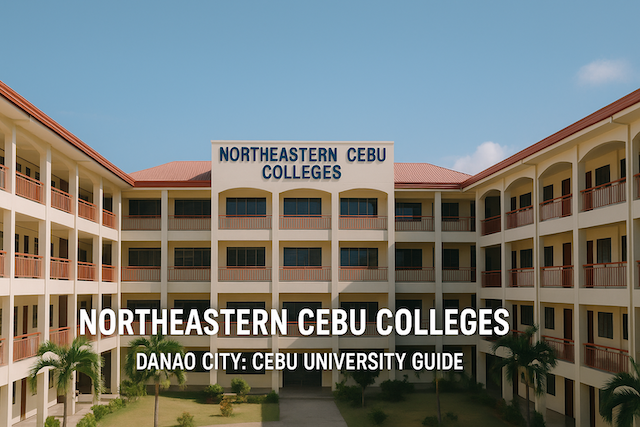
Northeastern Cebu Colleges (NCC) in Danao City is one of the more established private higher education institutions in northern Cebu, serving students from Danao, Carmen, Compostela, and surrounding municipalities. Known for its accessible tuition fees, practical programs, and community-focused mission, NCC attracts both local students and those seeking an affordable yet reliable education near home.
This comprehensive guide explores its academic offerings, campus environment, student life, and what you can expect if you are considering NCC as your college choice in Cebu.
Overview of Northeastern Cebu Colleges
NCC is a private institution that emphasizes accessible education and practical academic programs. It is known for producing graduates who excel in teaching, criminology, business, and hospitality management. The college places strong importance on discipline, character development, and real-world training through internships and field practice.
Located in Central Nautical Highway, Danao City, the campus is highly accessible for students from northern Cebu as it sits along the main transportation route. NCC continues to update its curriculum to ensure relevance, especially in fields with strong local employment demand.
Location and Accessibility
Northeastern Cebu Colleges is situated along the major highway in Danao City, making it one of the most conveniently located schools in the area. Students can easily commute via:
-
Jeepneys from Compostela, Carmen, Sabang, and Barangay Poblacion
-
Buses passing through the highway from northern Cebu
-
Tricycles and habal-habal within Danao City proper
-
V-hire vans from SM City Cebu or Ayala Center Cebu
The location is close to commercial areas, banks, restaurants, and the Danao City port, making it easy for students to run errands or find dining options.
Academic Programs Offered
NCC offers a mix of undergraduate programs that cater to the career needs of students in northern Cebu. Its programs are designed to be affordable while maintaining academic standards that prepare students for future employment and licensure examinations.
College of Teacher Education
One of the strongest and most popular programs at NCC, the Teacher Education department offers:
-
Bachelor of Elementary Education (BEEd)
-
Bachelor of Secondary Education (BSEd) with majors often including English, Math, Filipino, or Social Studies
Graduates from NCC’s teacher education programs often pursue careers as public or private school teachers, tutors, or education assistants.
College of Criminology
This is one of the most in-demand programs in the college. Students undergo training in:
-
Law enforcement principles
-
Crime investigation
-
Physical conditioning
-
Firearms familiarity (in partnership with certified institutions)
Many criminology graduates go on to careers in the PNP, BFP, BJMP, and private security agencies.
College of Business Administration
For students pursuing business-related careers, NCC offers:
-
Bachelor of Science in Business Administration (BSBA), commonly with majors such as Financial Management or Marketing Management
This program helps students develop skills in entrepreneurship, finance, operations, and management.
Hospitality Management and Tourism
Given the tourism growth in Cebu, NCC provides programs aligned with service and hospitality careers:
-
Bachelor of Science in Hospitality Management (BSHM)
Students gain training in food and beverage service, hotel operations, and tourism management.
Information Technology Programs
To address growing digital and technical career opportunities, NCC offers IT-related programs such as:
-
Bachelor of Science in Information Technology (BSIT)
-
Associate courses in computer systems service or programming (depending on current offerings)
These prepare students for entry-level IT support, web development, and related roles.
Campus Facilities
Northeastern Cebu Colleges maintains essential facilities that support academic and non-academic activities alike. While the campus is modest compared to larger universities in Cebu City, it offers the following:
Classrooms and Lecture Spaces
Well-arranged classrooms equipped with basic teaching tools such as projectors, whiteboards, and audiovisual systems.
Library and Learning Resource Center
A functional library provides textbooks, research materials, and access to digital resources to support classroom learning.
Computer Laboratories
Equipped with computers and internet access for IT students and general academic use.
Science Laboratories
For students under the education and criminology programs who require laboratory work.
Multi-Purpose Areas
Spaces used for assemblies, student activities, seminars, and school events.
Sports and Recreation
Courts for basketball and other outdoor activities, giving students opportunities to unwind or participate in intramurals.
Tuition Fees and Affordability
One of the biggest advantages of studying at NCC is its affordability. Tuition fees are significantly lower than many private schools in Cebu City, making NCC a practical choice for students from working-class families.
Additionally, NCC often supports students through:
-
Flexible payment schemes
-
Government financial aid programs (TES, TDP, UniFAST)
-
Scholarships for academic achievers
-
Discounts for siblings or multi-enrollee households
Because of these factors, NCC attracts a large number of students seeking quality yet budget-friendly college education.
Student Life and Campus Culture
Student life at Northeastern Cebu Colleges is characterized by strong community ties and a focused, goal-driven environment. Many students commute from nearby municipalities, creating a diverse yet tight-knit student community.
Student Organizations
Clubs and organizations typically include:
-
Education Society
-
Criminology Student Association
-
IT and Computer Clubs
-
Hospitality Management Club
-
Student Government
These organizations hold events such as leadership seminars, campus festivals, sports competitions, and community outreach programs.
Campus Events
NCC hosts annual events including:
-
Foundation Day
-
Intramurals
-
Academic competitions
-
Cultural performances
These foster school spirit and help students balance academics with extracurricular involvement.
Internship and Industry Connections
NCC maintains partnerships with schools, local businesses, hospitality establishments, and government offices to provide students with real-world exposure. Examples include:
-
Practice teaching for education students in public and private schools
-
OJT placements in hotels, restaurants, and tourism offices
-
Work immersion for IT students in tech companies or business offices
-
Criminology field training in local police stations or community safety programs
These opportunities allow students to develop practical skills and strengthen their resumes.
Career Opportunities After Graduation
Graduates from Northeastern Cebu Colleges pursue various career paths depending on their field of study:
-
Teachers and education professionals
-
Police officers, jail officers, fire officers
-
Business staff, entrepreneurs, office administrators
-
Hotel and restaurant staff, tourism personnel
-
IT support staff, junior developers, digital assistants
Because NCC focuses on teachable, practical programs, students often find employment within Cebu or return to serve their local communities.
Why Choose Northeastern Cebu Colleges?
Here are the top reasons why students consider NCC as their college of choice:
-
Affordable tuition compared to Cebu City universities
-
Accessible location along the main highway
-
Strong programs in Criminology and Education
-
Supportive faculty and approachable administrators
-
Active student community and organizations
-
Relevant internships and industry exposure
-
Flexible payment and scholarship options
For students living in northern Cebu, NCC offers a balance of affordability, convenience, and practical academic preparation.
FAQs (Frequently Asked Questions)
What degree programs does Northeastern Cebu Colleges offer?
Northeastern Cebu Colleges (NCC) typically offers practical, career-oriented programs such as Education, Criminology, Business Administration, Hospitality Management, and Information Technology. The exact list of programs and majors can change over time as the school updates its curriculum based on demand and accreditation. For the most up-to-date and official list of programs, it is always best to contact the registrar’s office or visit the school’s official communication channels.
Where is Northeastern Cebu Colleges located in Danao City?
NCC is located along the main highway area of Danao City, making it accessible to students from nearby municipalities such as Compostela, Carmen, and other northern Cebu towns. Public transport like jeepneys, buses, tricycles, and habal-habal commonly pass along the route, so commuting is generally straightforward. Because local traffic patterns and routes can change, students are encouraged to confirm exact directions using maps or by asking local drivers.
Is Northeastern Cebu Colleges an affordable school?
Yes, Northeastern Cebu Colleges is generally considered more affordable compared to many private colleges and universities in Cebu City. Its tuition fees are designed to be within reach of working-class and middle-income families in northern Cebu. However, the total cost will still depend on your chosen course, number of units, and miscellaneous fees. Since tuition and other charges can be adjusted each school year, you should request a current assessment from the cashier or registrar before enrollment.
Does NCC offer scholarships or accept government financial assistance?
NCC commonly acknowledges the importance of financial support and may participate in government-funded scholarship or subsidy programs such as TES or UniFAST, depending on current policies. The school may also provide in-house scholarships, discounts for academic achievers, student leaders, or siblings enrolled at the same time. Availability, requirements, and deadlines can change, so it is important to inquire directly at the scholarship or registrar’s office for the latest details and application procedures.
What is the campus environment like?
The campus environment at Northeastern Cebu Colleges is usually described as modest, practical, and community-oriented. Many students are commuters from nearby towns, creating a local and familiar atmosphere. Classrooms, computer labs, and basic facilities are focused on supporting the academic needs of the programs. Campus life is often strengthened by student organizations, intramurals, and school events, providing a balance between studies and extracurricular activities without the overwhelming scale of a very large city campus.
Are there dormitories or housing options for students near NCC?
NCC may not always operate its own large dormitory complex, so many students choose to stay in rented rooms, boarding houses, or apartments around Danao City. Because the school is near the main highway and city proper, it is relatively easy to find budget-friendly housing options within a short jeepney or tricycle ride. Availability, price, and safety conditions can vary, so students and parents should personally inspect boarding houses and discuss rules, curfews, and security before deciding.
What are the usual admission requirements for new college students?
Typical admission requirements for freshmen include a completed application form, Form 138 or Senior High School report card, certificate of good moral character, birth certificate, recent ID photos, and any required entrance or placement exams. Transferees and second coursers may be asked to submit their transcript of records, honorable dismissal, or course descriptions. Because policies may change, applicants should check NCC’s latest admission guidelines or contact the registrar to confirm the exact list of documents and deadlines.
Does Northeastern Cebu Colleges accept transferees and working students?
Yes, NCC usually accepts transferees and is generally open to working students, especially those from Danao and nearby localities. Class schedules in some programs may include morning, afternoon, or early evening sections, which can help students balance work and study. However, course equivalency, crediting of subjects, and load limitations will still follow the school’s academic policies. Transferees and working students should coordinate closely with the dean or program head for proper advising.
What internship or on-the-job training opportunities are available?
Internship and on-the-job training (OJT) arrangements at NCC depend on your program. Education students may have practice teaching in public or private schools; Criminology students may be assigned to police stations, safety offices, or related institutions; Business and IT students may be deployed in offices or companies; Hospitality Management students may train in hotels, resorts, or restaurants. Partnerships can change over time, so students should ask their department for the latest list of partner institutions and OJT guidelines.
How does NCC support student development outside academics?
Beyond classroom learning, Northeastern Cebu Colleges supports student development through organizations, clubs, and school-wide activities. Student councils, academic societies, sports teams, and special-interest clubs help learners build leadership skills, teamwork, and confidence. The school may also organize seminars, outreach programs, and campus events such as foundation days and intramurals. The exact mix of activities can vary by year, so interested students should monitor official announcements and join organizations aligned with their interests and goals.
How can I get the most up-to-date information about Northeastern Cebu Colleges?
Because school policies, fees, programs, and schedules may change from year to year, the most reliable way to get accurate information is to contact Northeastern Cebu Colleges directly. You can visit the campus in person, call the registrar or admissions office, or check their official Facebook page or website if available. When making decisions about enrollment, it is always a good idea to verify details such as tuition, program offerings, and admission requirements using the school’s latest official announcements.
Philippines University Guide
Cebu University Guide
Cebu Province All Universities Lists

How to Register for eTravel Philippines (2025 Guide)
Step-by-step guide to completing your eTravel registration before arriving in the Philippines, with images and tips.

Night Market in Cebu – Things You Don’t Know About Cebu Life
Discover the hidden charm of Cebu’s night markets, from street food stalls to local life tips you won’t find in tourist guides.

How to Use ChatGPT for IELTS Preparation: A Complete Guide
Learn how to prepare for IELTS using ChatGPT — including strategies for Writing, Reading, Listening, Speaking, and grammar support.

How to Build a Website Without Coding Using ChatGPT
Discover how to build your own website using AI—no coding skills needed. From structure planning to SEO and design, let ChatGPT guide you.