
Contents
- PATTS College of Aeronautics: Manila University Guide
- Overview of PATTS College of Aeronautics
- Why Choose PATTS College of Aeronautics?
- Academic Programs Offered
- Campus Facilities
- Admission Requirements
- Tuition Fees and Expenses
- Student Life
- Career Opportunities After Graduation
- Location and Accessibility
- Final Thoughts
- FAQs (Frequently Asked Questions)
- What is PATTS College of Aeronautics known for?
- Where is PATTS College of Aeronautics located?
- What degree programs are offered at PATTS College of Aeronautics?
- Is PATTS a good choice for students who want to become aircraft mechanics or aeronautical engineers?
- What are the general admission requirements for new students?
- How much is the tuition fee at PATTS College of Aeronautics?
- What kind of facilities does PATTS have for aviation training?
- What are the career opportunities for PATTS graduates?
- Does PATTS have a strong alumni network?
- What is student life like at PATTS College of Aeronautics?
- Is PATTS suitable for international students?
- How can prospective students get more accurate and updated information?
ChatGPT said:
PATTS College of Aeronautics: Manila University Guide
Overview of PATTS College of Aeronautics
PATTS College of Aeronautics, located in Parañaque City, is one of the most respected aviation schools in the Philippines. Established in 1969, PATTS (Philippine Air Transport and Training Services) has built a strong reputation as a premier institution specializing in aeronautics, aircraft maintenance, and aviation-related programs. Over the decades, it has produced thousands of aviation professionals who now work in airlines, airports, aviation manufacturing, engineering firms, and international aviation companies.
PATTS is known for providing a highly technical education focused on hands-on training, industry exposure, and strict adherence to aviation safety standards. Its campus in Parañaque is strategically located near Ninoy Aquino International Airport (NAIA), making it highly convenient for aviation practice, partnerships, and real-world observations.
Whether you’re a future pilot, aircraft mechanic, avionics technician, airline manager, or aeronautical engineer, PATTS College of Aeronautics offers a solid foundation that is recognized by local and global aviation industries.
Why Choose PATTS College of Aeronautics?
PATTS continues to attract aviation students because of its focused, specialized, and industry-driven curriculum. Here are the key strengths of the institution:
1. Specialized Aviation Education
Unlike general universities, PATTS exclusively focuses on aviation studies. This specialization ensures that all courses, laboratories, and faculty expertise are aligned with aviation standards and industry requirements.
2. Strong Industry Recognition
As one of the oldest aeronautics schools in the Philippines, PATTS has strong connections with airlines, MROs (Maintenance, Repair, and Overhaul companies), airports, and aviation suppliers. Many graduates find opportunities both locally and abroad.
3. Experienced Faculty
Most instructors come from the aviation field—licensed aircraft mechanics, aeronautical engineers, former airline personnel, and technical specialists. Their knowledge ensures students learn real-world skills and discipline.
4. Hands-On Training and Laboratories
PATTS provides access to aircraft parts, engines, avionics equipment, simulation labs, and workshops. Training covers troubleshooting, repairs, assembly, and safety inspections.
5. Strong Alumni Network
PATTS alumni are spread across the world—working for airlines in the Middle East, Asia, Europe, and North America. This network helps graduates find mentorship and career opportunities.
Academic Programs Offered
PATTS College of Aeronautics offers Bachelor’s degree programs and technical courses relevant to the aviation industry.
Bachelor’s Degree Programs
These are the primary courses students choose:
1. BS in Aircraft Maintenance Technology (BSAMT)
A technical program focused on aircraft repair, maintenance, inspection, and safety protocols. It prepares students for licensure under CAAP.
2. BS in Aeronautical Engineering
This engineering program covers aircraft design, aerodynamics, propulsion, materials, and aircraft systems. Graduates often proceed to take the Aeronautical Engineering licensure exam.
3. BS in Air Transportation
Designed for students pursuing aviation operations or aspiring to become pilots. It includes aviation management, airline operations, navigation, safety management, and more.
4. BS in Avionics Technology
Focused on aircraft electronics—communication systems, navigation equipment, and aircraft electrical systems. Graduates often work in MRO facilities and airlines.
5. BS in Aviation Information Technology
A newer program blending IT with aviation systems, ideal for careers such as airline IT analyst, airport systems manager, or aviation software specialist.
Technical Courses
These short programs prepare students for specialized aviation jobs:
-
Aircraft Technician Courses
-
Avionics Technician Courses
-
Safety and Security Programs
-
Aviation Operation Courses
Campus Facilities
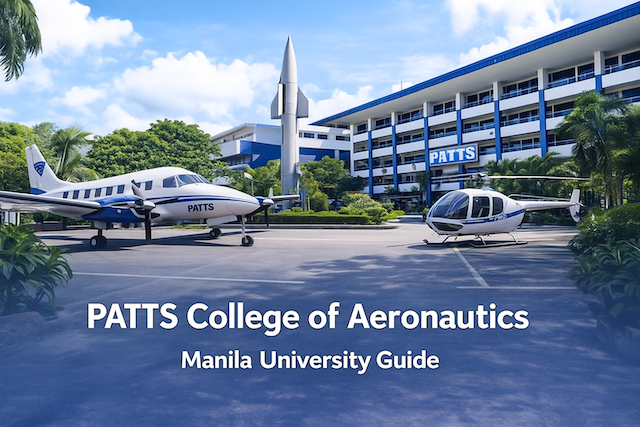
The PATTS campus supports aviation training with specialized equipment, laboratories, and simulation rooms.
Key Facilities Include:
-
Aircraft Hangar with engine and component displays
-
Aerodynamics and propulsion laboratories
-
Avionics and electronics labs
-
Engineering workshops
-
IT and computer training labs
-
Flight simulation rooms
-
Library with aviation manuals, journals, and resources
-
Multi-purpose hall for trainings and seminars
The school also provides student lounges, cafeteria, and open spaces for relaxation and extracurricular activities.
Admission Requirements
Admission to PATTS College of Aeronautics involves academic, documentary, and sometimes medical requirements due to aviation standards.
Basic Requirements:
-
Accomplished application form
-
High school report card (Form 138)
-
Good moral certificate
-
PSA Birth Certificate
-
2×2 and ID photos
-
Entrance examination (depending on program)
-
Medical clearance (especially for aviation programs)
Transfer students and foreign applicants must submit additional documents.
Tuition Fees and Expenses
PATTS tuition varies based on the course and year level. Aviation programs generally cost more due to specialized equipment and laboratory usage.
Estimated Tuition Range:
-
₱40,000 – ₱60,000 per semester (may vary depending on course and lab requirements)
Additional costs:
-
Lab fees
-
Aviation manuals
-
Tools and safety equipment (for AMT and Avionics)
-
Uniforms
-
Medical check-ups
Despite the costs, many students consider PATTS a solid investment because of the high employability in the aviation industry.
Student Life
While PATTS is known for its technical and rigorous training, campus life is active and enjoyable.
Student Activities Include:
-
Aviation seminars and conferences
-
Technical workshops and competitions
-
Sports programs and varsity teams
-
Student clubs (engineering, IT, aviation, arts, culture)
-
Campus festivals and yearly celebrations
The school’s community is tight-knit, with students supporting each other through challenging technical subjects, projects, and practical examinations.
Career Opportunities After Graduation
Graduates of PATTS College of Aeronautics have access to diverse career opportunities in the aviation industry.
Common Job Paths Include:
-
Aircraft Mechanic (local or overseas)
-
Aeronautical Engineer
-
Avionics Technician
-
Airline Operations Staff
-
Flight Dispatcher
-
Air Transportation Specialist
-
Aviation IT Specialist
-
Airport Ground Crew
-
MRO Technician
-
Aircraft Safety Inspector
-
Airline Managerial Roles
Airlines such as Philippine Airlines, Cebu Pacific, AirAsia, and international carriers often hire PATTS graduates.
Location and Accessibility
PATTS College of Aeronautics is located in Parañaque City, close to NAIA and several aviation companies.
Nearby Areas Include:
-
NAIA Terminals 1, 2, 3
-
Sucat and Bicutan
-
SM City Sucat
-
Airport Road commercial areas
The campus is accessible by jeepney, bus, Grab, and airport routes.
Final Thoughts
PATTS College of Aeronautics stands out as one of the premier aviation institutions in the Philippines. With specialized training, industry-aligned programs, strong faculty experience, and excellent career opportunities, it remains a top choice for students aiming to pursue careers in aviation, engineering, and airline operations. It offers a learning environment that combines strict aviation standards with hands-on experience—producing graduates who are ready to join one of the world’s most dynamic and high-demand industries.
If you’re passionate about aviation and seeking a school that can guide your career toward airlines, airports, or aeronautical engineering, PATTS is a strong and reputable choice.
FAQs (Frequently Asked Questions)
What is PATTS College of Aeronautics known for?
PATTS College of Aeronautics is known as one of the pioneering aviation schools in the Philippines. It specializes in aviation-related programs such as aircraft maintenance, aeronautical engineering, avionics, air transportation, and aviation IT. The institution is recognized for its strong technical curriculum, hands-on training, and proximity to Ninoy Aquino International Airport (NAIA), which helps students gain exposure to real-world aviation environments. Many graduates work for local and international airlines, MRO (Maintenance, Repair, and Overhaul) companies, and other aviation organizations.
Where is PATTS College of Aeronautics located?
PATTS College of Aeronautics is located in Parañaque City, Metro Manila. Its location is strategic because it is close to NAIA and other aviation-related businesses, making it convenient for students to access airports, training facilities, and potential internship sites. The area is also served by public transportation such as jeepneys, buses, and ride-hailing services, so commuting is relatively manageable for students coming from different parts of Metro Manila.
What degree programs are offered at PATTS College of Aeronautics?
PATTS offers several aviation-focused bachelor’s degree programs. Common offerings include BS in Aircraft Maintenance Technology, BS in Aeronautical Engineering, BS in Air Transportation, BS in Avionics Technology, and BS in Aviation Information Technology. These programs are designed to provide both theoretical foundations and practical skills for careers in aircraft maintenance, engineering, flight operations, aviation electronics, and IT systems used in airlines and airports. Some technical or technician-level courses may also be available for those who prefer shorter, more specialized training.
Is PATTS a good choice for students who want to become aircraft mechanics or aeronautical engineers?
Yes. PATTS is considered a strong option for students who want to become aircraft mechanics or aeronautical engineers because its curriculum is highly technical and industry-aligned. The school has laboratories, workshops, and aircraft components that allow students to practice maintenance, inspection, troubleshooting, and repair. For Aeronautical Engineering, the subjects cover aircraft design, aerodynamics, propulsion, and structural analysis, which prepare graduates for licensure examinations and engineering positions in aviation and aerospace industries.
What are the general admission requirements for new students?
Admission requirements typically include an accomplished application form, high school report card or senior high school credentials, a certificate of good moral character, a PSA birth certificate, and recent ID photos. Some programs may require an entrance examination and medical evaluation, especially those directly tied to flight operations or technical work. Transfer students and foreign applicants usually have to provide additional documents such as transcript of records, passport information, and equivalency certifications, depending on their previous school and country of origin.
How much is the tuition fee at PATTS College of Aeronautics?
Tuition fees at PATTS can vary by program and year level, but students can generally expect a range around mid-level private school costs, with additional laboratory and equipment fees due to the technical nature of aviation education. Programs that require extensive lab work or specialized equipment, such as Aircraft Maintenance Technology, Aeronautical Engineering, and Avionics Technology, may cost more per semester. Aside from tuition, students should also budget for uniforms, tools, manuals, projects, and possible medical examinations required by the program.
What kind of facilities does PATTS have for aviation training?
PATTS is equipped with aviation-related facilities such as aircraft engines and components for laboratory work, avionics and electronics labs, engineering and maintenance workshops, computer and IT labs, and specialized rooms for simulations and technical demonstrations. A campus library provides textbooks, manuals, and references focused on aviation and engineering. The school also has common student facilities like classrooms, a cafeteria, and multipurpose areas that support both academic and extracurricular activities, such as seminars, student organization meetings, and sports events.
What are the career opportunities for PATTS graduates?
Graduates of PATTS College of Aeronautics have a wide range of career opportunities in the aviation industry. They can work as aircraft mechanics, aeronautical engineers, avionics technicians, airline operations staff, dispatchers, ground crew, safety inspectors, and aviation IT specialists. Some graduates build careers in MRO companies, while others join domestic and international airlines in Asia, the Middle East, Europe, or North America. With experience and further training, many move into supervisory or managerial roles within airlines, airports, and aviation service providers.
Does PATTS have a strong alumni network?
Yes. Over decades of operation, PATTS has built a large and active alumni community working in different parts of the world. This network can be helpful for new graduates who are looking for job opportunities, mentorship, or professional connections. Many alumni return to the school as guest speakers or industry partners, sharing real-world insights about airline operations, maintenance standards, and international aviation trends. This helps current students understand the expectations and culture of the aviation workplace.
What is student life like at PATTS College of Aeronautics?
Student life at PATTS is a combination of rigorous technical study and active campus involvement. Since aviation subjects can be demanding, students spend a lot of time in laboratories, workshops, and study groups. At the same time, there are various student organizations, sports activities, and interest-based clubs that focus on engineering, aviation, leadership, culture, and the arts. The school also hosts seminars, job fairs, and aviation-related events that expose students to professionals, companies, and current issues in the industry.
Is PATTS suitable for international students?
PATTS can be an option for international students who wish to study aviation in the Philippines, as long as they meet admission and visa requirements. Foreign applicants usually need to submit authenticated academic records, passport documents, and other clearances specified by Philippine regulations. Because English is commonly used as the medium of instruction, international students should have a sufficient level of English proficiency to understand technical lectures and manuals. It is also advisable for them to inquire directly with the school about specific requirements and support services for foreign enrollees.
How can prospective students get more accurate and updated information?
Since details such as tuition fees, admission schedules, program offerings, and requirements can change over time, prospective students should always confirm information directly with PATTS College of Aeronautics. They can visit the official website, contact the admissions or registrar’s office, follow official social media accounts, or schedule an on-campus visit or online orientation. This ensures that they receive the most updated and accurate details before applying or enrolling.



