2026年1月12日
3D ACADEMY offers affordable English study programs in Cebu, Philippines – perfect for beginners, professionals, and exam takers.

3D UNIVERSAL ENGLISH INSTITUTE INC
info.3d-universal.com
8:00-17:00(Mon-Fri)
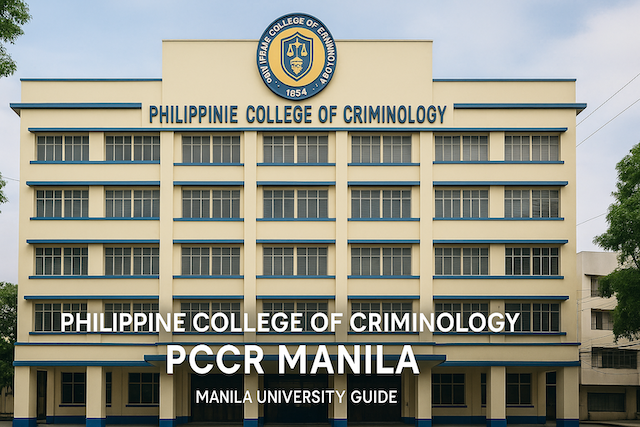
Philippine College of Criminology (PCCR Manila): Manila University Guide
Contents
- Philippine College of Criminology (PCCR Manila): Manila University Guide
- Introduction
- About Philippine College of Criminology
- Academic Programs Offered
- Campus and Facilities
- Admissions Process
- Tuition Fees and Costs
- Scholarships and Financial Assistance
- Student Life and Campus Culture
- Career Opportunities
- Why Choose PCCR?
- Conclusion
- FAQs (Frequently Asked Questions)
- What is Philippine College of Criminology (PCCR Manila) known for?
- Which degree programs are offered at PCCR Manila?
- Where is PCCR Manila located?
- How much is the tuition fee at PCCR Manila?
- Does PCCR Manila offer scholarships or financial assistance?
- What are the admission requirements for incoming freshmen?
- Can transferees and second-course takers enroll at PCCR Manila?
- Is PCCR Manila a good choice for students who want to become police officers?
- What kind of facilities and laboratories are available on campus?
- What career opportunities are available to PCCR graduates?
- Does PCCR Manila accept foreign or international students?
- How can I get more information or contact PCCR Manila?
Philippine College of Criminology (PCCR Manila): Manila University Guide
Introduction
The Philippine College of Criminology (PCCR), located in Manila, is one of the Philippines’ most recognized institutions specializing in criminology, criminal justice, and law enforcement education. Since its establishment in 1954, PCCR has built a strong reputation for producing graduates who pursue careers in policing, forensic science, corrections, security management, and related public service roles. Its long-standing history, specialized programs, and strong focus on national service make it a top choice for students aiming to enter the law enforcement or justice sector.
This comprehensive guide explores everything you need to know about PCCR Manila—its academic programs, campus environment, admission process, tuition fees, student life, and employment opportunities. Whether you are a future criminology student, a parent researching schools, or an international applicant looking to study in the Philippines, this article provides a clear and detailed overview.
About Philippine College of Criminology
The Philippine College of Criminology is a private, non-sectarian institution that primarily offers criminology and criminal justice programs. It has played a significant role in shaping the professional landscape of law enforcement in the country. Many of its alumni have gone on to become police officers, forensic investigators, fire and jail officers, public safety professionals, and even leaders in national agencies.
PCCR is known for:
-
Specialized criminology-focused programs
-
Strong connections with law enforcement agencies
-
Practical, hands-on learning through simulations and field activities
-
A historically high turnout of board exam passers
-
Comprehensive training in forensic science, criminal investigation, corrections, and security
The institution is located in Quiapo, Manila—providing easy access to public transport and surrounding commercial areas.
Academic Programs Offered
PCCR offers a focused range of programs designed to develop students into capable professionals in the fields of criminology and public safety.
Bachelor of Science in Criminology (BSCrim)
This is PCCR’s flagship program, widely recognized nationwide. It provides a solid foundation in:
-
Criminal investigation
-
Forensic science
-
Criminal law
-
Corrections
-
Police organization and administration
-
Fire protection and safety
-
Ethics and human behavior
Students participate in practical training such as mock crime scene investigations, fingerprint analysis, defensive tactics, and community immersion programs.
Bachelor of Science in Industrial Security Management (BSISM)
A program designed for students planning to work in corporate security, protective services, and risk management. Courses include:
-
Threat assessment
-
Loss prevention
-
Security operations
-
Emergency and disaster response
-
Security risk analysis
Graduates often pursue careers in corporate security departments, private investigation firms, and safety compliance organizations.
Master of Science in Criminology
A graduate program aimed at professionals who want to advance their careers in law enforcement, teaching, research, or agency leadership. Training focuses on:
-
Criminological theories
-
Research methodologies
-
Forensic advancements
-
Public safety administration
-
Criminal justice strategies
Doctor of Philosophy in Criminology
This terminal degree develops experts and thought leaders capable of contributing to national crime prevention strategies, academic advancements, and high-level policy planning.
Campus and Facilities
The PCCR campus is designed to support a criminology-focused education with specialized laboratories, classrooms, and training facilities. Key features include:
Criminology Laboratories
-
Forensic lab for crime scene analysis
-
Ballistics room with mock firearm testing equipment
-
Fingerprinting and document examination facilities
-
Forensic photography room
-
Simulation spaces for investigation exercises
Library and Learning Resource Center
The institution maintains criminology reference materials, law books, case studies, and modern learning resources to support research and academic study.
Physical Training Facilities
Since criminology is physically demanding, the campus provides:
-
Gym spaces for self-defense and tactical training
-
Outdoor areas for physical fitness activities
-
Reserved venues for ROTC and law enforcement drills
Student Spaces
-
Study lounges
-
Multipurpose halls
-
Cafeterias and meeting areas
-
Administrative and support offices
Admissions Process
PCCR has a streamlined admissions process to accommodate incoming freshmen, transferees, and graduate school applicants.
Requirements for Freshmen
-
Completed senior high school
-
Form 138 or high school report card
-
Good moral certificate
-
Birth certificate
-
2×2 photos
-
Entrance examination (if applicable)
-
Application form
Requirements for Transferees
-
Transcript of Records or transfer credentials
-
Honorable dismissal
-
Good moral certificate
-
Application form
Graduate School Requirements
-
Official transcript
-
Bachelor’s degree or Master’s degree (depending on program)
-
Research background
-
Recommendation letters
-
Admission interview (for some programs)
Admission Tips
-
Apply early to secure preferred class schedules
-
Prepare required documents ahead of time
-
Check the academic calendar for enrollment periods
-
Visit the campus to understand the environment and facilities
Tuition Fees and Costs
PCCR’s tuition is considered affordable compared to many private Manila universities. While fees may change annually, students can generally expect:
-
Undergraduate programs: Competitive tuition fees that fit budget-conscious students
-
Graduate programs: Slightly higher but still affordable
-
Miscellaneous fees: Include labs, library access, student services, and ID fees
Flexible payment options may also be available, including installment plans and scholarships.
Scholarships and Financial Assistance
PCCR offers several types of scholarships for deserving or financially challenged students. These may include:
-
Academic scholarships
-
Athletic or talent-based support
-
Government scholarships such as CHED and TES
-
Private donor-based financial assistance
Interested students should contact the Registrar or Student Affairs Office for complete details.
Student Life and Campus Culture
PCCR’s campus culture is centered on discipline, service, and community involvement. Students are encouraged to participate in activities that build character, leadership, and national service.
Student Organizations
The college supports groups and clubs such as:
-
Criminology student organizations
-
Forensic science societies
-
Martial arts and tactical clubs
-
Campus journalism groups
-
Community outreach teams
Campus Activities
-
Crime prevention seminars
-
Forensic workshops
-
Physical fitness and law enforcement drills
-
Academic competitions
-
Social responsibility programs
These activities give students practical exposure and prepare them for real-world challenges.
Career Opportunities
Graduates from PCCR pursue careers in both government and private sectors. Common employment paths include:
Government Agencies
-
Philippine National Police (PNP)
-
Bureau of Fire Protection (BFP)
-
Bureau of Jail Management and Penology (BJMP)
-
National Bureau of Investigation (NBI)
-
Philippine Drug Enforcement Agency (PDEA)
-
Department of Justice
-
Local government offices
Private Sector Roles
-
Corporate security officers
-
Investigators
-
Forensic specialists
-
Risk and loss prevention managers
-
Safety and compliance officers
The college’s strong network and training foundation give students a competitive edge in the criminology field.
Why Choose PCCR?
Students choose PCCR for several reasons:
-
Trusted name in criminology education
-
Specialized, practice-based training
-
Strong alumni network in law enforcement
-
Affordable tuition fees
-
Convenient Manila location
-
Opportunities for board exam success
For those passionate about criminal justice and public service, PCCR provides a structured and supportive environment.
Conclusion
The Philippine College of Criminology remains one of Manila’s leading institutions for students aspiring to careers in law enforcement, forensic science, and public safety. With its specialized programs, strong campus facilities, experienced faculty, and long-standing legacy, PCCR continues to shape professionals who contribute meaningfully to the country’s justice system.
Choosing PCCR means joining a community dedicated to discipline, integrity, and service. For many students, it marks the beginning of a fulfilling and impactful career in criminology.
FAQs (Frequently Asked Questions)
Here are some frequently asked questions about Philippine College of Criminology (PCCR Manila) to help prospective students, parents, and working professionals better understand the school, its programs, and campus life.
What is Philippine College of Criminology (PCCR Manila) known for?
Philippine College of Criminology (PCCR Manila) is best known as a pioneering institution in the field of criminology and criminal justice education in the Philippines. It has a strong reputation for training future police officers, forensic practitioners, security professionals, and public safety workers. Many of its graduates go on to serve in the Philippine National Police (PNP), Bureau of Fire Protection (BFP), Bureau of Jail Management and Penology (BJMP), and other law enforcement or government agencies.
The college is recognized for its specialized curriculum, practical training activities, and board exam–oriented instruction, making it a popular choice for students who want a focused criminology education in Manila.
Which degree programs are offered at PCCR Manila?
PCCR Manila primarily offers programs related to criminology and security. The most popular undergraduate degree is the Bachelor of Science in Criminology (BSCrim), which covers criminal investigation, forensic science, corrections, criminal law, and police administration. The school also offers a Bachelor of Science in Industrial Security Management (BSISM) for those interested in corporate and industrial security.
For graduate students, PCCR offers Master of Science in Criminology and Doctor of Philosophy in Criminology. These programs are designed for professionals who want to advance into teaching, research, higher-level management, or policy-making roles in criminal justice and public safety.
Where is PCCR Manila located?
PCCR Manila is located in Quiapo, Manila, an area that is easily accessible via public transportation, including jeepneys, buses, and LRT stations nearby. Its central location makes it convenient for students coming from different parts of Metro Manila and nearby provinces.
The surrounding neighborhood has many shops, eateries, bookstores, and service centers, so students can find food, school supplies, and basic necessities within walking distance of the campus.
How much is the tuition fee at PCCR Manila?
Tuition fees at PCCR Manila are generally considered affordable compared to many private universities in Metro Manila. Exact amounts may vary per semester and depend on the program, year level, number of units, and any additional laboratory or miscellaneous fees.
Because fees can change, the best approach is to contact the Admissions or Registrar’s Office directly or check the school’s official announcements for updated tuition and payment schedule information. Some students also spread out payments through installment plans if the school allows it.
Does PCCR Manila offer scholarships or financial assistance?
Yes, PCCR Manila offers different forms of scholarships and financial aid to qualified students. These may include academic scholarships for high-performing students, as well as grants for those with special achievements or financial need. In some cases, students may also apply for government-supported programs such as CHED scholarships or other external grants, if available.
Scholarship slots are usually limited and may require maintaining a certain grade point average or meeting specific conditions. Interested applicants should inquire early at the Scholarship or Student Affairs Office to know the requirements, deadlines, and application process.
What are the admission requirements for incoming freshmen?
For incoming freshmen, typical requirements include a completed Senior High School program, Form 138 (report card), a Certificate of Good Moral Character, birth certificate, and recent ID photos. Some applicants may be required to take an entrance examination or undergo an interview depending on current school policies.
It is advisable to prepare documents in advance and submit them within the enrollment period. Since policies can change, always confirm the latest admission guidelines by checking with PCCR Manila’s Admissions Office.
Can transferees and second-course takers enroll at PCCR Manila?
Yes, PCCR Manila generally accepts transferees and second-course takers, subject to evaluation of their academic records. Transferees are typically required to present their Transcript of Records, Honorable Dismissal, and Certificate of Good Moral Character from their previous school.
Units may be credited depending on the alignment of previous subjects with PCCR’s curriculum and the grades obtained. Second-course takers who already hold a college degree can also apply, especially if they wish to shift into criminology or related fields.
Is PCCR Manila a good choice for students who want to become police officers?
Yes, many students choose PCCR Manila specifically because they want to become police officers or work in law enforcement. The school’s criminology program is designed to prepare students for the Criminologist Licensure Examination and for work in agencies such as the Philippine National Police (PNP).
The curriculum combines theoretical knowledge with practical training, including mock investigations, forensic exercises, and physical fitness activities. This combination helps students build the skills and discipline needed for a career in policing and public safety.
What kind of facilities and laboratories are available on campus?
PCCR Manila is equipped with specialized facilities that support criminology education. These may include forensic laboratories for crime scene simulations, ballistics rooms for mock firearm and ammunition studies, fingerprinting and document examination rooms, and spaces for forensic photography and investigative techniques.
In addition, the campus usually provides a library, study areas, classrooms, and physical training spaces for defensive tactics and fitness activities. These facilities enable students to practice what they learn in a more realistic and controlled environment.
What career opportunities are available to PCCR graduates?
Graduates of PCCR Manila have various career paths in both government and private sectors. Many alumni work in the Philippine National Police (PNP), Bureau of Fire Protection (BFP), Bureau of Jail Management and Penology (BJMP), National Bureau of Investigation (NBI), Philippine Drug Enforcement Agency (PDEA), and other law enforcement or regulatory bodies.
In the private sector, graduates may be employed as corporate security officers, risk and loss prevention specialists, investigators, safety officers, and security consultants. Those with advanced degrees can also pursue careers in teaching, research, and academic administration in criminology and criminal justice programs.
Does PCCR Manila accept foreign or international students?
PCCR Manila may accept foreign students, subject to compliance with Philippine immigration and education regulations. International applicants normally need to submit authenticated academic records, passport copies, proof of English proficiency if required, and other documents requested by the school and by government agencies.
Since requirements for foreign students are more detailed and time-sensitive, it is highly recommended that international applicants contact the school’s admissions or international students’ office directly to get accurate and updated instructions.
How can I get more information or contact PCCR Manila?
For the most accurate and updated information on programs, tuition, admissions, and schedules, it is best to refer to PCCR Manila’s official communication channels. You can usually reach them through their official website, phone numbers, email addresses, or verified social media pages.
Before enrolling, many students also visit the campus to get a feel for the environment, check facilities in person, and ask questions directly at the Registrar, Admissions, or Guidance Office.
Philippines University Guide
Manila University Guide
Manila Province All Universities Lists

How to Register for eTravel Philippines (2025 Guide)
Step-by-step guide to completing your eTravel registration before arriving in the Philippines, with images and tips.

Night Market in Cebu – Things You Don’t Know About Cebu Life
Discover the hidden charm of Cebu’s night markets, from street food stalls to local life tips you won’t find in tourist guides.

How to Use ChatGPT for IELTS Preparation: A Complete Guide
Learn how to prepare for IELTS using ChatGPT — including strategies for Writing, Reading, Listening, Speaking, and grammar support.

How to Build a Website Without Coding Using ChatGPT
Discover how to build your own website using AI—no coding skills needed. From structure planning to SEO and design, let ChatGPT guide you.