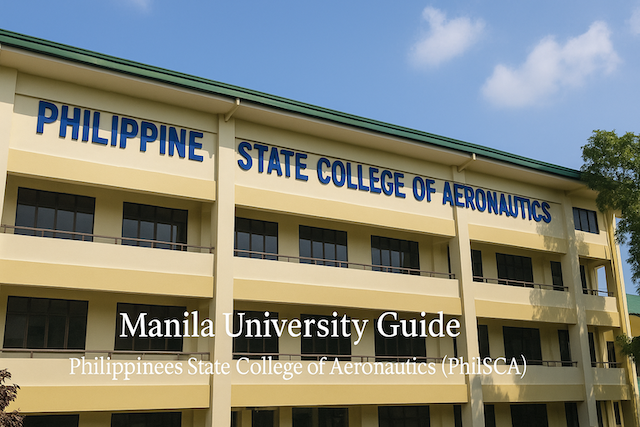
Philippine State College of Aeronautics (PhilSCA): Manila University Guide
The Philippine State College of Aeronautics (PhilSCA) is one of the Philippines’ premier aviation-focused state institutions, offering specialized programs that prepare students for careers in aeronautics, engineering, aviation technology, and aviation administration. With campuses in Pasay, Pampanga, Batangas, and other key locations, PhilSCA has built a solid reputation for providing affordable, high-quality education for aspiring aviation professionals.
This guide explores PhilSCA’s academic programs, admissions, tuition expectations, campus life, facilities, and what makes it a top choice for students aiming to enter the aviation industry in Metro Manila and beyond.
Overview of PhilSCA
Founded in 1978 as the Philippine Air Force College of Aeronautics, PhilSCA has evolved into a state-run aviation institution that caters to civilian and military learners. It is known for its strong technical training foundation, rigorous engineering curriculum, and close partnerships with the country’s aviation sector.
PhilSCA’s main campus is located in Villamor, Pasay City, strategically positioned near Ninoy Aquino International Airport (NAIA), making it ideal for hands-on aviation exposure. The institution supports thousands of students pursuing aviation-centered education at an accessible cost.
Key Highlights
-
The only state college in the Philippines dedicated mainly to aeronautical education.
-
Offers CHED-recognized engineering and aviation technology programs.
-
Produces graduates who pursue careers in aircraft maintenance, aviation management, air transportation, and engineering.
-
Affordable tuition typical of state institutions.
-
Close collaboration with aviation companies and government agencies.
Academic Programs
PhilSCA offers a variety of programs designed to supply skilled manpower to the aviation and aerospace industries. These programs blend theoretical foundation with immersive technical training.
Bachelor of Science in Aeronautical Engineering (BSAE)
This is one of PhilSCA’s flagship programs. Students learn aircraft design, aerodynamics, propulsion systems, materials engineering, aviation laws, and simulation modeling. Graduates may become:
-
Licensed Aeronautical Engineers
-
Aircraft design specialists
-
Aerospace researchers
-
Quality control engineers
The program includes board exam preparation since BSAE is a PRC-licensed profession.
Bachelor of Science in Air Transportation (BSAT)
This program prepares students for pilot training and aviation operations. Coursework includes:
BSAT students may pursue flying school after graduation or work in airline operations, flight dispatch, or aviation safety management.
Bachelor of Science in Aviation Electronics Technology (BSAET)
This program focuses on electronic and electrical systems in aircraft. Students study:
Graduates often work as avionics technicians or specialists for airlines and MROs (Maintenance, Repair, and Overhaul companies).
Bachelor of Science in Aviation Technology (BSATech)
This program supports the technical workforce for aviation ground operations, maintenance, and logistics. Courses cover:
Bachelor of Science in Aviation Management (BSAM)
BSAM prepares students for administrative and leadership roles in aviation organizations. Key topics include:
-
Aviation law
-
Airport operations
-
Airline management
-
Air cargo logistics
Graduate Programs
PhilSCA offers limited but growing graduate studies in aviation and education fields, allowing professionals to pursue advanced training.
Admissions Guide
Admission to PhilSCA is competitive due to its affordable tuition and specialized programs.
Basic Admission Requirements
-
High school diploma or SHS certificate
-
Form 138 / Report Card
-
PSA Birth Certificate
-
2×2 or passport-sized photos
-
Entrance examination (if required)
-
Medical certification
Some programs, particularly Aeronautical Engineering and Aviation Technology, may require:
Entrance Examination
PhilSCA typically conducts entrance tests that assess:
-
Math proficiency
-
Science comprehension
-
Logical reasoning
However, in certain academic years, entrance exam policies may vary depending on CHED and institutional guidelines.
Application Tips
-
Apply early, as slots fill quickly.
-
Strengthen your Math and Physics foundation.
-
Prepare medical documents ahead of time, especially for aviation-related fitness screening.
Tuition and Fees
As a state college, PhilSCA offers affordable tuition, especially under the expanded Universal Access to Quality Tertiary Education Act. Eligible Filipino students may study tuition-free in most undergraduate programs.
Students should still budget for:
-
Miscellaneous and laboratory fees
-
Uniforms (especially aviation and engineering programs)
-
Tools and equipment for technical courses
-
Flight training (for programs requiring it — note that flight hours are usually taken in external flight schools and can be costly)
Estimated Annual Cost
-
State tuition: Typically ₱0 for most Filipino students
-
Miscellaneous fees: ₱3,000 – ₱8,000 per semester
-
Laboratory fees: Varies depending on program
-
Flight training (optional/BSAT): ₱800,000 – ₱2 million in external accredited flying schools
Despite flight training costs, PhilSCA remains one of the most cost-efficient aviation pathways in the Philippines.
Campus Locations
While the main campus is in Pasay, PhilSCA operates several campuses to serve different regions and specializations.
1. Villamor, Pasay City (Main Campus)
Located near NAIA, this campus houses major engineering and aviation programs. Key advantages include:
-
Proximity to airlines and aviation facilities
-
Opportunities for internships with airport authorities
-
Accessible transportation networks
2. Basa Air Base Campus (Pampanga)
Originally used for military aviation training, this campus supports more technical and grounded aviation programs.
3. Fernando Air Base Campus (Batangas)
Focuses on aeronautical and aviation technical training in partnership with military aviation units.
4. Busuanga and Mactan Extension Campuses
These campuses expand access for students near Palawan and Cebu.
Facilities and Student Life
PhilSCA’s facilities reflect its technical specializations. While some equipment varies by campus, students typically have access to:
Laboratories and Workshops
Aviation Training Equipment
Other Campus Facilities
-
Library with aviation reference materials
-
Student lounges and study halls
-
Multipurpose halls and outdoor areas
PhilSCA student life is centered around academic rigor and aviation-focused organizations. Popular student groups include:
Extracurricular involvement helps students build leadership and technical experience relevant to future aviation careers.
Career Opportunities After Graduation
Graduates from PhilSCA are highly employable in aviation and related fields. The industry demand for engineers, technicians, and aviation managers continues to grow both domestically and internationally.
Popular Career Pathways
-
Aeronautical Engineer (licensed)
-
Avionics Technician
-
Aircraft Maintenance Engineer (AME)
-
Airport Operations Officer
-
Airline Ground Crew / Supervisor
-
Flight Dispatcher
-
Aviation Safety Officer
-
Pilot (after flight school training)
-
Air Cargo Specialist
-
Air Traffic Service Support Staff
Many graduates also explore opportunities overseas, particularly in the Middle East and Southeast Asia where aviation manpower shortages persist.
Why Choose PhilSCA?
1. Specialized, focused education
PhilSCA concentrates almost exclusively on aviation and aeronautics, offering depth and expertise unmatched by most general universities.
2. Affordable pathway to an aviation career
As a state college, it provides one of the most cost-effective routes to becoming an aviation professional.
3. Strong industry alignment
Its proximity to NAIA and partnerships with aviation organizations create valuable internship and training opportunities.
4. Solid academic foundation
Engineering programs are recognized for producing board passers and competent aviation professionals.
5. National presence
Multiple campuses allow students from various regions to access aviation-related education.
Conclusion
The Philippine State College of Aeronautics (PhilSCA) stands as a leading institution for aspiring aviation professionals in the Philippines. With accessible tuition, specialized academic programs, industry-relevant training, and a strong engineering foundation, PhilSCA continues to shape the next generation of pilots, engineers, aviation managers, and technicians.
Whether you’re seeking a career in aircraft design, aviation operations, air transportation, or airport management, PhilSCA offers a solid and affordable pathway into the aviation world.
FAQs (Frequently Asked Questions)
What is the Philippine State College of Aeronautics (PhilSCA)?
The Philippine State College of Aeronautics (PhilSCA) is a state-run higher education institution that specializes in aviation, aeronautical engineering, and aviation-related technologies. It was originally founded to support the training needs of the Philippine Air Force and has since expanded to serve civilian students who wish to build careers in the aviation and aerospace industries. PhilSCA offers degree programs in aeronautical engineering, air transportation, aviation electronics technology, aviation technology, and aviation management, among others.
Where is PhilSCA located in Metro Manila?
PhilSCA’s main campus is located in Villamor, Pasay City, very close to Ninoy Aquino International Airport (NAIA). This strategic location near the country’s primary gateway makes it convenient for students to gain exposure to real aviation environments, airlines, and airport operations. In addition to the Pasay campus, PhilSCA also operates other campuses and extension sites in key aviation hubs such as Pampanga, Batangas, and other regions.
What popular degree programs does PhilSCA offer?
PhilSCA is best known for its aviation-focused programs. Some of the most popular undergraduate degrees include:
- Bachelor of Science in Aeronautical Engineering (BSAE)
- Bachelor of Science in Air Transportation (BSAT)
- Bachelor of Science in Aviation Electronics Technology (BSAET)
- Bachelor of Science in Aviation Technology
- Bachelor of Science in Aviation Management (BSAM)
These programs are designed to prepare students for technical, operational, and managerial roles in the aviation sector.
Is PhilSCA tuition-free for Filipino students?
As a state college, PhilSCA generally falls under the coverage of the Universal Access to Quality Tertiary Education Act, which allows eligible Filipino students to study in state universities and colleges without paying tuition fees for regular undergraduate programs. However, students should still expect to pay miscellaneous and laboratory fees, and they need to budget for uniforms, school supplies, and other personal expenses. For programs that require actual flight training, the flying hours are usually taken through external flight schools, and those costs are not covered by the free tuition law.
How much should I budget per semester at PhilSCA?
While tuition itself may be free for qualified students, there are still related costs. Miscellaneous and laboratory fees can range from a few thousand pesos per semester, depending on the program and the number of lab-based courses. Students should also consider expenses for uniforms (especially in engineering and aviation programs), tools for technical subjects, books, transportation, and daily living costs. For students in Air Transportation who plan to pursue pilot training later, the separate cost of flight school can reach several hundred thousand to over a million pesos, depending on the flying program.
What are the admission requirements for new students?
Typical admission requirements include a high school diploma or Senior High School certificate, report card (Form 138), PSA birth certificate, ID photos, and a completed application form. PhilSCA may also require applicants to take an entrance examination that assesses mathematical ability, science knowledge, and logical reasoning. Some programs, particularly Aeronautical Engineering and other highly technical courses, may have stricter grade requirements and medical or physical fitness screenings because of the demands of the aviation profession.
Do I need strong Math and Science skills to study at PhilSCA?
Yes. Most of PhilSCA’s core programs are heavy in Mathematics and Science, especially Physics. Courses in aerodynamics, statics and dynamics, fluid mechanics, electronics, and engineering design all require a solid quantitative foundation. Students who plan to take Aeronautical Engineering, Aviation Electronics Technology, or related technical programs are advised to strengthen their skills in Algebra, Trigonometry, Calculus, and Physics as early as Senior High School. Having a good foundation in these subjects will make it easier to handle the academic workload.
Does PhilSCA provide pilot training?
PhilSCA offers the Bachelor of Science in Air Transportation, which provides the theoretical and academic foundation related to flying, flight operations, meteorology, aircraft systems, and aviation regulations. However, the actual hands-on flight training and flying hours needed to become a licensed pilot are usually taken in accredited flight schools outside of PhilSCA. Many students complete their academic degree at PhilSCA and then enroll in a flight school to obtain their pilot licenses. This combination helps lower the cost compared with purely private aviation training pathways.
What career opportunities are available for PhilSCA graduates?
Graduates of PhilSCA can pursue a wide range of careers in the aviation and aerospace sectors. Common roles include Aeronautical Engineer, Aircraft Maintenance Engineer, Avionics Technician, Airline or Airport Operations Officer, Flight Dispatcher, Aviation Safety Officer, Air Cargo Specialist, and Aviation Manager. Some graduates proceed to become pilots after completing additional flight training. Others find opportunities abroad, particularly in regions with strong demand for aviation professionals, such as the Middle East and other parts of Asia.
What is student life like at PhilSCA?
Student life at PhilSCA is centered on technical learning, discipline, and a strong aviation culture. Many students join engineering organizations, aviation clubs, and academic societies where they can participate in seminars, technical workshops, competitions, and research projects. Some campuses also have Reserve Officers’ Training Corps (ROTC) and other leadership programs for students who are interested in military-inspired training. Because many students share the same passion for aviation, the campus environment tends to be focused, goal-oriented, and community-driven.
Does PhilSCA have partnerships with airlines or aviation companies?
PhilSCA maintains linkages with various aviation-related organizations, including airlines, maintenance and repair organizations (MROs), and airport authorities. These partnerships help facilitate internships, on-the-job training, and industry exposure for students. Being located near NAIA is also an advantage, as the school is close to numerous aviation companies and government agencies. While partnerships may vary over time, the college continuously works to align its programs with industry needs so graduates remain competitive in the job market.
Is PhilSCA a good choice for someone serious about an aviation career?
PhilSCA is a strong option for students who are serious about building a long-term career in aviation or aeronautical engineering, especially if they are looking for a more affordable path compared to private aviation schools. Its specialized programs, state-college status, and proximity to major aviation hubs give students a unique combination of academic training and real-world exposure. Applicants should be ready to work hard in Math and Science and commit to the demanding nature of aviation studies, but the potential rewards in terms of career opportunities can be significant.